
Sem Elegant Voyage team | Revised March 2026
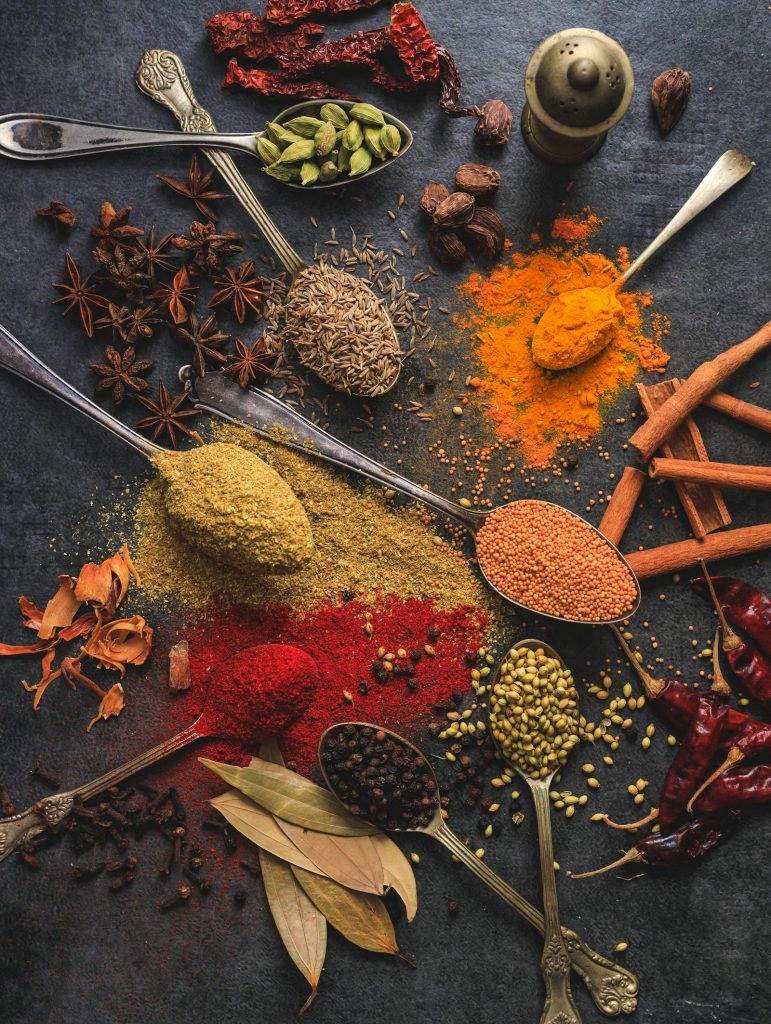
Cairo's oldest souk is Khan el-Khalili, established by a Mamluk emir in the 14th century. Of the whole market, the spice lanes are easily the most heady corner. Step into them and the scent arrives before anything else: cumin, cinnamon, saffron, hibiscus, mint... A riot for the senses that leaves you wanting a bag of everything.
The problem is that without preparation, you risk paying three times the normal price or leaving with saffron that isn't really saffron. This guide is here to help you navigate this fragrant labyrinth with confidence and leave with real good deals.
Fancy wandering Khan el-Khalili alongside a local guide?
Our English-speaking guides know each lane of the souk and which spice merchants are worth your money. They haggle for you and dodge the tourist traps.

Khan el-Khalili: a little history
The Khan el-Khalili souk was founded in 1382 by Emir Djaharks el-Khalili, who built a caravanserai for merchants. Six centuries later, the market is still there, lively and noisy, in the heart of Fatimid Cairo. The buildings have evolved, of course, but the spirit has remained the same - it is a place of commercial exchange, meetings and trading.
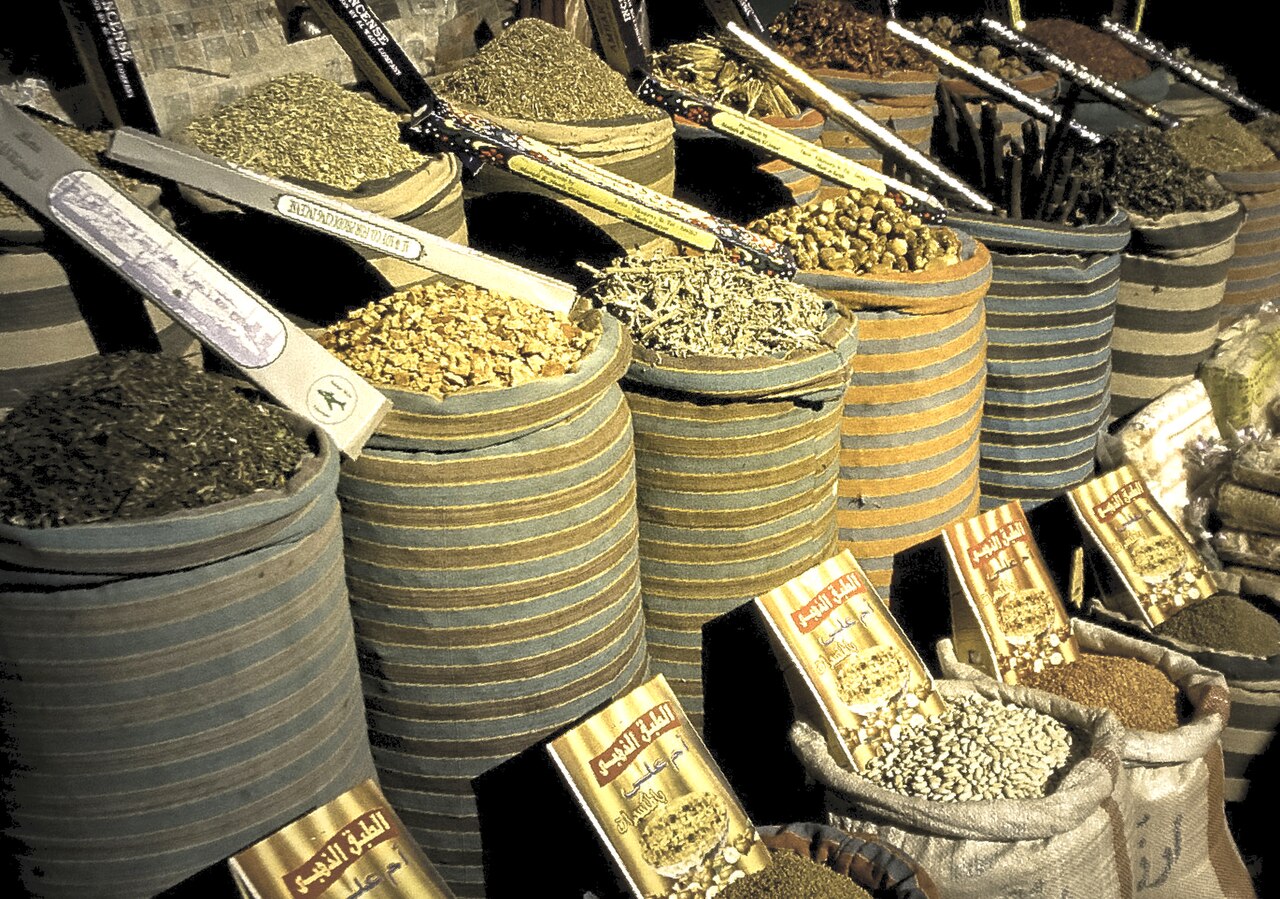
The spices section (souk el-Attarin) is located in the oldest part of the market. The stalls are often tiny - just a few square meters - but overflowing with bags and jars filled with spices, herbs and medicinal plants. Some families have been running their shop for several generations.
The market is located right next to the Al-Hussein Mosque and a stone's throw from the Al-Azhar Mosque, making it a natural stop during a visit to the Islamic Cairo.
What spices to buy?
Karkadé (hibiscus)
It is the flagship product and the best purchase you can make at the spice market. Karkade is the national drink of Egypt - an infusion of dried hibiscus flowers that is drunk hot or cold, with sugar. Its intense red color and tangy taste make it a refreshing drink rich in vitamin C.
Two grades sit side by side on the stalls: whole flowers (the better buy) and crushed ones (cheaper, but poorer). Look for a deep red colour and avoid anything turning brown, which means old stock. Decent karkade sells for 100 to 200 EGP a kilo in the market. Anyone quoting above 300 EGP a kilo is charging you the “tourist price”.
Cumin
Egyptian cumin is particularly fragrant and fresh. It is sold in seeds or ground. The seeds store better and retain their aroma longer - grind them yourself at home for maximum flavor. Cumin is used in dukkah and many Egyptian dishes.
Rough guide to cost: good seeds run 80-150 EGP a kilo.
Saffron - be careful, danger
Saffron is the most expensive spice in the world, and it is also the one that is the subject of the greatest number of scams. At the Cairo market, a lot of "saffron" sold is actually safflower (saffron) or turmeric dyed red. Real Egyptian saffron practically does not exist - quality saffron comes from Iran or Morocco.
How to recognize the truth: True saffron is made up of fine, dark red filaments with orange ends. Put a filament in warm water - real saffron releases its color slowly and evenly, fake saffron dyes the water instantly. Real saffron has a complex, slightly bitter, earthy aroma.
Honestly, unless you can judge saffron with confidence, leave it alone in the souk. Should you still want some, go to an established shop or have your guide walk you to a merchant they trust.
Other spices to bring back
Cinnamon - In sticks, it's a visually nice souvenir and the Egyptian cinnamon is fresh and fragrant. 80-120 EGP per kilo.
Dukkah: a thoroughly Egyptian blend of nuts, seeds and spices (sesame, coriander, cumin, hazelnuts), scooped up with bread dipped first in olive oil. A lovely present for anyone who cooks. 100-200 EGP a kilo.
Cardamom - Essential in Turkish/Arabic coffee served throughout Egypt. Green capsules are best. 200-400 EGP per kilo depending on quality.
Fennel and aniseed: the base of Egyptian herbal infusions, kind to the stomach. Costs very little.
The baharat - Spice blend used in Middle Eastern cuisine. Each merchant has their own recipe, which makes each purchase unique.
The art of negotiating in the souk
Bargaining in Cairo's spice souk is an art in its own right. Here's how to get a good price without offending anyone.
Step 1: Take a reconnaissance tour. Before you buy anything, wander the aisles. Look at the prices displayed (rare), note the products that interest you, and compare the presentations. It gives you a baseline.
Step 2: Show interest without urgency. When you find a shop you like, take the time to chat. Accept the tea that is offered to you (this is the custom, it does not commit you to anything). Ask to smell and taste the products. Good merchants are proud of their merchandise and like to show it off.
Step 3: Ask what it costs, then pause. The opening figure will be steep. Keep your face friendly, smile, and come back with roughly 30-40% of what was asked. The seller will feign astonishment. Perfectly normal; that is how the game is played.
Step 4: Negotiate gently. Gradually increase your offer. The seller lowers his. You're going to end up somewhere between 40% and 60% of the original price, which is generally a fair price for both parties.
Step 5: The starting technique. If you cannot reach an agreement, say thank you politely and pretend to leave. Often the seller will call you back with a better price. If not, you were below their minimum price - come back with a slightly higher offer.
One more trick: bundle several things with a single merchant. “What do you charge if I take the karkade AND the cumin AND the cinnamon together?” That nearly always beats bargaining over each item separately.
See the souk with a guide who does the haggling for you
Our local guides speak Arabic, know trusted sellers, and get prices you wouldn't get on your own. Combine the visit to the souk with the discovery of Islamic Cairo.
Avoid tourist traps
The souk is wonderful, though it pays to stay alert. These are the tricks you will meet most often:
The false saffron: As mentioned above, this is the number 1 scam. Dyed safflower or turmeric sold at the price of saffron. If the price seems too low for saffron, it’s not.
Pre-packaged mixes: Beautiful sealed bags with colored labels are often less fresh and more expensive than bulk spices. The packaging costs more than its contents. Favor buying in bulk.
The “gift” that isn’t one: Some sellers put a small bag of spices in your hand and say “gift”. Then they add another product, then another, and in the end you have to pay for it all. In short, don't take anything "for free" unless you're sure it's really free.
The “official” guide: a stranger offers to show you round the souk at no charge. What follows is a tour of shops paying him a commission, with prices marked up to match. For a genuine guide, book through an agency such as ours.
The rigged scale: It rarely happens but it does exist. If possible, ask to see the weight on the scale. Or bring a small object that you know the weight to check.
Practical information for your visit
Opening times: stalls trade roughly from 9am to 10pm. For spices, come in the morning (9am to 12pm), while it is still cool and the merchants have time for you, or towards evening (4pm to 6pm) once the midday heat has passed.
How to get there: Metro to Al-Ataba or Bab el-Shaaria station, then 10-15 minutes walk. In a taxi, ask for "Khan el-Khalili" - everyone knows it. If you are staying in the center of Cairo, it is easily accessible.
The El-Fishawi café: After shopping, take a break at El-Fishawi Café, the oldest café in Cairo (open for over 200 years). A mint tea or Turkish coffee at this historic location is the perfect complement to your souk visit.
Photographs: the lanes beg to be photographed: pyramids of coloured spice, hessian sacks, shafts of light through the awnings... Ask first before pointing a camera at a merchant or his stall. Most will happily agree, all the more so if you look like a buyer. Just do not park a tripod across a narrow passage.
Other markets in Cairo
Cairo has more than one market worth your time. For something that feels more local and less geared to visitors, try these instead:
Souk el-Gomaa (the Friday market): a sprawling flea market out in the Sayeda Aisha district. Antiques, furniture, clothes, car parts... it is all here, spices included, and noticeably cheaper than at Khan el-Khalili. Chaotic, and utterly absorbing.
Bab el-Louq market: a proper neighbourhood market where Cairenes do their own shopping. Spices and groceries go for local prices. Not as pretty as Khan el-Khalili, but a good deal more "real".
El Obour Market - Cairo's large wholesale market, located on the outskirts. It's not a tourist destination, but if you want to buy spices in large quantities at wholesale prices, it's here. So, it’s more for connoisseurs or serious buyers.
Heading further south? The Nubian stalls of Aswan and the bazaars of Luxor deserve a look as well. Take a Nile cruise and you can browse the market in every town you moor at.
FAQ - Cairo Spice Market
Can we bring spices from Cairo to France or Europe?
Yes, dry spices, karkadé and herbal teas pass European customs controls without any problem. Avoid fresh or damp products. Pack your purchases well to prevent the smell from permeating your clothes in the suitcase. A resealable zip bag inside a plastic bag works.
Is the market safe for tourists?
It is, on the whole. Pickpockets operate here as they do in every busy market on earth, so keep bags in front of you and stay switched on. Merchants push hard but never turn nasty. Crowds fill the lanes from morning until late, which keeps the place safe at any sensible hour.
Is it necessary to negotiate?
Bargaining is expected in the spice shops of the souk. If you pay the first asking price, the seller will be happy but you will probably have paid 2 to 3 times the normal price. Basically, negotiation is part of the cultural experience - enjoy it rather than seeing it as a chore. If this makes you uncomfortable, a local guide can negotiate for you.
How much should you budget for spices?
With 200-500 EGP (around 5-12 euros), you can bring back a nice selection of karkadé, cumin, cinnamon and spice blends - plenty of money to make gifts and stock you for several months. Real saffron would be the only really expensive product. For the overall budget for your trip, spices remain a very modest expense item.
Is Khan el-Khalili open on Friday?
It does open on Fridays, although a number of shops pull their shutters down for midday prayers (roughly 12 to 1:30pm). Friday evening is a fine time to go, with the lanes at their liveliest. In Ramadan the rhythm shifts: the souk really wakes up after iftar, when the fast is broken.
How long does it take to visit the spice market?
Give the spice lanes 1 to 2 hours. Covering all of Khan el-Khalili (jewellery, fabrics, souvenirs, Egyptian crafts) takes more like 3 to 4 hours. Stop for tea at El-Fishawi and look inside the Al-Hussein or Al-Azhar mosque and you have filled a half-day nicely.
Discover authentic Cairo with our guides
Spice market, Islamic Cairo, local gastronomy - our Cairo tours cover the tastiest facets of the city. Combine with a Nile cruise and Cairo tour for a complete trip.
Published by Sem Elegant Voyage - Specialist in tailor-made trips to Egypt. Find our Egypt tour packages, our travel preparation checklist and our cultural activities in Egypt.