
By Sem Elegant Voyage | Updated: March 2026
QUICK RESPONSE
Karnak is 2.5 km² of temples. 30 pharaohs left their mark there. You won't see everything. Nobody sees everything. 4h30 minimum to do it correctly. Admission: 600 EGP. Sound and Light in the evening costs extra. That said, daytime is better.
Luxor is where you thought you were going for the temples. People say "Luxor temple". No. It's Karnak who kills. Karnak is 3100 years of architecture in a single site. It's surreal.
We, a local agency based in Cairo, we see 50-70 tourists per month who thought they could do Karnak in 1h30. Impossible. They leave after 2 hours, frustrated. Karnak demands respect. Time. Preparation.
Why Karnak Is Different (And Confusing)
Cheops? A pyramid. A structure. You understand it in 30 seconds (it's big, it's old, it's blocks). Karnak? It's not a pyramid. It's an assembly. So, it's confusing.
Main temple dedicated to Amon-Re. Then annex temples for Khonsou (the lunar god), Mout (goddess). Then small temples for secondary worship. Then pharaoh chapels. Then obelisks, colossal statues. In short, it is a draft of 30 centuries compressed over 2.5 km². You can't "finish" it. You explore areas.
The absurd figure: 80 temples existed in Karnak in the past. Today, 8-10 are in good condition. It's not that archaeologists are incompetent. It's gigantic and people built on top of the old temples (recycling was already eco-friendly at the time).
The Great Hypostyle Room: Your Central Point
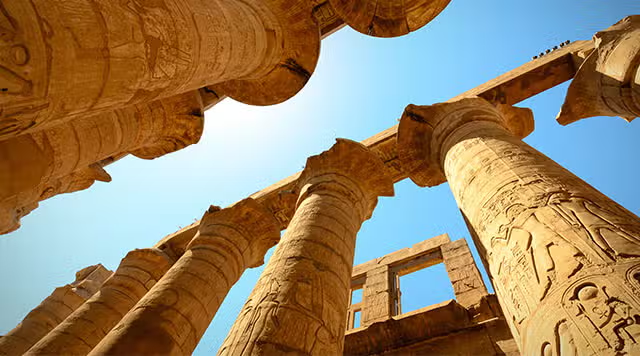
If you do one thing in Karnak, do the Hypostyle Great Hall. Built under Sethi I and Ramses II (19th dynasty, 1290-1213 BC). 134 columns. Yes, 134.
Architecture and dimensions
Dimensions: 102 meters by 53 meters. Two rows of giant columns (23 meters high). The 12 central columns have capitals in the shape of an open papyrus flower. The side columns, firm. The ancient Egyptians made architectural codes, it was not random. (arrive late in the afternoon, the shadows of the columns are crazy).
Painted starry sky. Walls covered with hieroglyphs and bas-reliefs. The majority of the original colors have disappeared (vandalism, bad weather, calcification). But traces remain: blue lapis lazuli, red ocher, malachite green. As a result, you see bits of color on the upper walls.
Sensory experience
You enter. It's dark. Your eyes adjust. And then the columns emerge from the heat fog (35°C at 2 p.m.). It's claustrophobic and majestic at the same time. So, you stay there for 1h30. Walk between the columns, photograph, read the hieroglyphs. It is the most imposing room in Karnak.
Section By Section: Your Optimal Journey
You have 4-5 hours. Here is the logical order (site order). If you do this, you have 70% Karnak without dying from fatigue.
1. First Pylon and Courtyard (20 min)
You enter through the Courtyard of the First Pylon. Main facade of the site. Massive walls, bas-reliefs of Ramses II defeating enemies. It's ancient propaganda: "Look how strong I am." Go straight, ignore the souvenir sellers (by the way, prices are negotiable by 40%). The courtyard itself is vast, empty, often overheated.
2. Great Hypostyle Room (1h30)
That's all. You read above. You take your time. No rush. If you have a guide, this is where he speaks the most (hieroglyphs, symbolism). If you are alone, bring a booklet (50 EGP at the entrance).
3. Sacred Sanctuary of Amun-Re (45 min)
Behind the Hypostyle Room. It's more deteriorated. Headless statues (headless, torn off by fundamentalists or thieves). Hieroglyphs erased. But it's authentic. This is where the statue of Amun (gold, lapis lazuli) was before being stolen. Adjacent rooms for priests and rituals.
4. Khonsou Temple (30 min)
Small annex temple dedicated to the son of Amon (Khonsu, god of the moon). It is less damaged than the main sanctuary. Interesting pylon with military bas-reliefs. It’s a worthwhile detour if you have time. If you're tired, ski it.
5. Sacred Lake (20 min)
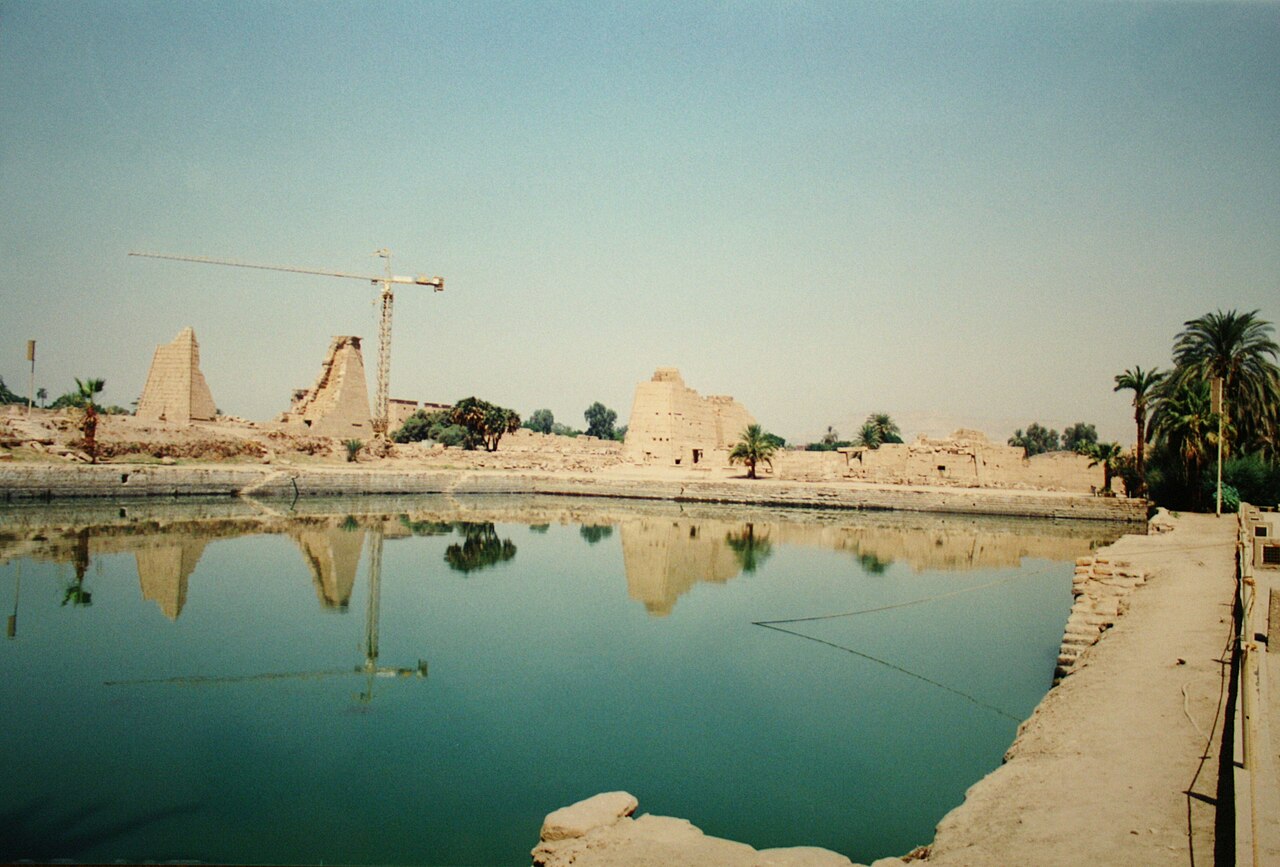
An artificial pool where priests performed their ritual ablutions. Size: 130m x 80m. Water today? Muddy, unattractive. But it is an interesting photo spot at sunset (reflection of the temple on the water). In short, it's quiet, far from the chaos of the central complex.
Local advice: If you have 6 hours, add the Temple of Mut (south of the Sacred Lake). It is a detour (1 km on foot), little visited, with interesting chapels and uphill streets. That said, there are stray dogs there. Not aggressive but annoying.
6. Alley of the Sphinxes (optional, 15-20 min)
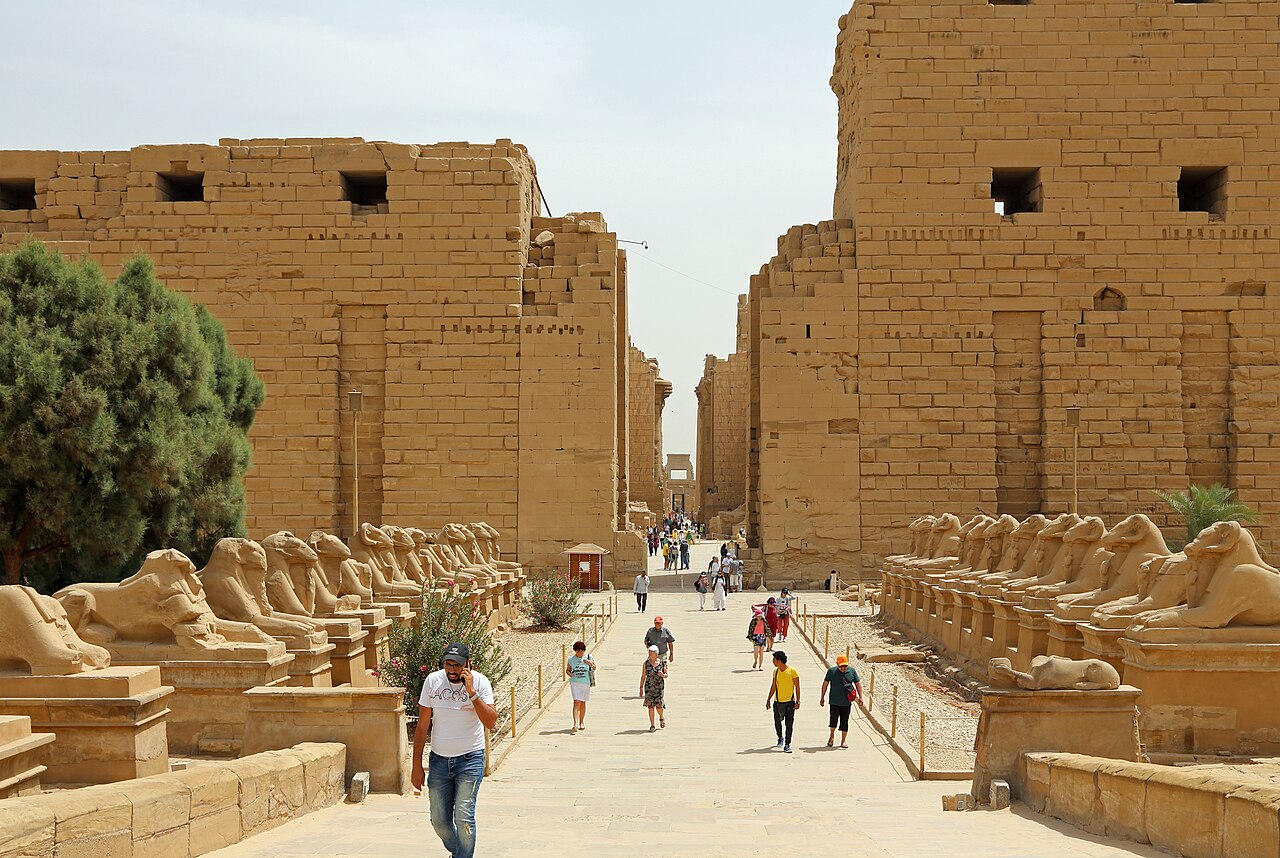
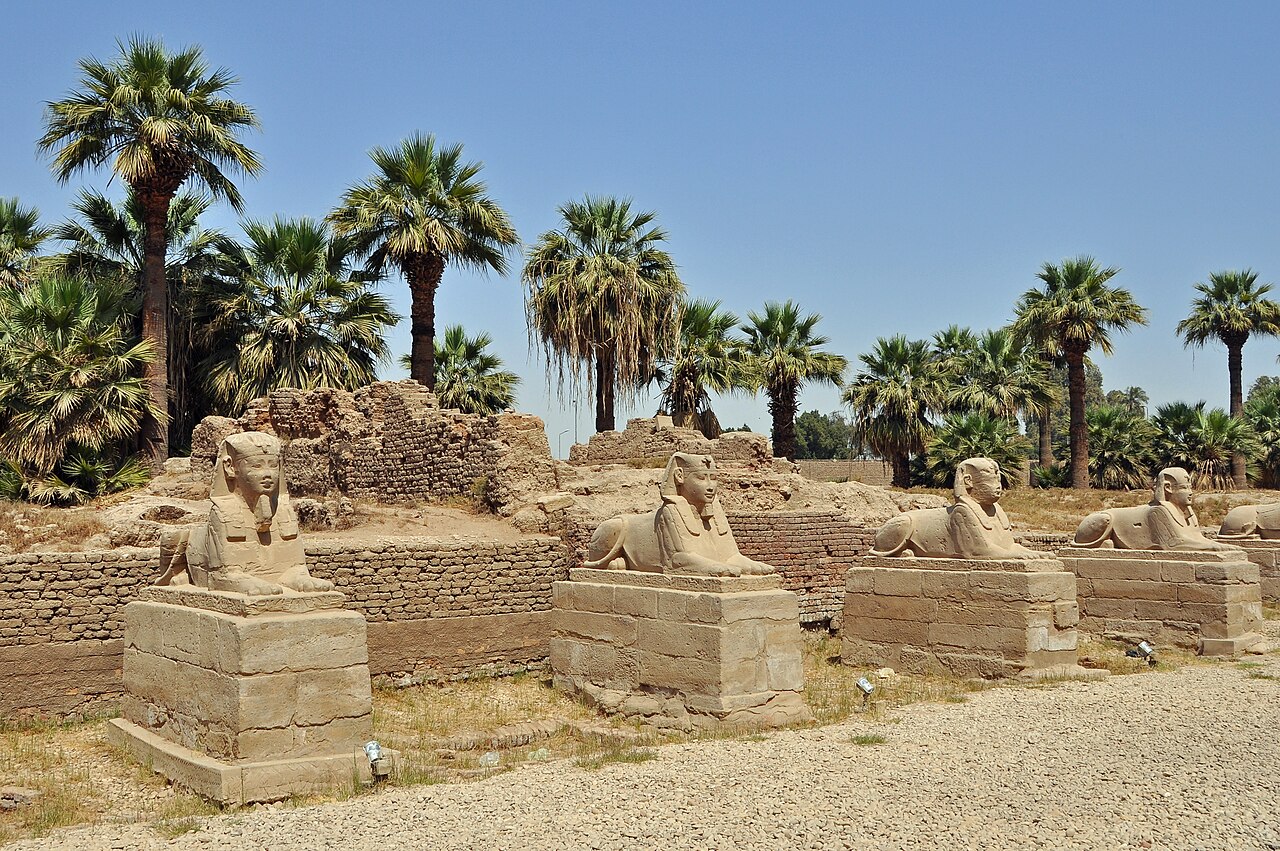
2.7 km walkway connecting Karnak to the Luxor Temple. Restored in the 2000s. It is touristy now, not like before. You can walk one segment (200-300m) south. Stone sphinx, classic Egyptian avenue. If you have time, yes. If you're exhausted, no.
Obelisks of Karnak: The Pointed
Three major obelisks remain in Karnak (others were taken away: one in Rome, one in Istanbul). They mark the stages of the cult of Amon.
Obelisk of Thutmose I (42 meters)
Older. Almost intact. Hieroglyphics still legible. This is towards the south entrance to the Great Hall.
Obelisks of Thutmose III (replicas in red granite)
Later. Less visible because the site was built around them. You will come across them while exploring.
Prices and Practical Information
General admission
600 EGP. Children 6-12 years old: ask at the ticket office. International students (valid card): 300 EGP. Cheaper than expected.
Sound and Light (Night Show)
Charged on top of admission. Two sessions: 6:30 p.m. and 8 p.m. (depending on season). Duration: 1h15. Projection of light on the facades of the temple + historical narration. Available in French on certain days (check before).
The problem ? It's a banal spectacle. The lights illuminate the temples, but it's not revolutionary. Daytime is best for architectural details. That said, the atmosphere at night is different, almost spiritual. To your preferences.
Schedules
Opens at 6 a.m. all year. Last admission: 4 p.m.
Want a serious archaeological guided tour? Our certified guides in Luxor do 5-hour tours with complete historical context (dynasties, cults, architectural developments). £120 for 2 people, English-speaking guide included.
Book a tourResponse in less than 2 hours · 7 days a week · No obligation
Best Time to Visit Karnak
Two variables: heat and crowds.
October-November and February-March: sweet spot. 22-30°C. Average crowd (200-400 tourists per day). Quite a few other sites, December-January: tourist peak. 18-25°C (ideal for the weather). But crazy queues at the entrance. The morning (7 a.m.-10 a.m.) is less worse than the afternoon.
April-May and September: avoid. 40-45°C. You will sweat. The interior corridors become ovens. And few tourists mean few water sellers.
Ideal visiting time
7 a.m. arrival. Great Hypostyle Hall at 7:45 a.m. (before the groups). You have 3 hours alone. At 10:30 a.m., it becomes touristy. Golden hours for photos: 7-8:30 a.m. (soft light, no harsh shadows). Noon-3 p.m.: avoid (overwhelming heat, black shadows, few visible details).
Local Tip: French tourist groups disembark between 9 a.m. and 10 a.m. German groups, 10 a.m.-11 a.m. The Chinese, 11 a.m.-12:30 p.m. If you want the opposite of the crowds, come after 3 p.m. (sunset hours). You have 2-3 quiet hours before closing.
A visit to Karnak fits perfectly into a well-planned stay, especially if you choose the right dates. Indeed, the budget for a trip to Egypt depends largely on your choice of activities. Also discover how to integrate Karnak into a Nile cruise.
Combine Karnak with Other Sites in Luxor
Luxor is dense. Too dense for a day if you really want to do them well. Short jumpsuits:
Karnak + Luxor Temple (1 day)
Distance: 2.7 km (alley of the sphinxes connects them). Karnak in the morning (7 a.m.-12:30 p.m.), Luxor Temple in the afternoon (3 p.m.-5 p.m.). You see two major temples in one day. Feasible. Not ideal (you'll run a bit) but doable. For more details on Complete Luxor.
Karnak + Valley of the Kings (1 day long)
East bank (Karnak 7 a.m.-12:30 p.m.). Crossing the Nile at noon. West Bank (Valley of the Kings 2 p.m.-5 p.m., including Colossi of Memnon). You see temple AND tombs. Long. Tiring. But thematically coherent. View our Luxor-Aswan itinerary.
Karnak alone (best choice)
If you only have 1 day in Luxor, do Karnak in full (5-6 hours). Then, stroll on the Nile in the evening. Luxor Temple at sunset (1 hour). You have a consistent day without burnout. If you prefer a less rushed approach, the Edfu Temple offers a more intimate and better preserved experience.
What You Would Do Wrong Without a Guide
Karnak solo is confusing. Here are the pitfalls.
You think you've seen it all when you're at the Hypostyle Great Hall
False. It's the center. There is much more of the site after. You are halfway there.
You wasted 45 minutes looking for the Sacred Lake
It's to the north, the opposite direction of most tourists. Signs are rare. With a guide, 5 minutes to get there.
You are photographing the wrong obelisks
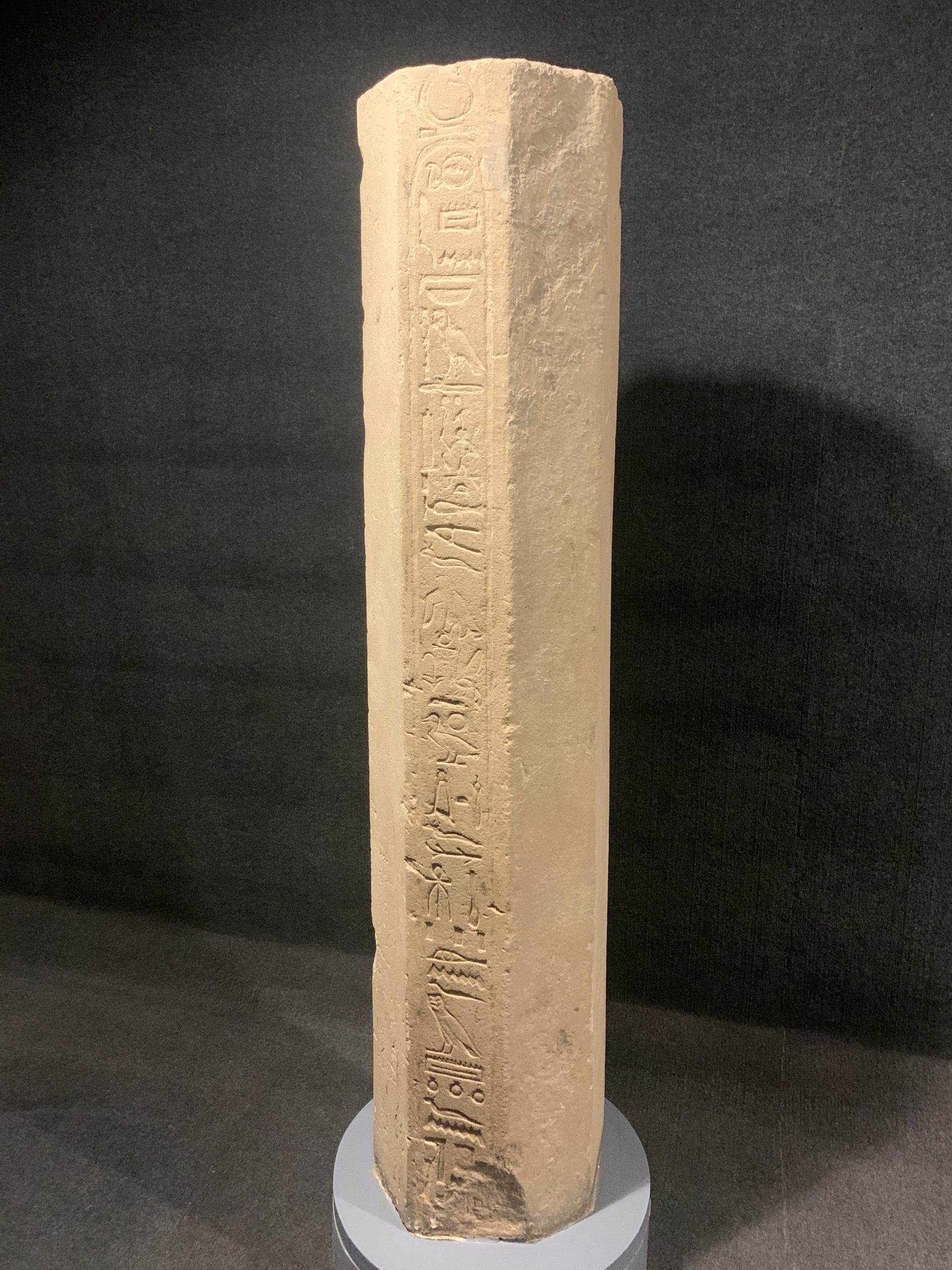
There are three obelisks. Not easy to differentiate without context. A guide points out “this one is from the 19th dynasty, that one is from the 18th”. It's not just the photo, it's the understanding.
5-6 hours seem long? Not when it's well guided. Our packages include transportation from your hotel + English-speaking Egyptologist guide + local lunch. Full Karnak (5h) from £70 per person (min 2).
Get a quoteResponse in less than 2 hours · 7 days a week · No obligation
Practical Tips
Before leaving
Comfortable shoes. Non-negotiable. You would walk 3-5 km on uneven ground. Flip flops, no. Sneakers. 2-3 liters of water. SPF 50 sunscreen. Hat. Camera with charged battery (4 hours of minimum use). Small notebook to write down hieroglyphs if that fascinates you.
Photography: key points
Great Hall: 7 a.m.-8 a.m. before groups arrive. Shadow contrast creates interesting paintings. No flash (prohibited and ruins photos). ISO 1600, aperture f/5.6. Obelisks: southwest side for warm light. Sacred Lake: sunset (4:30 p.m.-6 p.m.) for reflection.
Food and drink
Coffee outside Karnak: expensive and bad (12-15 EGP for coffee). Bring a thermos of cold coffee if you are passionate. Catering nearby (100-150 EGP for decent sandwich). At midday, you better leave the site to eat (few options there).
Frequently Asked Questions
What is the difference between Karnak and the Luxor Temple?
Karnak = temple of the daily worship of Amon (vast, complex, 30 centuries of construction). Luxor Temple = more intimate sanctuary, built for festivals (Opet) where Amon left Karnak to symbolically visit Luxor. Luxor smaller, better preserved, more “beautiful”. More “historical” Karnak.
Is 4 hours really the minimum?
Honestly ? 3h30 if you are fast and physical. But you're missing details. 5-6 hours is better. 7h+ if you are a hardcore archeo-fan.
Is there a light and sound show that’s worth it?
Frankly no. It’s touristy and expensive (an extra charge on top of admission). During the day it's a thousand times better to see details. If you like nightlife, go to Luxor Temple at sunset instead.
Do you really need a guide?
Solo? Possible. But 50% less satisfying. Hieroglyphics and symbolism are addictive crack. Without explanation, it's just "old walls". A guide turns that into understanding.
Are you still hesitating between going alone or with a guide? Try our flexibility package: pick up from the hotel, guide accompanies you for the first 2 hours for historical context, then you explore alone if you want. £50/person.
Request the flexible planResponse in less than 2 hours · 7 days a week · No obligation