
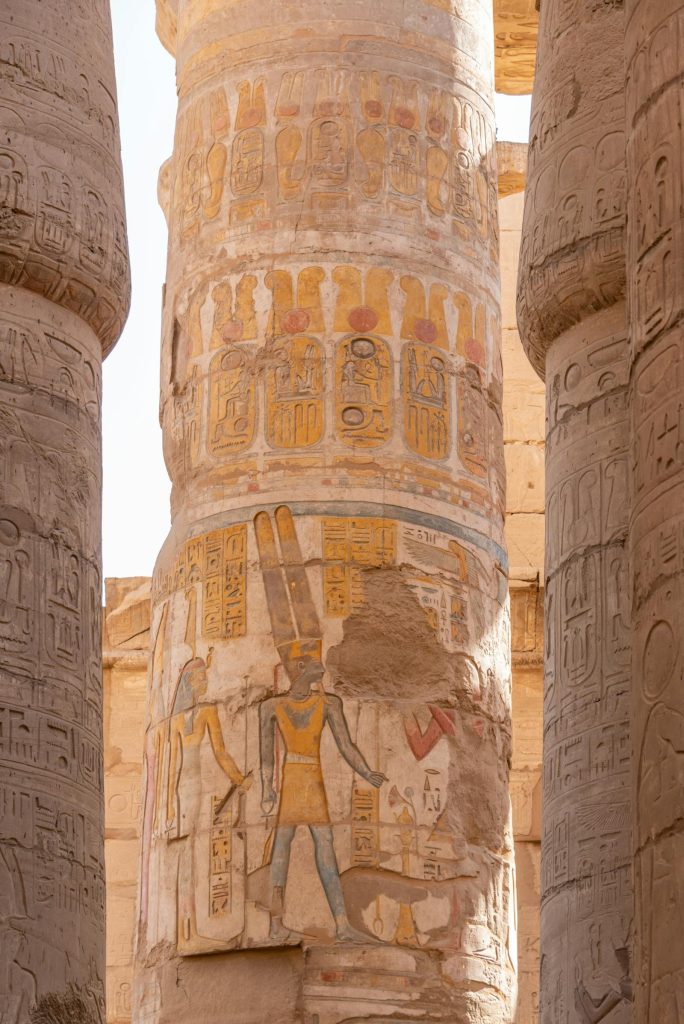
Karnak needs no introduction, nor does the Valley of the Kings. Médinet Habou, though? Most visitors have never heard of it, and it repays the detour many times over. Here you can stand alone in front of the walls with no coach party jostling behind you. The carvings survive in such condition that Ramesses III might have laid down his chisel last week. The colours survive too, and not merely faint traces: genuine painted surfaces. Nowhere else gives so clear a picture of how these temples once appeared. Planning a Nile cruise? Check the best months to travel. Follow our Luxor to Aswan route.
Why Medinet Habou Is Better Than Karnak (Frankly)
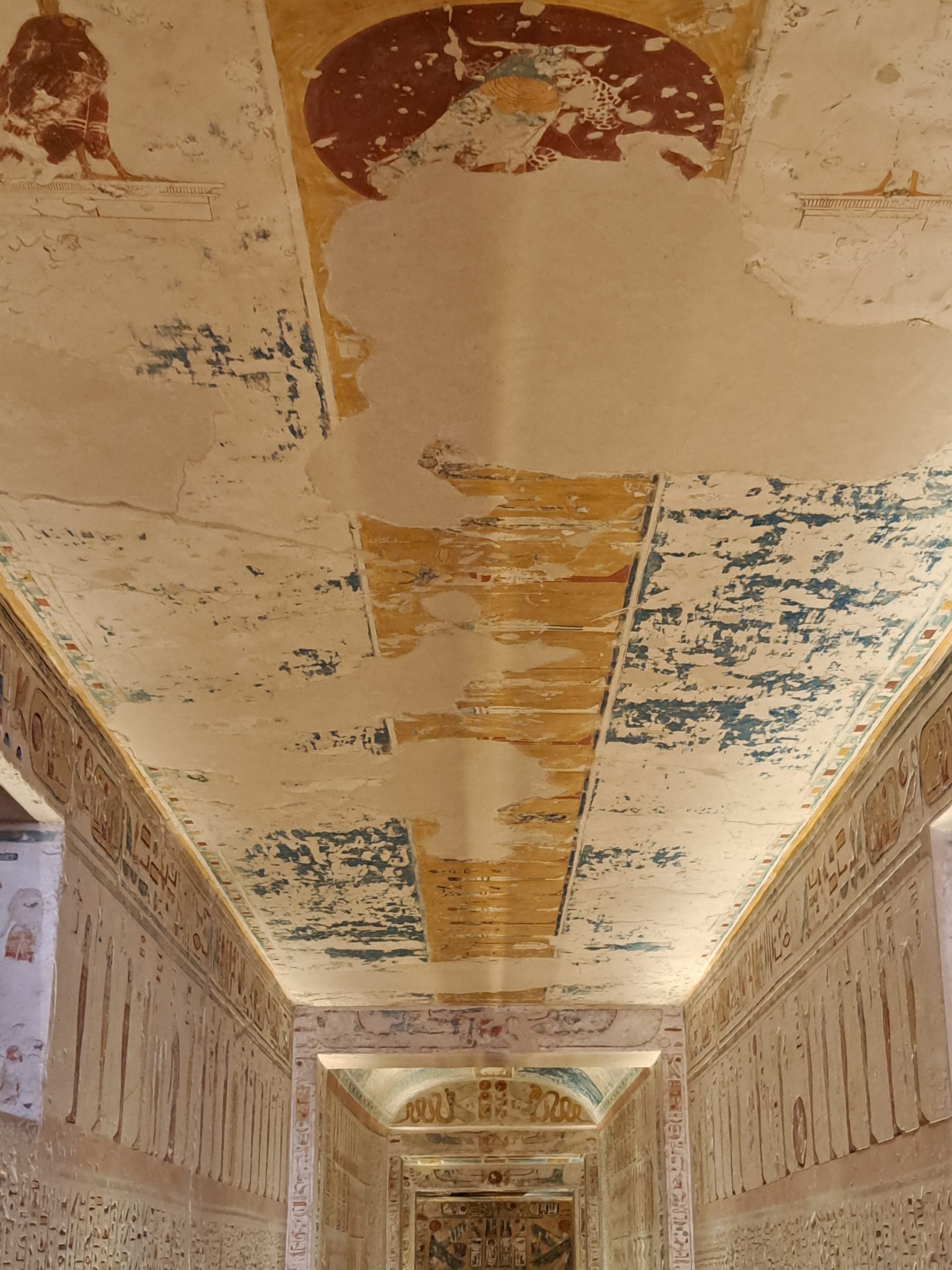
Wait, we don't say that lightly. Karnak is huge. Gorgeous. But it's also full of tourists, worn by 4000 years of history, and the reliefs? Often erased. Médinet Habou is different. It is the mortuary temple of Ramesses III, built in the 12th century BCE, and it has retained something that few Egyptian monuments possess: visual integrity. See itinerary. See itinerary.
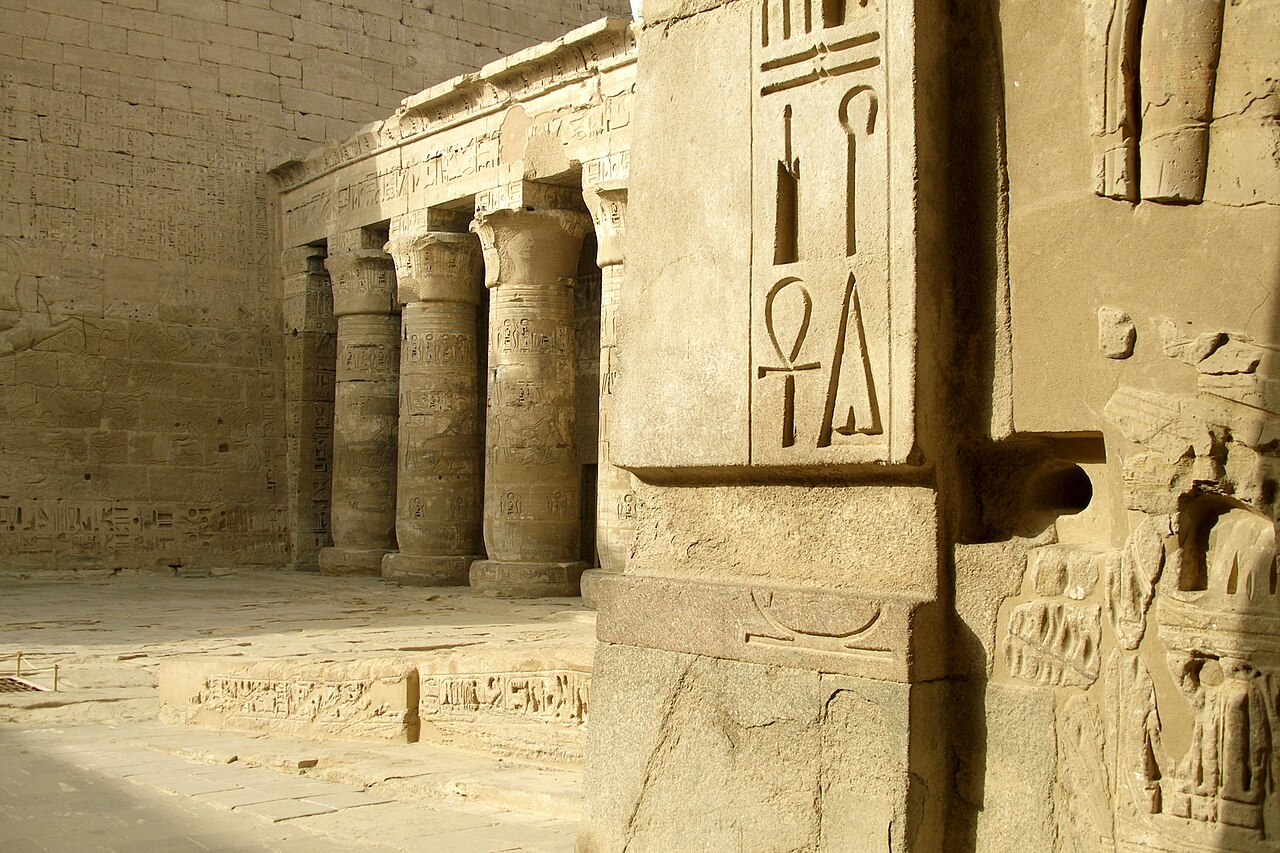
The reliefs are clear. Readable hieroglyphics. And where Karnak shows you ghostly traces, Médinet Habou shows you details. Faces. Expressions. War scenes where we really see the soldiers, the horses, the Sea Peoples fighting. It's concrete. It's alive. No need to guess what was there. See itinerary.
And, to be blunt, the crowds are halved. Your guide is actually audible. You can breathe. Your photographs will not have 15 strangers wandering through them.
The Mortuary Temple of Ramses III: Architecture and History
Calling Medinet Habou a temple undersells it. It was also a stronghold, a palace and a seat of government. Ramses III, the pharaoh who beat back the Sea Peoples (an alliance of invaders from around the Mediterranean), raised it to secure his afterlife and to broadcast his own story: his triumphs, his might. Our Nile itinerary shows how it fits in.
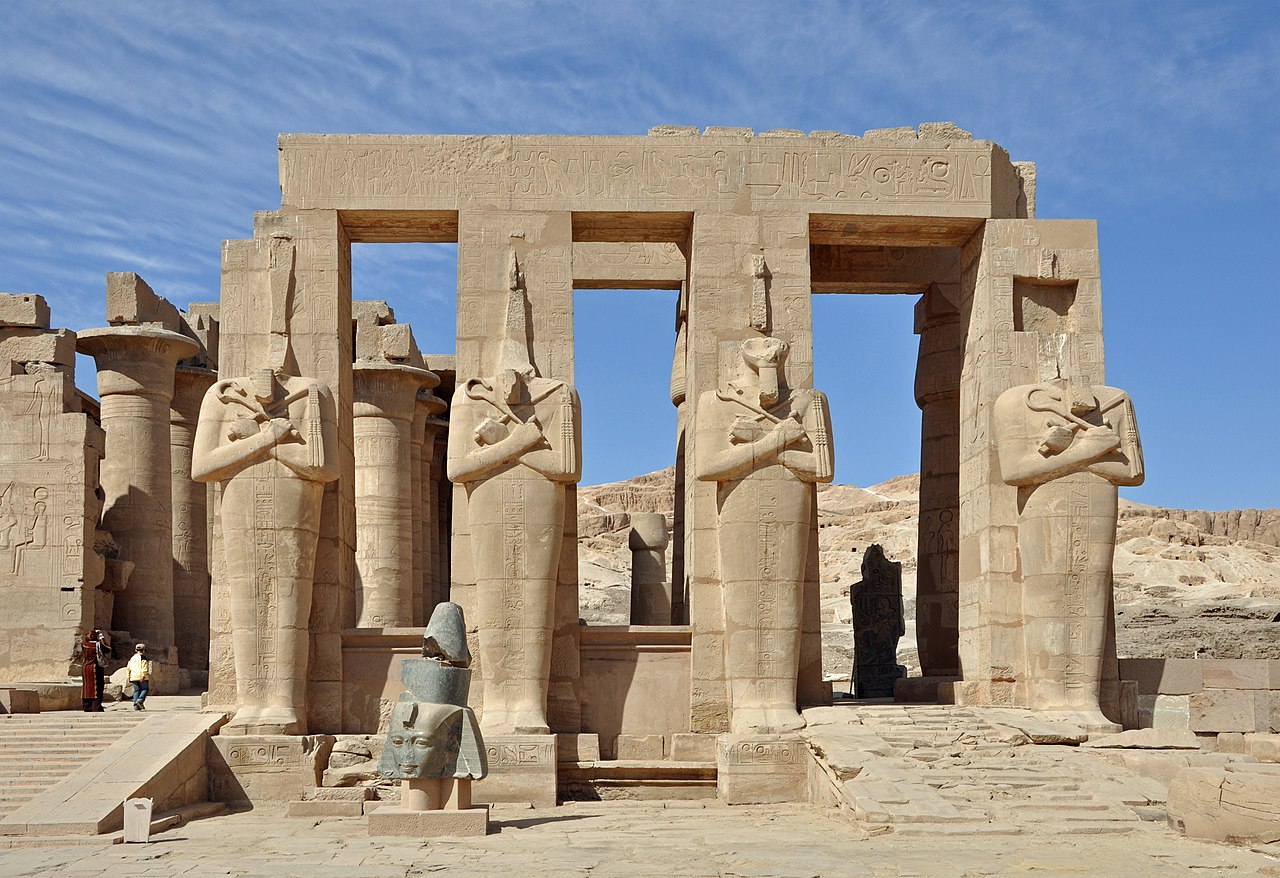
The central structure is the mortuary temple itself. Two massive pylons (fortified gates), followed by two open-air courtyards, then hypostyle rooms (with columns everywhere). But what makes Medinet Habou unique is that the complex also retains the Migdol. It is a Syrian style fortified gate. Are you wondering what such a door was used for in an Egyptian temple? Good question. Ramses III wanted one, period. Perhaps to mark that he had defeated the invasions from the North. Archaeologists are still debating. See itinerary.
The building runs to roughly 150 metres in length. Karnak is bigger, but this is tighter, more complete. Carved scenes cover the inner walls from end to end. It is astonishing.
The Best Preserved Reliefs in Egypt
Here is what matters most. The carvings at Médinet Habou defy every expectation. In the typical Egyptian temple the reliefs are eroded, smashed or rubbed away. Here you can pick out individual feathers on the soldiers' headgear. No exaggeration. Our day-by-day route and shore excursions both include it.
The scenes represent daily life, religious rituals, and especially the military victories of Ramesses III. There is an entire sequence that shows the battle against the Sea Peoples. The ships. The warriors. The start of the Egyptian army. It's like a comic book carved in stone.
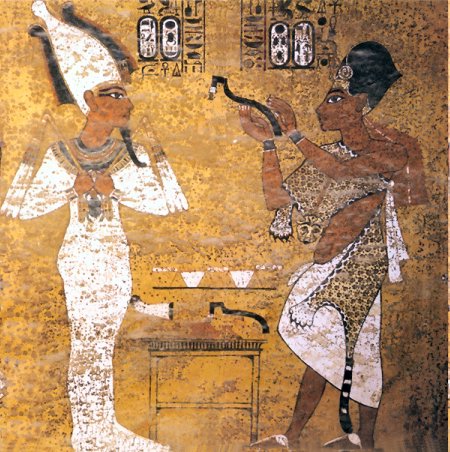
The colors that still remain? Lapis blue (for hair), red ocher (for skin), white (for linen), black (for eyelashes). This is an ancient Egyptian rainbow. When the sun hits the walls at dawn, you really see how colorful these temples were. It's a revelation.
Battle Scenes and Sea Peoples
This is the core of Médinet Habou. Twice, in the 8th and 12th years of his reign, Ramses III met the Sea Peoples in full-scale invasion. They had sailed from around the Mediterranean, most likely Libya, Sicily, Cyprus and Hittite lands, and Egypt was in real danger. Ramses III turned them back, and was proud enough to have every phase of the fighting cut into the walls of his mortuary temple. Read the full Luxor to Aswan itinerary.
The level of detail is remarkable. You can pick out the Sea Peoples by their feathered helmets and distinctive weapons. The Egyptians, by contrast, are drilled and orderly, riding into battle on chariots, with archers and spearmen in support. It is a genuine military record, two civilisations colliding before your eyes.
What gets you is the humanity of it. These are not dry royal emblems but men in combat, panicking horses, the wounded. It hits hard.
The Holiday Calendar and Royal Life
War is not the whole story. Médinet Habou records sacred and everyday life as well: festival scenes, processions, the king making offerings and the gods answering him. Think of it as a permanent calendar cut into the stone. More in our Nile route.
An entire section shows Ramesses III hunting. Him in his tank, shooting animals with a bow. It's a classic theme in Egyptian art, but here it's shown so dynamically that you can almost feel the movement.
Do not skip the royal palace next door. Private apartments, service quarters, walls that still stand, inscriptions: you get an almost tangible sense of the pharaoh's domestic world. One caveat: the carvings are sparser here. This is architecture rather than a gallery of art.
The Migdol: The Unique Fortified Gate
Medinet Habou's Migdol is a curiosity in Egyptian building. It is a square defensive tower with crenellations (narrow slots for archers) modelled on Syrian fortifications, something almost unheard of in Egypt. What made Ramesses III want one? Our Luxor to Aswan route takes you there.
The hypotheses are rife. Maybe it really was a defensive door. Perhaps it was symbolic, representing victory over the northern invaders. Perhaps Ramesses III just wanted to show that he knew foreign architecture and could do with it what he wanted. Archaeologists don't really know. But it's there. Robust. Imposing. Different.
Inside the Migdol, you find an access door, corridors, stairs. It's good for photos, it really gives the impression of a fortress.
How to Access Medinet Habou
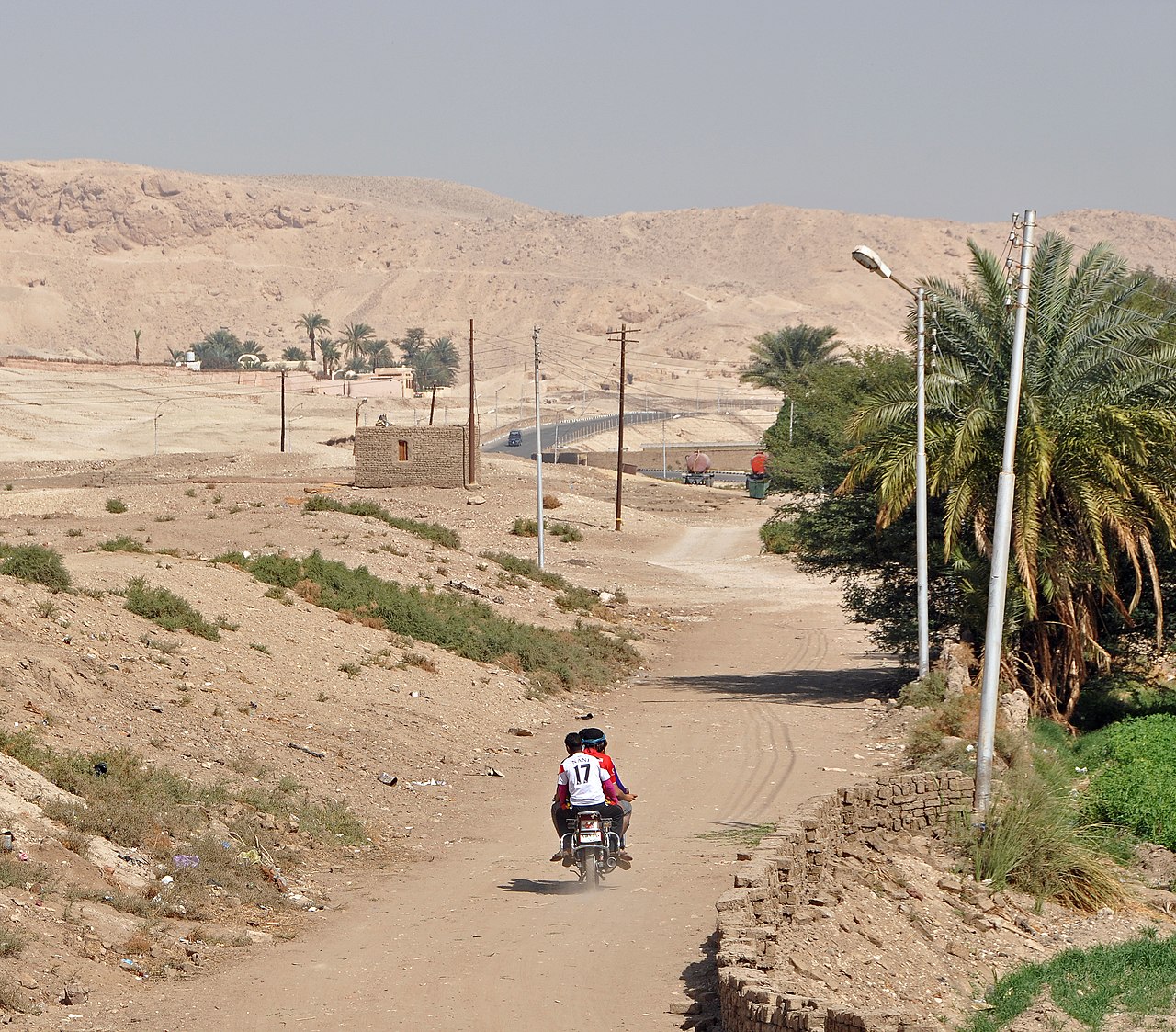
You will find Médinet Habou on the Nile's west bank at Luxor. Getting there is simple enough: from Luxor's centre on the east bank, two routes present themselves. Our full itinerary covers both banks.
Option 1: Boat + taxi. Take the local ferry over the Nile (very cheap, 2-3 euros), then on the far bank find a taxi to Médinet Habou. Expect 5-10 euros, depending on how well you haggle. It is the more characterful choice: you get the river, and you get the feluccas (the traditional sailing boats). Our route guide has the timings.
Option 2: Organized tour. Your hotel can arrange transportation. A guide. You get into an air-conditioned mini-van. It's less adventure, but more comfortable. Around 25-35 euros per person for half a day.
Personally ? The boat is nice. It's part of the journey. You are in Egypt, not Disneyland.
Opening hours are 6am to 5pm daily (the usual pattern). From the ferry landing it is roughly 2 km, a pleasant enough stroll, or 2-3 euros by calèche (horse-drawn cart).
Entry Prices and Combos
Entrance to Médinet Habou costs around 4 euros (220 EGP at the 2026 rate). This is within the normal range of Egyptian sites. The Valley of the Kings costs more (25 euros). Karnak costs the same (12 euros). So it's fair. See itinerary.
If you take a combined west bank ticket (Valley of the Kings + Medinet Habou + Temple of Medinet Hatschepsut), count around 40-45 euros. It's more economical than buying entries one by one. See itinerary.
Tip: reception desks also sell photocopies of French guides (3-5 euros). Useful if you don't speak English and your guide doesn't explain everything. But honestly, with a good French guide, it's worth it.
Seeing Medinet Habou and the Valley of the Kings Together
Most people do the Valley of the Kings in the morning (too hot in the afternoon, and tourists are crowded there) and Medinet Habou in the late afternoon. It's a rich day. It's manageable. See budget. See itinerary.
The Valley of the Kings is detailed in our complete guide to Luxor. Tombs of pharaohs. Caves. Murals in burial chambers. It's touristy. It's impressive. But it's crowded.
Médinet Habou is the quieter of the two. Its mortuary-temple carvings recount the king's life as a story, whereas the tombs read more like catalogues of deities and burial rites. The two sites complete each other. See the Luxor to Aswan route.
If you really have time, also check out the funerary temple of Montouhotep Nébhépetrê on the west bank. It's a little further, but it's an architectural masterpiece. Almost no one goes there.
Why You Should Really Go to Medinet Habou
Because it is a temple where you can actually feel ancient Egypt. Not just like an abstract idea or a photo. It's the colors. These are the facial expressions on the reliefs. It’s the relative silence of the site. It was the architect who thought of every detail.
Ramses III lived 3200 years before you. He won battles. He built a temple for people to remember him for eternity. And you ? You are there. You look at him. Eternity works.
Fewer tourists come here than to Karnak or the Valley of the Kings, and that changes the whole experience: closer, more genuine, quicker to absorb. Your guide gets to speak properly. Your brain gets a chance to take it all in.
And, put simply, no reliefs in Egypt are in better shape than those at Medinet Habu. Anyone drawn to archaeology, pharaonic art or the ancient world in general should treat it as essential: a lesson written in stone and colour. Check the day-by-day route.
Practical Tips for Your Visit
Water and hydration: Shops are scarce on the west bank, so carry plenty, at least 2 litres each. The heat is unforgiving.
Hat and sunscreen: There is no shadow. Zero. You burn in an hour without protection.
Shoes: Comfortable trainers. The site sprawls, there is a lot of walking, and the stones get hot.
Camera: Médinet Habou places no limits on photography (unlike the Valley of the Kings), so shoot wherever you like. The painted reliefs under a low morning sun make superb pictures. Our route builds in time.
Guide: Try to find a English-speaking guide. It's not cheap (30-50 euros for a private visit), but it changes everything. You really learn history. It's worth the investment.
Time: Allow 2-3 hours of quiet visit. If you want to study all the reliefs in detail, 4 hours.
Do you have questions about Medinet Habou or the West Bank of Luxor? See itinerary.
Our Egypt specialists will put together a bespoke visit, with an English-speaking guide, transport and advice tailored to you.
Warm WhatsApp MessageResponse in less than 2 hours · 7 days a week · No obligation
FAQ: Your Questions about Médinet Habou
Q: Médinet Habou, is it really better than Karnak for the reliefs? See itinerary.
A: Honestly yes. The reliefs of Médinet Habou are better preserved, more colorful, and less faded. Karnak is larger and more impressive in scale, but for quality of detail and color, Médinet Habou wins. Both are worth it, but Médinet Habou is a must for the reliefs specifically. See itinerary. Consult excursions.
Q: When in the day should I go?
A: First thing (6am-8.30am) or later on (2pm-5pm). The middle of the day is brutal, with 45+ degrees. Get there early and you will have the place almost to yourself, which is wonderful.
Q: How much time should you allow?
A: Allow 2-3 hours at a gentle pace, or 4-5 hours to examine every relief and photograph properly. You could rush it in 1 hour, but you would kick yourself.
Q: Can visitors with limited mobility get around?
A: No. This is an ancient site on rough ground, without ramps or adapted routes, and anyone with mobility problems will find it hard going. Get in touch and we will suggest alternatives.
Q: Can Medinet Habu be paired with the Temple of Hatshepsut? Our route does.
A: Yes, without difficulty. Both sit on the west bank, roughly 15-20 km apart, so a half day there covers the pair. Make it a whole day if the Valley of the Kings is on your list too.
Q: Are there any photo rights or restrictions?
A: No. The Valley of the Kings sometimes bans cameras inside the tombs, but at Médinet Habou you may photograph as you please. Those painted reliefs deserve proper pictures, so make the most of it. More in our route.
A Contrary View: Why Some Prefer Karnak
OK, we can't say that Médinet Habou is better than Karnak without admitting what's special about Karnak. Karnak is bigger. Much more. It's a colossal complex. Several temples. Sanctuaries from different periods. Crazy historical depth. If you are an archaeologist or history buff, Karnak is richer. It is an open-air archaeological museum. See itinerary.
Médinet Habou is denser and tells a clearer story, with less variety of architecture. For the sheer size and intricacy of ancient Egypt, Karnak comes out ahead. For the finest surviving reliefs and a sense of intimacy with Pharaonic art, Médinet Habou takes it. Our Luxor to Aswan plan includes both.
Best of all? See the two of them. 2-3 days in Luxor is ample, no rush.
Combine With Other Tours (Suggested Itineraries)
If you are in Luxor, you will probably visit Medinet Habou in a broader context. Here are some combinations that work well: See itinerary.
Luxor to Aswan, full route: Three days at least: Karnak and Luxor temples on the east bank first, then the west bank (Valley of the Kings, Medinet Habou, Hatshepsout), then Aswan by road or Nile cruise. Route guide.
Nile cruise: If you take a Luxor-Aswan cruise, you go to Luxor. A day trip to the west bank. Médinet Habou is often included, otherwise it is easy to add it. See itinerary.
Best season: November to February. It's the ideal season. After February, it's too hot. Médinet Habou without water and shade is dangerous. See itinerary.
Budget: Entrances to Médinet Habou and the Valley of the Kings cost around 37 euros together. Transport to the west bank around 10-15 euros. Guide (optional) 40-50 euros. Breakfast/lunch: 10-20 euros. Total: 100-130 euros per person for a full day on the west bank. See itinerary.
Photographing Egypt: Few sites in Egypt photograph as well as Médinet Habou: the colour, the shadow, the fine detail. Photographers will be spoilt. Our route allows time for it.
Conclusion: Why Medinet Habou Deserves Your Time
Medinet Habu is not Egypt's biggest temple, nor its busiest, nor the one every documentary lingers on. What it is: among the best preserved, among the loveliest, and among the most revealing about the life, art and power of Egypt's 18th dynasty. Follow the Luxor to Aswan route to include it.
You will see readable hieroglyphs. Reliefs with expressive faces. Battles represented with dynamism. Colors that have survived 3200 years. It's rare. It's precious. It is a direct window into the past.
Anyone heading to Luxor (which you should) ought to put Medinet Habou on the list, and not as an afterthought: as a destination in itself, half a day at the very least, with a guide, first thing in the morning. Then you will understand why this gem gets overlooked so often. Our route shows where it fits.
Ready to explore Medinet Habou and the West Bank of Luxor? See itinerary.
Let our specialists arrange it: transport, an English-speaking guide, the right timing and every practical detail handled.
Plan Now (Personal Guide)Response in less than 2 hours · 7 days a week · No obligation
Questions? Write to usResponse in less than 2 hours · 7 days a week · No obligation
Useful Resources
Further reading for your Egypt trip and this visit:
- Luxor: the Complete Guide - Every site, temple and museum, plus getting around, eating and staying.
- Detailed Itinerary Luxor-Aswan - 3-5 days on site, how to organize, how much it costs.
- Nile Cruises for 2026 - Which boats stand out, honest pricing, the right season, the sights.
- Best Time to Visit Egypt - Weather, peak and quiet seasons, ideal months for Luxor.
- Budgeting for Egypt in 2026 - Itemised costs, saving tips, the pricey bits.
- Photography of Egypt - The best spots, technical advice, golden hours in Luxor.
- Pre-Departure Checklist - Paperwork, kit, health, jabs, insurance and everything else to remember.
- Egypt Package Tours - Specialist operators, how to choose, pros and cons.
- Shore Excursions - Combined cruise and excursions, what you see, average prices.
Sem Elegant Voyage - Genuine Egyptian journeys for English-speaking travellers. Bespoke routes, local English-speaking guides and immersive experiences, arranged by us since 2018. Explore Luxor or get ready for your trip.