

By the Sem Elegant Voyage team | Revised March 2026
Frankly ? The temple of Edfu is THE visual shock that the guides oversell and which is difficult to experience the first time. For what ? Because we expect Luxor, the grandiose shaken, and we find... an immaculate fortress. (And frankly, that's part of its charm.) In 2026, it's still one of the three best-preserved temples in Egypt - if not the best - and the least overrun with tourists in the Nile Valley. No crowds at 10am. No selfie sticks at the top of the pylon. Just you, the story, and hellish heat.
Got three days on the river? Give one of them to Edfu.
Quick response
Where: 105 km up the Nile from Luxor | Ticket: 150 EGP (around Â) | Allow: 2-3 hours | Go at: 7-9am or 4-5pm | By boat: 95% of cruises call at Edfu
Why Edfu surpasses Dendera and Abydos (yes, that's my opinion)
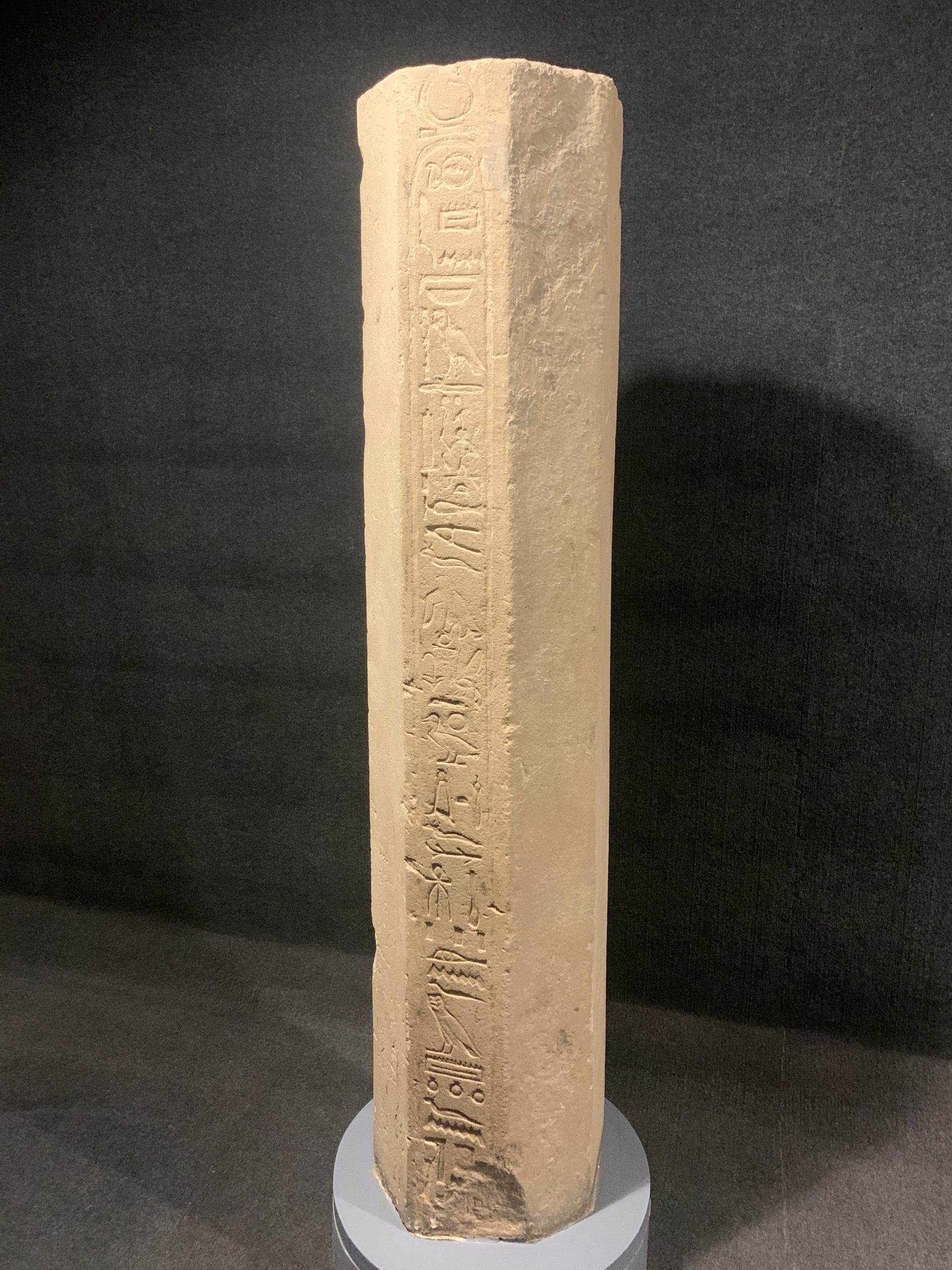
First, the numbers. The Edfu Temple dates from the late Ptolemaic period (237-57 BC), so it has had 2,000 years to turn into a ruin. And then... he didn't transform. For what ? Sand. Landfill. Chance. The Ptolemies built this monument to Horus like a fortress, walls 2.5 meters thick, and geology did the rest - the temple was completely buried until its "discovery" in 1860 by Auguste Mariette. (Mariette cleared the steps with workers, it’s crazy.) Result? 80% of the original iconography is intact. The colors, too - there are traces of Khufu blue paint remaining on the hieroglyphs. Dendera? Bigger, but bombarded by iconoclasts. Abydos? Beautiful, but damaged.
The sanctuary of Horus that we see today? It's almost the original.
The architecture of the temple: the plan in three acts
Good. Structurally, Edfu follows the pattern of the classical Egyptian temple: pylon, courtyard, hypostyle, sanctuary. But there are details that make the journey almost dramatic.
The entrance pylon. 36 meters high. Two massive white limestone towers. The walls bear bas-reliefs of Ptolemy XII crushing his enemies - it's a trope, but it's blown up on a grand scale. As you go up (be careful, old-fashioned staircase, no banister), you see the pharaoh's cartouches enlarge, and the perspective should remind you that you are entering a sacred space. 67 steps. Half the tourists stop halfway.
The open courtyard. 7,000 m² of sand. Columns all around in the shape of papyrus (13 meters high, the capitals are finely chiseled). In the center, the original altar, still there. It was in this courtyard that the pilgrims stood - they never passed beyond this point. Only the king and the clergy could cross.
The hypostyle room (pronaos). 32 columns. Low ceiling (4.5 meters). Low-angle light from the upper slits. The hieroglyphs are discovered as we progress. (It's a thing the Egyptians did: adapt illumination to create narrative suspense.) The reliefs tell the myth of Horus vs Sethy - 6 epic scenes of combat, judgment, apotheosis.
The inner sanctuary. This is where we enter the pure myth. Three small successive rooms, each more intimate. The last (the Adyton) is said to have contained the barque of Horus - the ritual boat where the god sailed each night. The room is 6×4 meters. The walls are covered with blue-black hieroglyphs on white limestone. Photography prohibited inside (you check with the temple guard - rules change).
Horus: the falcon god at the centre of everything
What made the Ptolemies (Greeks, do not forget) raise such a vast temple to Horus? Politics, pure and simple. Horus, son of Osiris, won back his father's throne from the usurper Sethy. The Ptolemies cast themselves as heirs to that same divine claim, so Horus became a mirror of their own right to rule. The whole building turns into a declaration: “We are Egypt's rightful kings.” This from men who spoke Greek and most likely dined on Libyan olives back in Alexandria.
Horus appears dozens of times across the carved walls: as a falcon, as a fighter, as a god in triumph. One scene recurs again and again: Horus binding Sethy and delivering him to the pharaoh, a victory sanctioned by heaven. Another shows Osiris crowning his son. And the point of it all?
Succession. Legitimacy. Revenge.
As a visitor, it's important to keep this context: you're not just looking at decoration, you're looking at 2,000 year old propaganda, etched in stone. (And frankly, that's what makes it interesting.)
Calling in from a Nile cruise: the practical side
95% of Nile cruises make a stopover in Edfu. Some stop in the morning, others in the afternoon. If you're on a boat with 150 passengers, you're going to go with 40 other tourists. If you are on a dahabiya (traditional boat), you go there with 8 people. Very big difference in quality of experience.
The route from the landing stage: carriage or on foot?
This is the eternal debate. The temple is about 3 km from the Nile embankment. Two options.
Option 1: The carriage (el-kantareh). This is the “authentic” experience that agencies sell you. You board a horse-drawn buggy, the guide makes a deal with the forklift operator (usually 50-80 EGP per ride for 2 people), and you travel through the local neighborhoods of Edfu. Duration: 15 minutes. Inconvenience ? The horse is often tired (40°C in March is hard for an animal). The road is bumpy. And the "authentic charm" is diluted when you see 8 other carriages full of tourists on the same street. We feel less of an explorer, more of a sheep. That said, it's cheaper than taking a private taxi.
Option 2: On foot (khodj). Serious ? Yes. Let me explain. You leave the boat at 7am (before the heat), you walk peacefully towards the temple with a local Egyptian guide. The walk lasts 30 minutes. You see real life - children going to school, shops opening, Egyptians wondering why you are there. Arriving at the temple, you have 2 hours to explore. Return by carriage because it's hot at noon (it's okay, 15 minutes). Best experience? In my opinion, yes. More money for local people, more stories to tell, fewer clichés.
On a typical cruise itinerary the carriage fare is normally part of the excursion price. So why bother walking? Because a walk stays in the memory far longer than a ride.
Would you like a hand planning your Edfu visit?
Edfu is not to be missed, above all when you are cruising the Nile. Our English-speaking guides steer you past the crowds and decode every hieroglyph of Horus for you.
Contact us on WhatsAppWe answer inside 2 hours · 7 days a week · Nothing to commit to
Timing and price in 2026
Foreign visitors pay 150 EGP to enter, and children 10 EGP. Travelling with a group from your boat? It has already been settled. Prefer to take a taxi from the landing stage and see the temple on your own? Budget another 100 EGP for the return journey.
Best time to go? 7am-9am. Bearable temperature, golden light, fewer tourist buses. Avoid midday (40°C+, you just want water). Sunset ? Magical, but too many people, and the guards close at 6 p.m. (or 5 p.m. in winter).
Average duration of the visit: 2 hours if you read the signs, 45 minutes if you are quick. Take your time. Read an entire bas-relief. Imagine the offering ritual. Sit under a column and listen to the echo of your footsteps on the limestone. (This is where it gets memorable.)
Arrange your priority visit to the Temple of Edfu
In before the crowds, licensed English-speaking guides, a proper telling of the Horus myths and the cosmic battle. Sem Elegant Voyage handles it all.
Book my guided tourWe answer inside 2 hours · 7 days a week · Nothing to commit to
The iconography of the temple: the scenes not to be missed
If you have a English speaking guide, that's good. Otherwise, here are the key points.
Scene 1: The fight between Horus and Sethy (south wall of the hypostyle room). Horus as a giant falcon crushes the hippopotamus Sethy (the visual representation of Sethy). Visual hierarchy? Horus towers over Sethy. It's brutal propaganda. The message? Good vs Evil. Order vs. Chaos. Divine right vs usurpation.
Scene 2: The sacred boat (north wall). Here the barque of Horus ferries the god across the heavens and along the Nile. It is Egyptian cosmology brought to life: the god moves, the universe renews itself and the cycle rolls on. The Egyptians watched the sun rise and set every day, and this boat was their answer to why. Impressive, given the telescope was still 2,000 years away.
Scene 3: The coronation of Horus (open courtyard, east wall). Osiris sets the crown on his son's head while the attendant gods, arms held high, cheer him on. It is the hinge of the entire myth: power handed down, the inheritance confirmed. Seen through Ptolemaic eyes, it is the pharaoh being granted his right to rule.
Detail: Traces of Cheops blue color. Remains of painted hieroglyphs. Looking upwards as you climb the pylon stairs - the sky blue incitures are visible on the cartouches. It's rare to see them. It makes seniority tangible.
Travel budget and regional context
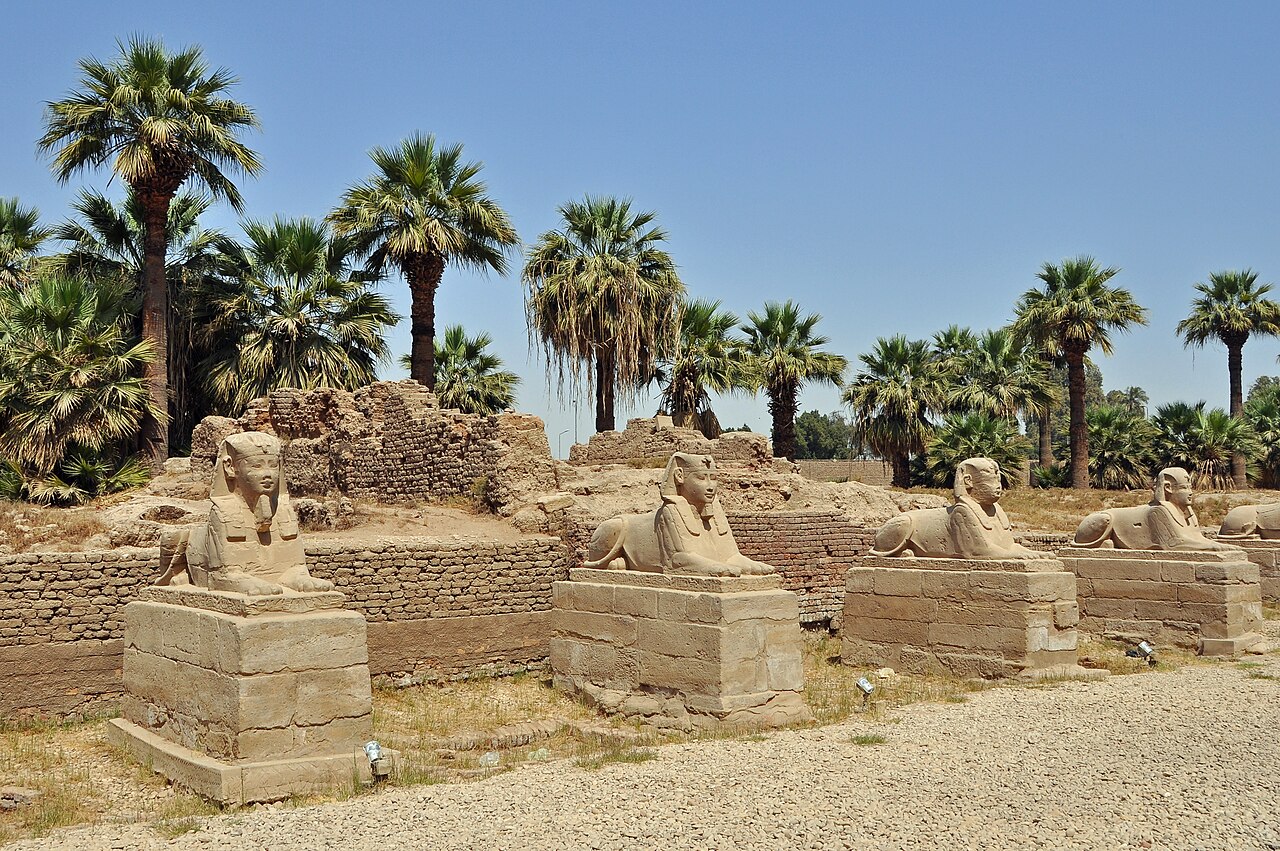
Edfu is part of a broader itinerary: Luxor to the north, Aswan south. A 4-day cruise Luxor-Aswan takes you through Edfu, Kom Ombo, and Aswan. Typical cost in 2026: EGP 1,200-2,000 per person for 4 days (£30-£50), food included. Entrance to the temple (150 EGP) is often outside the main budget - this should be checked.
If you take a trip 10 days in Egypt classic (Cairo + Nile + Aswan + Abu Simbel), Edfu is an almost obligatory step. Don't miss it.
Practical advice and visitor tips
1. Bring water. A lot. 2 liters minimum. The sellers near the entrance sell for 20 EGP per small bottle (expensive for Egypt, normal for tourist sites). Better: fill before leaving the boat.
2. Sun cream and a hat. Shade is scarce. The pylon throws some onto the western side early in the day, but for 80% of your visit you are out in full sun. Tell yourself "it's only 2 hours" and you will go home burnt.
3. Sensible footwear. You cover 2 km over sand and uneven steps. Thin trainers mean a sore back; sandals mean blisters.
4. Take a guide if you are on your own. Expect 100-150 EGP, and it transforms the visit: a guide knows which mythological scenes deserve lingering over and which merely repeat. None with good English? One working in another language still helps; the hieroglyphs read the same.
5. Photography prohibited at the sanctuary. The interior (Adyton and adjacent rooms)? Flash banned, and sometimes device banned entirely. Ask the guard. Rules change. Accept that you are going to keep certain images in memory, not on Google Photos.
6. Talk to the temple guards. I'm serious. The guys who clean and look after the rooms? They know details that no tourist guide mentions. An old broken carriage that has been sitting in a room for 50 years. The true story of the release by Mariette. They appreciate it if you say “salam alaikum” and ask before photographing.
Comparison with other major temples
You will see Luxor, Karnak, then Edfu. It's the natural order. Here's how to mentally distinguish them.
Karnak: Huge, complex, overwhelming. You feel small. Not a visit, an expedition. Each pylon reminds you that you can't see everything.
Luxor Temple: Elegant, well proportioned, right in town. Walls you can lay a hand on, hieroglyphs faded yet still readable. It is the Egypt of the classroom textbook.
Edfu: Whole, untouched, and telling a story. From the gateway to the inner sanctuary you follow the Horus myth in sequence, a proper narrative arc set in stone. (Honestly, that makes the visit far more rewarding than you would expect.)
If you have to choose an in-depth visit, Edfu wins on narrative coherence. If you're looking for raw immensity, Karnak. If you want the urban vibe, Luxor. No bad choices.
Worth knowing: As of March 2026 a small permanent display of photographs stands by the temple entrance, showing the engravings of David Roberts (the 19th century British orientalist). It takes 15 minutes and sets the scene nicely for how Westerners came to "rediscover" the temple. No charge. Well worth it.
Frequently asked questions
Can you manage without a guide? You can, though you would be missing out. A guide explains why Horus is crushing Sethy rather than leaving it at "that's a carving". At Edfu the background is 50% of the experience.
Is it overrun with tourists in 2026? Far less so than Giza, Karnak or Luxor. Groups come through between 9am and 2pm, though never to an unbearable degree. Turn up at 7am and you will have the place to yourself.
What if I'm afraid of heights? You can jump the pylon stairs. The basic temple (courtyard + hypostyle + sanctuary) does not require climbing. Nevermind.
When to go? December-February. March-May: dusty, hot. June-September: brutal heat. October-November: fine.
How long a cruise takes in Edfu? Allow at least 4 days (Luxor to Aswan). With a bespoke itinerary from a local agency, though, you could linger in Edfu for 1-2 days.
Is there a museum in Edfu? No. Archeology remains mainly at the temple. Possibly, a small tourist café at the entrance with souvenirs (reproducible objects at 20 EGP each, nothing sublime).
In short: Edfu is worth far more than a 3-hour stop
The Edfu temple is not just an archaeological site. This is a session with live history. The walls tell the myth of Horus without paraphrase. Architecture marks each emotional transition of the Ptolemaic cult. And frankly, it's the best Egyptian temple you can master in a morning. No wear, no lag, just real estate storytelling.
If your cruise stops in Edfu, let yourself be surprised. It's the temple that we forget in the lists, and that's precisely why it changes your vision of Egypt.
Need help with a Nile cruise?
Sem Elegant Voyage builds bespoke holidays taking in Edfu, Kom Ombo and Aswan. WhatsApp, email or the form: we speak English.
Contact us on WhatsApp