
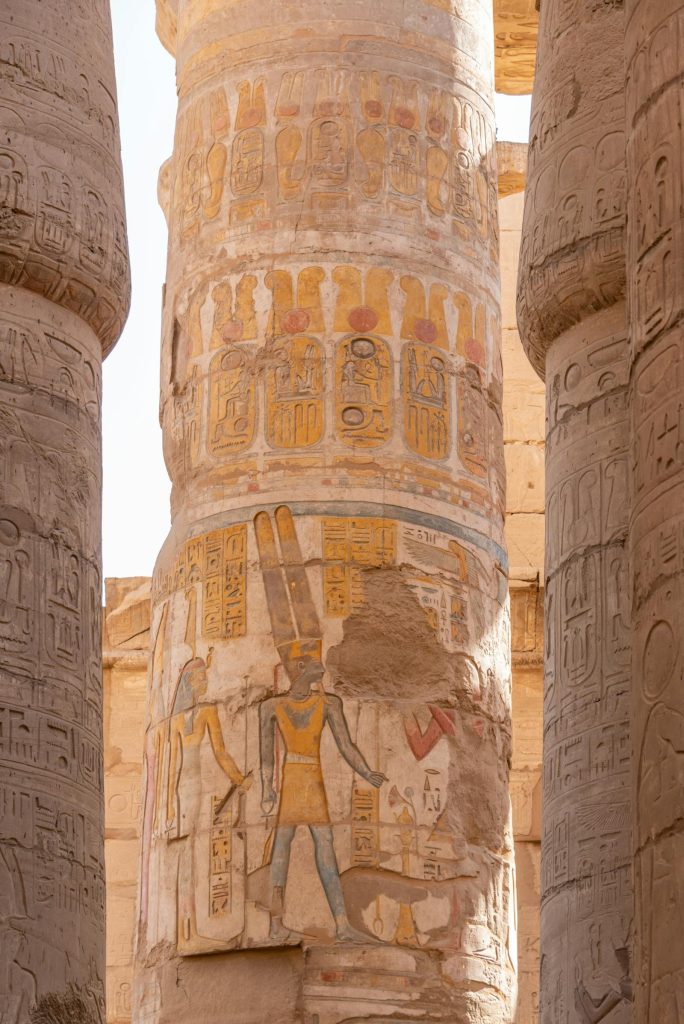
You know Karnak. You know the Valley of the Kings. But Medinet Habu? Honestly, this overlooked temple is worth the trip a thousand times over. It is the kind of place where you find yourself alone with the walls, without 200 tourists stepping on your toes. The reliefs are so well preserved that it looks like Ramesses III finished carving them yesterday. The colors too. Yes, there are still colors. Real polychromy, not just traces. This is where you truly understand what these temples looked like back then. See Nile cruise. Read when to go. View itinerary.
Why Medinet Habu Beats Karnak (Honestly)
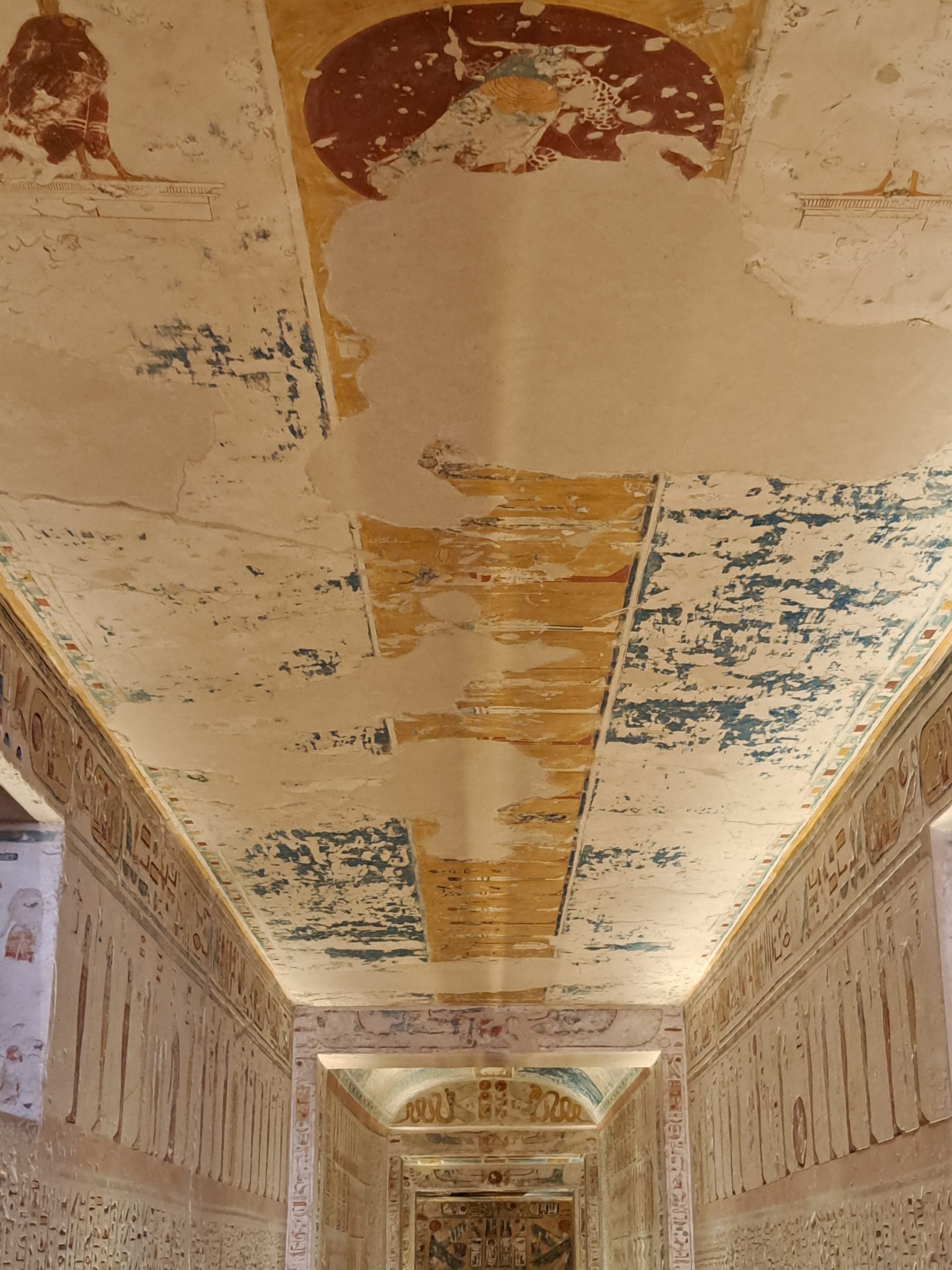
Wait, we do not say this lightly. Karnak is enormous. Magnificent. But it is also packed with tourists, worn down by 4,000 years of history, and the reliefs? Often erased. Medinet Habu is different. It is the mortuary temple of Ramesses III, built in the 12th century BC, and it has kept something that few Egyptian monuments possess: visual integrity. View itinerary. View itinerary.
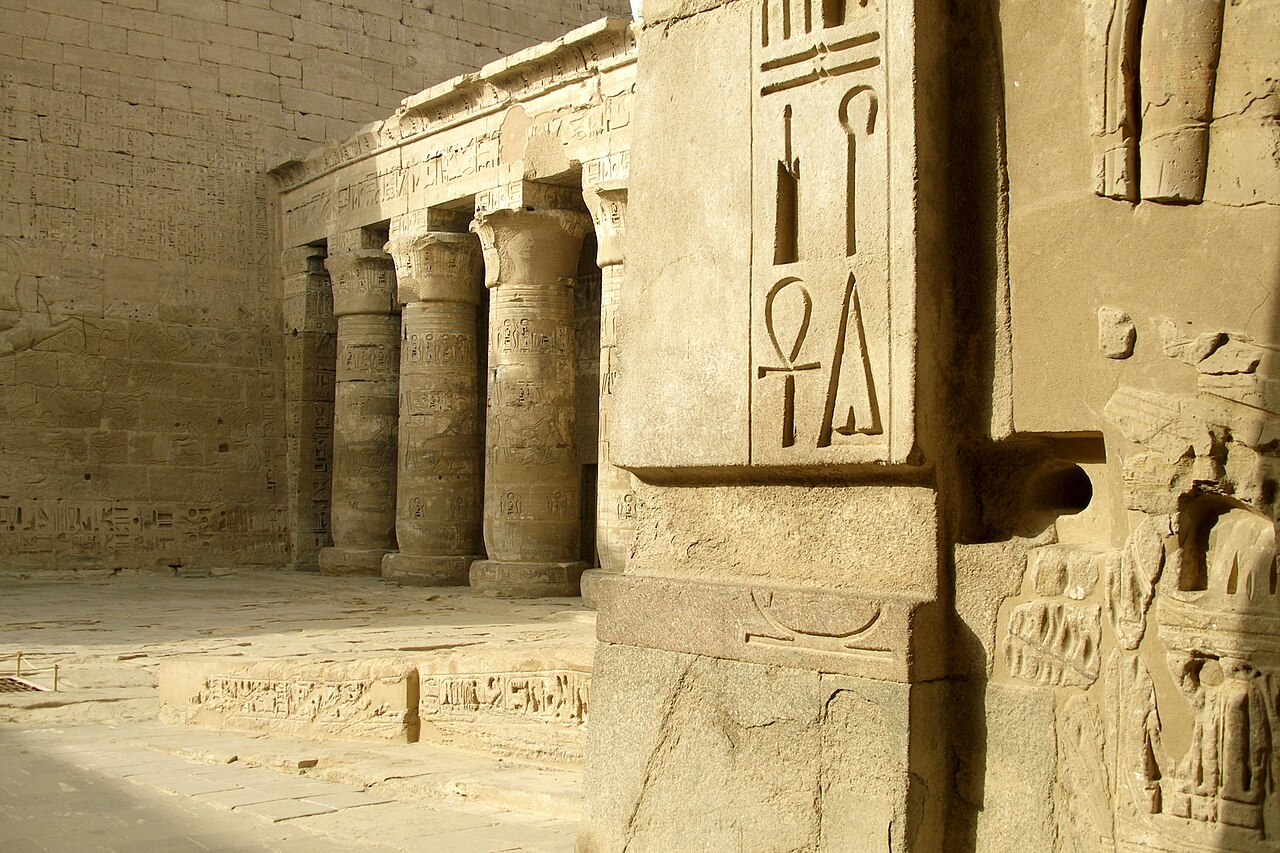
The reliefs are crisp. The hieroglyphs legible. And where Karnak shows you ghostly traces, Medinet Habu shows you details. Faces. Expressions. Battle scenes where you can actually see the soldiers, the horses, the Sea Peoples in the thick of combat. It is concrete. It is alive. No need to guess what used to be there. View itinerary.
And honestly? There are half as many people. You will be able to hear your guide. To breathe. To take photos without 15 people crowding into the frame.
The Mortuary Temple of Ramesses III: Architecture and History
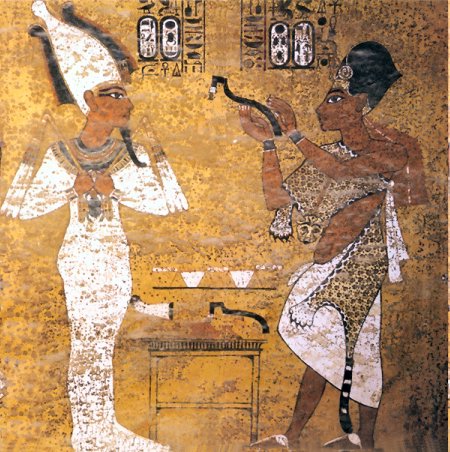
Medinet Habu is not just a temple. It is a fortress. A royal residence. An administrative center. Ramesses III, the pharaoh who defeated the Sea Peoples (a coalition of invading peoples from the Mediterranean basin), built it for his own eternity, but also to tell his story. His victories. His power. View itinerary.
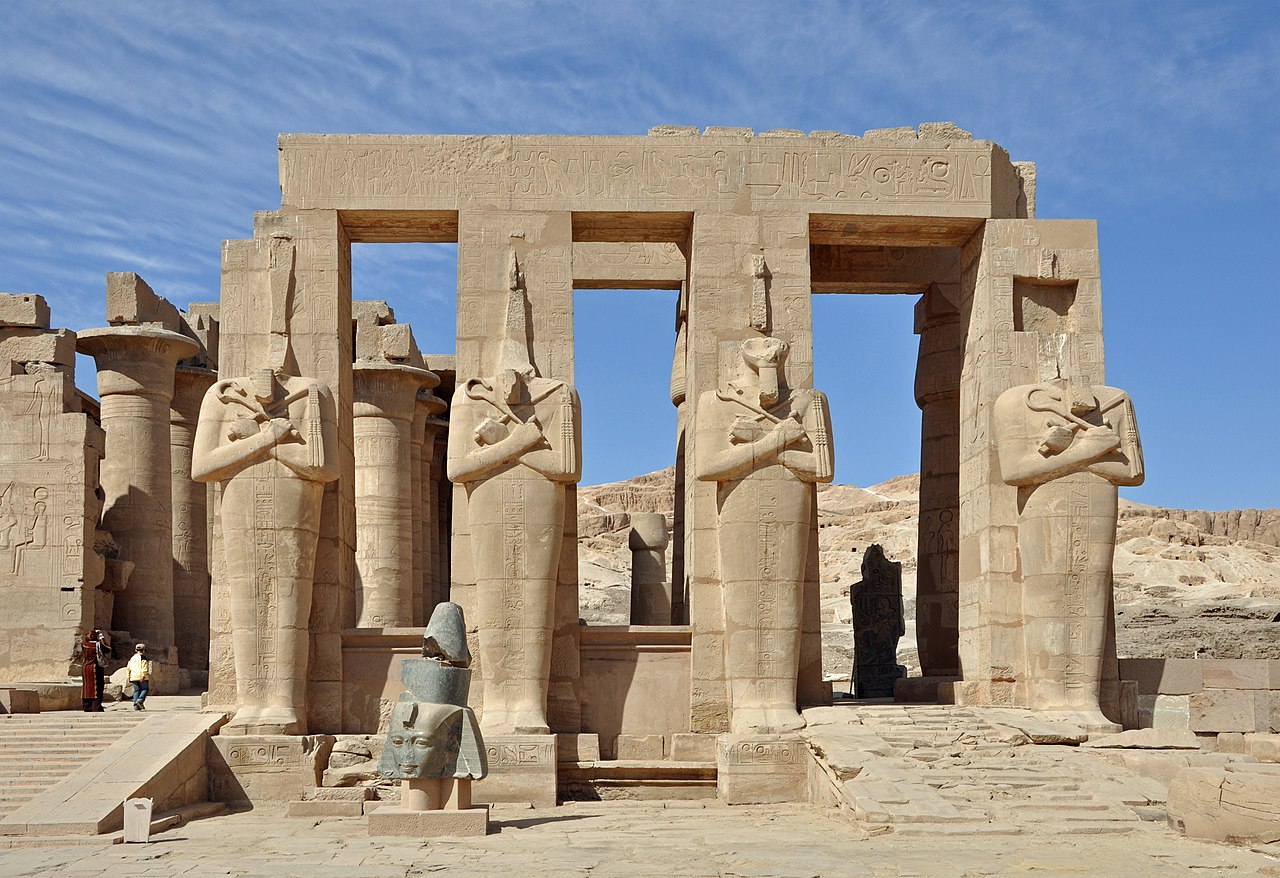
The central structure is the mortuary temple proper. Two massive pylons (fortified gateways), followed by two open-air courts, then hypostyle halls (columns everywhere). But what makes Medinet Habu unique is that the complex also preserves the Migdol. It is a fortified gate in the Syrian style. You might wonder what such a gate was doing in an Egyptian temple? Good question. Ramesses III wanted one, period. Perhaps to mark that he had defeated the invasions from the North. Archaeologists are still debating it. View itinerary.
The temple itself covers about 490 ft in length. It is smaller than Karnak, but more compact. Better preserved. The interior walls are covered with figurative reliefs. Everywhere. It is insane.
The Best-Preserved Reliefs in Egypt
Here is what really matters. The reliefs of Medinet Habu are an archaeological UFO. In most Egyptian temples, the reliefs are worn, broken, erased. Here, the details are so sharp that you can count the feathers in the soldiers' headdresses. Seriously. View itinerary. See shore excursions.
The scenes depict daily life, religious rituals, and above all the military victories of Ramesses III. There is a complete sequence showing the battle against the Sea Peoples. The ships. The warriors. The mobilization of the Egyptian army. It is like a comic strip carved in stone.
The colors that still remain? Lapis blue (for the hair), red ochre (for the skin), white (for the linen), black (for the eyelashes). It is a rainbow of ancient Egypt. When the sun hits the walls at dawn, you truly see just how colorful these temples were. It is a revelation.
The Battle Scenes and the Sea Peoples
This is the beating heart of Medinet Habu. Ramesses III faced the Sea Peoples in a major invasion (year 8 of his reign), alongside his Libyan wars (years 5 and 11). These peoples came from around the Mediterranean (probably Libya, Sicily, Cyprus, the Hittite region). They threatened Egypt. Ramesses III stopped them. And he was so proud of it that he had the entire battle carved on the walls of his mortuary temple. View itinerary.
The reliefs show insane detail. The Sea Peoples are identifiable by their distinctive plumed helmets and their weapons. The Egyptian soldiers? Organized, disciplined, mounted on war chariots. The archers. The spearmen. It tells a real military story. It shows you the clash of two civilizations.
What gets you is that you see the human in it. Not just abstract royal symbols. People fighting. Horses that are afraid. The wounded. It is visceral.
The Festival Calendar and Royal Life
Beyond war, Medinet Habu also shows religious and civil life. There are depictions of religious festivals. Processions. The pharaoh offering sacrifices. The gods responding. It is a perpetual calendar carved in stone. View itinerary.
An entire section shows Ramesses III hunting. Him in his chariot, firing his bow at animals. It is a classic theme of Egyptian art, but here it is shown with such dynamism that you can almost feel the movement.
The royal palace adjacent to the temple is also worth a look. The royal apartments. The outbuildings. Walls still standing. Inscriptions. It is like holding a piece of the pharaoh's private life in your hands. One small caveat: fewer reliefs in there. More of an architecture than an art gallery.
The Migdol: The Unique Fortified Gate
The Migdol of Medinet Habu is an oddity of Egyptian architecture. It is a square fortified tower with battlements (the small openings for archers), inspired by Syrian architecture. In Egypt, that is rare. Very rare. Why did Ramesses III want one? View itinerary.
The theories are flying. Maybe it was genuinely a defensive gate. Maybe it was symbolic, representing the victory over the invaders from the North. Maybe Ramesses III just wanted to show that he knew foreign architecture and could do whatever he wanted with it. Archaeologists are not quite sure. But there it stands. Robust. Imposing. Different.
Inside the Migdol, you find an access gate, corridors, staircases. It is great for photos, it really gives off a fortress feeling.
How to Get to Medinet Habu
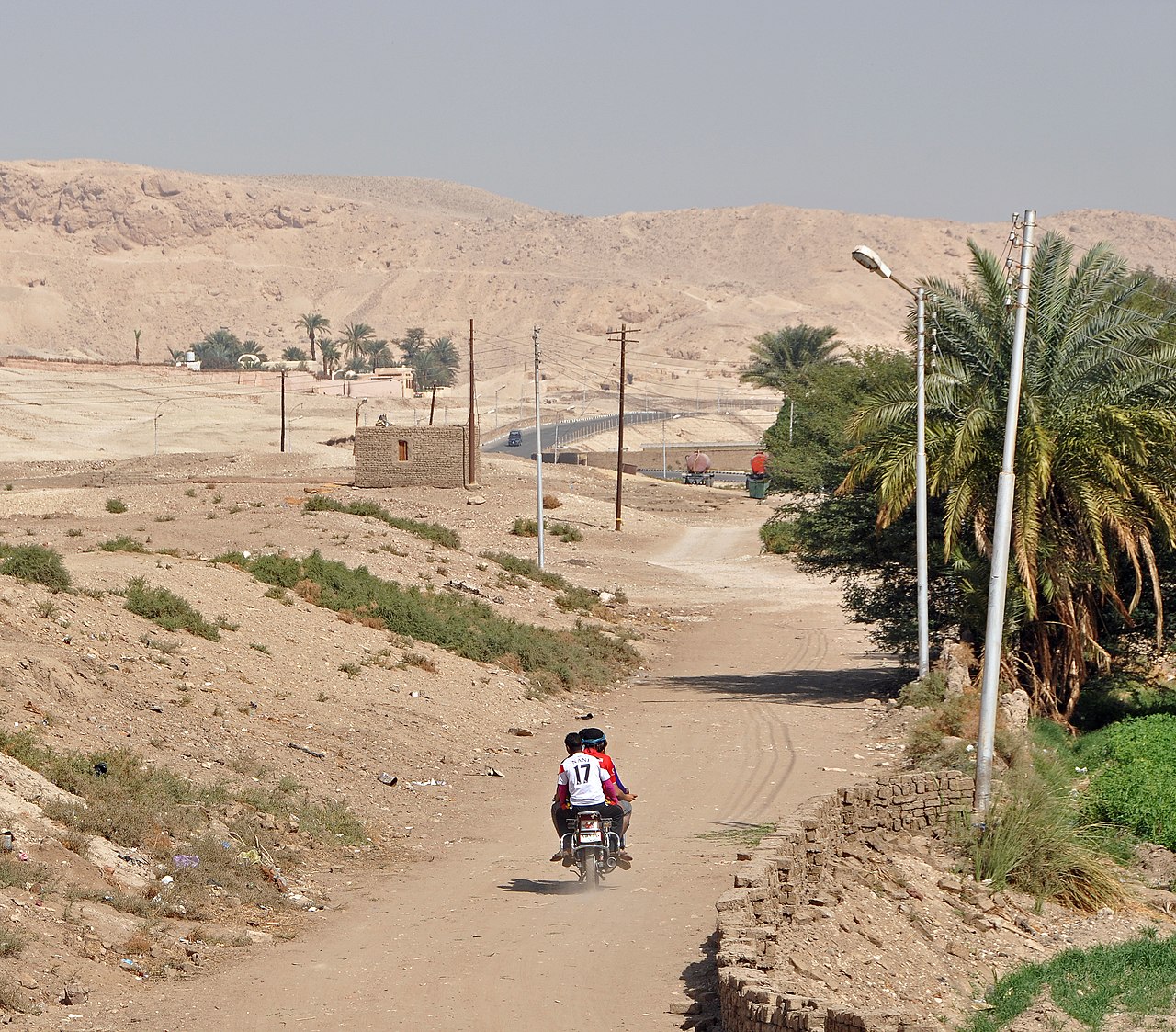
Medinet Habu sits on the west bank of the Nile, in Luxor. It is not complicated. From the center of Luxor (east bank), you have two options. View itinerary.
Option 1: Boat + taxi. Cross the Nile by boat (local ferry, very cheap, $2-3). On the other side, hail a taxi to drop you at Medinet Habu. Figure $5-10 depending on the haggling. It is the authentic option. You will see the Nile. You will see the feluccas (traditional sailboats). View itinerary.
Option 2: Organized tour. Your hotel can arrange transportation. A guide. You climb into an air-conditioned minivan. It is less of an adventure, but more comfortable. Around $27-38 per person for the half-day.
Personally? The boat is fun. It is part of the journey. You are in Egypt, not at Disneyland.
The site is open every day, from 6 a.m. to 5 p.m. (standard hours). Distance from the landing dock: about 1.2 miles. On foot, it is a pleasant walk. By calèche (horse-drawn carriage), it is $2-3.
Entry Prices and Combos
Entry to Medinet Habu costs about $4 (220 EGP at the 2026 rate). That is in the normal range for Egyptian sites. The Valley of the Kings costs more ($14). Karnak costs more too ($11). So it is fair. View itinerary.
If you get a combined west bank ticket (Valley of the Kings + Medinet Habu + Temple of Hatshepsut), figure about $43-49. It is more economical than buying the entries one by one. View itinerary.
Tip: the ticket booths also sell English-language guide booklets ($3-5). Useful if you do not speak Arabic and your guide does not explain everything. But honestly, with a good English-speaking guide, it is worth it.
Combining Medinet Habu with the Valley of the Kings
Most people do the Valley of the Kings in the morning (too hot in the afternoon, and the tourists are massed over there) and Medinet Habu in the late afternoon. It is a full day. It is manageable. See budget. View itinerary.
The Valley of the Kings is detailed in our complete Luxor guide. Tombs of pharaohs. Caves. Wall paintings in the burial chambers. It is touristy. It is impressive. But it is crowded.
Medinet Habu is calmer. The reliefs of the mortuary temple tell the story of the pharaoh in a more narrative way than the tombs (which are more like lists of gods and funerary rituals). So it is complementary. View itinerary.
If you really have the time, also go see the funerary temple of Mentuhotep Nebhepetre on the west bank. It is a bit farther, but it is an architectural masterpiece. Almost nobody goes there.
Why You Really Should Go to Medinet Habu
Because it is a temple where you can genuinely feel ancient Egypt. Not just as an abstract idea or a photo. It is the colors. It is the expressions on the faces in the reliefs. It is the relative silence of the site. It is the architect who thought through every detail.
Ramesses III lived 3,200 years before you. He won battles. He built a temple so that people would remember him for eternity. And you? You are here. You are looking at him. Eternity works.
Also, it is a less touristy site than Karnak or the Valley of the Kings. That means you get a more intimate experience. More authentic. You learn faster. Your guide can actually talk. Your mind can actually process what it sees.
And honestly, the reliefs of Medinet Habu are the best-preserved in Egypt. If you are interested in archaeology, pharaonic art, or just the general history of the ancient world, it is a must. It is a lesson in stone and color. View itinerary.
Practical Tips for Your Visit
Water and hydration: On the west bank, there are few places to buy anything. Bring plenty of water. At least 2 liters per person. The heat is no joke.
Hat and sunscreen: There is no shade. Zero. You will burn in an hour without protection.
Shoes: Comfortable sneakers. The site is vast. You walk a lot. And the stones are hot.
Camera: No photo restrictions at Medinet Habu (unlike the Valley of the Kings). You can shoot everywhere. The colorful reliefs in the morning, when the sun is low, are perfect for photos. View itinerary.
Guide: Try to find an English-speaking guide. It is not cheap ($32-54 for a private visit), but it changes everything. You truly learn the history. It is worth the investment.
Time: Figure 2-3 hours for a relaxed visit. If you want to study every relief in detail, 4 hours.
Do you have questions about Medinet Habu or the west bank of Luxor? View itinerary.
Our Egypt specialists can organize a tailor-made visit for you, with an English-speaking guide, transportation, and personalized advice.
Friendly WhatsApp MessageReply in under 2h · 7 days a week · No obligation
FAQ: Your Questions About Medinet Habu
Q: Is Medinet Habu really better than Karnak for the reliefs? View itinerary.
A: Honestly, yes. The reliefs of Medinet Habu are better preserved, more colorful, and less erased. Karnak is bigger and more impressive in sheer scale, but for the quality of the details and the colors, Medinet Habu wins. Both are worth it, but Medinet Habu is a must for the reliefs specifically. View itinerary. See shore excursions.
Q: What is the best time of day to visit?
A: Early in the morning (6 a.m.-8:30 a.m.) or late afternoon (2 p.m.-5 p.m.). Midday is a nightmare (extreme heat, 113+ F). And if you go early, you are almost alone. It is magical.
Q: How much time should I plan for?
A: 2-3 hours if you visit at a relaxed pace. 4-5 hours if you study all the reliefs and take photos. An express visit (1 hr) is possible but you will regret it.
Q: Is there access for people with reduced mobility?
A: No. It is an ancient ruin on uneven terrain. No ramps. No special access. If you have limited mobility, you will struggle. Contact us to discuss alternatives.
Q: Can I combine Medinet Habu with the Temple of Hatshepsut? View itinerary.
A: Yes, easily. They are on the west bank, about 9-12 miles apart. A half-day on the west bank, you can do both. Or a full day if you also want the Valley of the Kings.
Q: Are there photo fees or restrictions?
A: No. Unlike the Valley of the Kings (where photography is sometimes forbidden inside the tombs), at Medinet Habu you can shoot freely. The colorful reliefs call for good photos. Go for it. View itinerary.
A Contrarian View: Why Some Prefer Karnak
OK, we cannot say that Medinet Habu is better than Karnak without admitting what makes Karnak special. Karnak is bigger. Far bigger. It is a colossal complex. Several temples. Sanctuaries from different periods. Insane historical depth. If you are an archaeologist or a history buff, Karnak is richer. It is an open-air archaeological museum. View itinerary.
Medinet Habu is more concentrated. More narrative. Less architectural variety. If you want to see the scale and complexity of ancient Egypt, Karnak wins. If you want to see the best-preserved reliefs and feel close to pharaonic art, Medinet Habu wins. View itinerary.
Ideally? You visit both. You can do it over 2-3 days in Luxor without any stress.
Combining with Other Visits (Suggested Itineraries)
If you are in Luxor, you will probably visit Medinet Habu within a broader context. Here are a few combinations that work well: View itinerary.
Complete Luxor-Aswan itinerary: Three days minimum. Day 1: east bank (the temples of Karnak and Luxor). Day 2: west bank (Valley of the Kings, Medinet Habu, Hatshepsut). Day 3: travel to Aswan or a Nile cruise. View itinerary.
Nile cruise: If you do a Luxor-Aswan cruise, you go to Luxor. A day of excursions on the west bank. Medinet Habu is often included, and if not, it is easy to add. View itinerary.
Best season: November to February. That is the ideal season. After February, it is too hot. Medinet Habu with no water and no shade is dangerous. View itinerary.
Budget: Entry to Medinet Habu and the Valley of the Kings costs about $40 together. West bank transportation around $11-16. Guide (optional) $43-54. Breakfast/lunch: $11-22. Total: $108-140 per person for a full day on the west bank. View itinerary.
Photography: Medinet Habu is a better spot for photos than many other sites. The colors. The shadows. The details. If you are a photographer, you will have a field day. View itinerary.
Conclusion: Why Medinet Habu Deserves Your Time
Medinet Habu is not the largest temple in Egypt. It is not the most visited. It is not the one that shows up in every documentary. But it is one of the best-preserved temples. It is one of the most beautiful. And it is one of the most significant for genuinely understanding the life, the art, and the power of the New Kingdom in Egypt. View itinerary.
You will see legible hieroglyphs. Reliefs with expressive faces. Battles depicted with dynamism. Colors that have survived 3,200 years. It is rare. It is precious. It is a direct window onto the past.
If you are going to Luxor (and you should), Medinet Habu has to be on your itinerary. Not as a secondary visit. As a destination in its own right. Half a day minimum. With a guide. Early in the morning. And you will see why it is an often-forgotten gem. View itinerary.
Ready to explore Medinet Habu and the west bank of Luxor? View itinerary.
Organize your visit with our specialists. We arrange transportation, an English-speaking guide, optimal timing, and all the logistical details.
Plan Now (Personal Guide)Reply in under 2h · 7 days a week · No obligation
Questions? Write to usReply in under 2h · 7 days a week · No obligation
Useful Resources
To deepen your visit and your trip to Egypt:
- Complete Luxor Guide - All the sites, temples, museums, transportation, where to eat, where to sleep.
- Detailed Luxor-Aswan Itinerary - 3-5 days on site, how to organize it, how much it costs.
- Nile Cruise 2026 - The best cruises, realistic prices, which season, what you see.
- When to Go to Egypt? - Climate, tourist seasons, the best time for Luxor.
- Egypt Travel Budget 2026 - Detailed costs, how to save, where it gets expensive.
- Egypt Photography - The best spots, technical tips, golden hours in Luxor.
- Preparation Checklist - Documents, gear, health, vaccines, insurance, what not to forget.
- Egypt Tour Packages - Specialized agencies, selection criteria, pros and cons.
- Shore Excursions - Cruise and combined excursions, what you see, average prices.
Sem Elegant Voyage - Authentic trips to Egypt for English-speaking travelers. Since 2018, we have organized personalized itineraries, local English-speaking guides, and immersive experiences. Discover Luxor or prepare your trip.