
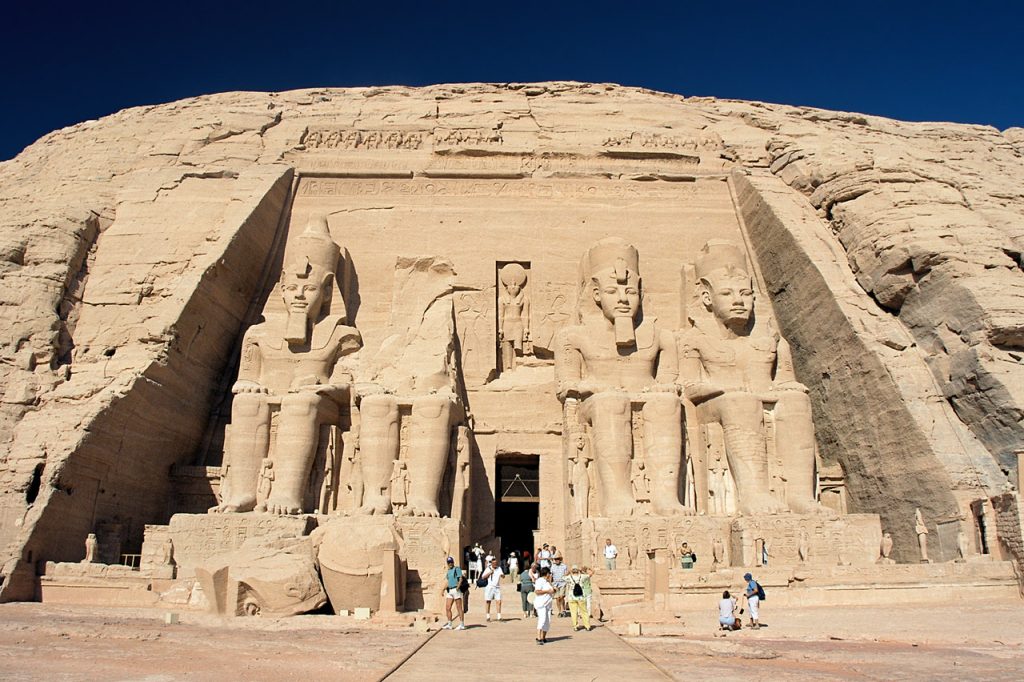
Lth temple of Abu Simbel is, rightly, one of the three most impressive monuments in Egypt along with the Pyramids of Giza and the Temple of Karnak. Sculpted from the Nubian cliff by Ramses II in the 13th century BC, moved block by block in the 1960s to escape the waters of Lake Nasser, it is well worth the 280 kilometers of desert that separate it from Aswan. This English-speaking 2026 guide answers all the practical questions you ask yourself - police convoy obligatory or not, flight vs road vs cruise Lake Nasser, ticket in 2026, solar phenomenon of February and October, how to program the ideal light, and the small temple of Nefertari often neglected.
Whether you are booking a Nile cruise or a stay split between Aswan and Luxor, an Abu Simbel excursion can nearly always be slotted in. The SEV team runs more than 200 of these trips every year, so we have the logistics down to the minute. Ask us for a quick quote, either with the internal flight or by private air-conditioned convoy:
Request a quote Abou Simbel on WhatsApp →
Abu Simbel: 5 minutes of history to set the scene
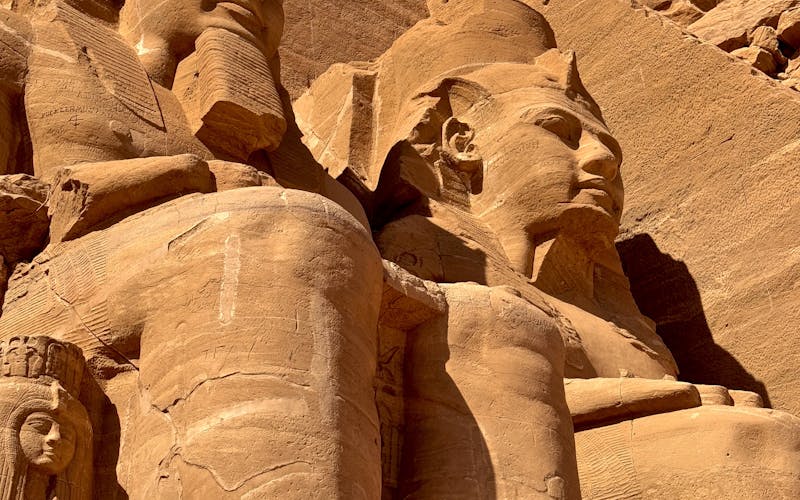
The Abu Simbel complex consists of two rock-cut temples. The large temple, dedicated to Ramses II and the gods Amon-Râ, Ptah, Râ-Horakhty, is guarded by 4 colossi 20 meters high. The small temple, dedicated to the goddess Hathor and Queen Nefertari (main wife of Ramses II), features 6 10-meter statues representing the royal couple alternating with Nefertari in the guise of Hathor.
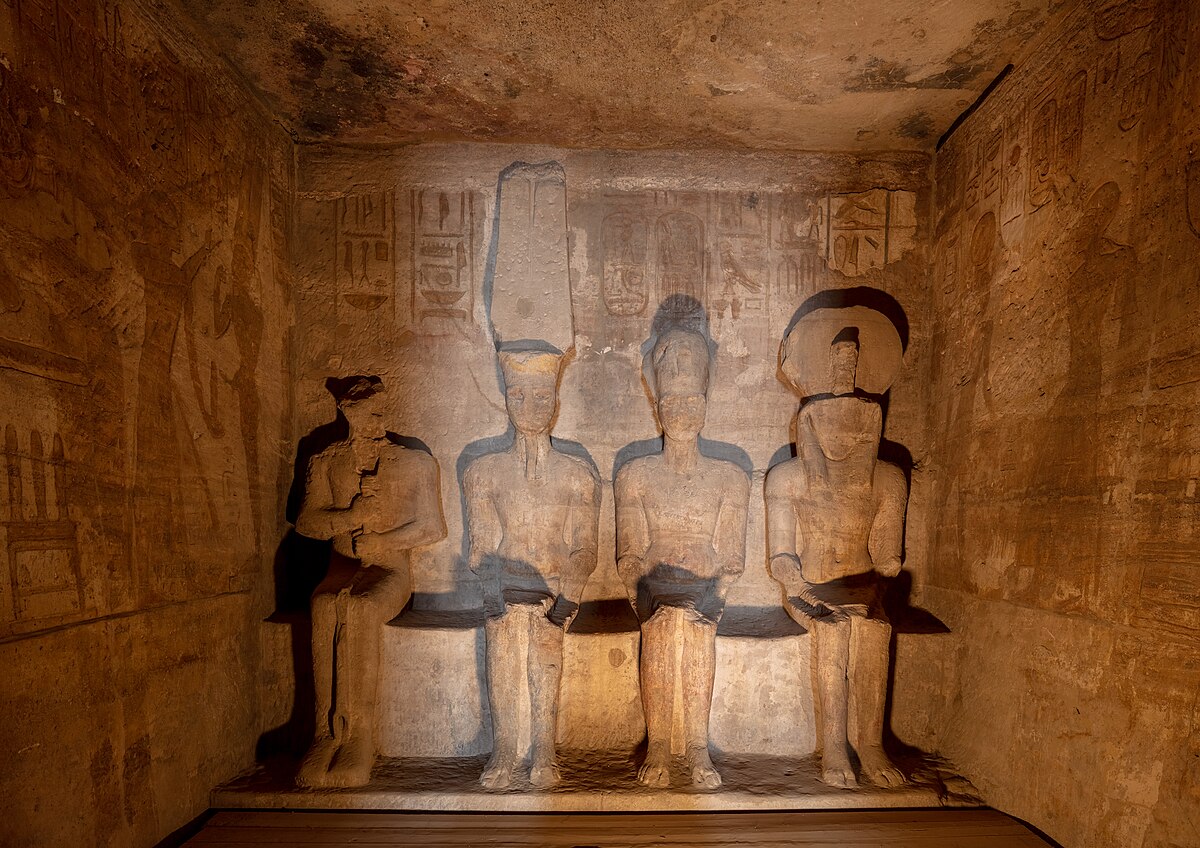
The temples were commissioned by Ramesses II around 1264 BC, most likely to stamp Egypt's authority on its southern frontier with Nubia after a run of military successes. What sets the great temple apart is its solar alignment: on two days each year the rising sun reaches all the way into the innermost sanctuary and lights up 3 of the 4 carved gods, leaving only Ptah, lord of darkness, unlit. The two dates, February 22 and October 22, are thought to have marked the coronation and the birthday of Ramses II.
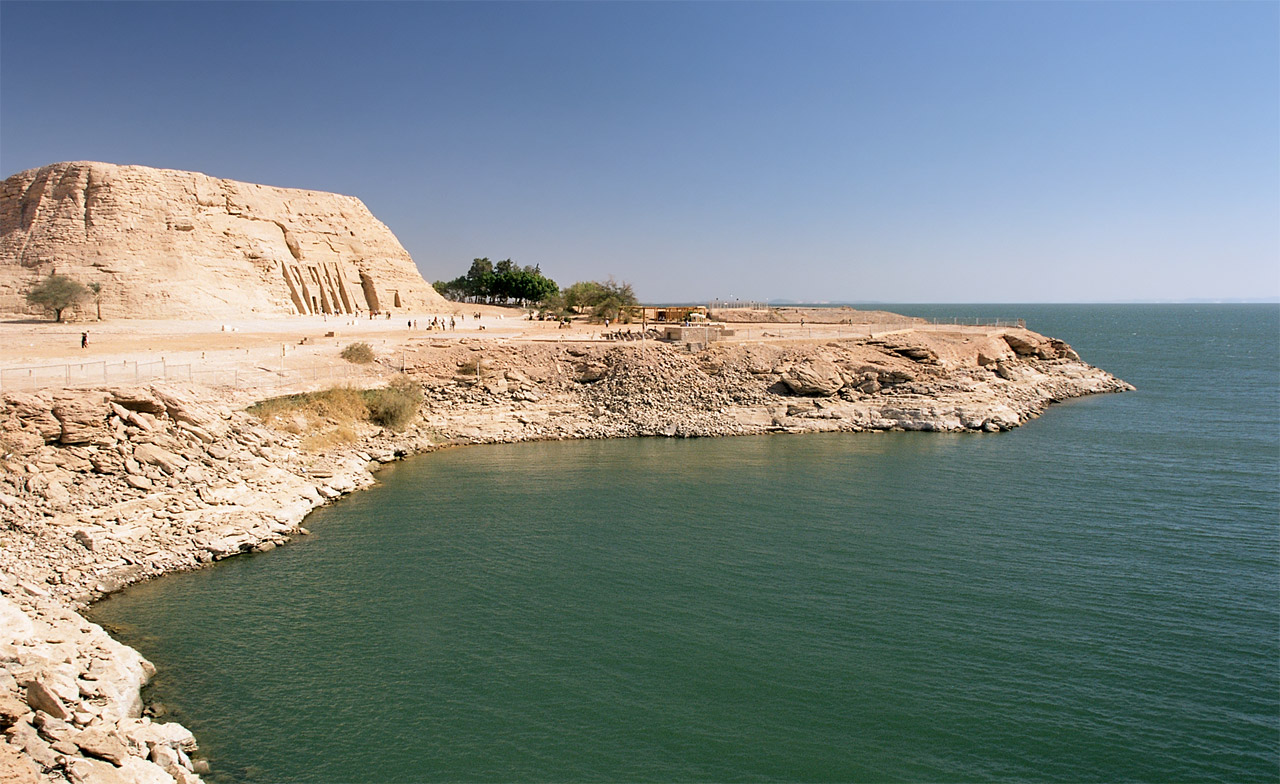
The 1964-1968 removal under the auspices of UNESCO was one of the greatest archaeological rescues in history. 1,036 blocks (4 to 20 tonnes each) were cut out and reassembled 65 meters higher and 200 meters back, on the new “Abou Simbel Island” artificially created after the filling of Lake Nasser by the Aswan High Dam. The result is so accurate that most visitors don't realize the site has been reconstructed.
Getting from Aswan to Abu Simbel in 2026
Three realistic options exist. Here is the detailed comparison.
SEV recommendation - for 80% of travelers, the EgyptAir return flight is the best option. You gain 5 hours of desert time, you arrive fresh at the site (tours by road convoy arrive around 8 a.m. after leaving at 4 a.m., tired), and the price difference (~£40) is marginal on a complete Egypt trip.
There is still a case for the road convoy if the Western Desert appeals: the scenery between Aswan and Abu Simbel is dramatic, with mirages, dunes and your first glimpse of Lake Nasser.
For real enthusiasts the Lake Nasser cruise is the top-tier choice, since it takes in 6 further UNESCO-listed Nubian temples (Kalabsha, Wadi es-Seboua, Amada, Beit el-Wali, Derr, Aniba) that nobody on a day trip gets near.
Is the police convoy still compulsory in 2026?
Good question because many English-speaking pages give an outdated answer. Answer 2026 - no, the police convoy is no longer obligatory. This rule dated from the 1990s after Hatshepsut's attacks, and was gradually relaxed. Since 2019, road traffic between Aswan and Abu Simbel has been free, with the presence of checkpoints every 60-80 kilometers - papers checked quickly, generally passport and name of the agency.
What remains of old practices:
- Group convoy departures still exist but not obligatory - some local agencies prefer to go in convoy to optimize passage through checkpoints. SEV offers a more flexible separate private convoy (1-2 vehicles).
- Restrictive departure times - the first checkpoints reopen at 4 a.m. Ideal departure from Aswan between 4:30 a.m. and 5 a.m. to arrive in Abu Simbel around 8:15 a.m.-8:30 a.m. (light still OK on the facade).
- Security in general: thanks to the heavy presence along it, diplomats rate the road from Aswan to Abu Simbel among the safest anywhere in Egypt.
If you read on a site “convoy is obligatory”, this is outdated information from before 2019.
How long does it take on site?
Count 2 hours on the site itself to do the essentials without running.
- 15 mins - parking, ticket control, access via the pedestrian path (the temple is not visible from the parking lot, you discover it by going around the artificial hill - “wow” effect guaranteed)
- 45-60 mins - large temple of Ramses II (exterior facade, hypostyle with 8 Osiriac columns, treasure room, deep sanctuary)
- 30-45 mins - small temple of Nefertari and Hathor (often neglected, magnificent)
- 15-30 mins - visit to the inner dome of the hill (UNESCO relocation techniques are explained with period photos)
- 15 mins - view of Lake Nasser and exterior photos
If you arrive by flight (Aswan flight 6:30 hrs → Abu Simbel 7 hrs, return flight 11:30 hrs → Aswan 12 hrs), you have approximately 4 hours on site. More than enough.
The solar phenomenon of Ramses II - when and how
Twice a year, at dawn around 6:35-6:45 a.m., the sun's rays penetrate the deep sanctuary of the great temple for a distance of 57 meters, successively illuminating the statues of Râ-Horakhty, Ramses II and Amon. Ptah, god of darkness, remains alone in the shadows - a feature desired by the pharaonic architects.
The 2026 dates: Sunday February 22, 2026 and Thursday October 22, 2026. Tickets are released a full year ahead and are gone within hours, and the price jumps for the occasion (1,200 EGP rather than 600 EGP). Somewhere between 5,000 and 8,000 people turn up. Plenty of Egyptologists argue that it is not worth travelling for this alone: you get 3 minutes of the illumination pressed into a heaving crowd, when on an ordinary day you have the temple more or less to yourself for an hour.
What we suggest: pick an ordinary date and be at Abu Simbel by about 7:30-8am. With the sun coming up behind you (east to west) the facades glow gold, the photographs are stunning, and there is none of the February 22/October crush.
The small temple of Nefertari: easily overlooked, yet not to be skipped
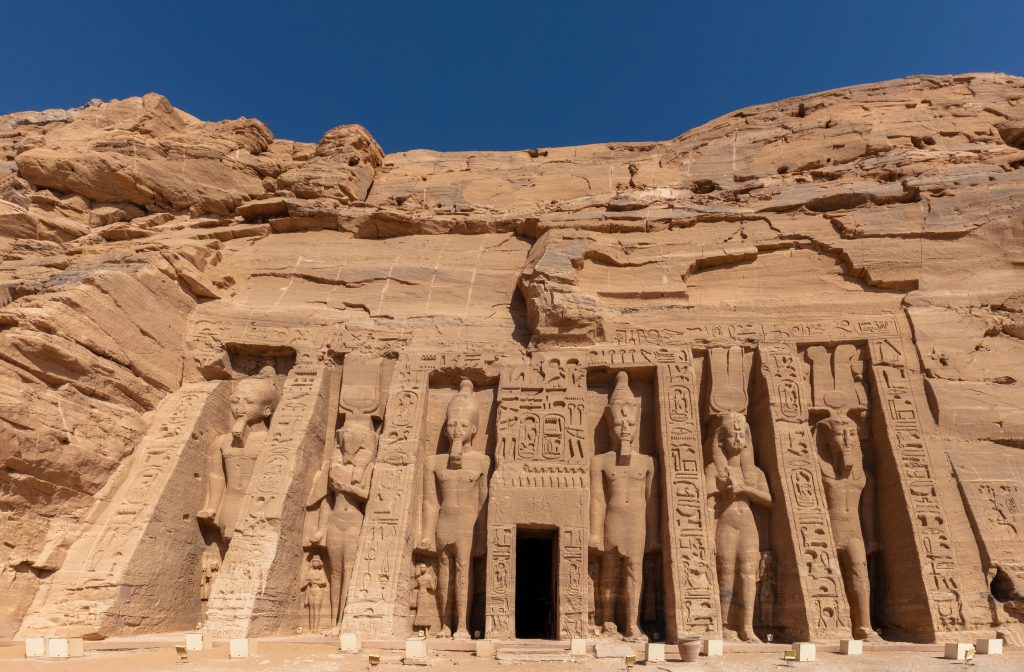
Right beside it stands the smaller temple honouring Queen Nefertari and the goddess Hathor, among the loveliest in the whole country. Its rarity lies in this: it is one of only two Egyptian temples in which the queen's statue is carved as large as the king's (the other being Nefertari's tomb temple in the Valley of the Queens). That equal footing speaks of how deeply Ramesses II cared for Nefertari, his first great royal wife and the one he had formally declared a goddess.
Step inside and the vestibule is lined with Hathoric columns, their capitals carved with the head of the cow goddess, while in the sanctuary Hathor appears as a cow stepping out of the mountainside. Because far fewer people pass through, the original paintwork on the reliefs has survived better here than in the great temple.
Count 30 to 45 minutes on the small temple - many visitors only spend 10 minutes there ("I've already seen the big one, let's hurry"). Error.
Prices and tickets Abu Simbel 2026
Tickets are bought at the site itself (an e-ticket through egymonuments.com has also been offered since 2024). The temples open from 5am to 6pm for most of the year and from 5am to 5pm in winter. After dark the site is shut, apart from the sound and light show, which runs every evening except on certain dates in the low season.
Staying overnight at Abu Simbel: does it make sense?
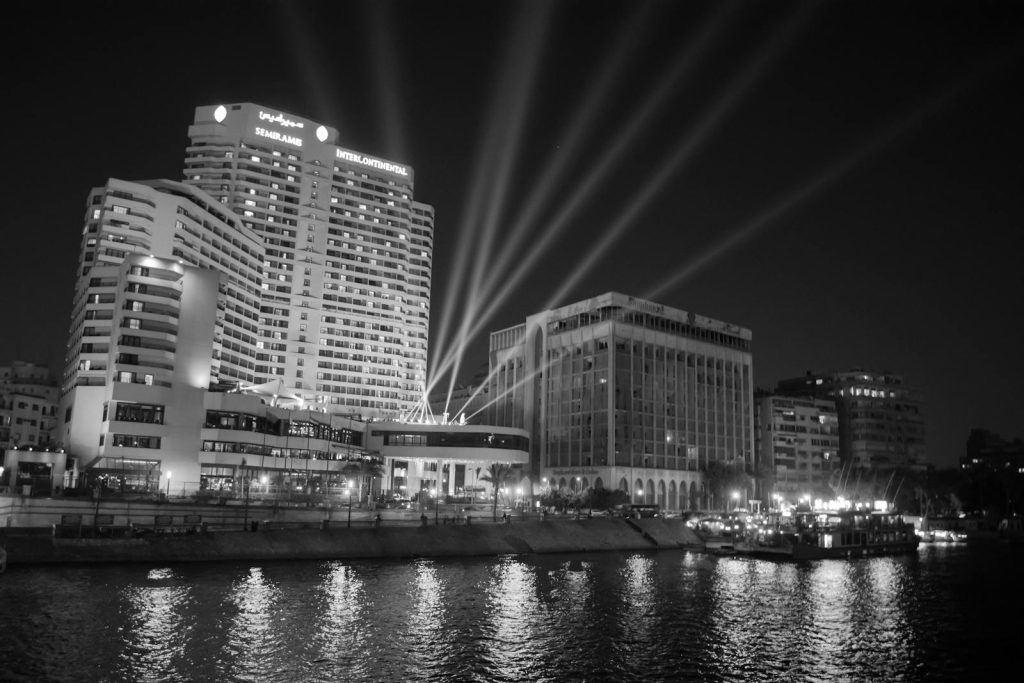
Minimalist hotel in Abu Simbel. Two main options:
- Seti Hotel Abu Simbel - 3★, on the banks of Lake Nasser 1.5 km from the temple. Simple setting, decent restaurant. £50-£70 per night in a double room. Good to visit the temple at dusk (sound and light show) then in the morning before the crowds.
- Nubian Village Eco Lodge - eco-responsible Nubian lodge, local experience. £40-£60, simple but authentic.
The advantage of sleeping there is to visit the temple twice - once in the evening at sunset (golden colors on the colossi) and once in the early morning before the arrival of the buses from Aswan (you will be alone from 7 a.m. to 8:30 a.m.). Additional cost ~£120, considerable gain in experience for enthusiasts.
Program with night in Abu Simbel →
FAQ - Frequently Asked Questions About Abu Simbel Temple
What is the best way from Aswan to Abu Simbel?
Three options - EgyptAir flight 30 min (£120-£150 return, recommended), private air-conditioned road convoy 3h30 (£100-£140 per person, departure 4am), or Lake Nasser cruise 3-4 nights (£500-£850 all inclusive, also access to Nubian temples). The flight is generally the best value for time/comfort/price.
Is the police convoy still compulsory in 2026?
No, the compulsory convoy no longer exists since 2019. Movement is free between Aswan and Abu Simbel with the presence of security checkpoints every 60-80 km (rapid paper check). Some agencies still use grouped convoys to optimize, but SEV offers a more flexible separate private convoy.
Morning or afternoon: when is the better time to visit Abu Simbel?
Aim for between 7:30am and 10:30am. The rising sun in the east lights the front of the great temple, the photos come out beautifully, and the heat has not yet become oppressive. Since the convoy coaches pull in at about 9-10am, arriving before 8am buys you a good 1.5 hours of calm. By afternoon the facade has fallen into shade (the reverse effect) and summer temperatures hit 38-42°C.
How much time should you expect on site?
Allow 2 hours to do the two temples (large Ramses II temple + small Nefertari temple) without running, plus 30 minutes for the interior dome explaining the UNESCO relocation. With exterior photos and lake views, we arrive at a comfortable 3 hours.
When does the sun-alignment phenomenon of Ramesses II happen?
Twice a year - Sunday February 22 and Thursday October 22, 2026. Ceremony at 6:35-6:45 a.m., illumination of the sanctuary for ~3 minutes. Very large crowd (5,000-8,000 people). Increased price 1,200 EGP. Our recommendation is to not come specifically on this day as the crowds take away from the quiet temple experience.
How much does the Abu Simbel 2026 ticket cost?
Adult foreign visitors pay 600 EGP (~£10), foreign ISIC students 300 EGP. The evening Sound and Light Show costs EGP 300 extra, a professional photo permit 300 EGP. Online booking at egymonuments.com has run since 2024, but card payments can fail, so carry cash (EGP) too.
Is Abu Simbel included on a Lake Nasser cruise?
Yes, this is the premium option. Cruises 3 to 4 nights on Lake Nasser from Aswan, aboard MS Eugénie or MS Kasr Ibrim (5★ unique Nubian boats). You also visit 6 UNESCO Nubian temples (Kalabsha, Wadi es-Seboua, Amada, Beit el-Wali, Derr, Aniba) which are usually inaccessible. Price £500-£850 per person all inclusive, ideal for enthusiasts of Nubian Egyptology.
Should you bother with the small temple of Nefertari?
Without question. It is the smaller of the two (six colossi of 10 m rather than four of 20 m), yet it is one of just two temples in Egypt where the queen stands as tall as the king. The original colours have also fared better than in the great temple. Give it 30-45 minutes rather than a 10-minute dash.
What does a Classic Nile Cruise actually cover, and is Abu Simbel part of it?
Rarely in the base price of a classic Luxor-Aswan Nile cruise. You pay £220-£260 extra for the internal flight excursion from Aswan (round trip 30 min flight + transfers), or £100-£140 by road convoy (3h30 there + 3h30 return). Check your package before purchasing - SEV systematically includes optional Abou Simbel in its cruise quotes.
Should you sleep in Abu Simbel?
Not obligatory, but excellent option for enthusiasts. The advantage is to visit the temple twice - at sunset (exceptional golden colors on the colossi) and in the early morning before the buses arrive from Aswan (you are alone from 7am to 8:30am). The Seti Hotel offers rooms at £50-£70 per night. Additional cost ~£120, considerable gain in experience.
Can visitors with limited mobility manage Abu Simbel?
Partially. The walking path to reach the temples from the car park involves 200 meters of walking on flat ground then a moderate staircase. The large temple is accessible with assistance. The small temple of Nefertari is more accessible (entrance on one level). Wheelchair available at the entrance on request free of charge. Our SEV team can organize a visit adapted to PMR.