
AAlexandria Egypt - located on the Mediterranean 220 km north of Cairo, it is the second city in the country and one of the most misunderstood by English-speaking travelers. Founded by Alexander the Great in 331 BC. BC, capital of the Ptolemies for three centuries, center of Hellenistic thought with the first great library of the ancient world, Alexandria has long been for Egypt what Marseille is for France - a maritime face turned towards another culture. Today, it is an Arab city of five million inhabitants, sometimes melancholic, often surprising, and which deserves much more than the half-day reserved for it.
Our SEV team organizes day trips to Alexandria from Cairo or short stays of 2 nights, with private air-conditioned transport, English-speaking guide and fish lunch on the Corniche. Request your quote on WhatsApp.
Request a quote Alexandria on WhatsApp →
Alexandria - the second capital of Egypt
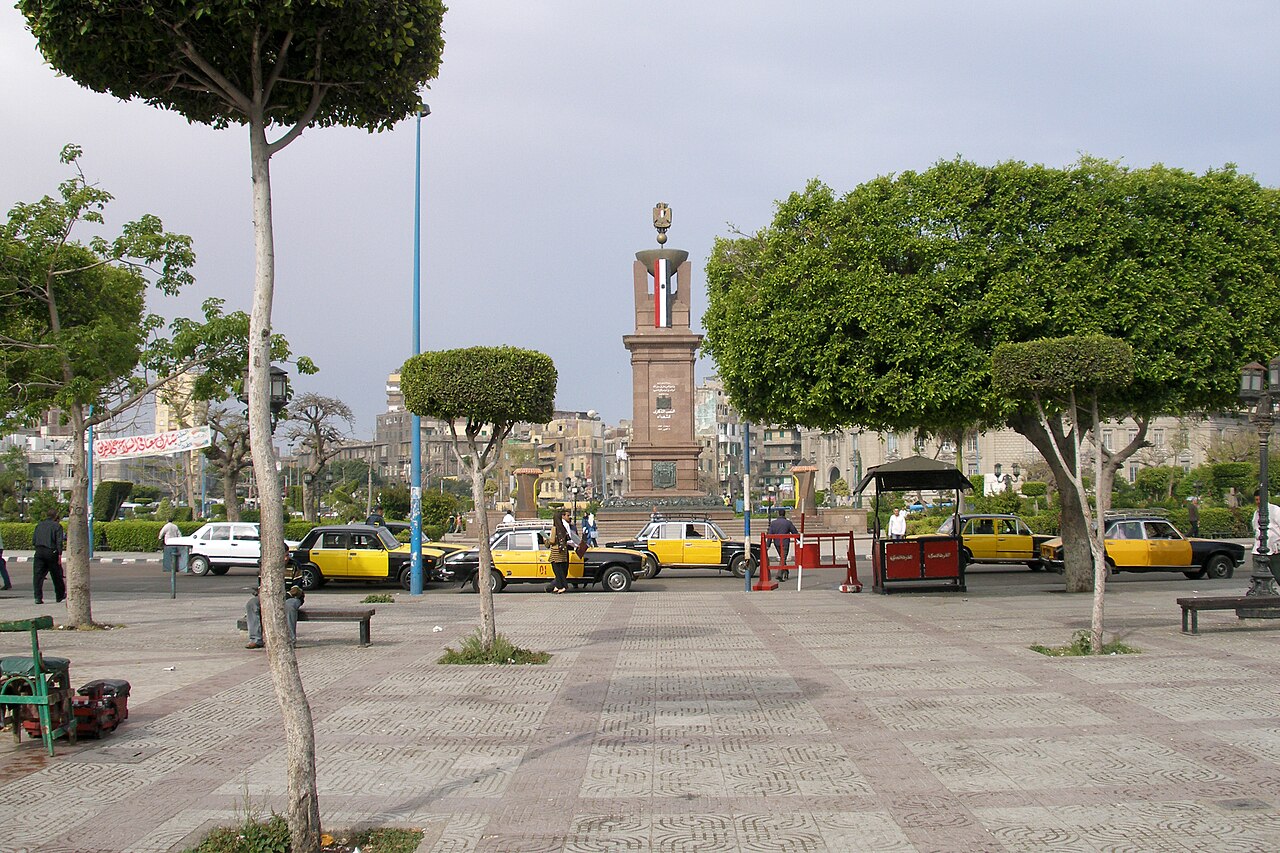
The numbers first. Alexandria - 5.2 million inhabitants, 32 km of coastline on the Mediterranean, four active ports including the one which still handles 60% of Egyptian goods. The climate also stands out - summers are 6 to 8°C cooler than in Cairo thanks to the sea breeze, and it rains 200 mm per year compared to only 25 mm in the capital. For the traveler suffering from the dry heat of the inland desert, Alexandria is a literal breath of fresh air.
Here is the catch: almost nothing of the ancient city survives. Repeated earthquakes brought the great lighthouse down between 956 and 1323, the Ptolemaic palace slid beneath the bay, and the library burned in successive blazes from Julius Caesar's day to the caliphate of Omar. What is left is a scattering of archaeological sites and a mood: a cosmopolitan city with a long memory. Arrive hoping for another Karnak and you will go home let down. Arrive for the Arab Mediterranean, fish landed that morning and the library reborn in 2002 as a modern temple to learning, and you will not be disappointed.
How to get to Alexandria from Cairo
Three serious options, plus one to avoid. All depart from the capital and all lead to Alexandria in 2 to 3 hours.
- First class train - the preferred way of Cairenes. 6 to 12 daily departures from Ramsès station in Cairo, arriving at Sidi Gaber or Misr station in Alexandria. Duration 2h30 to 3h for VIP express trains (“Spanish train” 2026 option). Air-conditioned 1st class fare 100-160 EGP (2-) depending on the line. The wifi works randomly, but the buffet car serves decent hot tea.
- Private car and driver: the SEV way of doing it for English-speaking visitors. Reckon on 2.5 hours by the desert road, or 3 hours on the slower, prettier agricultural route. Collected at your hotel in Cairo and dropped at the door, air-conditioned, with a driver who knows the road. Our standard recommendation.
- GoBus or Blue Bus coach: leaves from Almaza Cairo or Ramses once an hour, fares 80-150 EGP, 3 hours on the road. Comfortable enough, though you lose flexibility.
- Inter-city Uber - technically possible ("Uber Long Distance" option) but expensive (1200-1700 EGP, £20-£30) and drivers are often tired on this journey. Not recommended.
The stopover cruise option also applies - international cruise ships call at Alexandria, and the SEV formula "shore excursion from Alexandria" covers the city in a 7-8 hour day with return to the ship late afternoon.
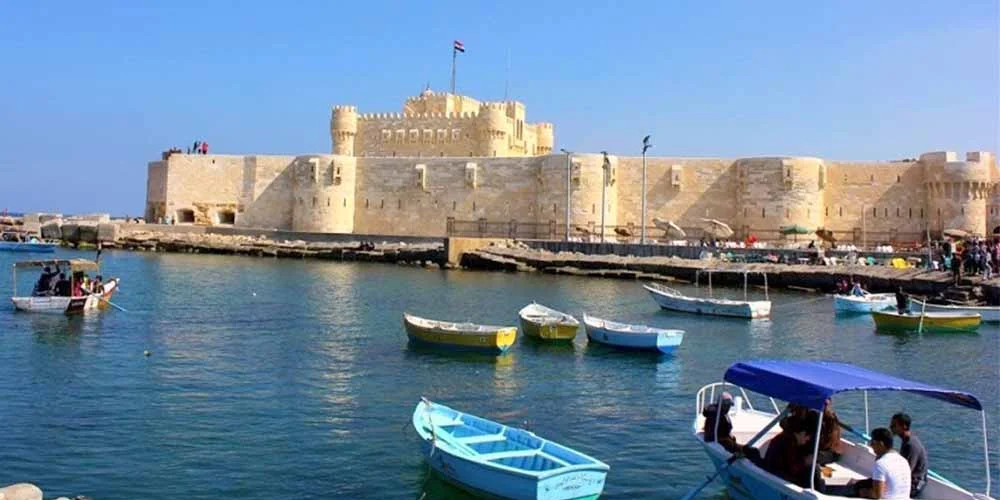
Qaitbay's citadel, built where the ancient Lighthouse once stood
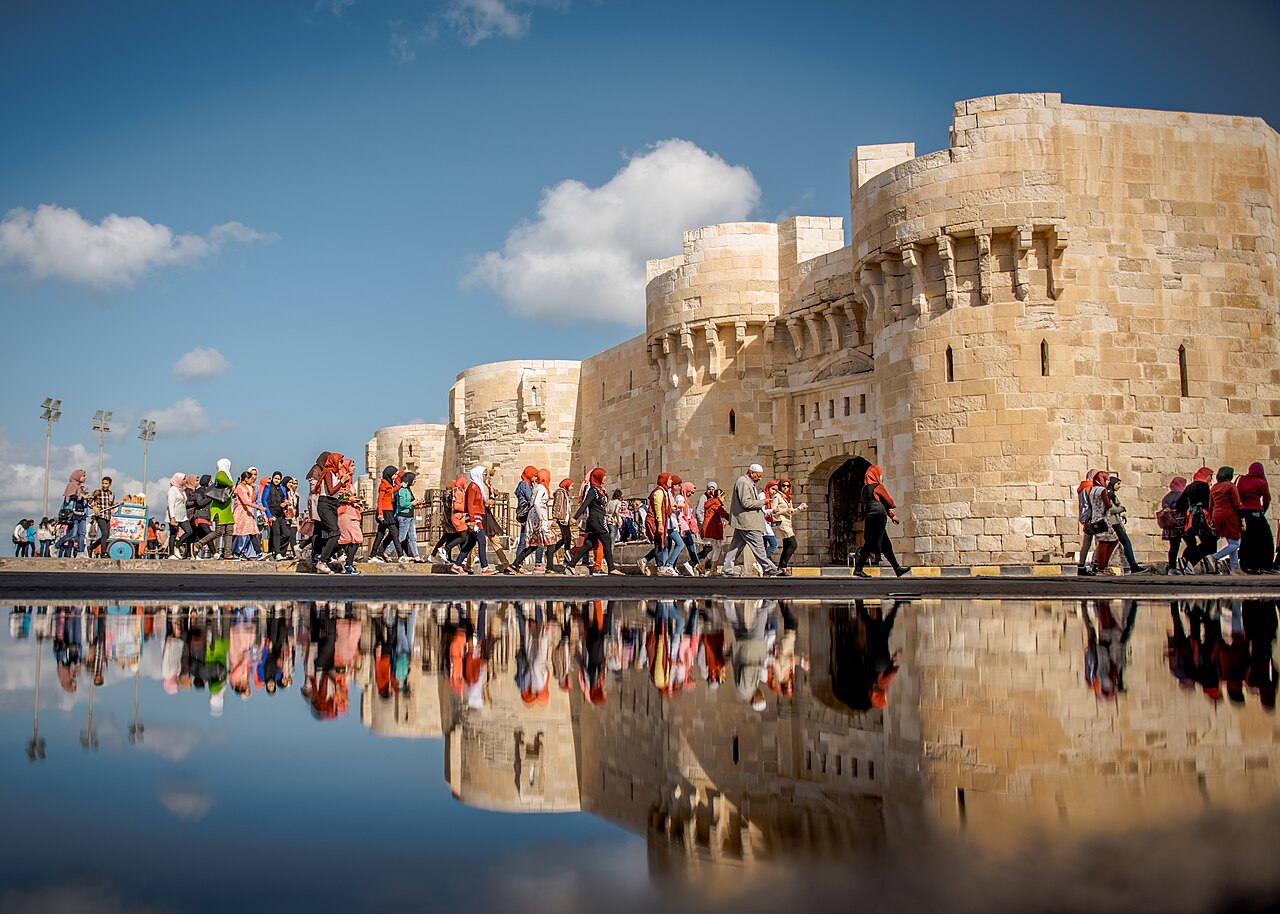
You arrive via the cornice and suddenly the yellow-white mass appears, resting on a rocky outcrop jutting into the sea. The Qaitbay citadel was built in 1477 by the Mamluk Sultan Qaitbay on the very foundations of the great Lighthouse of Alexandria - the sixth of the seven wonders of the ancient world. There is nothing ancient about the current building, but the site itself housed humanity's most famous lighthouse lantern for sixteen centuries.
Inside, three floors of vaulted rooms, a small naval museum, and a panoramic terrace with a view of the East Bay and the West Harbour. Price 2026 - 200 EGP for foreigners, 100 EGP ISIC students. Allow 1 hour visit. Our photo tip - take the building from the foot of the west pier at sunset, when the light passes over the limestone and reveals the joints.
Just offshore from the citadel, divers have been mapping the drowned remains of the Lighthouse and the Ptolemies' royal quarter since 1994, logging over 2,500 blocks so far. There is talk of an underwater museum, though the project keeps slipping. For now, the recovered pieces sit in the permanent display at the Bibliotheca's Museum of Antiquities.
The Bibliotheca Alexandrina - the renewal of knowledge
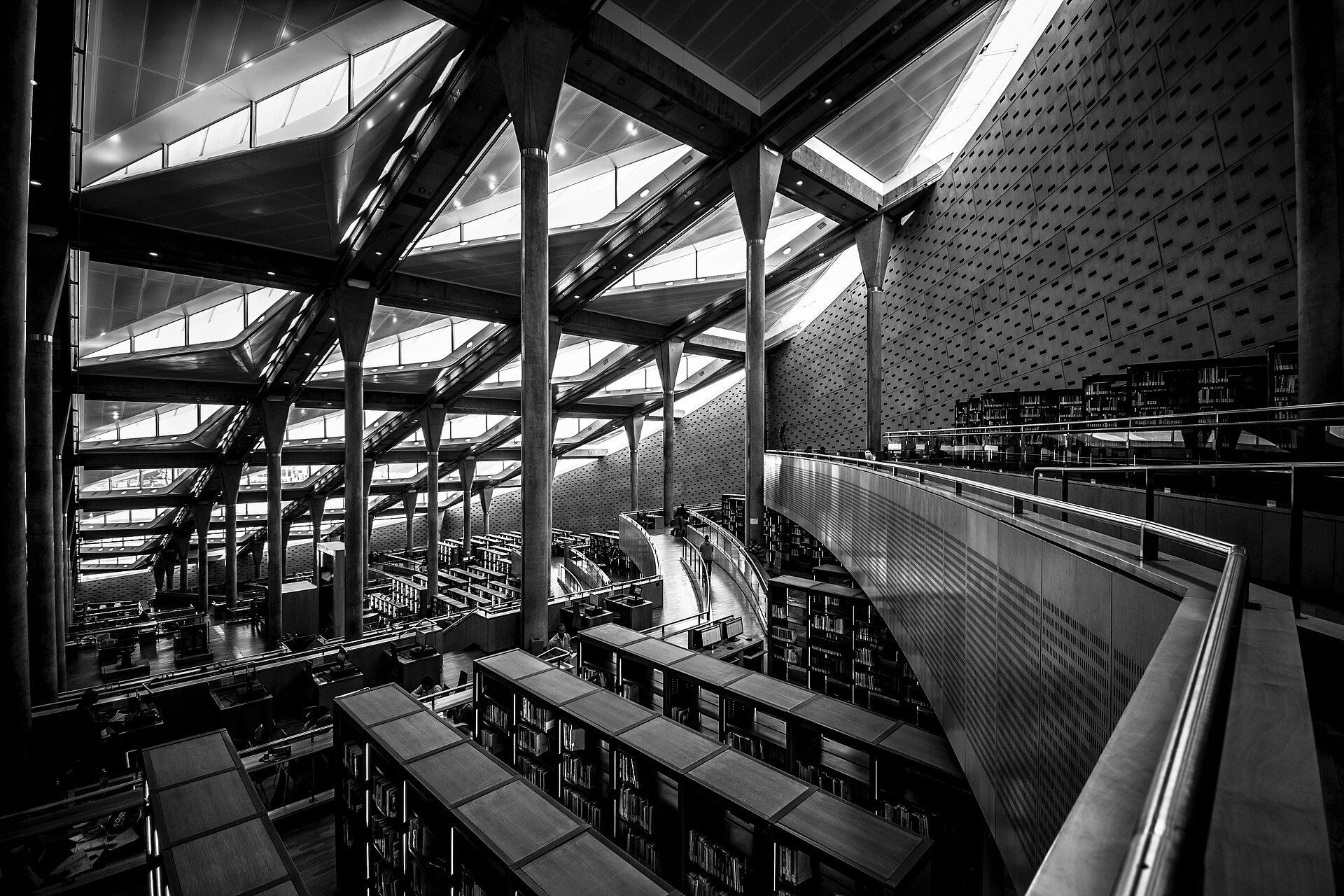
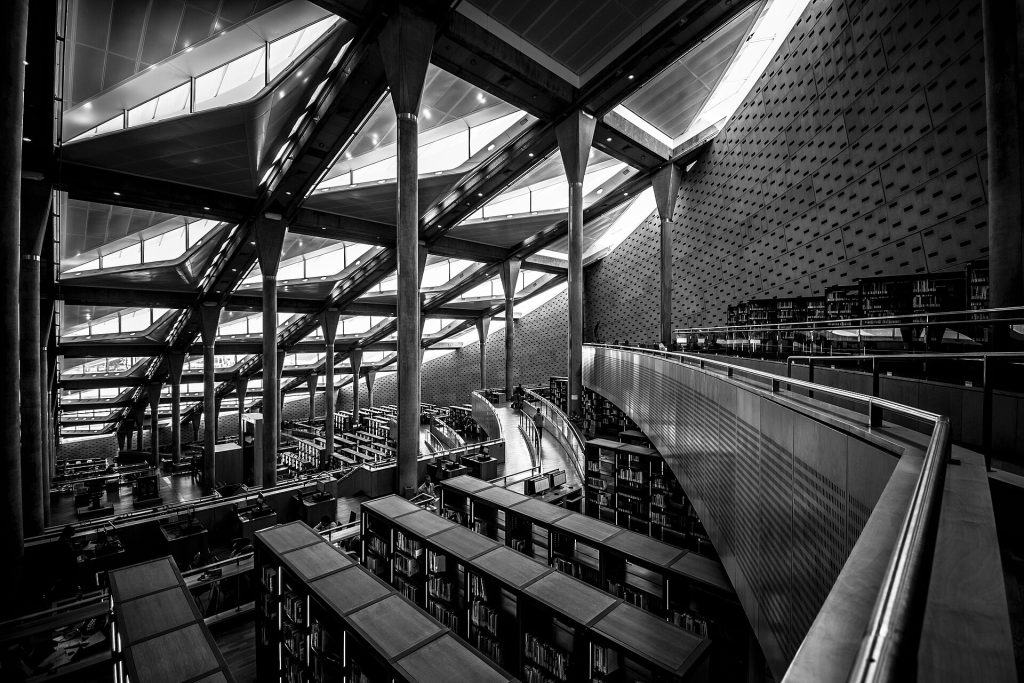
Inaugurated in October 2002 after twenty years of gestation, the Bibliotheca Alexandrina is a pharaonic project in the literal sense. Circular building tilted towards the sea like a sundial, Aswan granite facade engraved with characters from 120 world alphabets, cascading reading room on 11 levels that can accommodate 2,000 readers. It is undoubtedly the most beautiful modern building in Egypt and one of the most inspired by the 21st Mediterranean century.
The sightseeing tour provides access to the large reading room (from the upper gallery) and six integrated museums - Museum of Antiquities (objects brought back from the Pharos and the Ptolemies), Museum of Manuscripts, Sadat Museum (dedicated to the former president), planetarium, Museum of History of Science, and the permanent exhibition on historic Alexandria. Price 2026 - 100 EGP general admission + 70 EGP per additional museum, or around 400 EGP (£10) for the complete combo. Allow 2 to 3 hours.
One thing the guides rarely tell you: the library stages temporary exhibitions of international calibre throughout the year (frequently alongside the Louvre, the British Museum or the BnF), plus talks open to anyone. Look up the programme on its official site ahead of your trip; it can change the whole visit.
Kom el-Shoqafa's catacombs: three faiths beneath the streets
4 km from the corniche, in the Karmouz district, the catacombs of Kom el-Shoqafa descend 35 meters into the limestone soil of Alexandria. Discovered by chance in 1900 when a donkey fell there, they date from the 2nd century AD and offer something that is not seen anywhere else in Egypt - a Greco-Roman-Pharaonic architectural and iconographic mixture so accomplished that you forget that it is a cemetery.
Three successive levels (the lowest currently inaccessible due to rising water). Funerary chambers carved into the rock, sarcophagi, frescoes where Anubis (the Egyptian jackal god) wears a Roman soldier's breastplate, where Sobek holds the spear of a legionnaire, where mummy wrappings are decorated with Greek motifs. For those interested in comparative archeology and ancient cosmopolitanism, it is more meaningful than ten museums.
Price 2026 - 200 EGP foreign adults, 100 EGP students. Smartphone photography permitted, prohibited with flash. Allow 45 minutes to 1 hour. The surrounding area is not the prettiest in Alexandria - plan for a taxi to return to the corniche after the visit.
Pompey's Column and the Serapeum
A stone's throw from the catacombs, on Karmouz hill, rises a single surviving column from a vast ancient temple, the so-called "Pompey's" Pillar. The label is a misnomer: it has no link at all to Pompey the Great. Raised in 298 AD to honour the Emperor Diocletian, it is all that still stands of the Serapeum, the enormous sanctuary of Serapis, a hybrid god dreamed up by Ptolemy I so that Greeks and Egyptians could worship the same deity.
It rises 26.85 metres, carved from a single block of red Aswan granite, which makes it, strictly speaking, the tallest one-piece column to survive from antiquity. Around its base lie the temple's footings and those of Alexandria's second library (the successor to the great one, razed around 391 on the orders of the Christian patriarch Theophilus). Level ground, hardly any visitors, and lovely light at the end of the day.
Price 2026 - 100 EGP. Allow 30-45 minutes. The combined Pompey + Catacombs ticket costs 280 EGP - our recommendation.
The corniche, the port and Mediterranean cuisine
Stretching 32 km from Bitash in the modern west to Montaza Palace in the east, the corniche is the promenade that defines the city. It hums early and late, and fills on Friday evenings when families up from Cairo arrive. A few stretches deserve a proper pause: the quayside by Qaitbay's citadel, the open square fronting the Bibliotheca, the run between Cleopatra Beach and Stanley Bridge, and finally the Montaza Palace gardens (entry 30 EGP), where the promenade ends.
For the table, Alexandria is the Egyptian fish town. The auctions of the Anfoushi fish market (the most authentic) supply the daily restaurants. Three reliable addresses - Kadoura at Anfoushi (grilled John Dory, sardines, squid), Fish Market in Bahary (port view, choice at the fish counter), White & Blue in Stanley (designer setting, high prices but impeccable quality). For the traditional dishes of Egyptian cuisine (kochari, foul, ta'amiya), Mohammed Ahmed in the Manshiya district is the century-old institution.
Best time for Alexandria: weather through the year
Alexandria cannot be visited like the south of Egypt. Its Mediterranean weather changes everything.
Set against the rest of the country, Alexandria runs noticeably cooler in summer (6-8°C below Luxor or Aswan) and damper in winter. For how the city fits into Egypt's wider climate picture, read our region-by-region Egypt weather guide.
How many days does it take to Alexandria
Honest organizational question. Here are our most requested packages.
- One day (7am-8am on site) - possible from Cairo with departure at 7 a.m. Cover - Bibliotheca + Citadel of Qaitbay + Catacombs or Pompey (only one of the two) + fish lunch on the cornice. Return 7-8 p.m. Our most popular package for short travelers.
- Two days, one night: a more comfortable pace. Day 1: the Bibliotheca, the Citadel, lunch in Anfoushi, then a stroll along the Corniche as far as Stanley. Day 2: catacombs and Pompey's Pillar before lunch, Montaza Palace afterwards, back to Cairo by evening. Where to stay: the Steigenberger Cecil (a fixture since 1929) or the Helnan Palestine (looking over Montaza).
- Three days - for lovers of heritage or the Mediterranean. Add El Alamein (WW2 museum, 100 km to the west, Franco-German cemetery), Marsa Matruh, or a beach day at Cleopatra Beach.
Alexandria combines very well in a Egypt tour 10 days or 14 days with northern extension after the classic Nile valley. Allow 2 days from Alexandria inserted after returning from the south.
Get a tailor-made quote Alexandria + Egypt →
FAQ - Frequently asked questions about Alexandria
Is it really worth going to Alexandria, Egypt?
It is, as long as you know what you are coming for. Do not expect another Karnak or a second Cairo Museum. What you get instead is a Mediterranean feel, the modern Bibliotheca (among the finest buildings the Arab world has produced this century), the freshest fish anywhere in Egypt, and summer temperatures 6 to 8°C below the capital's. If you have already ticked off Cairo and the pyramids, Alexandria is the obvious next step, and a very different one.
How much does a day trip to Alexandria from Cairo cost?
In a private SEV formula (door-to-door air-conditioned transport + English-speaking guide + Bibliotheca + Qaitbay + Catacombs + Anfoushi fish lunch tickets), count from £110 per person for 2 people, or £70 per person for 4 people or more. By first class train + local taxi + solo visits, count £30-£40 per person excluding lunch.
Which months suit a visit to Alexandria best?
Aim for September-October or April-May. Expect 22-29°C, cloudless skies and that golden light which flatters the Citadel and the Bibliotheca in photographs. Summer (June-August) belongs to beachgoers, with the sands packed on Fridays: great for atmosphere, less so for sightseeing. Winter (December-February) is perfectly doable, but count on showers and a chill of 12-18°C, so pack a jacket.
Is there a train from Cairo to Alexandria?
Yes, this is the preferred way of the Egyptians. 6 to 12 daily departures from Cairo Ramses station, arriving at Sidi Gaber or Misr station in Alexandria. First class air-conditioned rate 100-160 EGP (2-). Duration 2h30 to 3h for “Spanish” VIP trains. Reservation preferable the day before via the ENR application or at the station counters. Correct service nothing more.
Which ancient sites should you see in Alexandria?
Four stand out. (1) Qaitbay's citadel (1477), raised on the footings of the ancient Lighthouse. (2) The Kom el-Shoqafa catacombs (2nd century AD), where Greek, Roman and Pharaonic styles merge like nowhere else. (3) Pompey's Pillar (298 AD) with the remains of the Serapeum. (4) The Roman theatre at Kom el-Dikka (2nd-4th century), right in the centre. Budget about EGP 600 in entry fees across all 4.
Is there a real beach in Alexandria?
Yes, several. Stanley Beach and Cleopatra Beach are the best known, accessible from the corniche. Correct sand, sea 18-26°C depending on season, basic infrastructure (chairs 100 EGP). For more beautiful and less crowded beaches, Marsa Matruh (300 km to the west) or Sidi Abdel Rahman offer turquoise water comparable to the Bahamas. If the priority is the seaside, prefer instead Hurghada in the Red Sea which offers coral reefs and guaranteed sun.
Which hotel to choose in Alexandria?
Three options depending on your style. (1) Steigenberger Cecil Alexandria - colonial institution 1929, Lawrence Durrell stayed there, emblematic facade. 4★ comfort and unique atmosphere. (2) Hilton Alexandria Corniche - modern 5★ with swimming pool, sea view, recommended for family travelers. (3) Helnan Palestine Hotel in Montaza - garden hotel in the former royal park, quiet, palm tree view. Count £60-£120 per night depending on the season.
Can Alexandria be combined with other sites in one day?
Only with difficulty. The Cairo-Alexandria run (220 km, 2h30 each way) swallows most of the day. That leaves barely 6-7 usable hours on the ground, enough for 3 of the major sites. To pair Alexandria properly with El Alamein, or add a stop at Wadi El Natrun, you need 2 days at least. THE SEV holiday packages include a 2 day / 1 night Alexandria extension once you are back from the Nile cruise.
Is Arabic or English necessary in Alexandria?
English is understood in tourist hotels and restaurants (corniche). Outside tourist areas, it is Arabic only. French is spoken very little in Alexandria - much less than in Cairo or Luxor where the tourist industry has been training English-speaking guides for 50 years. With a English-speaking SEV guide, the barrier disappears - without a guide, plan to Google Translate offline into Arabic.
Is Alexandria safe for tourists in 2026?
It is. Few Egyptian cities are as safe for overseas visitors as Alexandria. Tourist police keep watch along the corniche and at the main sites. Pickpocketing can happen in the busy market streets (Mansiya), so take the usual care. Do not wander alone after dark through the outlying residential districts. Women travelling solo may meet some street harassment, though it is milder here than in Cairo.
What is Alexandria's culinary specialty?
The fish, without hesitation. Sayadeya (rice with fish) is the emblematic dish, followed by grilled Anfoushi sardines, grilled John Dory in a salt crust, and seafood mezzes. Also - the foul medames revisited with Mediterranean lemon, and Greek pastries inherited from Ottoman immigration (especially in the Mansiya district). To explore Egyptian cuisine in depth, see our complete guide to traditional dishes.