
Go for a cruise on the Nile and explore, in complete peace of mind, the greatest treasures of ancient Egypt.

Embark on an unforgettable adventure with our Egypt Private Tour, a personalized 8-day journey that will introduce you to both the cultural treasures of Cairo and the peaceful charm of Dahabeya.
At the height of the New Kingdom (1549-1069 BC), the ancient city of Thebes, now known as Luxor, was the powerful capital of Egypt with a population of over a million. The pharaohs of this era, enriched by the military conquests which extended Egypt's influence
Revised April 2026 · Egypt specialists in Cairo since 2020, for British travellers
Luxor, Egypt packs roughly a third of the planet's pharaonic legacy into ten kilometres of Nile shoreline: Karnak, the temple of Luxor itself, the Valley of the Kings, Hatshepsut's terraces, the Colossi of Memnon and Medinat Habu. UNESCO inscribed the whole ensemble as a World Heritage Site in 1979. For a British traveller who books their own flight out from London or Manchester and then reaches Luxor on the sleeper train or a domestic hop we arrange (Cairo to Luxor, Aswan to Luxor), to visit Luxor in 2026 is to step back 3,500 years into ancient Thebes, seat of power under the Middle and New Kingdoms. Luxor, known in antiquity as Ouaset, is not somewhere you pass through: it earns three to five full days of its own, with an English-speaking Egyptologist at your side, either side of a Nile cruise down to Aswan.
The phrase "largest open-air museum on earth" gets attached to Luxor constantly, and for once the tourist-board cliché is accurate. Along the eastern shore sit the Luxor temple, right in the middle of the present-day town, and Karnak some 3 kilometres further north; the 2.7 kilometre avenue of sphinxes joining them was reopened in 2021 after three decades of digging. Across the river the Theban necropolis stretches for 8 kilometres: Valley of the Queens, Valley of the Kings, Medinat Habu, temple of Hatshepsut, Colossi of Memnon, the Ramesseum and the tombs of the nobles. Nowhere else on the planet gathers this many pharaonic monuments inside a 10 kilometre circle.
If you are a British traveller weighing up Cairo against Luxor, Aswan and the Red Sea, think of Luxor as the pharaonic chapter above all others. Cairo means the pyramids and the Grand Egyptian Museum; Luxor means temples and tombs; Aswan means Nubia and the southern frontier; the Red Sea means diving. Whenever we put together a bespoke Luxor travel plan, we build in a Luxor to Aswan cruise so the two great religious capitals of the Nile are joined up.
Being in Luxor Egypt also puts you at the obvious embarkation point for a Luxor Aswan cruise of 4 to 7 nights taking in Karnak and Luxor, then Edfu, Kom Ombo and finally Philae. Well over 80% of the travellers who message us on WhatsApp about an Egypt holiday settle on the same shape: Cairo for 3 nights, Luxor for 2, four nights afloat on the Nile, and a final night in Aswan. For British visitors it is the itinerary that balances best.
Put simply, a sensible luxor egypt travel plan for 2026 hinges on three decisions: how many days luxor deserves within your wider Egypt trip (2, 3, 5 or 7, covered in its own section below), what to do in Luxor on the east bank against the west bank (temples, necropolis, balloon flight, Nile cruise), and which month to travel given the heat. Message our English-speaking advisers on WhatsApp at +20 10 96569859 and you will have answers to all three inside 24 hours.
Weather in Luxor follows a continental desert pattern: hotter and far drier than Cairo. Asking about weather Luxor is a different exercise from asking about Hurghada or Marsa Alam, because nobody comes here for the beach; the days are spent among temples and tombs under an open sky. November and June are two entirely different trips.
October through to April is the best time to visit Luxor. Expect 22-30°C by day, 10-18°C once the sun is down, cloudless skies and not a drop of rain. December and January are the freshest months, and the kindest for spending hours on foot around the temples and the Valley of the Kings. February and March are a delight: gentle sunshine, the painted reliefs glowing in late-afternoon light, and tombs that are not yet airless.
Between June and August the thermometer climbs to 40 to 45°C in the shade, and inside the Valley of the Kings tombs it tops 50°C around midday. We advise against these months unless you are prepared to set off before 6am and be back by 10.30am. May and September sit in between at 32-36°C, manageable provided the day is built around the cooler hours. For a family travelling with children, the best time Luxor can offer is still November to March.
Worth knowing: British demand peaks from the middle of December until early April, in step with the school calendar (Christmas break, February half-term, Easter holidays). In those weeks the better cabins on Luxor-Aswan ships and the dahabiyas sell out 3-4 months ahead. Our busiest period for WhatsApp enquiries is September and October, for travel between December and February. Read our month-by-month guide to when to travel to Egypt.
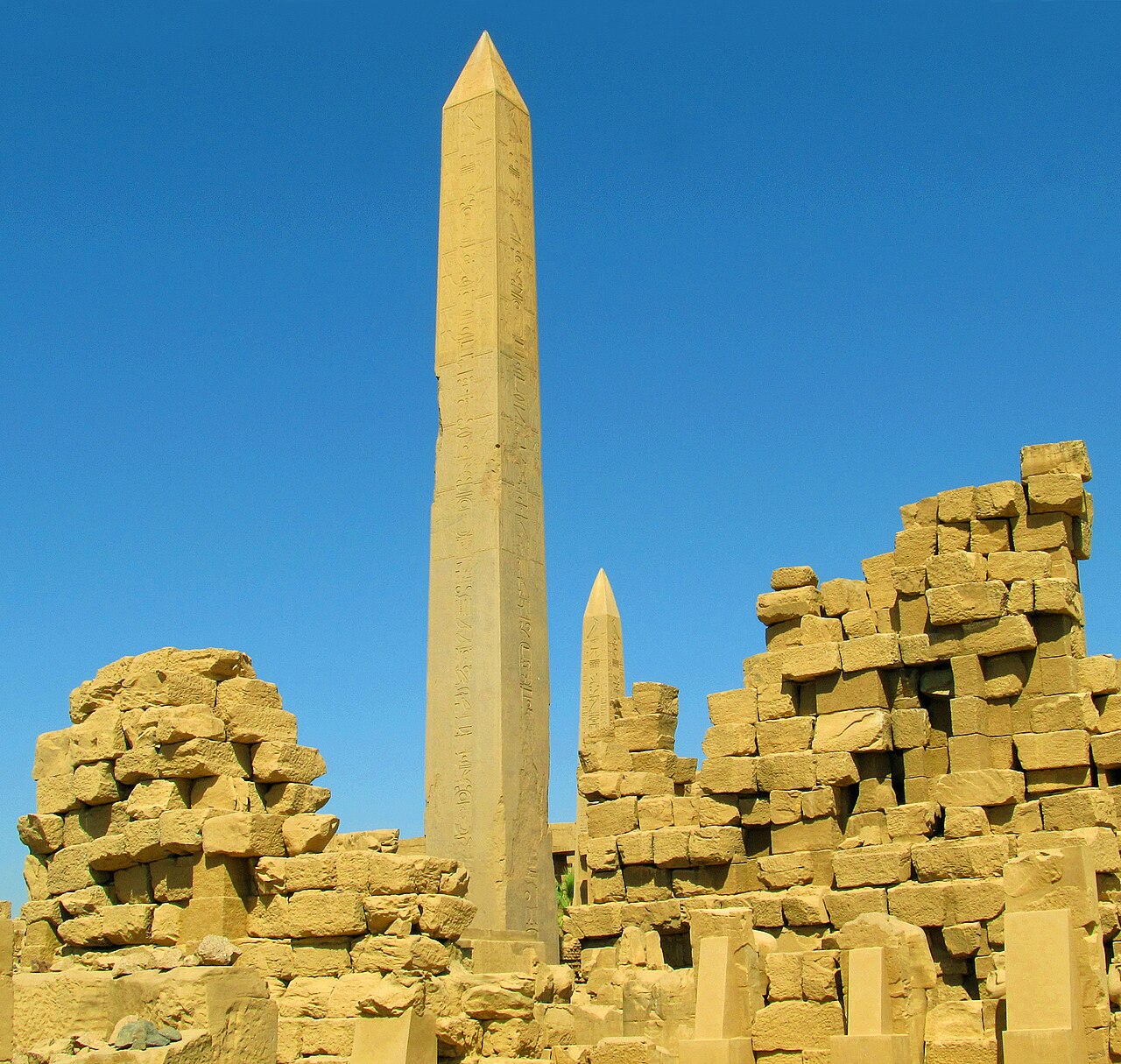
Nothing built for worship anywhere has ever matched the scale of the Karnak temple: two square kilometres of pylons, courts, hypostyle halls and chapels, added to across 2,000 years from the Middle Kingdom (2,000 BC) through to Ptolemaic times. Everybody who walks through Karnak falls quiet for a few minutes in the hypostyle hall, where 134 columns rise 23 metres to open papyrus capitals and the painted carving survives on the southern quarter of the room. If one Egyptian monument deserves the word monumental, this is it.
The usual route through Karnak starts on the avenue of rams (the ram-headed guardians of Amun), passes the unfinished first pylon, opens into the great court with the kiosk of Taharqa, and then reaches the hypostyle hall of Amenhotep III and Seti I. After that come the sanctuary of Amun-Re, the sacred lake, the obelisks raised by Hatshepsut and Thutmose I, and the cachette where the statues were found. Give the guided visit 2.5 to 3 hours so nothing is rushed. The sound and light show, performed in English three evenings a week, rounds off a first night in Luxor beautifully.
Admission to Karnak in 2026 is 600 EGP (roughly £9). Gates open from 6am to 5.30pm in winter and 6am to 6.30pm in summer. We book our British clients in for the first slot of the day (6.30am to 9am), well before the coaches from the cruise ships roll up after 10am. Our English-speaking Egyptologist will take you to the cachette court, the Greek and Phoenician graffiti, and the white chapel of Sesostris I, three spots that 90% of visitors walk straight past for want of a guide.
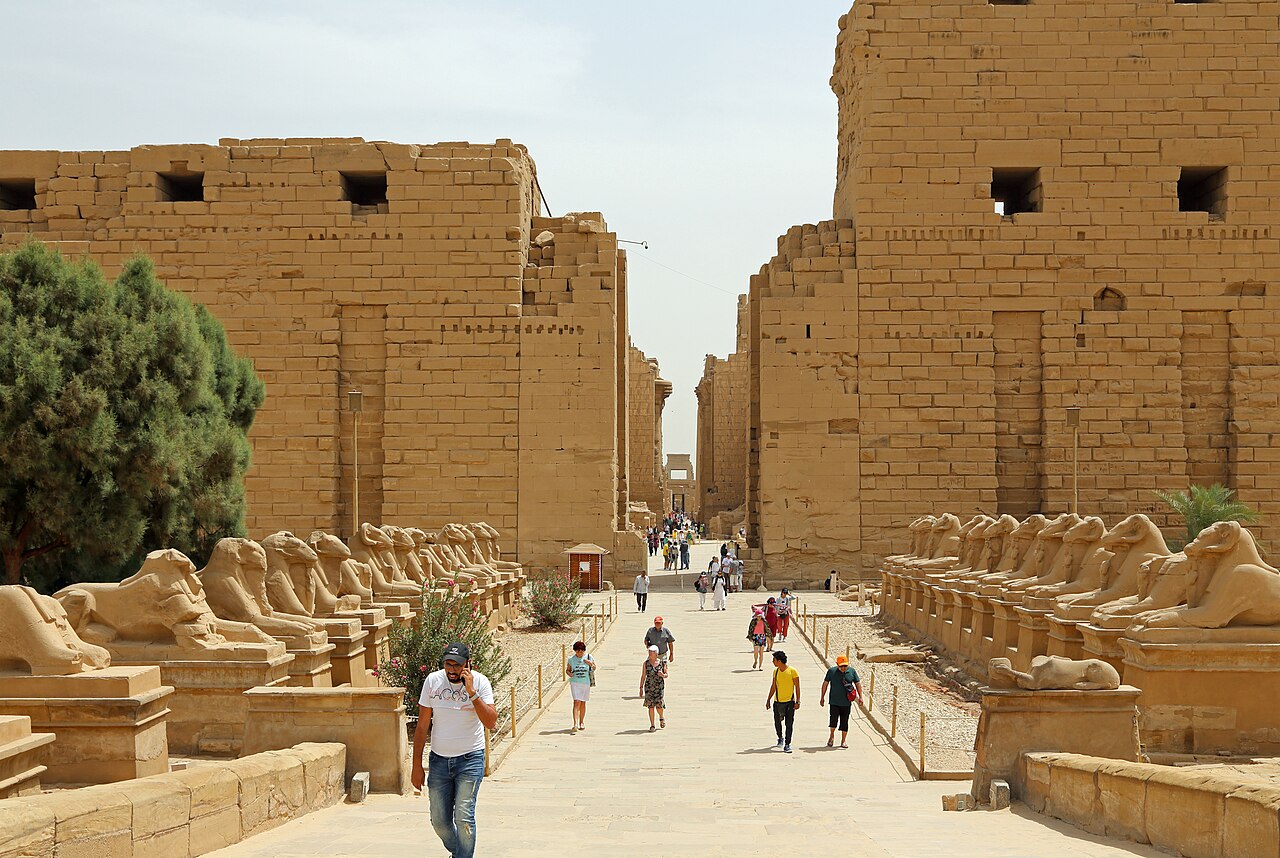
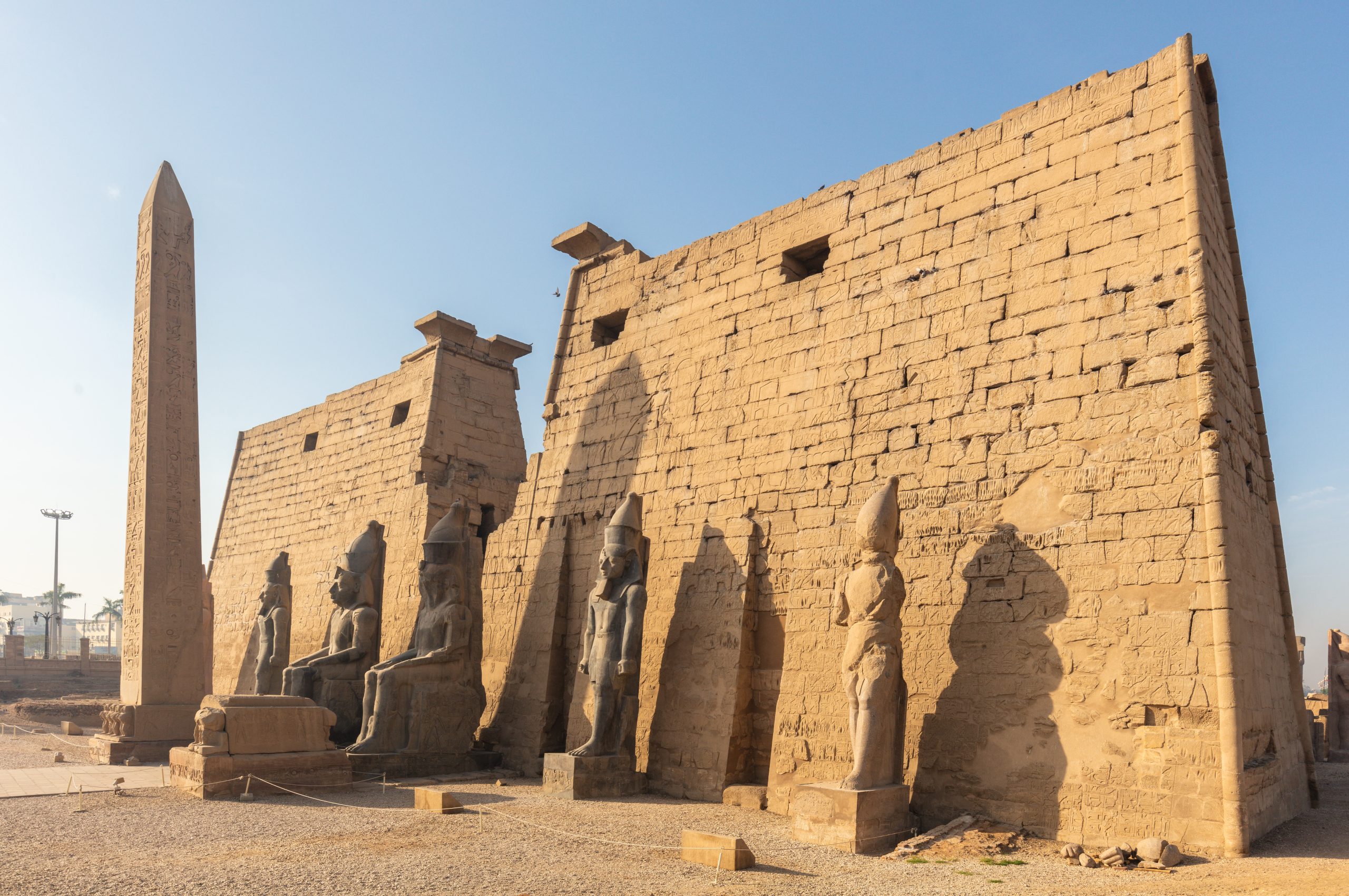
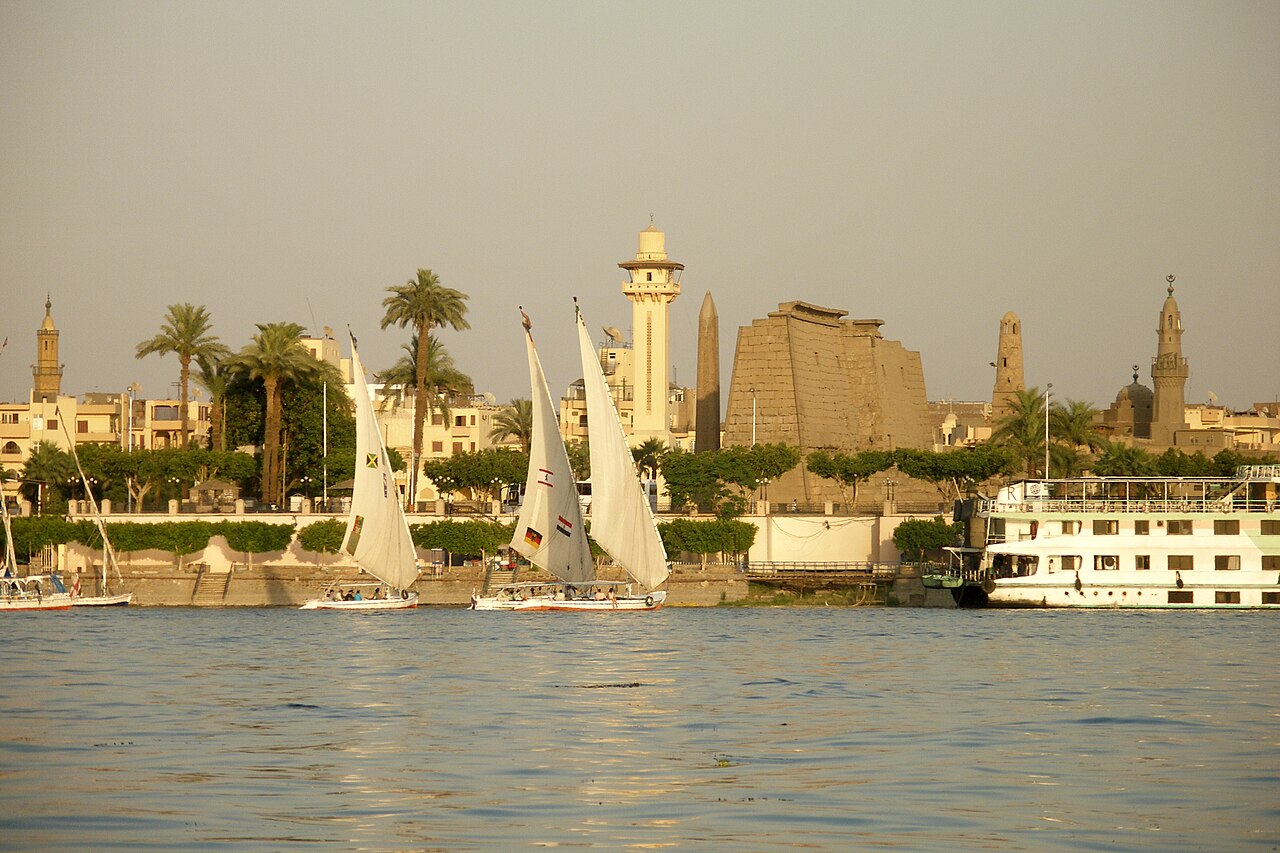
Sister to Karnak, the Luxor temple was raised by Amenhotep III in the 14th century BC and extended under Ramesses II. It stands right in the centre of town on the Nile Corniche, under 10 minutes on foot from the railway station and the main hotels. From the front you meet a pylon that once carried two obelisks (one is still here; the other has stood on the Place de la Concorde in Paris since 1836), a pair of seated colossi of Ramses II, a peristyle court, the great processional colonnade of Amenhotep III with its 14 columns of 19 metres, and finally the sanctuary of Amun-Re.
Because it stays open until 10pm, this is the one temple in Egypt you can see floodlit after dark. We tell our British clients to come twice: once late in the afternoon, when low sun rakes across the reliefs, and again at about 8.30pm for the illuminations. Ask people afterwards and many rank it alongside Karnak as the memory that stayed with them.
Linking Karnak with the Luxor temple, the 2.7 kilometre Avenue of Sphinxes opened to the public in November 2021, thirty years after the excavations began. Walk it early, before 9am (allow an hour), or cover it by horse-drawn carriage. Over 1,050 sphinxes line both sides, ram-headed on one stretch and human-headed on the other. It ranks among the highlights of the bespoke visit Luxor programmes we put together.
Your Luxor 2026 quote, on WhatsApp, inside 24 hours. From our office in Cairo, our English-speaking team shapes a Luxor itinerary around you: anything from 2 to 7 days, a private Egyptologist, a hotel on whichever bank you prefer, a balloon flight, a 4 or 7 night Luxor to Aswan cruise, and rail or air connections. Tell us your dates and your budget: message +20 10 96569859 here. You will hear back within 24 hours at the latest.
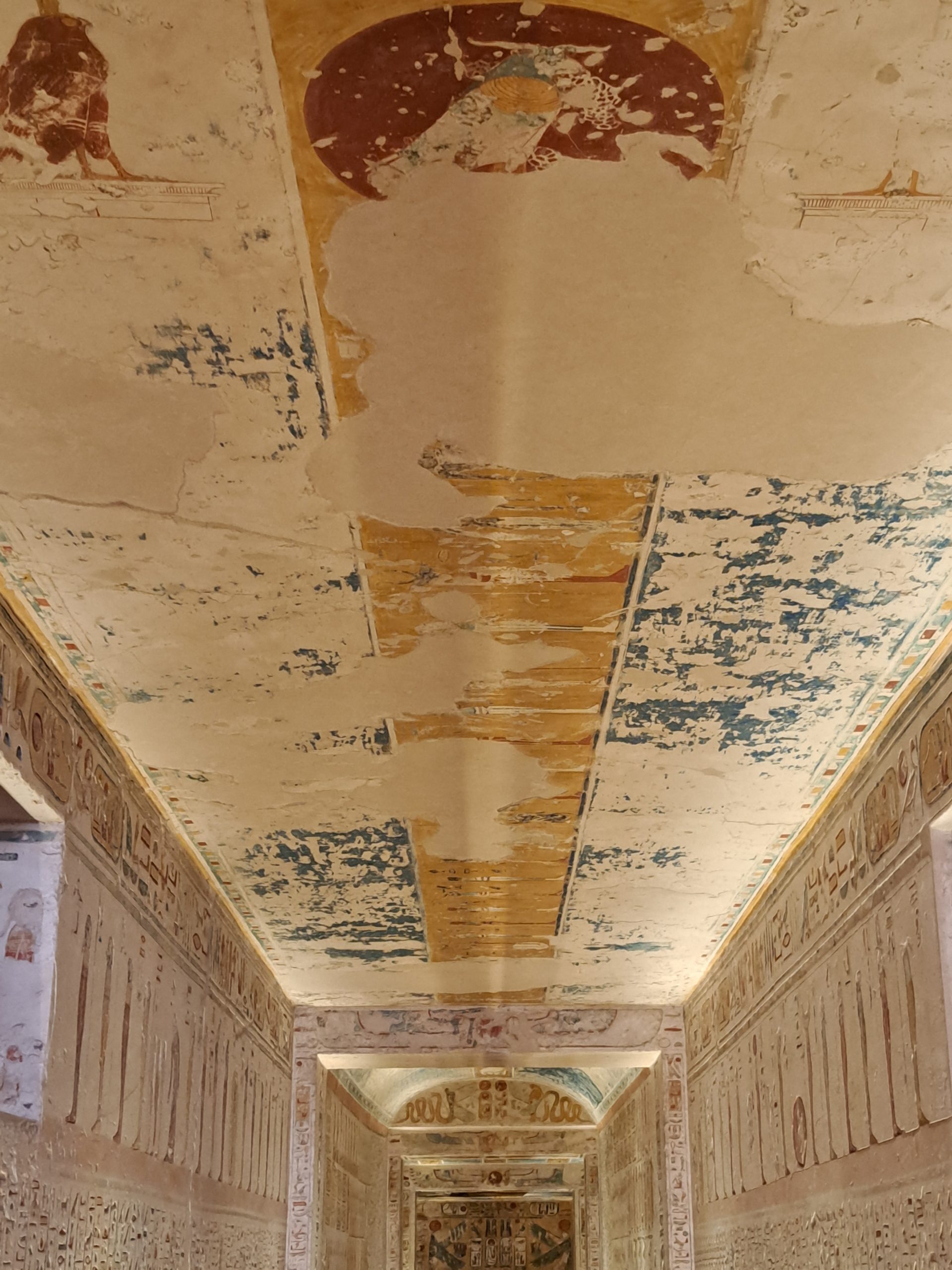
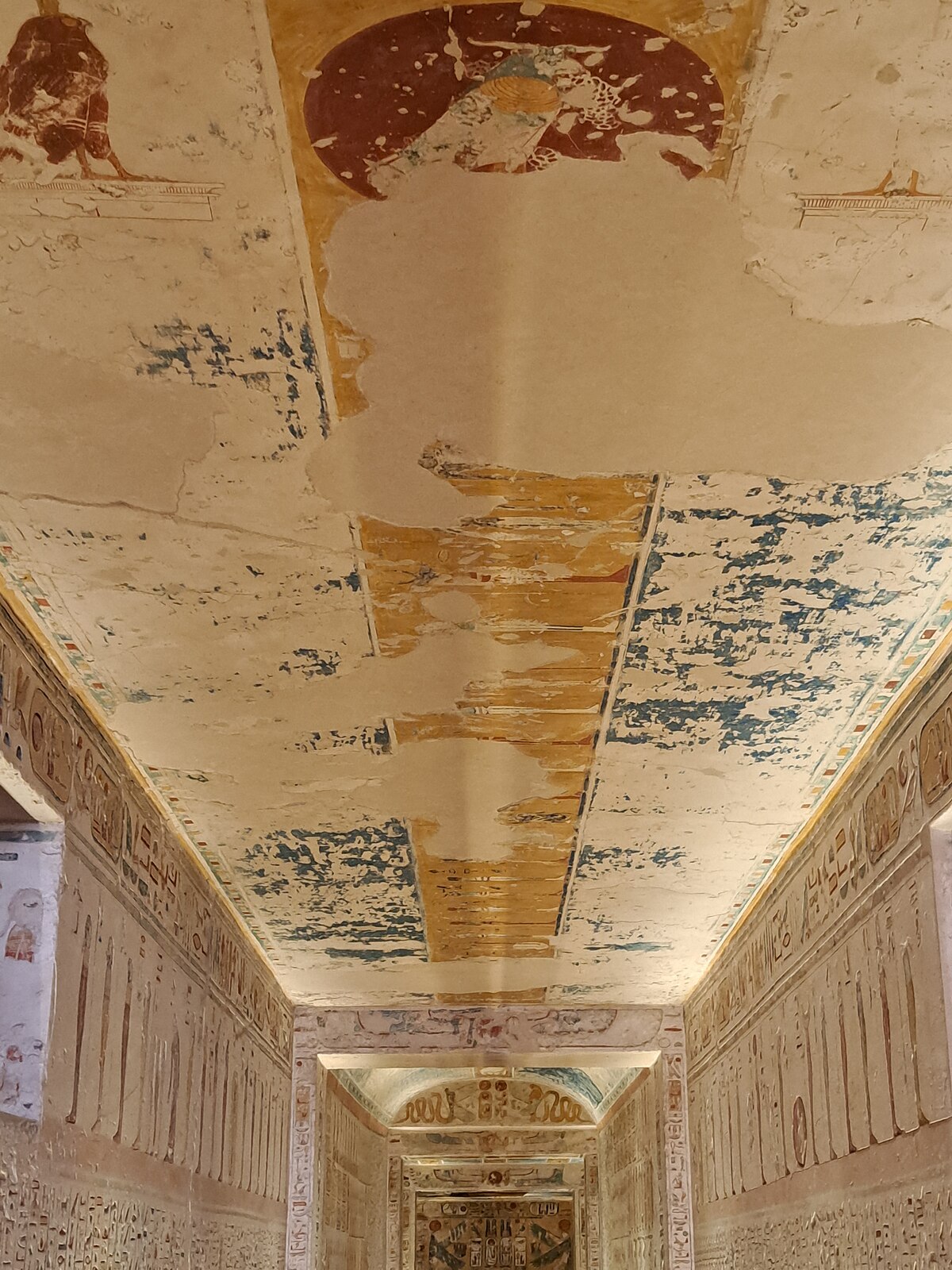
Pharaohs of the New Kingdom (1550 to 1070 BC) were buried in the Valley of the Kings, where sixty-three tombs have so far come to light, among them KV62, Tutankhamun's, opened by Howard Carter in 1922. Nobody sees the whole valley of the kings in a single visit: a standard ticket (750 EGP) admits you to 3 of the 9 tombs open at any one time. Our suggestion is KV11 (Ramses III, 125 metres of painted corridors), KV9 (Ramses V and VI, with astonishing astronomical ceilings) and KV2 (Ramses IV, its royal blue pigment beautifully intact). Tutankhamun's tomb costs extra (700 EGP); it is small, but few can resist it.
Two kilometres further south lies the Valley of the Queens, with 91 tombs of royal wives, princesses and princes. Its undisputed jewel is QV66, built for Nefertari, the great wife of Ramesses II, whose painted reliefs are among the finest the New Kingdom has left us. Entry to Nefertari runs to 2,500 EGP (around £38), capped at 200 people a day and 10 minutes inside. Every client who asks us for a top-tier Luxor holiday has Nefertari reserved ahead of time through the agency.
Getting there: allow 45 minutes by road from Luxor over the Luxor Bridge, or 15 minutes if you take the ferry and then a taxi. In summer the tombs hold 45-55°C inside, which is why the 6am to 10am window matters so much from June to August. Cameras stay in the bag in every tomb unless you buy the 300 EGP photo permit. Our usual what to do in Luxor plan gives the West Bank a full day: Medinat Habu, the Colossi, Hatshepsut, the Valley of the Queens and the Valley of the Kings, with a traditional lunch in Gourna.
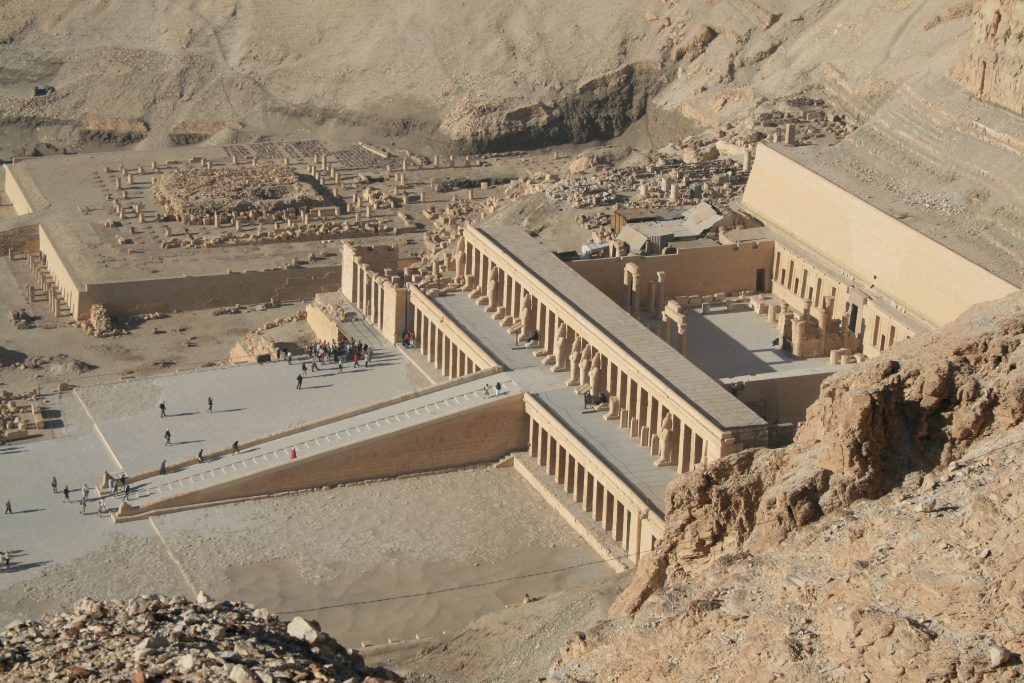
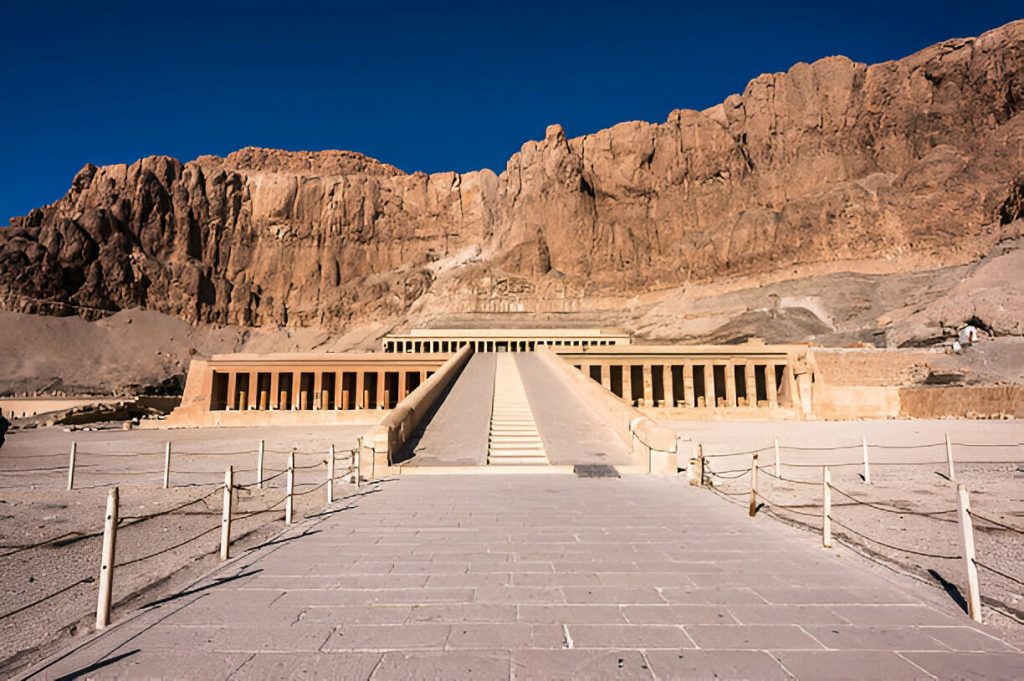
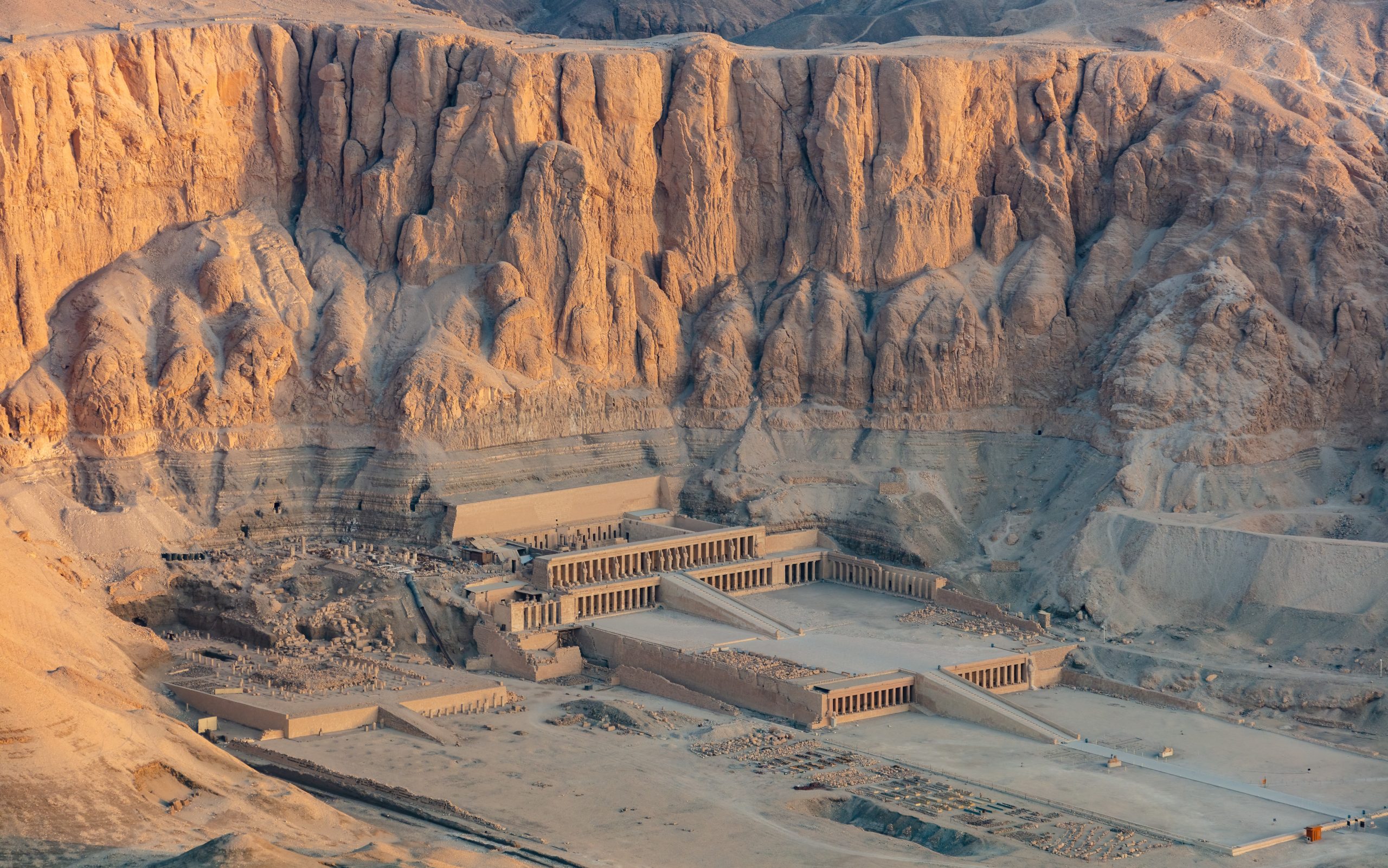
No monument on the West Bank is photographed more often than the temple of Hatshepsut at Deir el-Bahari: three stacked terraces set against the cliff, joined by ramps, beneath an amphitheatre of orange limestone. Hatshepsut, fifth ruler of the 18th dynasty and among the very few women to rule as king, had her trading expedition to the land of Punt (Somalia) and the divine account of her own birth carved into its walls. On the middle terrace, make time for the chapels of Anubis and of Hathor; they are the two rooms you should not skip.
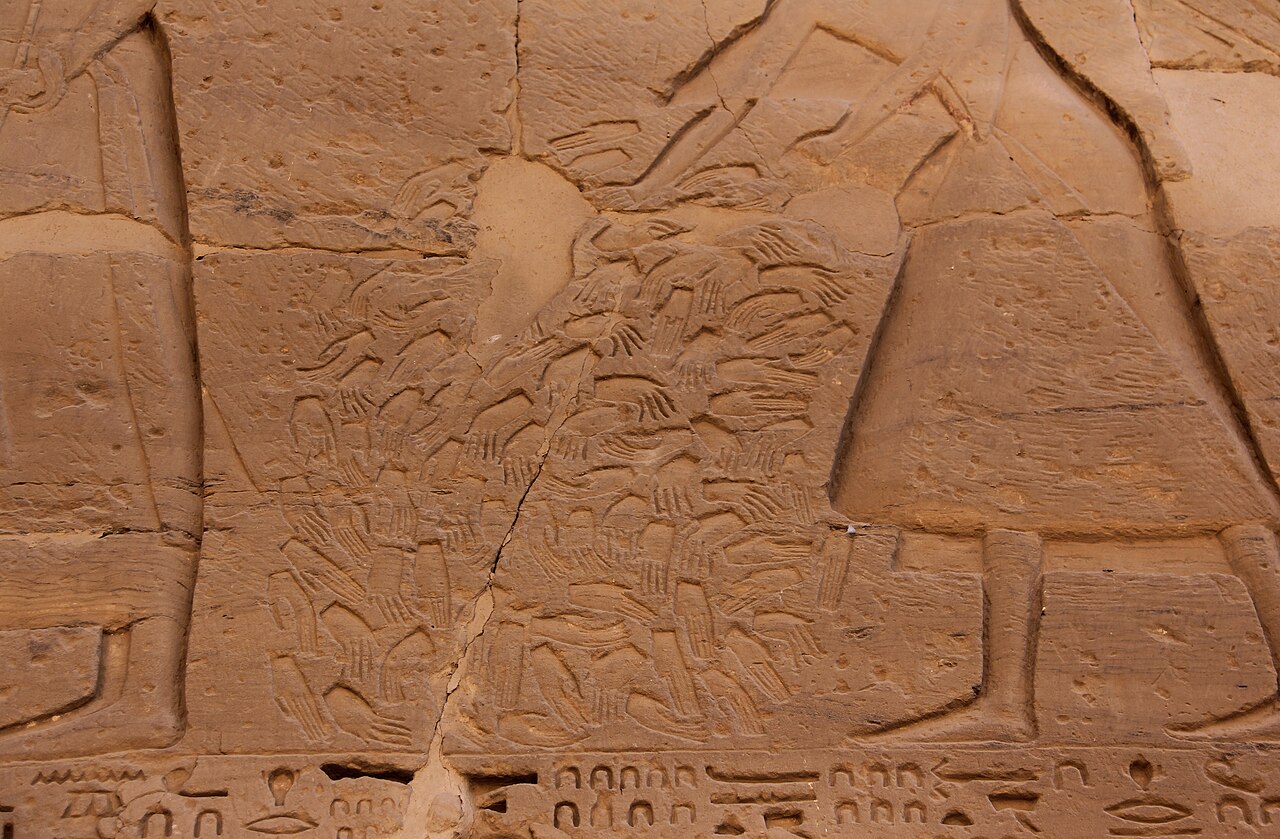
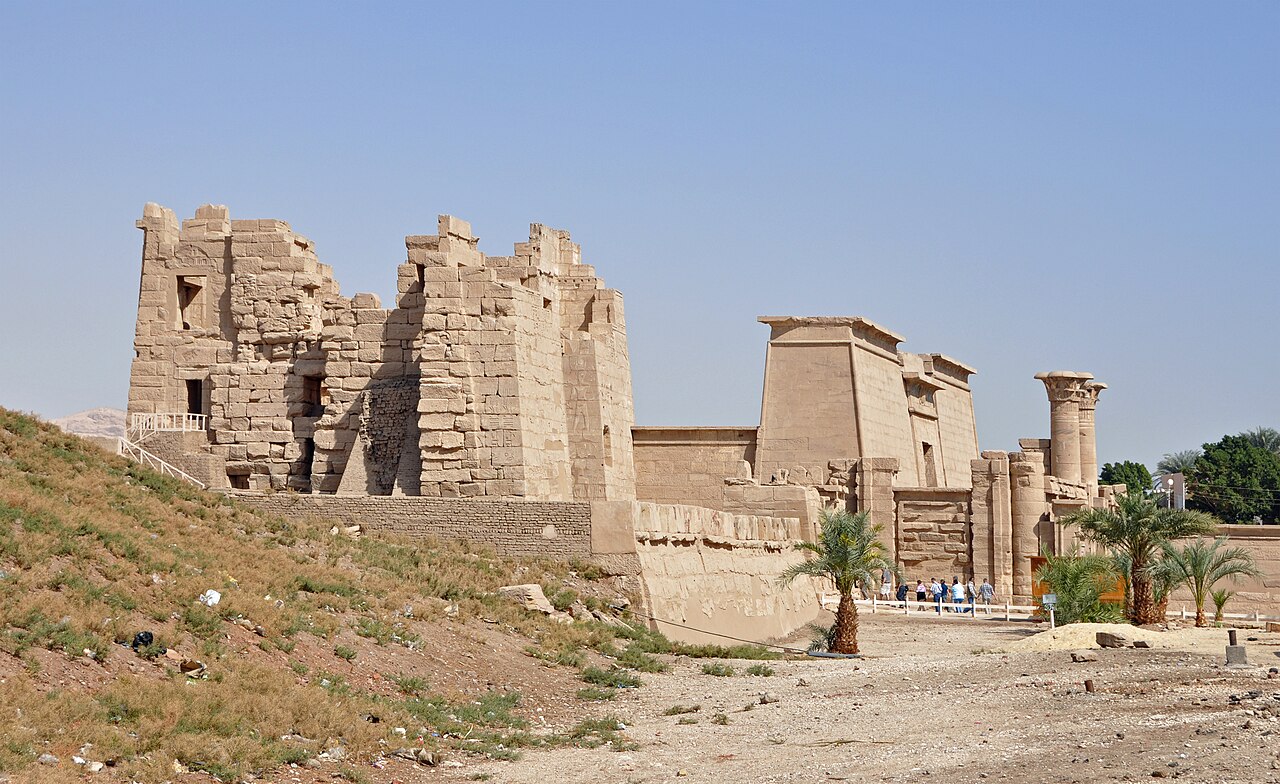
Three kilometres south of Hatshepsut stands Medinat Habu, the mortuary temple of Ramses III. It draws far fewer coaches than the Valley of the Kings, so it is calmer, and it holds the finest battle reliefs in the whole of ancient Egypt: the sea battle against the Sea Peoples, the campaigns in Libya, and the tally of severed hands. About three-quarters of the carving still carries its paint. Between the royal tombs and lunch, it is the stop we enjoy most.
Two seated figures of Amenhotep III, each 18 metres tall, the Colossi of Memnon announce the Theban necropolis to anyone arriving by the modern road. The Greeks named them after Memnon because the northern statue used to "sing" at dawn, an effect of heat expanding the stone cracked by the earthquake of 27 BC. Fifteen minutes and a few photographs will do for most people; keen classicists can linger over the Greek and Latin graffiti cut into the legs.
After the temples themselves, the Luxor hot air balloon is what our British clients ask for most. You lift off from the West Bank half an hour before the sun comes up and spend 45 to 60 minutes drifting above Hatshepsut's temple, the Valley of the Kings, Medinat Habu, the Colossi of Memnon and the river as the light arrives. Baskets carry between twelve and twenty passengers, depending on the company.
In 2026 expect to pay from 100 to 180 USD a head, according to season and company. The bargain operators (100-120 USD) tend to overfill baskets to 20 people and rush the safety talk. We use two certified companies (Sindbad and Magic Horizon) at 140-160 USD: no more than 16 passengers, a safety briefing in English, and your money back if wind grounds the flight. The fare covers hotel to jetty to hotel transfers, a proper breakfast on landing and a flight certificate.
Some practicalities: the alarm goes at 4 to 4.30am in winter and 3.30am in summer, since everyone must be down before the thermal wind picks up at about 7.30am. Pack a jacket; at 1,000 metres it is 10°C even in July. Above 10 km/h of wind the flight is cancelled, which happens roughly one morning in five in winter and one in fifteen between May and September. When it does, we move our clients to the following day without charging anything. To secure your Luxor hot air balloon, book through us at least 3 days ahead.
No format suits ancient Egypt better than the Luxor Aswan cruise: 4 or 5 nights heading south, or 7 nights there and back. The itinerary calls at Luxor (Karnak and the Luxor temple), the lock at Esna, Edfu for the temple of Horus, Kom Ombo and its twin temple of Sobek and Haroeris, and Philae, the island temple of Isis at Aswan. It is the one way to cover Upper Egypt with no long road journeys and no repacking every morning. Every option is set out on our full Nile cruise hub.
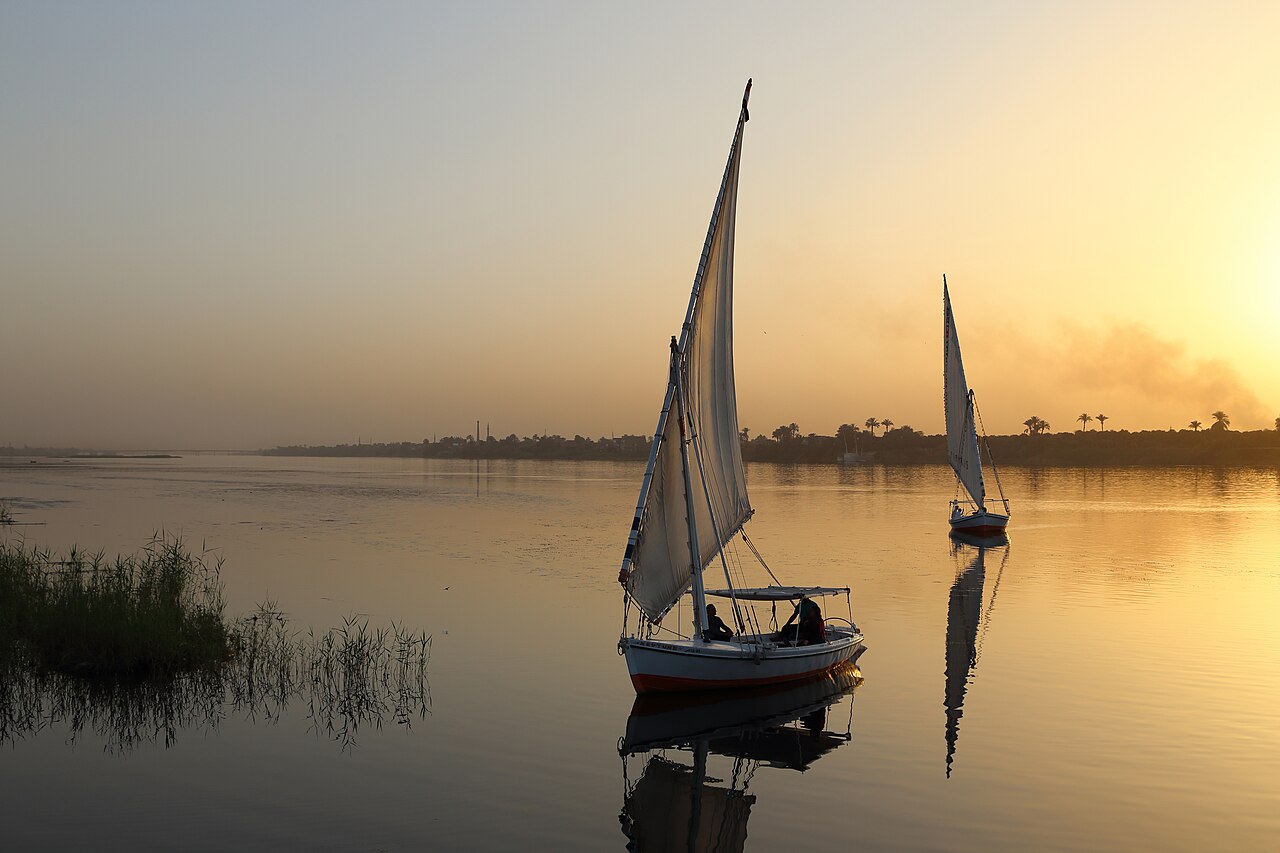
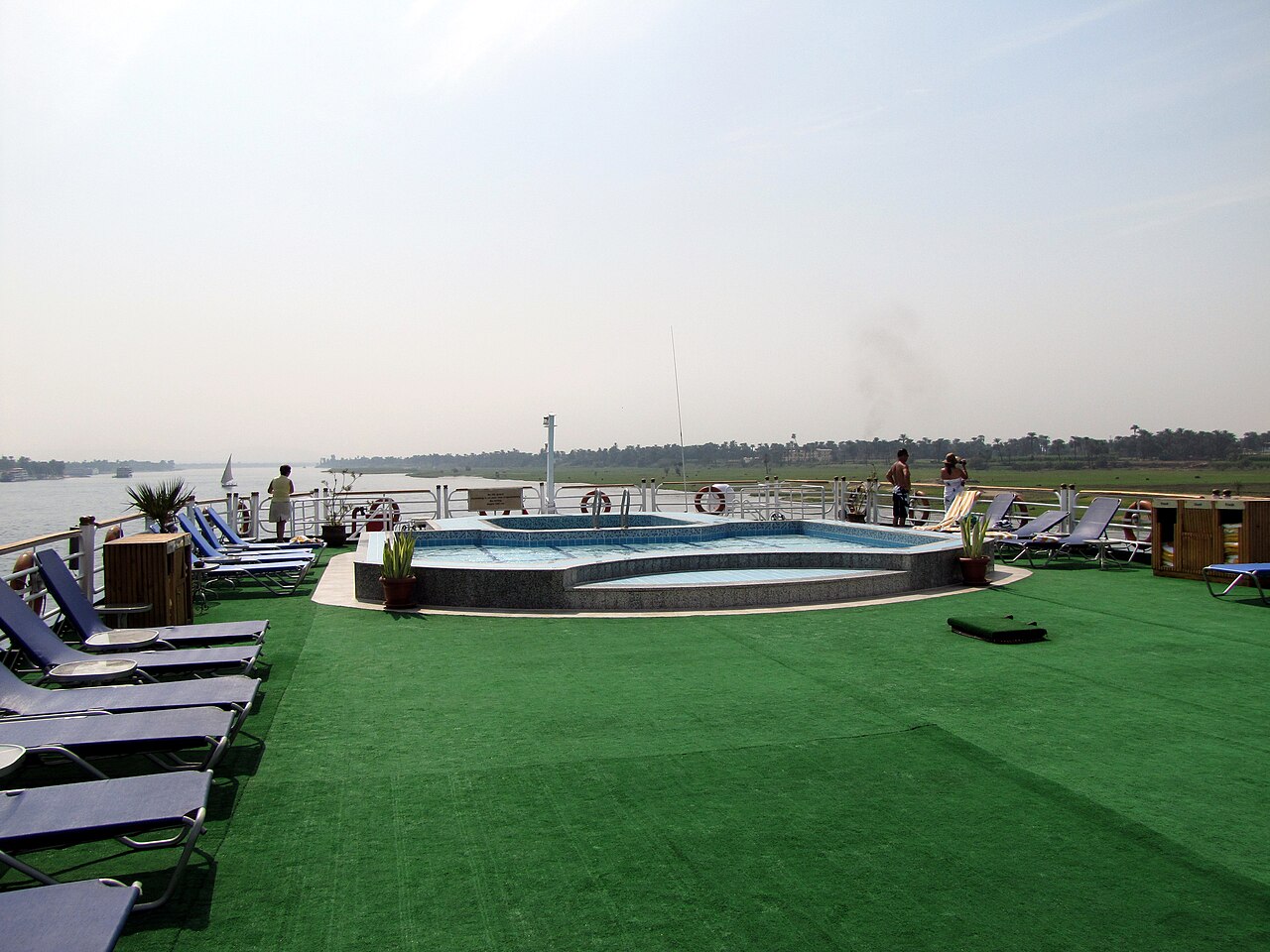
Boats on this stretch fall into three groups: the 4 and 5 star cruisers (80 to 150 cabins, a pool on the sun deck, international buffets, from £770 per person for 4 nights on an all-inclusive basis), the modern dahabiyas (6 to 10 cabins, under sail, an altogether more refined mood, £1,690 to £2,690), and the sandals and other small craft available for private charter (4 to 6 cabins, by request only, £3,080 upwards). You can take the cruise on full board, half board or bed and breakfast if you would rather eat ashore at the stops.
On the ground: boats leave Luxor from the jetty beside the Hotel Pavillon Winter, ten minutes' walk from the Luxor temple. You board at midday, lunch is served at 1pm, and departure is at 4pm or the following morning depending on direction. British clients who book a 4 night Luxor Aswan cruise usually reach Luxor on the overnight sleeper from Cairo (9 hours, air-conditioned compartment) or on a 1h15 EgyptAir domestic flight. From Aswan back to Cairo the only sensible option is the 1h25 flight.
"how many days in luxor" is the question we are asked most often on WhatsApp, and the honest reply depends on what kind of British traveller is asking.
Two days in Luxor is the floor, and only if you are then boarding a cruise to Aswan. Spend the first on the east bank (Karnak first thing, the Luxor temple towards dusk, sound and light after dinner) and the second across the river (Valley of the Kings, Hatshepsut, Medinat Habu, the Colossi). A balloon flight can slot into the morning of day 2 or 3. It is the version we build for people doing Cairo, Luxor, cruise and Aswan in 8 to 10 nights.
Three days in Luxor is the right length for a first visit that does not include a cruise: east bank on day 1, west bank on day 2, then a dawn balloon flight, the temple lit up at night and a farewell evening on day 3. Couples who would rather settle into one base than move boat every night tend to choose it.
Five days in Luxor is the Egyptology lover's version. On top of the core sites it takes in Nefertari in the Valley of the Queens, the nobles' tombs (Rekhmirê, Sennefer), the Ramesseum of Ramesses II, Dendera and its temple of Hathor 65 kilometres to the north, and Abydos, 170 kilometres north, with the cult of Osiris and the king list of Seti I. Nearly everyone who books five days with us is either studying the subject or back for a second or third time.
Seven days in Luxor is for researchers and the truly committed: it can stretch to the Aswan quarries, the Western Desert by the El-Kharga road, and a long spell aboard a private dahabiya. Hardly anyone asks for it, perhaps 1 to 2% of enquiries.
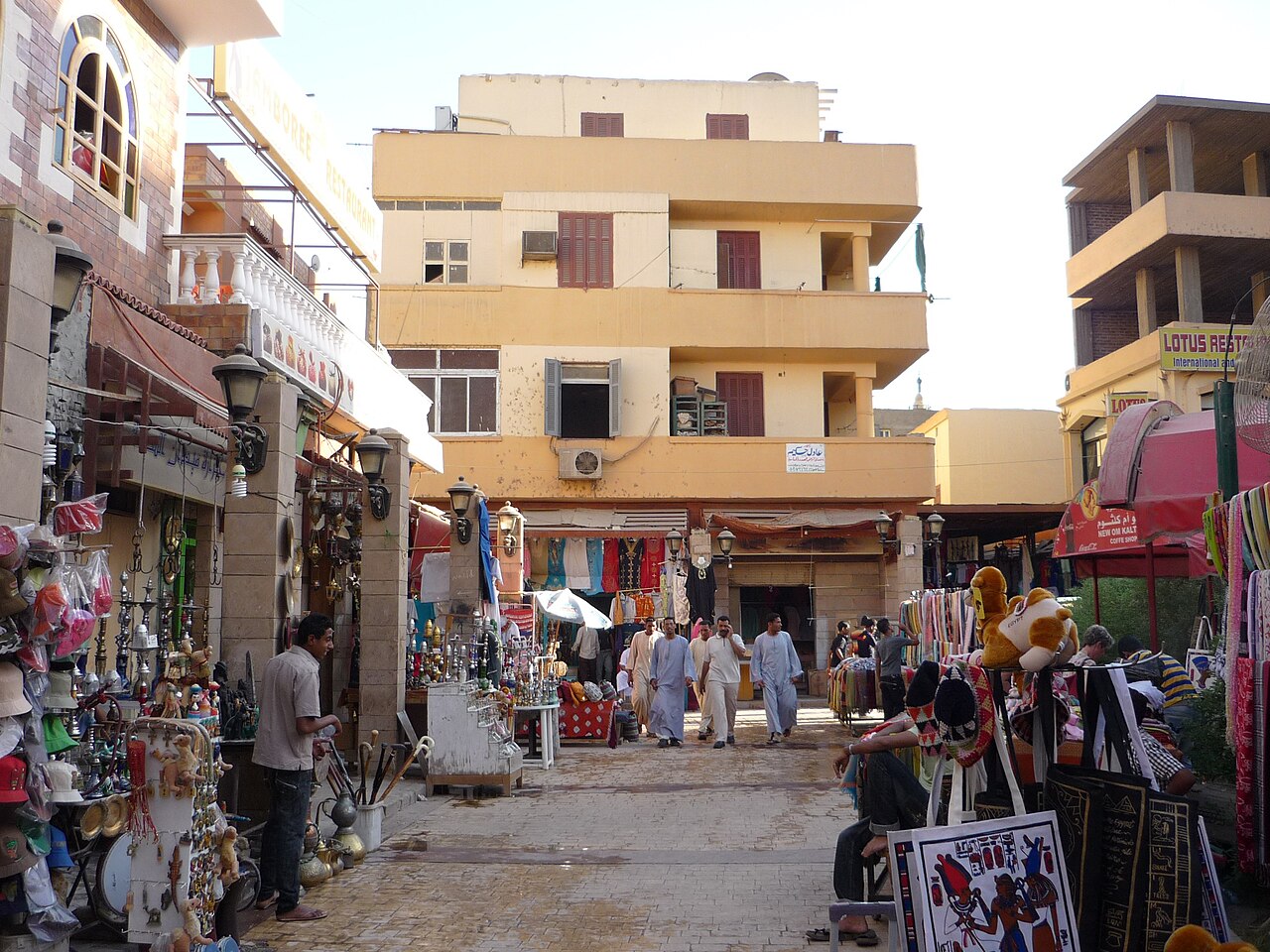
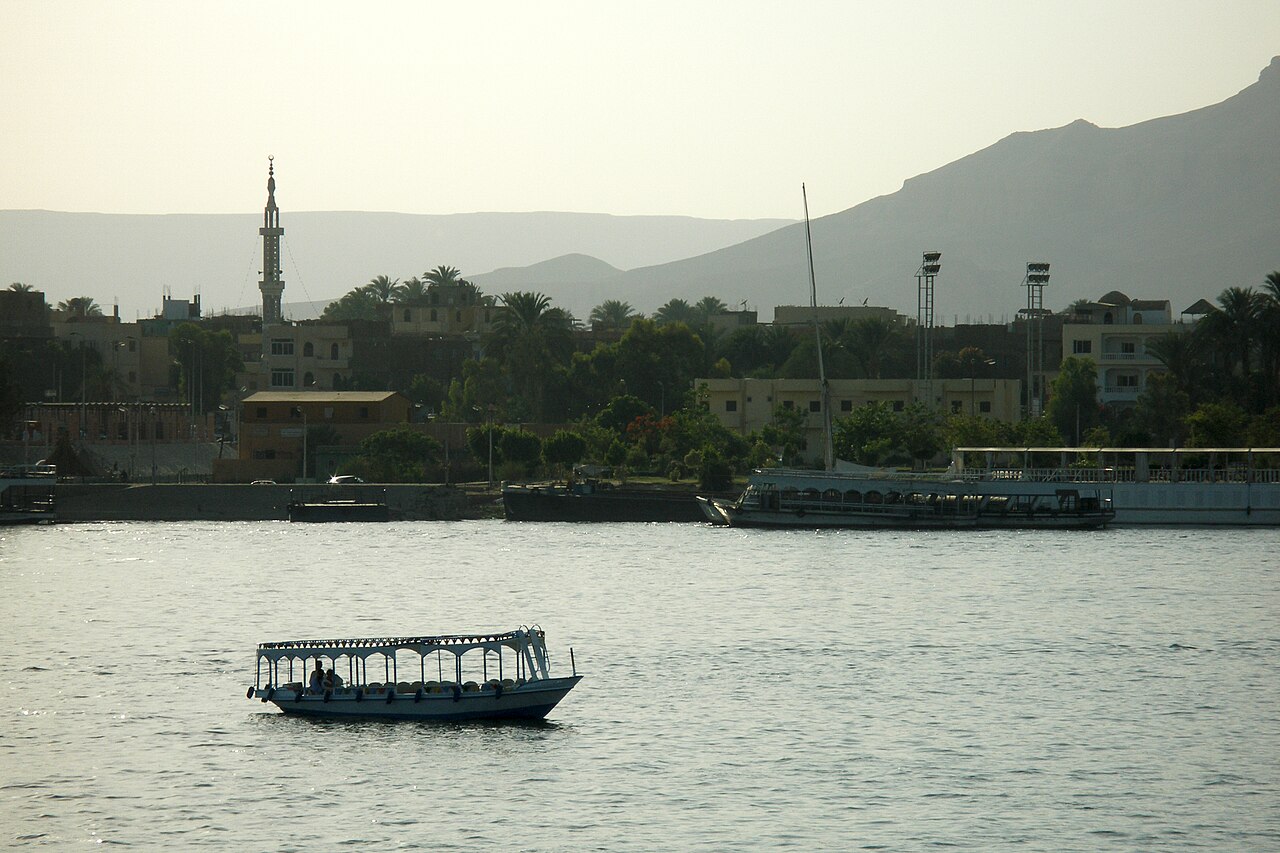
Picking where to stay in Luxor really means picking a bank. The east side is the modern town, a short walk from the Luxor temple and the station; the west side is countryside, near the Valley of the Kings and Hatshepsut, looking out over the desert hills.
On the East Bank, the addresses we have tried with British guests: Sofitel Winter Palace Luxor (a palace hotel of 1886, 95 rooms, gardens down to the Nile, 200 metres from the Luxor temple, from £220 per night), Hilton Luxor Resort (pool, spa, a quarter of an hour from the temples, £120) and Steigenberger Resort Achti (500 rooms on the Corniche, £90). Handy if a cruise follows, since the jetty is ten minutes on foot.
Across on the West Bank, the places we love: Hotel Al Moudira (28 suites in a riad-style palace, private pools, £250 per night, and the hotel that well-heeled British clients covet most in all Egypt), Djorff Palace (a boutique property, £60) and Nour el Gourna (a warm little guesthouse run by a family who speak English, £40). Calmer and greener, ideal for couples who want to slow right down. The single catch: dinner on the east bank Corniche is 45 minutes away.
For a 3 night Luxor stay we usually suggest splitting it: two nights on the east bank for the temples, the restaurants and the cruise jetty, then one night on the west bank for the desert quiet and breakfast facing the cliffs. We book both and lay on a driver to move you across.
Three ways link Luxor with Cairo: the sleeper train (our pick for atmosphere), a domestic flight (our pick for speed) and a private car (which we advise against).
Watania's Sleeping Train (formerly Abela) is the train Luxor Cairo option: it pulls out of Luxor at about 9.45pm and reaches Cairo Ramses between 6 and 7 the following morning. Nine to ten hours on board, in an air-conditioned two-berth compartment with a washbasin, supper brought to the cabin and breakfast when you wake. Fares in 2026: 100 to 130 USD per person sharing, 150 USD in a single. British clients who enjoy the romance of Egyptian railways rate it highly. We need 2 weeks' notice to secure berths.
EgyptAir's Luxor to Cairo service takes 1 hour 15 minutes and costs from £60 to £120 according to season, with three to five flights a day. Quicker and less atmospheric than the sleeper, it suits anyone landing straight into Luxor on a charter or coming across from Hurghada. Our packages cover the booking and a meet-and-greet at Luxor Airport (LXR), 6 kilometres east of town.
Driving between Luxor and Cairo is something we steer people away from: 700 kilometres, 10 to 12 hours and a crossing of the Arabian desert. It suits only specialist itineraries via Abydos and Dendera, with a police escort.
Moving around town: reckon on 50 to 120 EGP for a taxi ride, 400 to 600 EGP for a driver over half a day and 800 to 1,200 EGP for a whole day. Horse-drawn carriages look the part but are best kept for short hops. Every Luxor package we sell comes with a vetted English-speaking driver. Luxor-Cairo connections are covered in our Cairo airport guide too.
Daily spend for a British visitor in 2026, excluding flights:
The unavoidable outlays are the tickets: 600 EGP for Karnak, 500 EGP for the Luxor temple, 750 EGP for the Valley of the Kings (3 standard tombs), 700 EGP on top for Tutankhamun, 2,500 EGP for Nefertari, 440 EGP for Hatshepsut, 220 EGP for Medinat Habu, and 140-160 USD for the balloon. A full West Bank day without Nefertari or the balloon therefore comes to about 2,110 EGP in entries, around £32. We charge the official rates and add nothing on top.
Fancy seeing Luxor with none of the hassle? Our English-speaking team puts the whole trip together for you: a hotel on either bank, a private English-speaking Egyptologist, a driver, Karnak, the Luxor temple, the Valley of the Kings, Hatshepsut, Medinat Habu, the balloon, and a Luxor to Aswan cruise if you want one. Ask for your quote on WhatsApp, answered within 24 hours, on +20 10 96569859. Advice in English, prices with nothing hidden.
Luxor in 2026 is closely policed. After the 1997 attack, Egypt wrapped the city in a dedicated tourist security net: uniformed tourist police on the gate of every temple, checkpoints along the roads to the Valley of the Kings, and army posts on the bridges and desert routes. We know of no security incident involving a British visitor to Luxor in at least a decade.
A British woman on her own can get about Luxor by day with no trouble at all: temples, souks, the Corniche, restaurants. After dark, we suggest keeping to the visitor districts on the East Bank (the Corniche and the streets around the Sofitel and the Hilton). Away from the temples, covering shoulders and knees is welcomed as a courtesy rather than a requirement. For any evening outing, we supply a vetted driver as standard.
Families find Luxor easy. Egyptians adore children, who are forever being asked in for tea by local families and are spellbound by the carvings and the balloons overhead. Pack sunhats, factor 50 cream and lots of water. With little ones, the west bank is the gentler, quieter choice over the east bank.
The tricks to watch for in Luxor in 2026: the self-appointed guide at the temple gate who quotes 10 USD for a tour and demands 50 USD at the end (say no politely and firmly; every guide we send is licensed); the carriage driver who offers a ride for 20 EGP and then wants 200 EGP (agree the fare in writing before you climb aboard); and the trader at Karnak who drops a trinket into a child's bag and then insists on payment (never accept anything without hearing the price first). With an English-speaking guide from our agency beside you, none of these gets far.
Sem Élégant Voyage has specialised in Egypt since 2020 from its base in Cairo, with a team dedicated to English-speaking clients. Every bespoke Luxor travel plan rests on the same three supports: a private Egyptologist guide licensed by the Egyptian Ministry of Tourism, a driver in an air-conditioned 4-seat or 7-seat vehicle sized to your party, and a WhatsApp line watched around the clock from the day you arrive to the day you leave.
Our most requested Luxor tours in 2026:
An English-speaking adviser handles every enquiry personally and replies within 24 hours at most. There is no off-the-shelf package: we shape the trip to your dates, your budget, the standard of hotel you like and what draws you (Egyptology, photography, a family trip, a couple, travelling solo). Quotes cost nothing and commit you to nothing. See every possible format on our Egypt packages hub, and browse half-day ideas on our day trips hub.
To get a Luxor Egypt 2026 quote under way, WhatsApp +20 10 96569859 with your travel dates and how many of you there are. Within 24 hours you will have three costed proposals pitched at your budget.
Three things left to do before Luxor: (1) settle on your dates, (2) decide how long (3, 5 or 7 days), (3) get in touch. A free WhatsApp quote inside 24 hours. You deal with an English-speaking person directly: no call centre, nobody in between.
Ready-made itineraries from the SEV team; book on a WhatsApp quote, with an English-speaking adviser replying within 1 hour.
Luxor-based day trips to Karnak, Luxor temple, Valley of the Kings.
Cairo first, then a Luxor dahabeya: top-tier package.
Small sailing boat out of Luxor, unhurried, private moorings.
A classic 10 day circuit taking in every great Luxor temple.
A pair of Luxor excursions for those who want more than Karnak.
Allow two days at the very least when Luxor is a stop on the way to an Aswan cruise. Three is the sweet spot for a first trip without a cruise (east bank on day 1, west bank on day 2, balloon and floodlit temple on day 3). Five suits Egyptology devotees adding Nefertari, Dendera and Abydos. Most of our British clients go for three days in Luxor as part of a wider Egypt itinerary.
October to April, when Luxor weather is at its best (22-30°C by day). The coolest months are December and January, perfect for hours on foot among temples and tombs. June to August brings 40-45°C and beyond, which makes the Valley of the Kings hard work. British demand peaks from mid-December to early April.
Between 100 and 180 USD per person, depending on the company and the time of year. The certified operators we use with English speakers (Sindbad, Magic Horizon) charge 140-160 USD and give the safety briefing in English, cap the basket at 16 people and refund you if wind grounds the flight. You are airborne for 45-60 minutes above the Valley of the Kings, Hatshepsut and Medinat Habu. We reserve 3 days ahead.
Karnak is the great sanctuary of Amun-Re, enlarged over 2,000 years, with 2 km² of buildings and the 134 columns of its hypostyle hall. The Luxor Temple is its smaller sibling, dedicated to the royal god, standing in the centre of the modern town and open until 10pm with floodlighting. The 2.7 kilometre Avenue of Sphinxes, reopened in 2021, joins the two, and a well-planned Luxor day sees both.
The standard Valley of the Kings ticket costs 750 EGP (about £11) and covers 3 of the 9 tombs open on rotation. Tutankhamun (KV62) is a 700 EGP supplement. In the Valley of the Queens, Nefertari is a further 2,500 EGP, with only 200 visitors admitted a day. For clients who want it, we reserve Nefertari 2 months ahead.
Yes. Ships leave Luxor every day, most often on Sunday, Monday, Thursday and Friday, for 4 nights one way to Aswan or 7 nights there and back, calling at Luxor, Esna, Edfou, Kom Ombo and Philae at Aswan. From £770 per person on 4 and 5 star ships, £1,690-£2,690 on dahabiyas, and £3,080 upwards for a privately chartered sandal.
The Watania sleeper leaves Ramses station at 9.45pm and pulls into Luxor between 6am and 7am; you get an air-conditioned two-berth compartment for 100-130 USD per person. EgyptAir's domestic flight takes 1h15, costs £60-£120 and runs 3-5 times a day. People choose the train for the railway romance and because it saves a hotel night; the flight wins for anyone short of time or on a tight schedule. We book whichever you prefer.
Yes. For 15 years Luxor has ranked among Egypt's best-protected tourist cities: a tourist police unit at every temple, checkpoints on the roads to the Valley of the Kings and soldiers on the bridges. British travellers do not report security problems here. Women on their own and families get around without difficulty. What remains is the petty stuff, touts and unlicensed guides, and an agency guide keeps that at bay.
For an opening 3 night stay: two nights on the east bank (the historic Sofitel Winter Palace, the Hilton Luxor Resort or the Steigenberger Achti on the Corniche) and one on the west bank (Hotel Al Moudira, Djorff Palace or Nour el Gourna). East puts you ten minutes from the temples and the jetty; west gives you desert stillness. We arrange both hotels and the transfer between them.
The temples and tombs impose no formal dress code, though covering shoulders and knees is appreciated locally. British women do not need to cover their hair. What to bring: closed, comfortable walking shoes for the sandy ground, a wide-brimmed hat, sunglasses, factor 50 sun cream, and in summer a litre of water per person for every 2 hours you spend on site.
For 95% of visitors, fifteen minutes and a photograph are plenty. The two 18 metre statues of Amenhotep III mark the gateway to the Theban necropolis, but the site itself is badly worn. Classicists may happily give it 45 minutes to read the Greek and Latin graffiti carved on the legs after the northern colossus began to "sing", as Greco-Roman writers recorded. We keep it in every West Bank day.
Very much so; plenty of our British clients do it. Hurghada to Luxor is 4.5 hours by private coach or minivan, with a police escort on some stretches, or you can fly via Cairo with a connection (dearer but easier). The pairing that works best is 3 nights in Luxor (temples and the balloon) then 4 nights in Hurghada (beach, Red Sea diving, a day trip). Everything on the Red Sea side is on our Hurghada page.
Simply ask us. Every guide we work with holds a licence from the Egyptian Ministry of Tourism and speaks fluent English. We keep well clear of the men at the temple gates touting unofficial tours for 10 USD. Reckon on £80 per day for a private English-speaking Egyptologist in Luxor, charged per group rather than per head, and already built into our 3 to 7 night Luxor packages.
No, there is no direct international airport in Luxor. Access is via Cairo: you arrive at Cairo international airport by your flight to Egypt (around 4 hours from Europe), then we organize for you the EgyptAir Cairo-Louxor domestic flight of 1 hour 15 minutes, or the night train from 9 to 10 hours. We arrange all your domestic flights in Egypt (Cairo-Luxor, Aswan-Luxor, Cairo-Aswan, Aswan-Abu Simbel) and assemble each land segment into a single quote.