
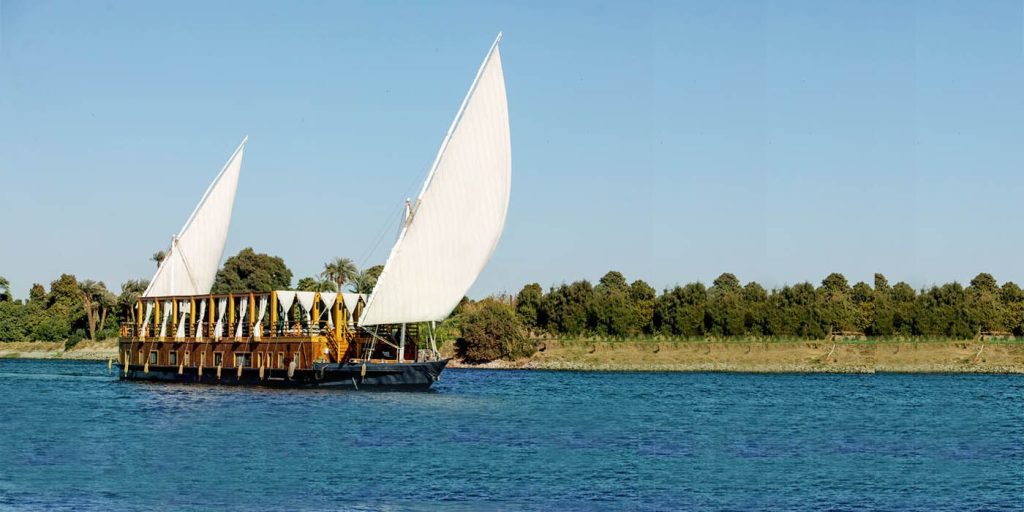
Enjoy exceptional navigation on the Nile, in comfort and elegance! Rather than traveling aboard a large cruise ship or a traditional felucca, opt for a unique experience by boarding a grandiose and luxurious dahabeya.
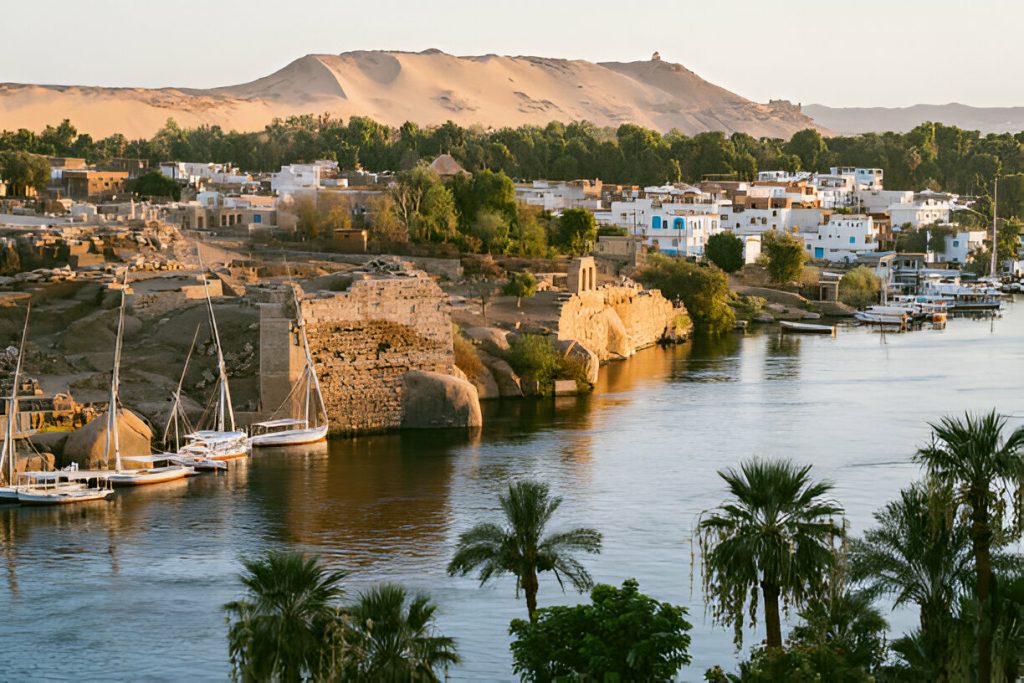
Aswan located just below the northernmost cataract of the Nile, historically marked Egypt's southern border, separating it from the rival kingdom of Nubia.
Last revised April 2026 · English-speaking agency, established in Cairo in 2012
Aswan in Egypt is the last city on the Egyptian stretch of the Nile, 230 kilometres upstream of Luxor, set on a bend of the river between Nubian islands and desert of pink granite. People come to Aswan for Philae temple on Agilkia island, for the run down to Abu Simbel 280 kilometres further south, for the feluccas drifting round Elephantine Island at sunset, for the Sofitel Old Cataract and for the Nubian Museum. Aswan, Souenet to the ancient Egyptians and Syène to the Greeks, was never a place you simply pass through: it marks the southern limit of Upper Egypt, the old frontier with Nubia, and the point where pharaohs, Ptolemies, Greeks and Nubians all met. A sensible Aswan itinerary for 2026 runs to 2 to 4 days, best placed at the close of a Luxor to Aswan cruise, with the Abu Simbel excursion built in.
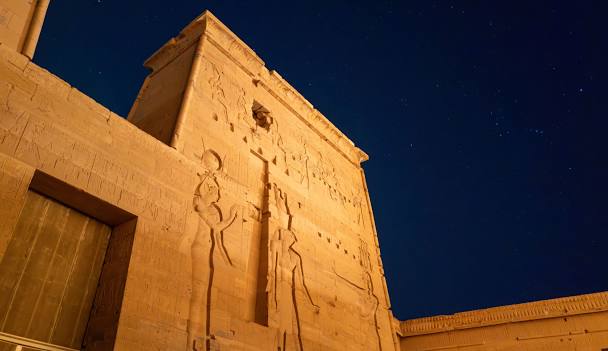
British visitors tend to agree that Aswan is the prettiest of Egypt's Nile cities. Three concrete reasons lie behind that view: the geography (the river splits here into several channels around a dozen granite islands covered in tropical gardens and brightly painted Nubian villages), the climate (the driest air anywhere along the Nile, with golden light from October to April), and Nubian culture (music, food, vividly coloured houses, all still very much alive even though the villages were moved when the High Dam went up in 1964-1971).
For a British traveller putting together Cairo, Luxor and Aswan in 2026, Aswan is always the final pharaonic stop before heading back to Cairo. It is also where the only great pharaonic excursion by air or road begins: Abu Simbel, the twin temples of Ramses II and Nefertari rescued from the rising waters of Lake Nasser by UNESCO between 1964 and 1968. Nowhere else in Egypt packs so much world heritage into a 300-kilometre radius: Philae (UNESCO 1979), Abu Simbel (UNESCO 1979), Nubia and the Nubian valley, Elephantine and the Nubian Museum.
Aswan is also a logistical hinge for any itinerary: it is where the 4-night Luxor to Aswan cruise ends, where the 3 to 4-night Lake Nasser cruise to Abu Simbel boards, where the Cairo-Luxor-Aswan railway line finishes, and where ASW airport puts Cairo 1h20 away on an EgyptAir flight. Most of our British guests stay 2 to 3 nights in Aswan before the flight back to Cairo.
In practical terms, a well-planned trip to Aswan in 2026 comes down to three questions: how many days Aswan deserves (2 at the very least with Abu Simbel, 3 ideally, 4 if Nubia fascinates you), what there is to see (Abu Simbel, Philae, Elephantine, Kitchener, the Nubian Museum, a felucca), and how to arrive (cruise, train or flight). Our English-speaking advisers reply on WhatsApp within 24 hours on +20 10 96569859.
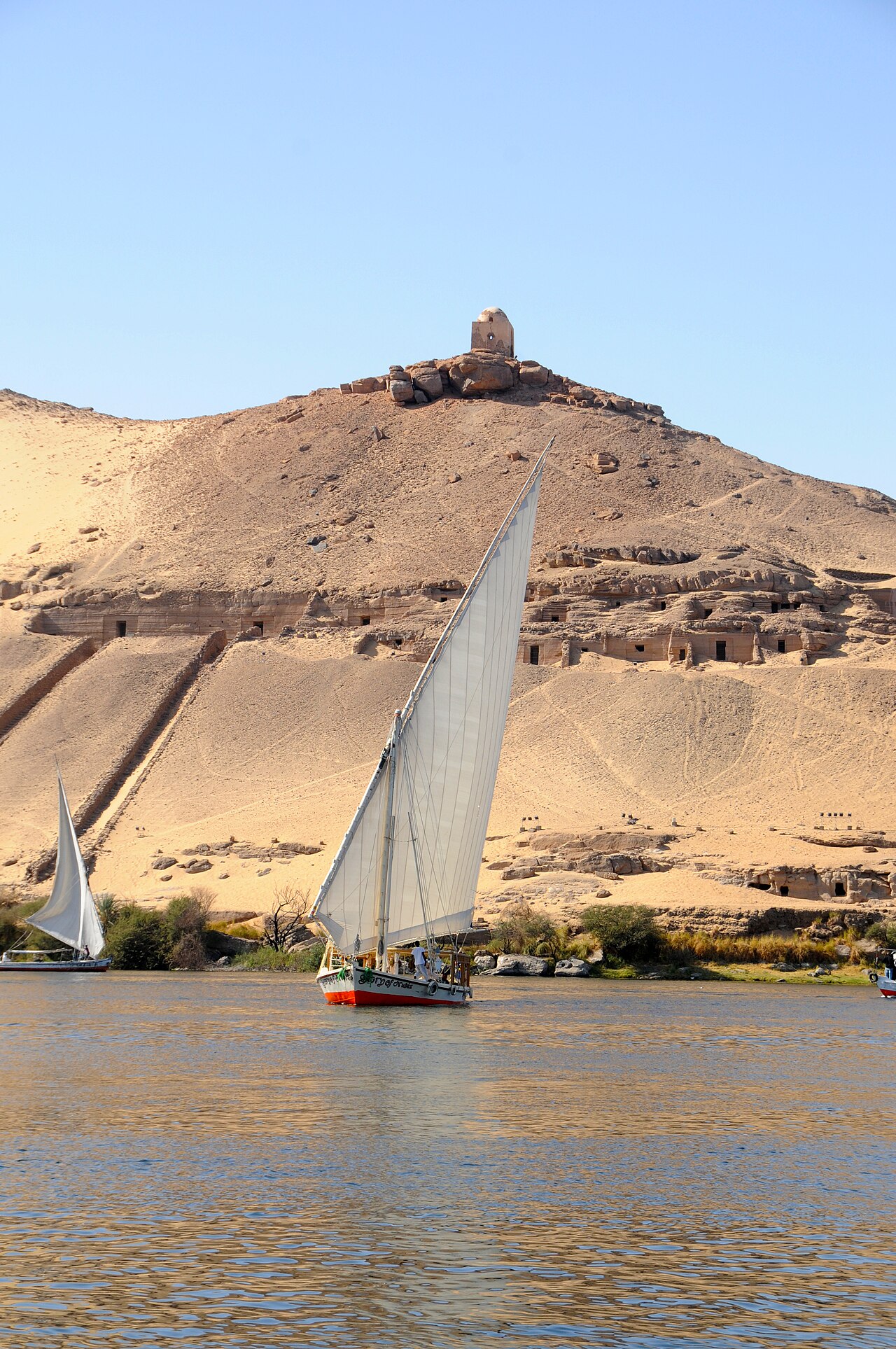
Aswan has a hot desert climate, harsher even than Luxor's. Humidity sits below 20%, rain is practically unknown (1 to 2 mm a year on average, making it the driest town in Egypt), and the light is astonishingly clear. When people ask about the weather in Aswan, the only real question is how hot, never whether it will rain.
The best months for Aswan are October to April. Days at 24-32°C, cool nights at 10-16°C, no rain at all and cloudless skies. December and January are the coolest and kindest for wandering round Philae, sailing by felucca and making the 3-hour drive each way to Abu Simbel. February and March are glorious: gentle sun, dry air, perfect for photographing the pink granite and the palm groves on Elephantine Island.
Between May and September the shade temperature tops 40-45°C and the midday sun pushes it to 48-50°C. Abu Simbel turns into an ordeal: 3 hours on the road each way with the return leg between 11am and 2pm, then 45 minutes of walking between the temples. We firmly advise families, older travellers and anyone unused to heat to avoid May to August. April and September are workable shoulder months at 32-36°C provided everything is scheduled before 10am and after 4pm.
The busiest period for British visitors runs from mid-December to early April, tracking the Christmas break, February half-term and the Easter holidays. Upper-deck cabins on the Luxor to Aswan boats and Nile-view rooms at the Sofitel Old Cataract sell out 4 to 6 months ahead for those dates. Our WhatsApp enquiries for Aswan peak between August and October, for departures from December to March.
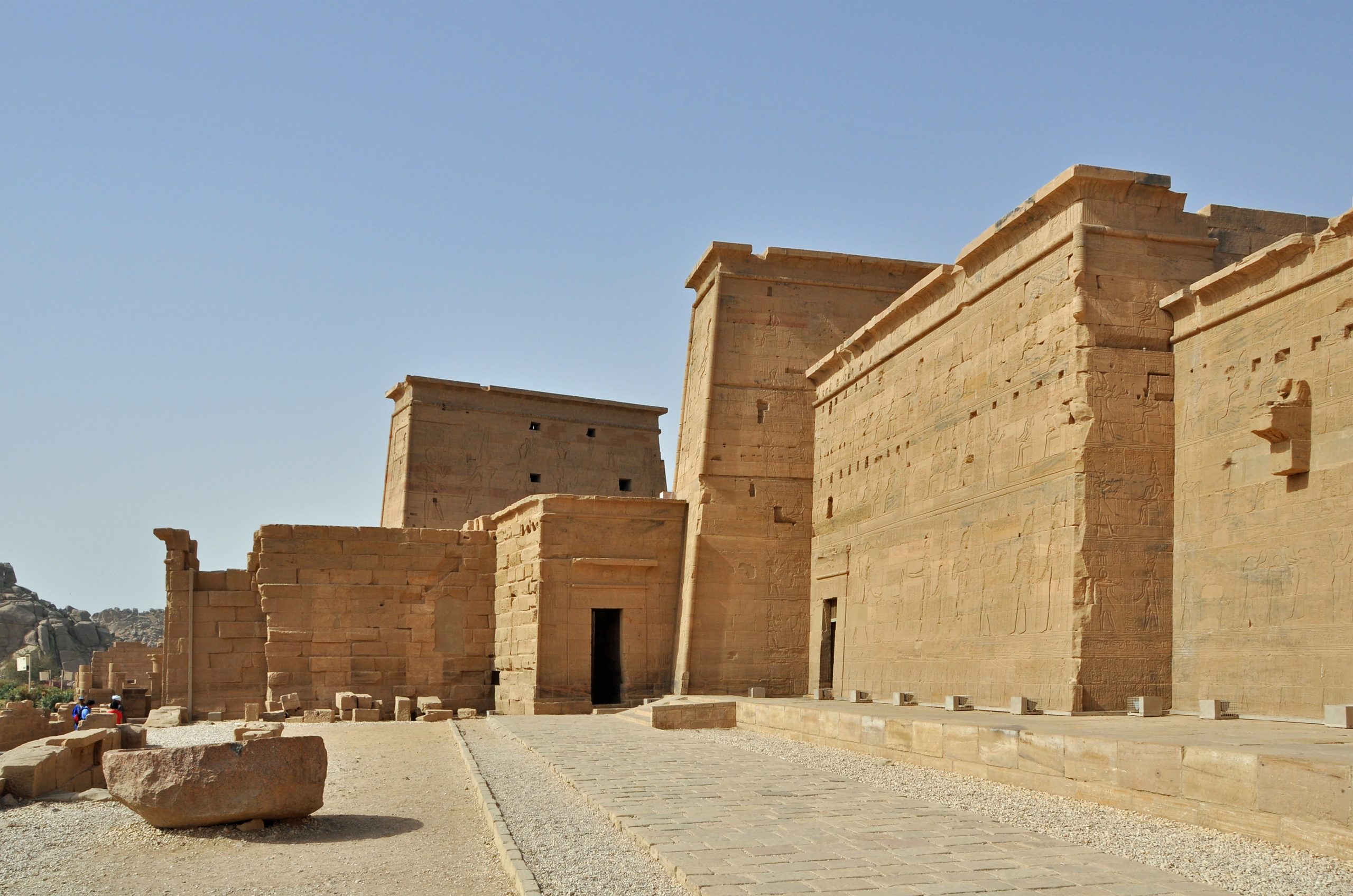
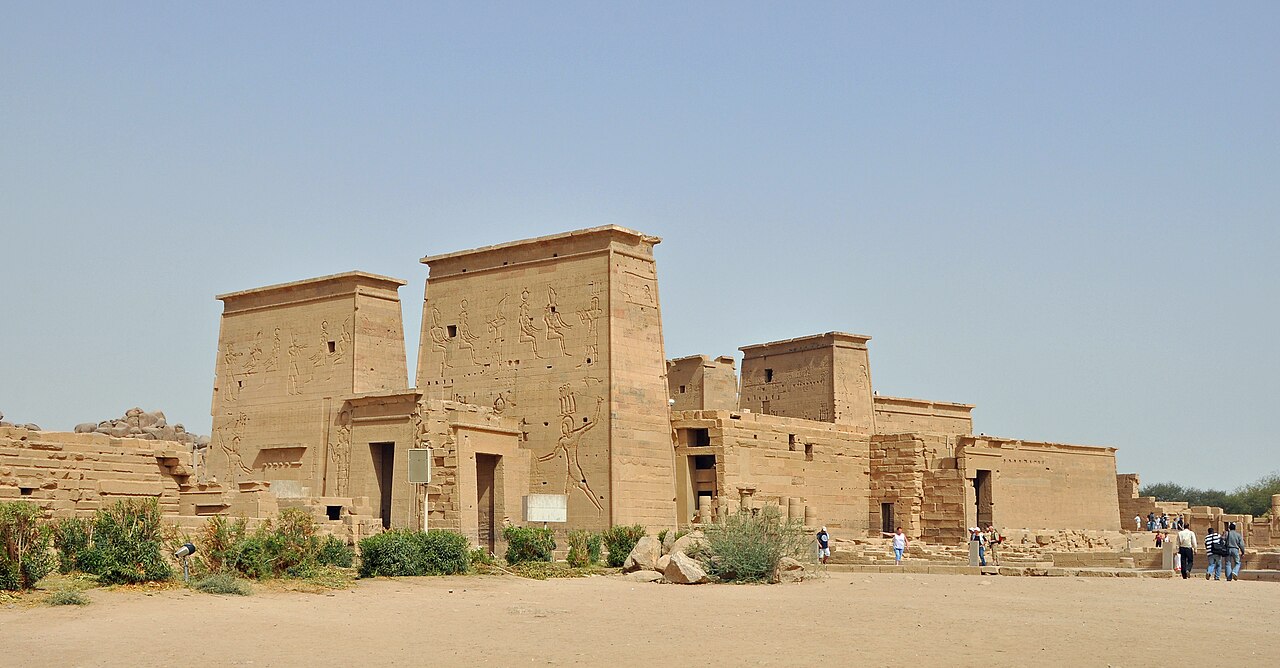
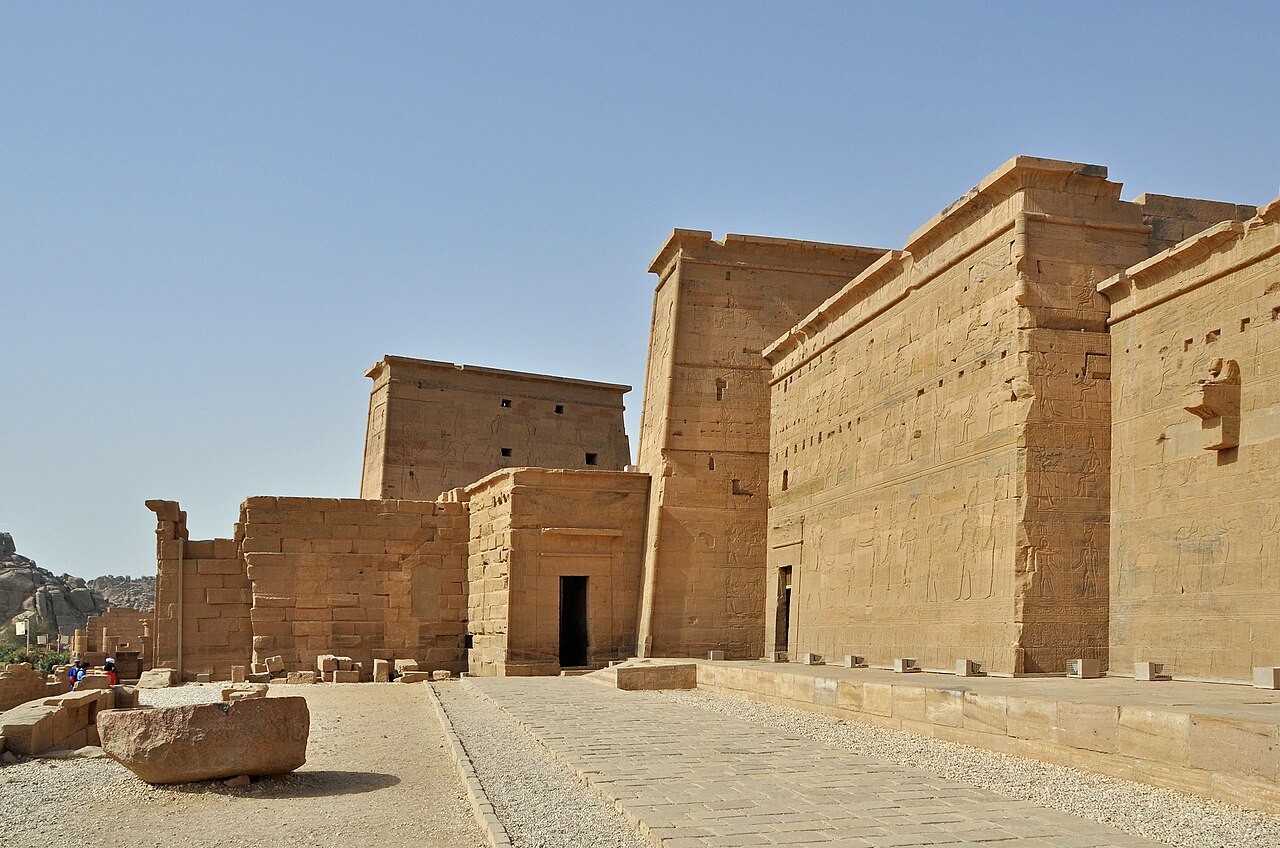
The temple of Philae belongs to Isis, goddess of motherhood and magic, wife of Osiris and mother of Horus. Raised under the last Ptolemies between 280 and 30 BC and extended by the Romans up to 550 AD, it was the final great flourish of pharaonic religion before Christianity took hold. After Emperor Theodosius outlawed pagan worship in 391, Philae oddly carried on as the last working pharaonic temple in Egyptian history, shut down officially only in 535 under Justinian. That unbroken run is why it survives as the best-preserved Ptolemaic temple of all.
Between 1972 and 1980 Philae was pulled from the water in spectacular fashion. Once the British dam was finished in 1902 the island spent half of every year under water; after the High Dam (1971) it would have vanished for good. UNESCO oversaw the dismantling of the temple block by block and its rebuilding on Agilkia, the island next door, 300 metres higher, with the original layout copied exactly. What you visit today is therefore Agilkia, though everyone still calls it Philae from habit.
You can only reach it by felucca or motor launch from the Shellal landing stage, 12 kilometres south of Aswan behind the British dam. After a 10-minute crossing the island comes into view: the first pylon rising 18 metres, the kiosk of Nectanebo I, the mammisi (the chapel of the divine birth), the temple of Hathor and above all the central sanctuary of Isis with its beautifully intact reliefs. Set aside 2 hours for the visit, or 3 with the sound and light show in English from 7pm (three evenings a week in winter).
Philae admission in 2026 is 550 EGP (around £8). The return felucca costs EGP 150-200 per person as part of a group, or EGP 800 for a private boat. We always suggest to our British guests that they go in the late afternoon (4pm-6pm), when the sun drops behind the hills and the cruise parties have gone. The sound and light show that follows ranks among the three finest in Egypt.
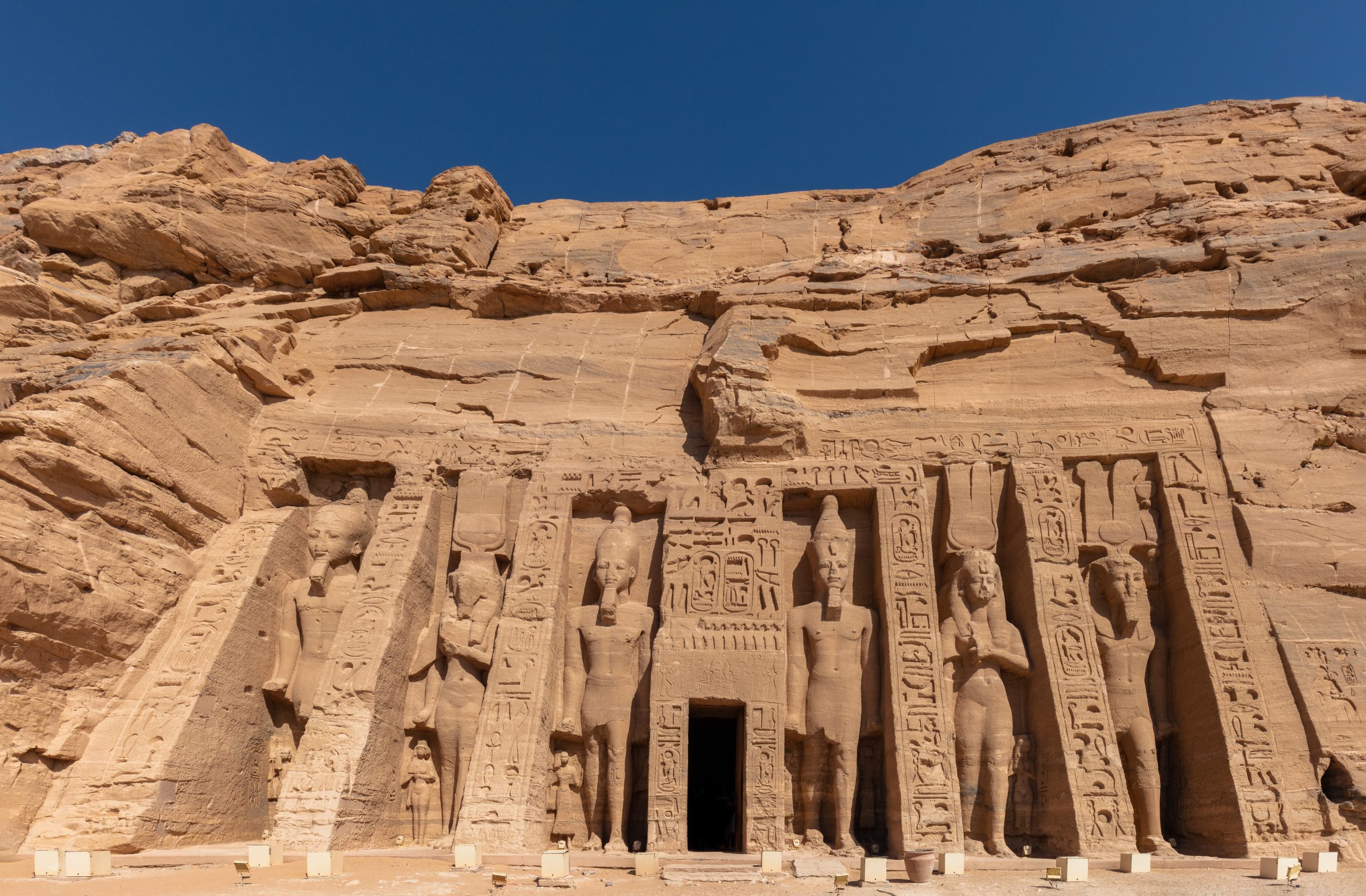
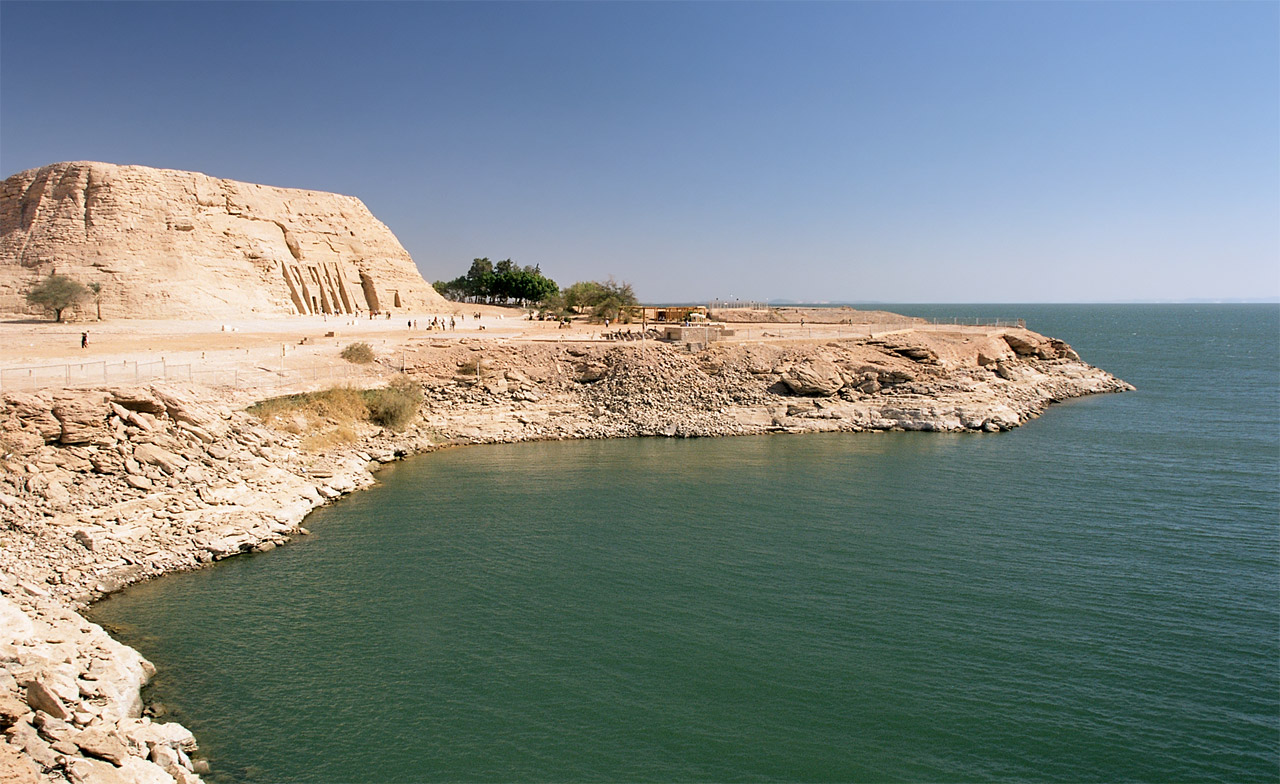
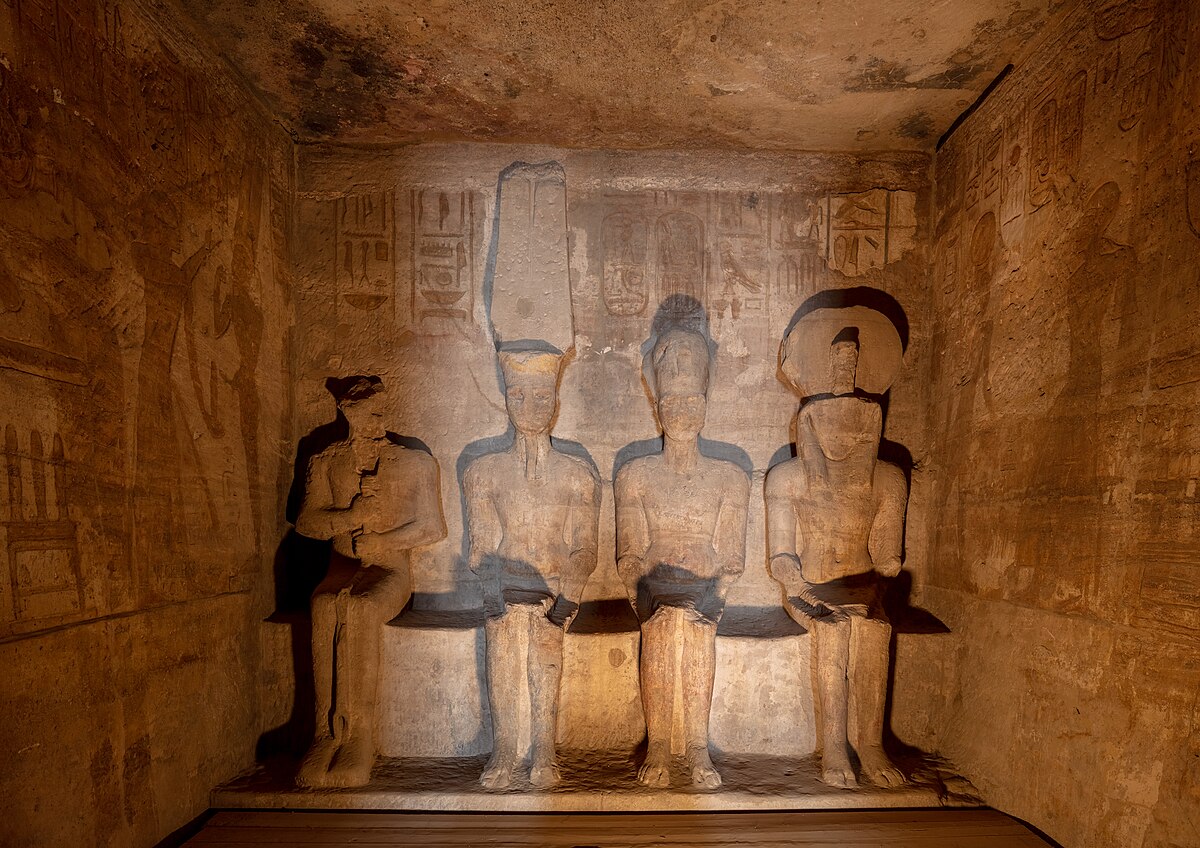
Abu Simbel is the excursion that defines Aswan. The two temples Ramesses II had cut into the cliff around 1265 BC outdo anything else in ancient Egypt for sheer scale: four seated colossi 20 metres tall across the front of the great temple of Ramses, six standing 10 metres tall at the smaller temple of Nefertari. Between 1964 and 1968 the whole site was raised 65 metres to keep it clear of Lake Nasser, a UNESCO operation that drew on 51 countries.
Abu Simbel lies 280 kilometres south of Aswan and just 40 kilometres short of the Sudanese border. From Aswan there are three ways to reach it.
1. By road in the police convoy. Leave Aswan at 4am, 3 hours across the desert, arrive at 7am, 2 hours 30 at the temples, back by 1.30pm. The police escort has been compulsory on security grounds since 1997 and departs at a set time. All-in cost with a private English-speaking minibus: £140-£190 for 4 people, covering admission (300 EGP) and the guide. This is the usual choice for our British guests spending 2 nights in Aswan.
2. On an EgyptAir flight. Aswan to Abu Simbel takes 45 minutes in the air, with 3 hours on the ground before the return. 2026 fare: 180-220 USD per person return. Easier on the body, though you miss the classic desert approach. Best for anyone short of time or travelling in the hottest months (June-August).
3. By Lake Nasser cruise. Sail from Aswan to Abu Simbel over 3 or 4 nights on a 4-5 star vessel, calling at Wadi es-Sebua, Amada and Kalabsha. Few people ask for it, yet nothing beats arriving at Abu Simbel from the water at first light for photographs. 2026 price: from £1,690 per person for 3 nights.
Opening hours in 2026: 5am to 6pm in summer, 5am to 5pm in winter. On two dates, 22 February and 22 October, the sun reaches right into the sanctuary of Ramses II and lights up the pharaoh's statue, a solar alignment recorded since antiquity. Abu Simbel receives 10,000 visitors in the space of 2 hours on those mornings, and we reserve 6 months ahead for them.
Abu Simbel admission in 2026: EGP 822. Photography permit: 300 EGP. Our British guests say the same thing every time: “no image of Egypt stays with you like this one”. Nobody should visit Aswan and skip Abu Simbel.
Your Aswan 2026 quote on WhatsApp within 24 hours. From Cairo, our English-speaking team puts together a bespoke Aswan stay: 2 to 4 days, private Egyptologist guide, Sofitel Old Cataract or Mövenpick Elephantine, Abu Simbel, felucca, Philae, and a Nile cruise link if you want one. Send your dates and budget: message +20 10 96569859 here. An English-speaking reply within 24 hours at most.

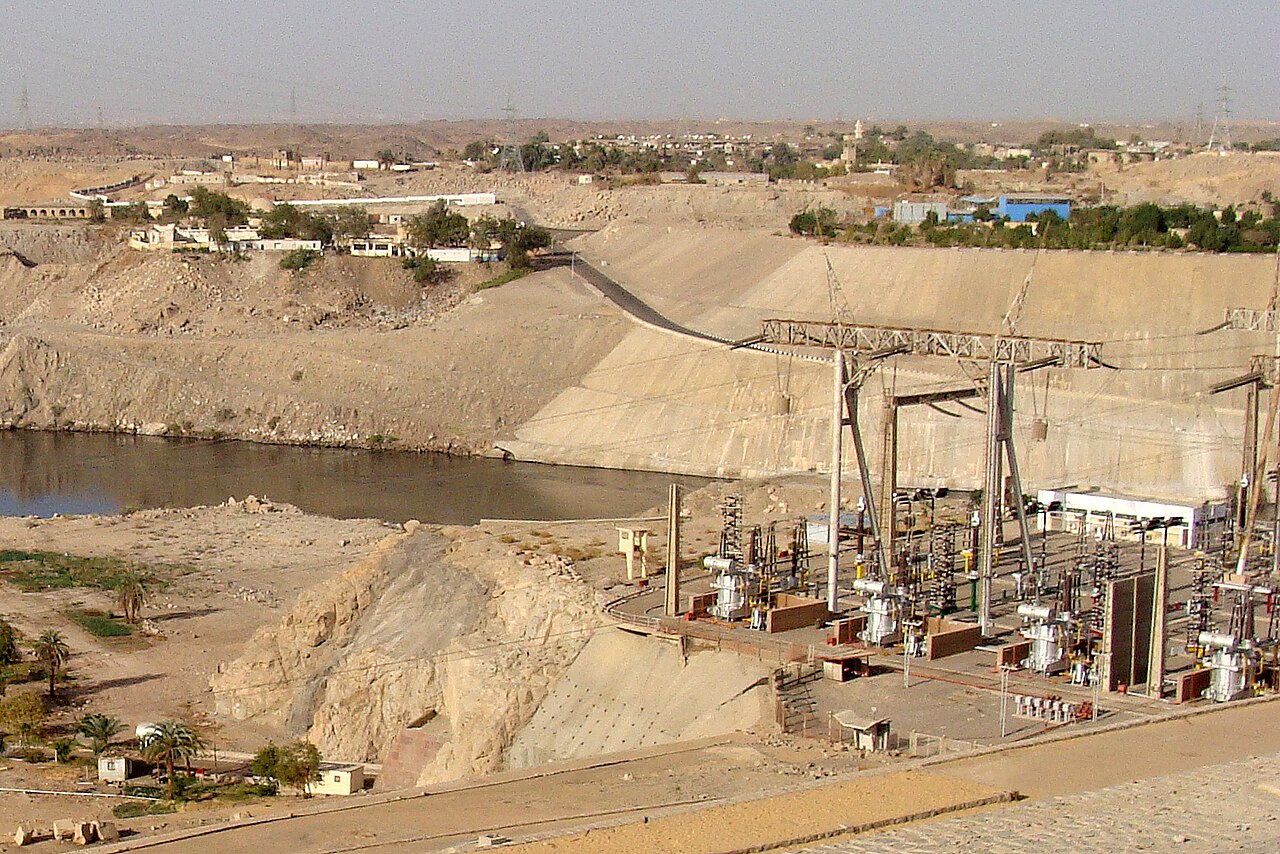
The Aswan High Dam (Saad al-Aali) ranks among the biggest dams on earth: 3.6 kilometres long, 111 metres high, 43 million cubic metres of concrete, raised between 1960 and 1971 with Soviet help. Behind it lies Lake Nasser, 500 kilometres long and the second-largest man-made lake in the world. Its purpose: to end the Nile's ruinous floods, to generate 10% of Egypt's electricity and to irrigate 33% of the farmland. Its price in human terms: 100,000 Nubians uprooted and 24 temples taken apart and moved, Philae and Abu Simbel among them.
Seeing the High Dam is essential if you want to make sense of Aswan today. There is a lookout over Lake Nasser, the Egyptian-Soviet Friendship Monument and a UNESCO plaque. Allow 45 minutes, with photographs from the crest. Admission: 120 EGP. We always send an English-speaking guide along to explain the history and the human story.
The British dam of 1898-1902 is smaller (2 kilometres long, 54 metres high) and was the first big modern dam on the Nile. Retired now in favour of the High Dam, it still repays a visit for the history and for the finest view of Kitchener Island and Elephantine. A 30-minute photo stop, free of charge.
Beyond the dam, Lake Nasser offers fishing for Nile perch (specimens of 40 to 90 kilograms), birdwatching for migrating species (herons, hippos glimpsed at a distance, Nile crocodiles reintroduced to the deep water), and a 3-4 night cruise to the rescued Nubian temples of Kalabsha, Beit el-Wali and Wadi es-Sebua.
Elephantine Island is where Aswan began. Settled without a break since the 4th millennium BC, it lent its name to the ancient town of Souenet, later Syène. On it you find the Aswan Museum (ruins and finds from the area), the temple of Khnum (the ram-headed god who guarded the Nile flood), the nilometer (a flight of steps once used to gauge the river's height at each inundation) and the painted Nubian villages of Siou and Koti. Walking the whole island takes 2 to 3 hours.
You reach Elephantine only by the little public ferry (5 EGP return) or by private felucca from the Aswan Corniche, a crossing of about 5 minutes. Many of our British guests stop for lunch at the Koti Nubian Restaurant on the riverbank, where the grilled Nubian chicken tagine and the traditional ginger tea are the things to order.
Kitchener's Island, properly the Island of Plants, is Aswan's botanical garden. It was presented in 1898 to General Horatio Kitchener, who filled it with plants from across the globe: mango trees from Brazil, bougainvillea from Mexico, date palms from Tunisia, hibiscus from Madagascar. Today it holds 200 tropical species across 7 hectares, a shady hour-long stroll, and a lookout over the Nile and Elephantine. Admission: 60 EGP. Reached by felucca from Elephantine or from the corniche. Best between 3pm and 5pm, when the light turns gentle.
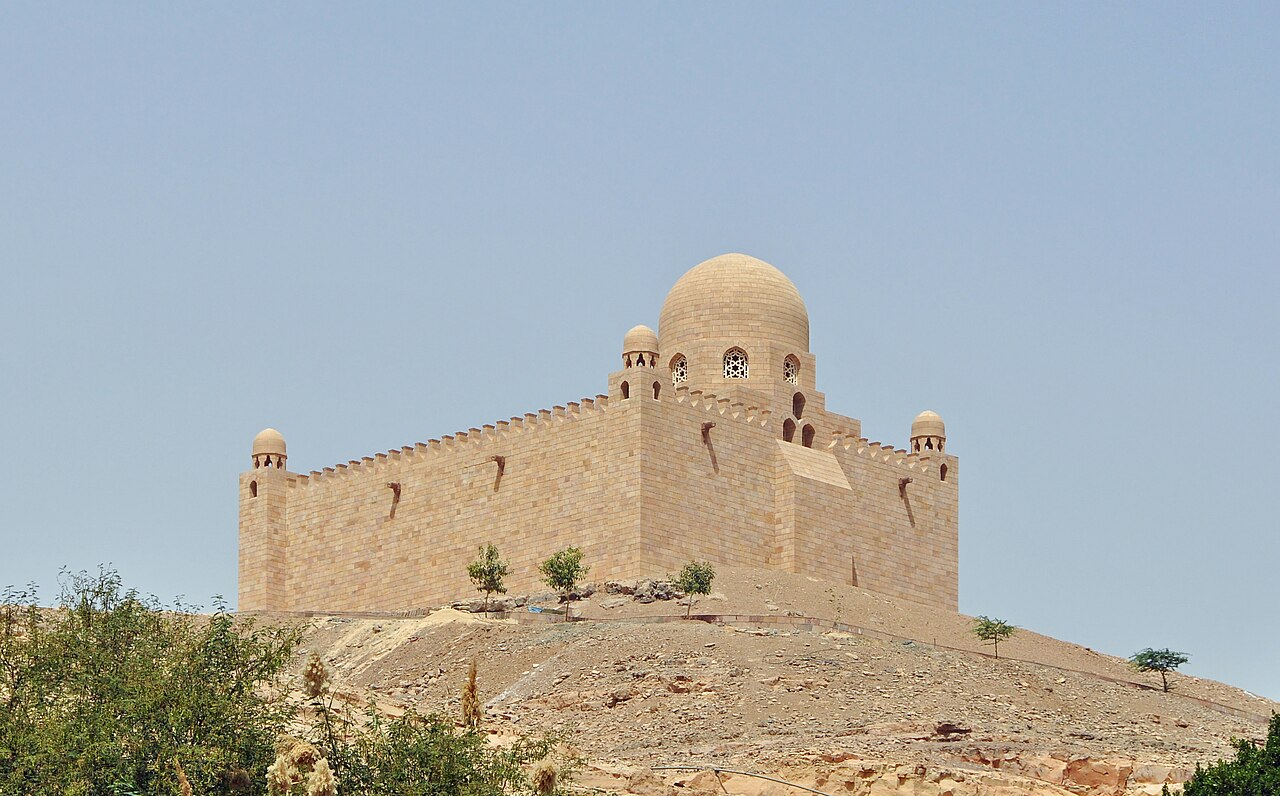
Aswan's Nubian Museum (in the Aga Khan Mausoleum district) is the leading museum of Nubian history and culture, opened in 1997 with UNESCO backing. On display: pharaonic finds from the region, Coptic art from Nubia, traditional Nubian textiles and jewellery, and scale models of the 24 rescued temples. Allow 2 hours. Admission 150 EGP. There is no better grounding before you set foot in an actual Nubian village.
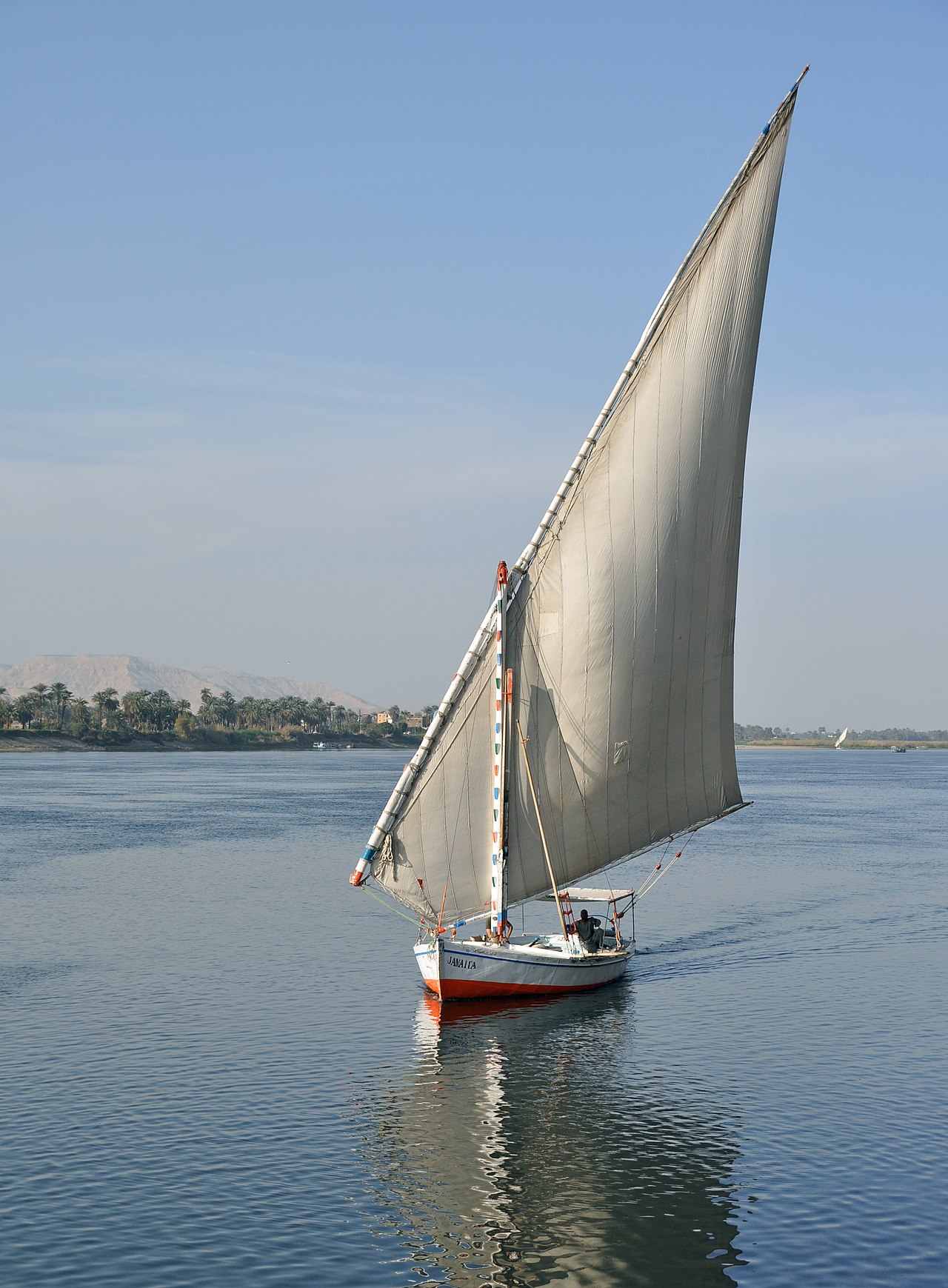
A felucca in Aswan at sunset is the experience the town is known for, and for sheer feeling it outstrips even Abu Simbel. A traditional Nile sailing boat carrying 8 to 12 people, gliding in silence with no engine, round Elephantine Island and Kitchener and along the British Dam. Usual length: 1.5 to 2 hours, setting off between 4.30 and 5pm in winter, 6pm in summer, back as darkness falls.
2026 prices: 200-400 EGP a head in a group (reckon on 4-8 USD), 1,200-2,000 EGP to have a felucca to yourselves (25-40 USD). We work with three Nubian families who have sailed these waters for three generations: Hassan (whose boat is the 'Black Bird'), Ibrahim and Mohamed. They read the winds, the currents and the finest vantage points. Ginger or karkade tea comes served on board.
The natural extension is a Nubian supper in a Nubian village on the west bank at Gharb Sehel, the ideal end to the day. You arrive by felucca at about 6pm, eat chicken tagine or stuffed pigeon in a family home with blue and red walls, hear traditional music and drink tea. 2026 price: £20-£40 a head, felucca and dinner included. We work with four English-speaking Nubian families, every one of them in Gharb Sehel.
The painted villages of Gharb Sehel and Nasaya are living evidence of the Nubian culture uprooted in 1964-1971. Frontages decorated with traditional scenes, domed roofs, kitchens open to the air, weaving looms visible from the lane. Families gladly invite visitors in for tea at 15-20 EGP a head. Always ask before taking a photograph: among Nubians the custom is an invitation, never assumed consent.
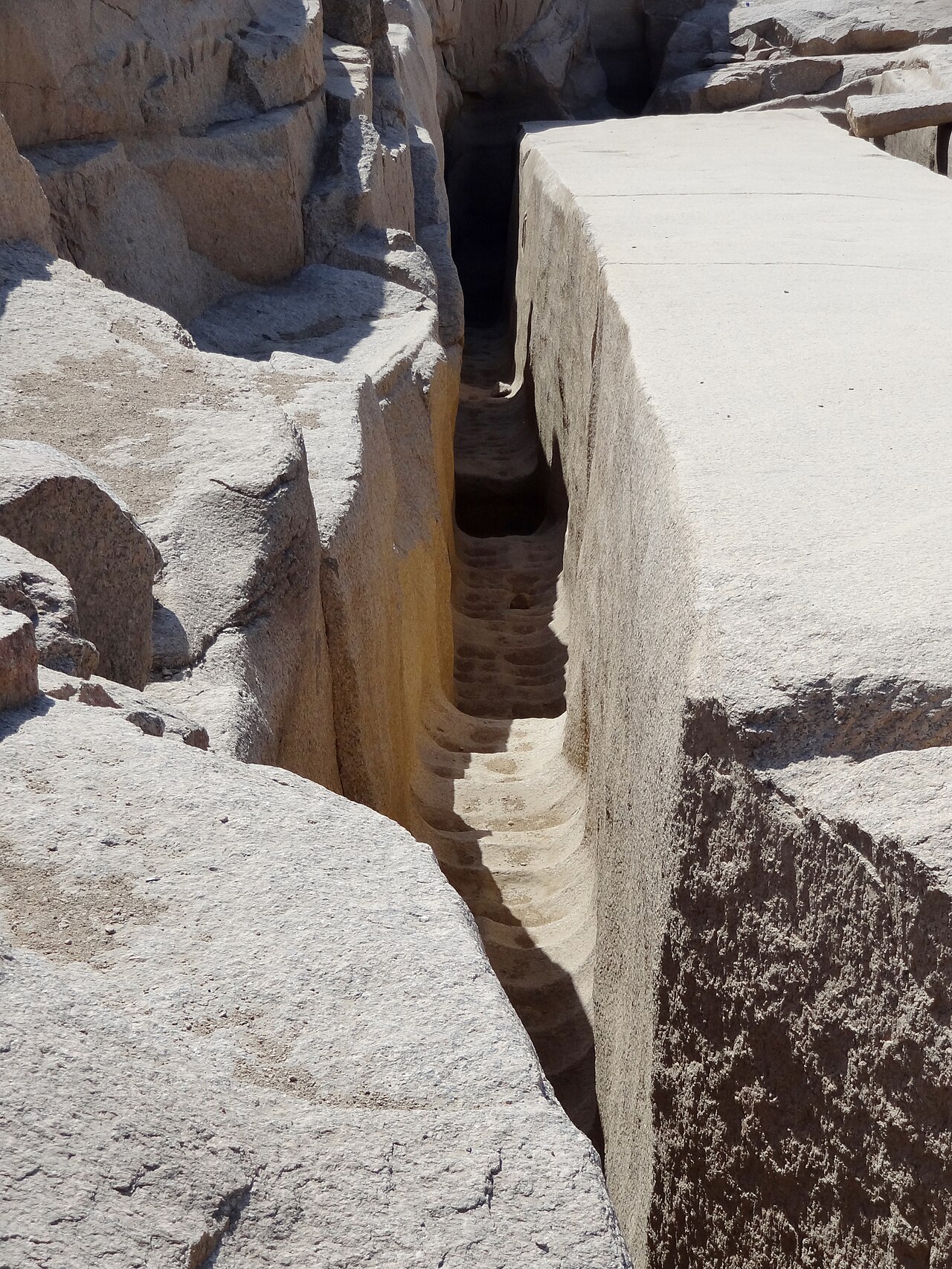
The unfinished obelisk in the Aswan quarries is among the most revealing archaeological oddities in Egypt. Ordered by Hatshepsut in the 15th century BC, it would have stood 42 metres tall and weighed 1,200 tonnes, the biggest obelisk ever attempted. Work stopped when a crack opened during the cutting, and it still lies in its pink granite bed 2.5 kilometres from the Aswan Corniche, a pharaonic building site caught mid-task, which is almost unheard of.
The visit doubles as a lesson in ancient engineering: marks left by diorite hammers, ramps for hauling the stone out, cutting lines still visible. It pairs neatly with Philae, since here you see the start of the chain (quarrying) and there the end (carving and assembly). 1 hour on site, admission 150 EGP. An English-speaking guide is worth having to decode the working methods.
For three thousand years the pink granite quarries of Aswan supplied obelisks, columns and sarcophagi to the whole Nile valley, from Karnak temple to the Giza pyramids. Aswan red granite is still cut today for modern Egyptian monuments. It is the down-to-earth context that makes sense of every pharaonic monument the visitor has already seen.
The Luxor to Aswan cruise is the spine of any journey through southern Egypt, and Aswan is always where it finishes. 4 nights Luxor to Aswan, 5 nights with a lighter return, 7 nights for the complete loop. The standard southbound calls: Luxor, Esna (the lock), Edfu (temple of Horus), Kom Ombo (temple of Sobek and Haroeris), then Philae at Aswan. Boats generally reach Aswan on the morning of day 4 or 5. Every format is set out on our Nile cruise hub.
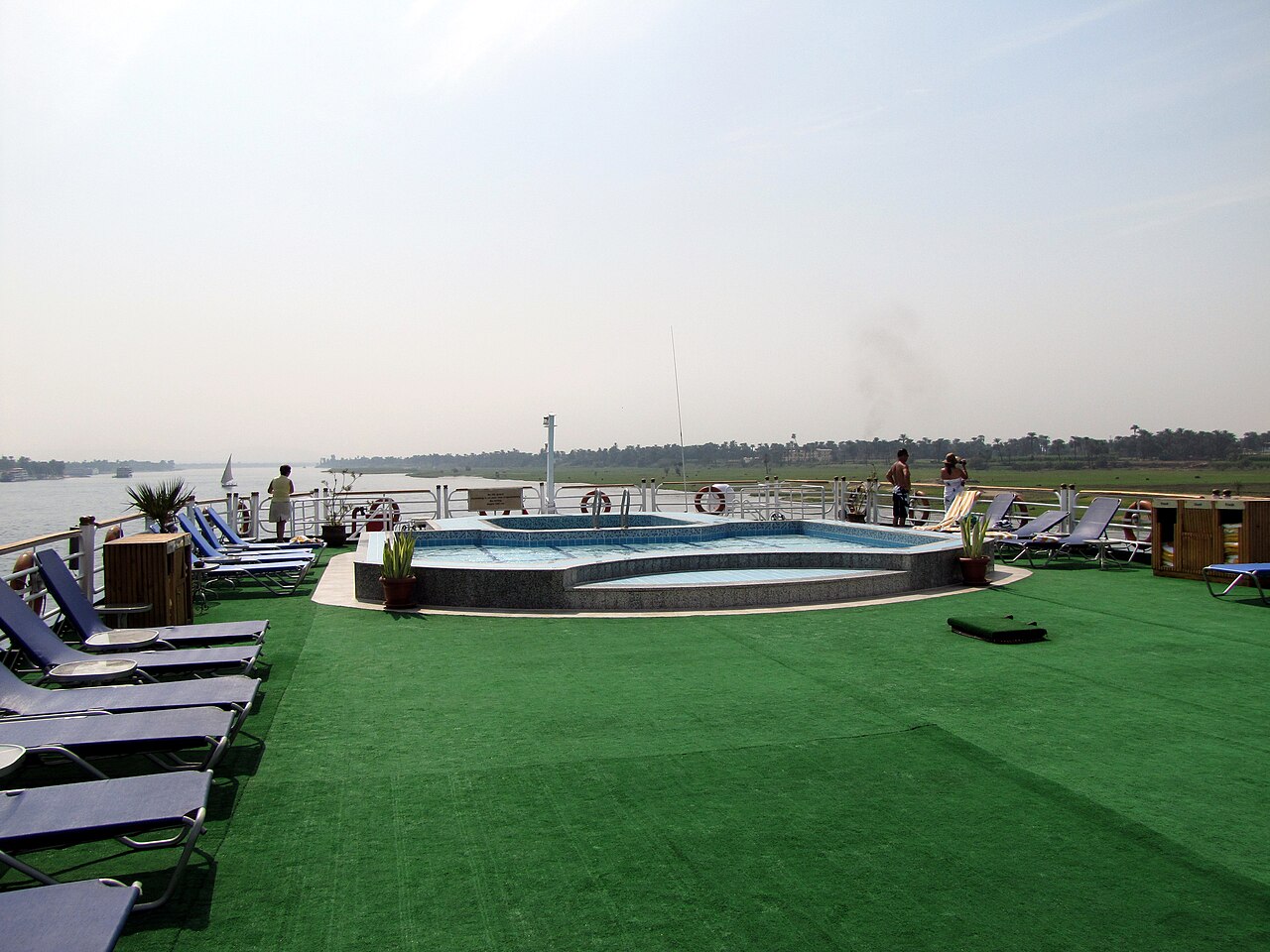
Aswan sees three kinds of vessel: the 4 and 5 star cruisers, with 80 to 150 cabins and 4 nights from £770 per person; the modern dahabiyas, 6 to 10 cabins, 4 nights at £1,690 to £2,690, which is what we suggest for British couples; and fully chartered boats at £3,080 and above.
Two popular add-ons start in Aswan. (1) A day trip by road to Abu Simbel, from the boat or from your hotel. (2) A further 3-4 night cruise on Lake Nasser to Abu Simbel, then flying home via Abu Simbel-Aswan-Cairo. This second version is what we assemble for British guests who want the fullest itinerary possible: 3 nights in Cairo, 2 in Luxor, 4 on the Nile cruise, 1 in Aswan and 3 on Lake Nasser, 13 nights in Egypt all told.
A practical note: cruise boats tie up at the Corniche port, 1 kilometre north of the Sofitel Old Cataract. You disembark at 7-8am, see Philae and the unfinished obelisk on day 4, go to Abu Simbel on day 5, and fly EgyptAir ASW-CAI back to Cairo (1h20, £70-£120) on day 6.
"How many days in Aswan?" is a question we field on WhatsApp all the time. The answer hinges on how you arrive.
Two days in Aswan: the least you need if Abu Simbel is on the list. Day 1: arrive by cruise or train, see Philae, the unfinished obelisk and the High Dam, felucca at sunset, Nubian supper. Day 2: leave at 4am for Abu Simbel, back at 2pm, an afternoon by the pool at the Old Cataract or the Mövenpick Elephantine, evening flight to Cairo. This is the commonest pattern, and the one most of our British guests choose.
Three days in Aswan: the right length whether you come on your own or off a cruise. Day 1 Philae, obelisk and felucca; day 2 Abu Simbel; day 3 Elephantine, Kitchener, the Nubian Museum and a Nubian village with supper in a family home. Suits couples who want to unpack properly and savour the Sofitel Old Cataract or the Mövenpick over several evenings.
Four days in Aswan: for those in love with Nubia, and for photographers. Add a full day under sail (Gharb Sehel, with a night in a Nubian guesthouse's private tent), a road trip from Aswan to the temple of Kom Ombo (125 km each way) and a traditional hammam. Only a few of our guests ask for it, yet it is often the stay they remember most.
Beyond 4 days in Aswan the only takers are perch anglers on Lake Nasser (a dedicated 5 to 8-night stay) and academics working on Nubia. Rare indeed: 1-2% of what we are asked for.

Aswan has three distinct categories of hotels.
The Sofitel Old Cataract is the most storied hotel in Egypt. Opened by Thomas Cook in 1899 and reborn as a 5-star palace in 2011. Agatha Christie wrote "Death on the Nile" in room 1314. There is the famous terrace above the river, a private botanical garden, and a royal suite that has hosted Churchill, the Aga Khan, Tsar Nicholas II and François Mitterrand. 138 rooms, from £290 a night in low season and £650 in high season. It is the first place we book for British guests who want the very best.
The Mövenpick Resort Aswan sits on the northern tip of Elephantine Island (the hotel's own ferry crosses every 30 minutes) and has the finest views of the river and the town. 236 rooms, two pools, and a revolving restaurant on the 14th floor with a panorama. £140-£220 a night. Couples who want a little distance between the sightseeing and the peace ask for it most.
On a middle budget, the places we have tried and trust: Basma Hotel (in town, river views, £80-£120), Helnan Aswan (on the corniche, pool, £70-£100), Paradise Hotel Aswan (Nubian family rooms, £40-£60). For British backpackers: the Nubian Guesthouse on Gharb Sehel (£30, everyday Nubian life on the doorstep).
For a 3-night stay in Aswan our advice is this: 1 night at the Sofitel Old Cataract for the history, then 2 nights at the Mövenpick Elephantine for comfort and the view. We book both and lay on a driver for the move between them.
Three ways link Aswan with Luxor and Cairo: the train (best for atmosphere and value), the domestic flight (best for saving time) and the cruise (best if you want the full holiday).
Luxor to Aswan by train takes 3 hours 15 minutes, costs 100-140 EGP in air-conditioned first class, and runs 5 to 7 times a day. British backpackers love it. Guests at the top end prefer the premium Watania sleeper from Cairo to Aswan, 13 hours overnight, double cabin USD 130-170 per person, crossing the Nile valley while you sleep.
EgyptAir's Cairo to Aswan service (CAI-ASW) takes 1 hour 20 minutes, costs £70-£130 in 2026 depending on the time of year, and runs 5 to 8 times daily. Quicker and dearer, and you see nothing of the valley. Right for anyone pressed for time or travelling in peak season. We include a meet-and-greet at Aswan airport (ASW), 25 kilometres south-west of town.
There is also a Luxor to Aswan flight (45 minutes on EgyptAir, £60-£90), though British travellers seldom take it, because the cruise between the two towns is the whole point.
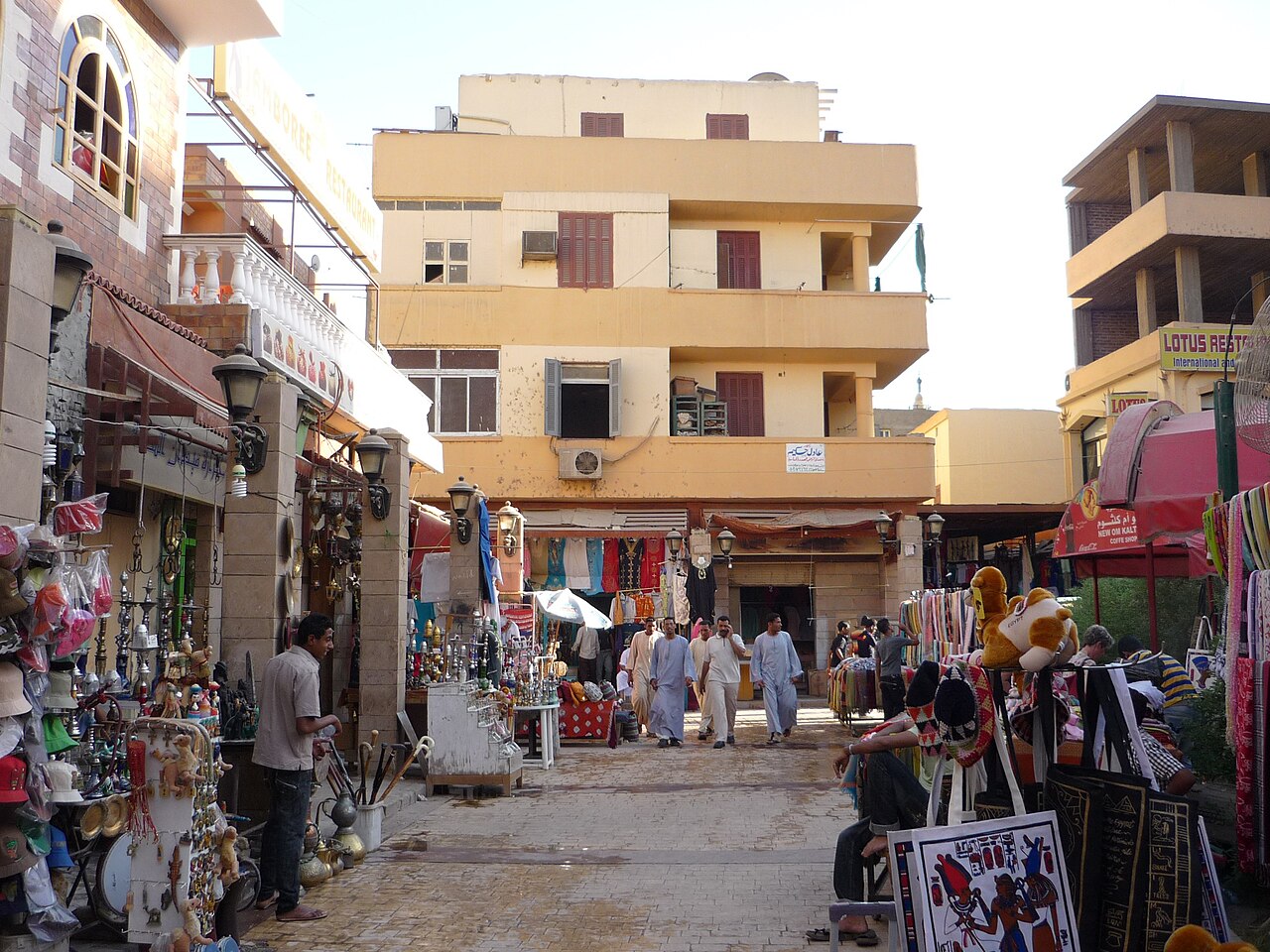
Getting about in Aswan: taxis at 30-80 EGP a ride, a private driver at 400-600 EGP for half a day or 800-1,200 EGP for a full day. The horse-drawn carriages on the corniche are charming for short hops and nothing more. Every Aswan package of ours comes with a vetted English-speaking driver. Trains and transfers across southern Egypt are covered in full on our Luxor page.

What a British traveller spends in Aswan in 2026, not counting flights from the UK (we handle the Egyptian domestic legs):
Fixed costs, site by site: Abu Simbel 822 EGP plus 300 EGP for a photo permit; Philae 550 EGP plus 150-200 EGP felucca return; High Dam 120 EGP; unfinished obelisk 220 EGP; Kitchener 60 EGP; Nubian Museum 400 EGP; Elephantine museum 80 EGP. A Philae, obelisk and dam day means 800-1,000 EGP in tickets, or £10-£20. We charge official rates with no mark-up; transfers and guide are included.
Fancy Aswan with none of the hassle? Our English-speaking team assembles the whole stay: Sofitel Old Cataract or Mövenpick Elephantine, private English-speaking guide, driver, Philae, the obelisk, the High Dam, Elephantine, Kitchener, the Nubian Museum, sunset felucca, Nubian supper and the Abu Simbel trip, with a Nile cruise bolted on if you like. Ask for your WhatsApp quote, answered within 24 hours, on +20 10 96569859. Advice in English, prices with nothing hidden.
In 2026 Aswan is as safe as Luxor, which puts it among the safest places in tourist Egypt. Tourist police are stationed at Philae, the dam, the landing stage, the Sofitel and the Mövenpick. The checkpoints on the Abu Simbel road have run round the clock since 1997. No British traveller has reported a serious security incident here in over ten years.
Every foreign and tourist vehicle heading for Abu Simbel must join the police convoy. It leaves Aswan once, at 4am, forms up at a checkpoint south of town and is escorted by 4 armed police vehicles across the 280 kilometres of desert. The return, escorted again, gets in between 1.30pm and 2pm. The convoy rules out any lingering risk near the southern border. Driving outside it is not permitted.
A British woman on her own can move around Aswan without trouble: the corniche, the souk, Philae, a felucca. We suggest covering shoulders and knees away from the hotels (bare shoulders pass without comment on the pool terraces of the Sofitel and the Mövenpick, less so in the souk). For anything after dark, always a vetted driver.
Families with children find Aswan easy. Children are made a great fuss of by shopkeepers and felucca owners alike. A number of British families come back to spend a night in a Nubian house at Gharb Sehel with the children, as long as the arrangements are made in advance.
The tricks to watch for in Aswan in 2026: the felucca tout on the Corniche who quotes 100 EGP and wants 500 when you step off (agree the price and the length in writing before you board), the bogus guide at Philae who offers a tour for 20 USD and then asks for 80 at the exit (every guide of ours is licensed), and the bazaar papyrus seller swearing his stock is hand-painted (buy nothing without our say-so). None of this happens when one of our English-speaking guides or drivers is with you.
Sem Élégant Voyage has specialised in Egypt since 2012 from its base in Cairo, with an English-speaking team devoted to Upper Egypt and Nubia. Every Aswan trip we build rests on four things: a private English-speaking Egyptologist guide qualified by the Egyptian Ministry of Tourism, a driver with an air-conditioned 4-seat or 7-seat vehicle depending on your party, a felucca skipper from a Nubian family, and WhatsApp support round the clock for the whole stay.
Our most requested Aswan tours in 2026:
An English-speaking adviser handles every enquiry in person within 24 hours at most. There is no off-the-shelf package: we shape the trip around your dates, your budget, the hotel category you prefer and what interests you most (pharaonic Egyptology, Nubian culture, photography, family, couple). The quote costs nothing and commits you to nothing. All our itinerary formats are on the Egypt packages hub, and the day trips hub covers half-day outings from Aswan.
To sum up: this guide sets out what to do with 2 to 4 days in Aswan (Philae, Abu Simbel, a felucca, the Nubian Museum, the villages of Gharb Sehel), how to arrange the Abu Simbel excursion by police convoy or EgyptAir flight, and how to fit Elephantine Island, Kitchener Island and the High Dam into a single day. Our English-speaking team puts these pieces together to suit your dates, your budget and the comfort you want.
To get an Aswan 2026 quote under way, tell us when you are travelling, how many of you there are, and whether Abu Simbel is on the wish list. WhatsApp +20 10 96569859. Within 24 hours you will have three proposals pitched at your budget.
Three things left to do before Aswan: (1) settle on your dates and how long you want (2, 3 or 4 days), (2) choose whether Abu Simbel is by road or by air, (3) get in touch. Free quote on WhatsApp inside 24 hours. A direct, English-speaking answer, no call centre, no middleman.
Ready-made itineraries from the SEV team, booked on a WhatsApp quotation, with an English-speaking adviser replying inside 1 hour.
Excursions from Aswan to Abu Simbel, Kalabsha, High Dam, Philae.
A classic cruise with Philae and 2 days in Aswan built in.
Under sail from Luxor to Aswan, unhurried, calling at small Nubian villages.
A 10-cabin luxury dahabiya from Esna to Aswan, taken slowly.
A classic itinerary with Philae, Abu Simbel and 2 nights in Aswan.
At least two days to fit in Philae, the unfinished obelisk, the High Dam and the Abu Simbel trip. Three days is ideal, adding Elephantine, Kitchener, the Nubian Museum and a sunset felucca. Four days for anyone drawn to Nubian culture, with supper in a family home on Gharb Sehel. Most of our British guests go for 2 to 3 nights in Aswan at the tail end of a Luxor to Aswan cruise.
October to April gives Aswan its best weather: 24-32°C by day, cool nights and no rain. December and January are the months to do Abu Simbel (no heat on the drive back). From May to August the thermometer passes 40-45°C, the Abu Simbel run turns punishing, and we advise the flight rather than the road. 22 February and 22 October are the special dates, when the sun reaches into the sanctuary of Ramses II at Abu Simbel.
It is 280 kilometres south of Aswan and 40 kilometres from the Sudanese border. Three ways in: the road with its compulsory police convoy (away at 4am, 3 hours of desert, back at 1.30pm), a 45-minute EgyptAir flight, or a 3-4 night Lake Nasser cruise. Since 1997 the police have escorted every foreign vehicle to keep the route entirely safe. We arrange the drive in a private English-speaking minibus from £140-£190 for 4 people.
550 EGP in 2026, roughly £8. The return felucca from Shellal adds EGP 150-200 a head in a group, or EGP 800 for a private boat. Open 7am to 5pm in winter and 7am to 6pm in summer. The sound and light show in English runs three evenings a week at 7pm (winter) or 8pm (summer), at an extra 250 EGP. We suggest going late in the afternoon and, for the keen, staying on for the show.
The British Dam (1902) was the first big modern dam on the Nile, 2 km long and 54 m high, now out of service and blessed with the best view of Kitchener Island. The High Dam (Saad al-Aali, 1971) is the huge Soviet-Egyptian structure, 3.6 km long and 111 m high, which created the 500 km Lake Nasser and supplies 10% of Egypt's electricity. Both fit into the same 1h30 outing and set up the engineering and human backstory to Abu Simbel.
Yes, and it is the signature Aswan experience. A traditional sailing boat, 1.5 to 2 hours of silent progress round Elephantine, Kitchener and the British Dam, leaving at 4.30-5pm in winter. 2026 prices: 200-400 EGP a head in a group (4-8 USD), 1,200-2,000 EGP for a felucca of your own. We use three vetted skippers from Nubian families. Ginger tea on board. You can carry on afterwards to a Nubian supper in a village at Gharb Sehel.
Both are outstanding, and they complement each other. The Sofitel Old Cataract (1899) is the historic address, with Agatha Christie's room and the celebrated terrace over the Nile, at £290-£650 a night: heritage first. The Mövenpick Elephantine is a modern island resort with its own ferry, two pools and a revolving restaurant, at £140-£220 a night: comfort for families. For 3 nights we suggest 1 at the Sofitel and 2 at the Mövenpick, so you get both.
Three choices: the EgyptAir CAI-ASW flight, 1h20, £70-£130, 5-8 departures daily (the time-saver); the Watania sleeper train, 13 hours, double cabin 130-170 USD per person, crossing the valley overnight (for the romance of the rails); or a CAI-LXR flight plus a 4-night Luxor to Aswan cruise (the most complete, and our pick for a first visit). We book whichever leg suits your timetable best.
Yes. Most 4-5 star boats come in on the mornings of Monday, Thursday, Friday and Sunday. The usual run is 4 nights from Luxor to Aswan, or 7 nights for the round trip. Passengers step off between 7am and 8am on day 4 or 5 at the Corniche port, a kilometre from the Sofitel Old Cataract. British guests then generally spend 2 nights in an Aswan hotel, covering the islands and Abu Simbel, before the ASW-CAI flight. Cruisers £770-£1,390/pers, dahabiyas £1,690-£2,690/pers.
Without question, and ideally before you see a real Nubian village. It opened in 1997 with UNESCO backing once the temple rescue was complete. On show: pharaonic finds from the region, Coptic art from Nubia, Nubian textiles and jewellery, models of the 24 temples that were moved. It sits in the Aga Khan Mausoleum district. Allow 2 hours. Admission 150 EGP in 2026. For a British visitor there is no better preparation for an evening in a Nubian village at Gharb Sehel.
Yes, and it is a highlight of every Aswan stay we arrange. You reach Gharb Sehel by felucca at about 6pm, eat in a Nubian family home with blue and red walls (chicken tagine or stuffed pigeon, ginger tea, local bread) and listen to traditional music. 2026 price: £20-£40 a head, felucca both ways and the meal included. We work with four vetted English-speaking Nubian families.
Yes. For a decade Aswan has ranked among the safest towns in Egypt. Tourist police at every site, working checkpoints on the roads, a mandatory convoy to Abu Simbel. British visitors report no incidents. Women on their own get about freely by day. Away from the hotels, covered shoulders and knees are appreciated. After dark we suggest our vetted English-speaking driver.
There is no dress code as such, but covering shoulders and knees is a courtesy the locals notice, above all in the souk and the Nubian villages. For Abu Simbel: closed shoes (dust), a wide-brimmed hat (the sun bites between 10am and 2pm), sunglasses, factor 50 sunscreen at least, 2 one-litre bottles of water each and a torch for the temple interiors. On the felucca in winter, take a jacket for the evening (10°C at 6pm).
Straight from us. Every one of our Aswan guides holds the Egyptian Ministry of Tourism qualification and a licence, is a native English speaker or bilingual, and knows Abu Simbel and the Ptolemaic era inside out. We steer well clear of the touts at Philae and the obelisk who hawk unofficial tours for 15-20 USD. A private English-speaking Egyptologist in Aswan costs £60 to £80 a day for the group, and comes included in our 2 to 4-night packages.