
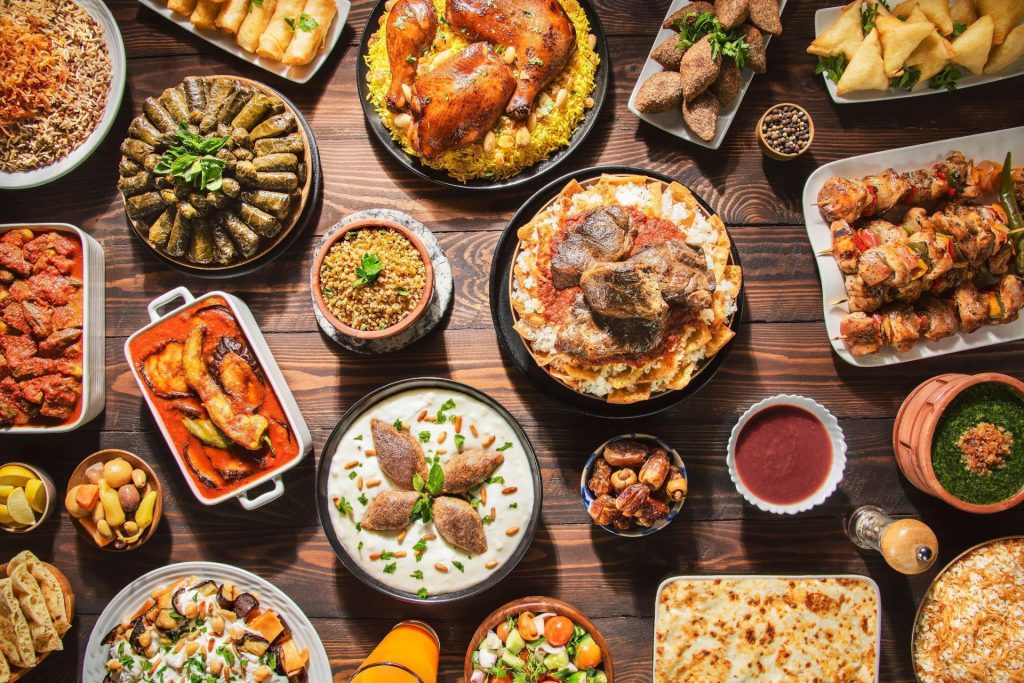
People ask us this before every trip: what do Egyptians actually eat? The truthful reply is, probably not what you imagine. Modern Egyptian food remains a mystery to most Britons, drowned out in the press by its Lebanese neighbour and its Turkish cousin. It is there all the same: distinct, very old, full of flavour, and halal almost by definition. You will find it at the street counters of Islamic Cairo, aboard the feluccas at Aswan, and at the tables of Nubian families who take guests in. Below is the groundwork to do before you fly.
Our SEV team includes in most of its tours a culinary tour with guided tasting - Khan el-Khalili spice market, local cooking class, dinner at a local's home. Ask for your quote with gastronomic immersion.
Request a trip with tastings on WhatsApp →
What is Egyptian cuisine?
Egyptian cuisine refers to all the dishes and culinary practices of Egypt. Mediterranean and popular, it combines influences from ancient Egypt, Levantine, Arab and Coptic. It is mainly based on legumes (beans, lentils, chickpeas), vegetables from the Nile Delta, bread and, more rarely, poultry such as squab. Koshari is the emblematic dish.
Which dishes define Egyptian cooking?
- Koshari: lentils, rice, pasta and chickpeas under a tomato sauce; Egypt's national plate.
- Foul ladies - beans simmered with garlic and lemon, the millennial breakfast.
- Ta'amiya - Egyptian falafels, made from beans (and not chickpeas).
- Molokhia: a green soup of jute leaves and garlic, ladled over rice.
- Mahshi - vegetables stuffed with spicy rice.
- Hamam mahshi - stuffed pigeon, specialty of Luxor.
Egyptian food: what do we really eat on a daily basis in Egypt?
Everyday Egyptian food is simple, generous and largely vegetarian. In the morning, it's foul medames, simmered beans that you savor in baladi bread. At midday, koshari dominates Cairo's eateries: a comforting bowl of carbohydrates served in seconds. In the evening, families share mahshi or molokhia accompanied by rice and chicken.
Street food punctuates the days: ta'amiya sandwiches, hawawshi (bread stuffed with minced meat), corn cobs grilled on the banks of the Nile. As for drinks, karkadé (hibiscus infusion) and very sweet black tea accompany each break. Our advisors happily book a guided tasting at a popular canteen in Islamic Cairo, far from the tourist traps.
Egyptian cuisine: a quick guide for English-speaking travelers
Short on French? Egyptian cuisine is a Mediterranean, mostly plant-based cuisine built on vegetables, vegetables and bread. The must-try dishes are koshari (rice, pasta and lentils), ful medames (slow-cooked fava beans), ta'amiya (Egyptian falafel made with fava beans), molokhia (a green jute-leaf soup) and stuffed pigeon in Luxor. For dessert, go for om ali and basbousa. Our Cairo team can arrange tastings and cooking classes - WhatsApp message SEV at +20 10 96569859.
To go further:
Egyptian cuisine - heritage of five thousand years
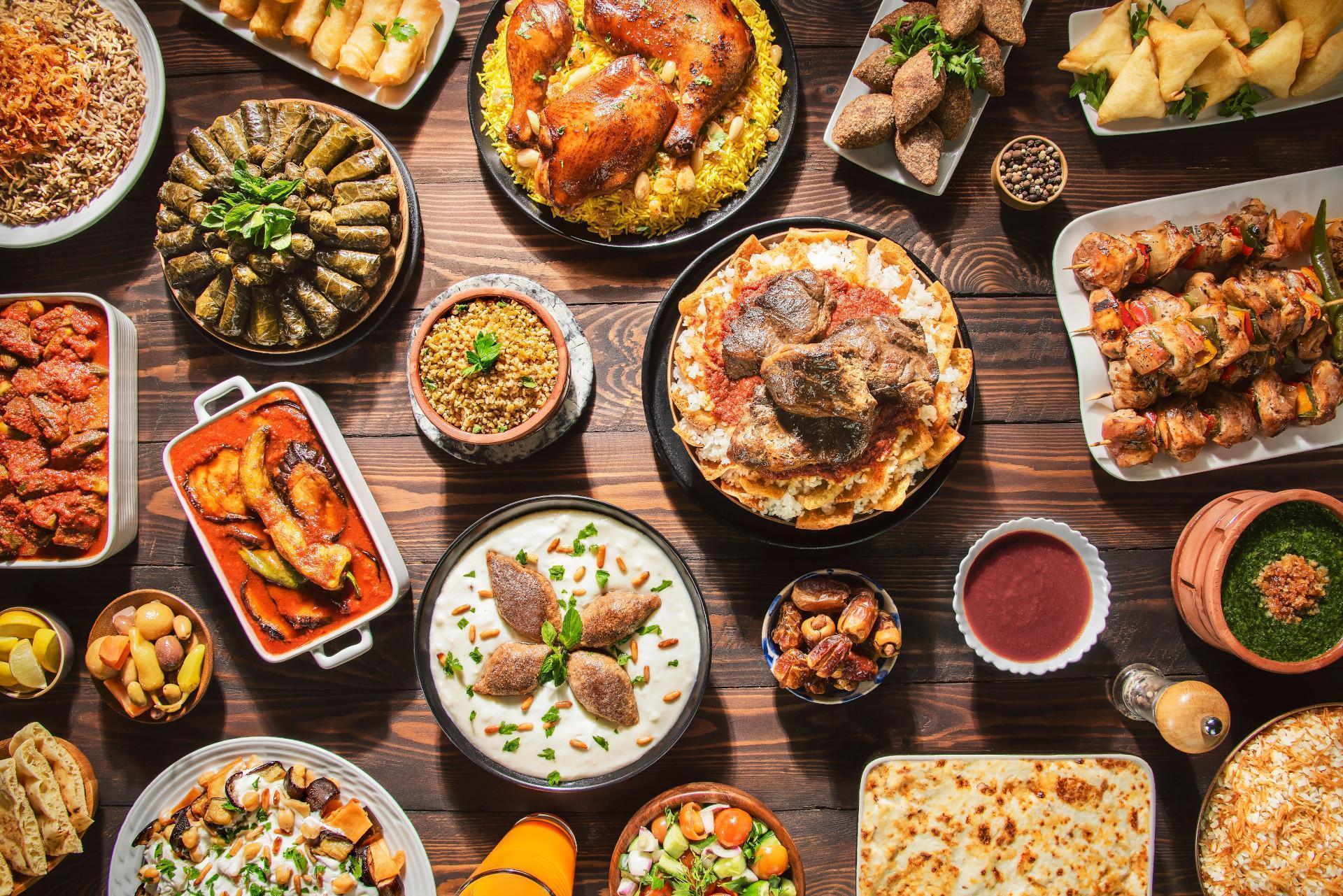
Egypt cooks essentially the same base as under the pharaohs - bread, lentils, beans, Mediterranean vegetables, stewed meats, Nile fish. Herodotus already described in the 5th century BC. the Egyptians eating long-fermented bread and boiled beans with comino - exactly the foul medames that we still serve today. Five thousand years of culinary continuity. This is rare in the world.
Three layers of influences were added. The Mamluks (1250-1517) brought simmered meats, rice with dried fruits, pastries with honey. The Ottomans (1517-1798) introduced kebabs, baklavas, coffee. The French and British colonial period (1798-1952) imported white bread, European seafood, cream desserts. But the base - lentils, beans, onions, onions, garlic, cumin, coriander - remains pharaonic.
Three structural features distinguish Egyptian cuisine. (1) Halal by default - 90% of the country is Sunni Muslim, no alcohol or pork logistics are integrated into traditional recipes. This is one of the reasons that makes Egypt a natural destination for English-speaking halal travel. (2) 60% vegetarian - meat is traditionally a festive dish, everyday is lentils and vegetables. (3) Bread in the center - Egyptian bread (aish baladi, long rising, tandoori cooking) accompanies and often replaces cutlery.
Koshari - the national dish par excellence
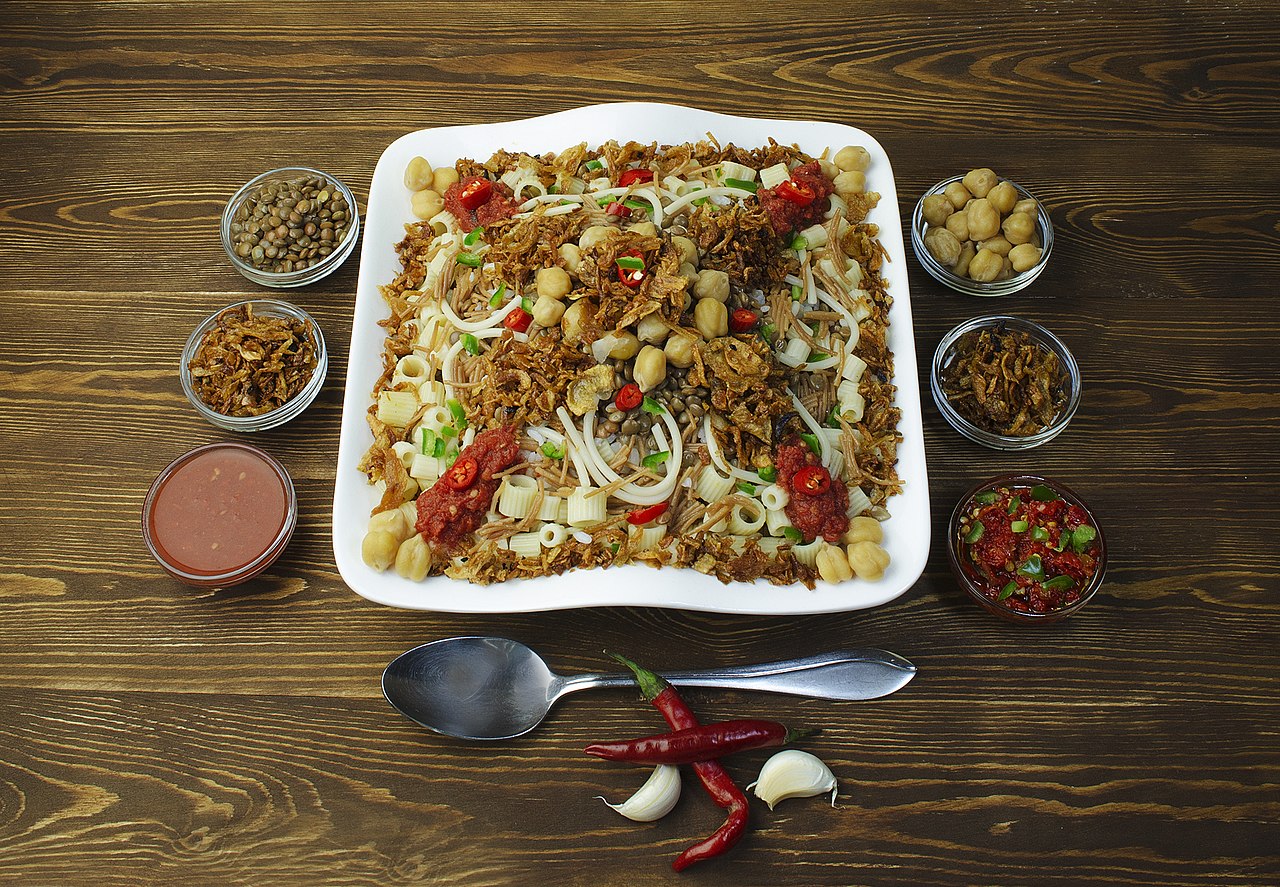
If you could only try one dish in Egypt, it would be koshari. Improbable but magnetic mix - white rice + macaroni + broken spaghetti + brown lentils + chickpeas + tomato sauce with chillies + golden fried onions on top, all drizzled with garlic vinegar. Apparently invented in the 19th century by Indian families hired on the Suez Canal (Indian kichuri being a direct cousin), it has become the national street dish since the 1920s.
The koshari is vegetarian, hearty, economical. A large bowl costs 30-60 EGP (0.60-£90) at Abou Tarek (the central Cairo institution, founded 1950) or at Koshary El Tahrir. For 5 euros, you eat as well as in half of the French restaurants. Our advice - go there on Wednesday lunchtime (office time), it's the most authentic atmosphere.
Variants - luxury koshari with minced meat (kebda), quick koshari with grilled chickpeas. Purists will say that real koshari is only eaten with a spoon, standing at the counter, harissa sauce aside - like in Tunis for couscous. Do like them.
Foul ladies - the millennial breakfast
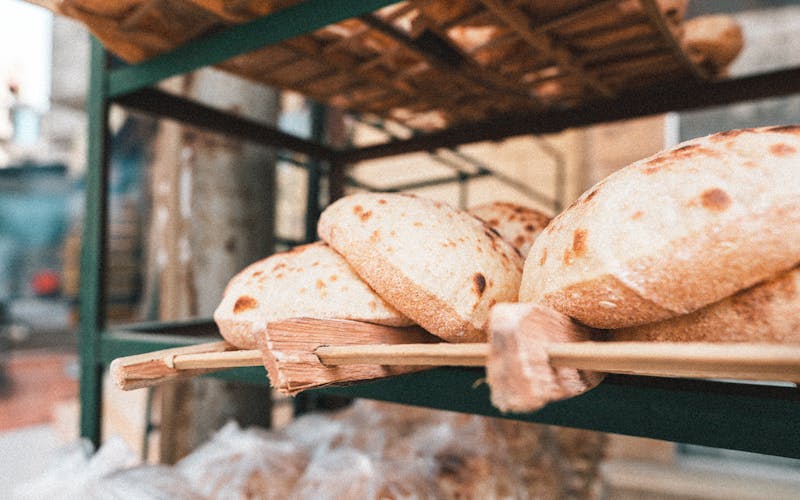
Breakfast in Egypt has meant foul medames since pharaonic times. Fava beans are left to simmer for 12 hours on the gentlest heat in a tall copper pot (the damma), then dressed at the table with cumin, lemon, olive oil, crushed garlic and parsley, and now and then a hard-boiled egg. It comes in a small bowl alongside two rounds of aish baladi for mopping up.
The crowd is the antidote to the Egyptian heat - slow to digest dish that lasts all morning, while European eggs and bacon melt in 2 hours in the heat of Cairo. All social classes eat it - workers at 5 EGP a bowl at the street stand, middle-class people at 60 EGP in 5★ hotels where it is served as a breakfast buffet.
A tip for the British traveller: on your first morning in Cairo, sample the foul from the hotel breakfast buffet. If it wins you over, head one morning to the working district of Bab al-Loq (Falaki Street) and the Foul Sabri stand, which our SEV drivers rate as the finest in the city.
Ta'amiya - Egyptian falafels (different from Lebanese)
Frequent error of the English-speaking traveler - confusion ta'amiya (Egyptian) and falafel (Lebanese). It's not the same dish.
Egyptian ta'amiya is done with beans (foul), not chickpeas like Lebanese falafel. Green interior color (because of the herbs), softer texture, flatter size. Garnish - aish baladi, salad with tomatoes and cucumbers, tahini sauce, pickled red onions. It is the daily sandwich of Egyptians, sold for 5-15 EGP (0.10-£20) throughout the country.
Reliable addresses - El Tabei El Domyati (stand since 1959, Orabi Street in Cairo), Foul El Saay in Mansoura, and all street stands in Luxor center. Eat it hot, on the street, at 10am - that's how it's designed to be eaten.
Mahshi - homemade stuffed vegetables
The mahshi is the festive cuisine of the Egyptian family, the one that we prepare on Friday lunchtime and share in a large circle. Vegetables (vine leaves, peppers, zucchini, tomatoes, cabbage) stuffed with a mixture of white rice + chopped parsley + tomato + onion + cumin + sometimes ground meat, simmered for 2 hours in a tomato-lemon broth.
This dish cannot be found almost not in restaurants. It's home cooking. To discover it, two options - (1) dinner at a local's home via a SEV "family meeting" formula in Luxor or Aswan, (2) order it at the Felfela restaurant in Cairo (an institution since 1959, mixed mahshi served by the slice) or at the Andrea restaurant (Sphinx view). Count 180-280 EGP per portion.
Local variation - in Upper Egypt, mahshi is prepared with chard leaves (sabanikh) instead of vine leaves; in the Mediterranean, fresh coriander is added. If you travel to Alexandria, ask Mohammed Ahmed for a seafood mahshi mediterraneo - a unique local creation.
Molokhia - the mystical green soup
Opinion splits over molokhia. Finely shredded jute leaves are cooked down in chicken or rabbit stock into a thick green soup, finished with fried garlic and coriander. The consistency is slippery, adored by some and loathed by others. Few dishes carry as much meaning in Egypt.
The name "molokhia" derives from the Arabic for "royal" (melukiya). Legend has it that the Fatimid caliph al-Hakim outlawed the dish in the 11th century, believing it a potent aphrodisiac, which only added to its mystique. In half the homes of Egypt it is now the Sunday family meal, with white rice, grilled meat, flatbread and a wedge of lemon on the side.
Our advice - try it at least once, in a good restaurant (Felfela, Naguib Mahfouz café at Khan el-Khalili). If the texture puts you off, you'll know. If it seduces you, you will become a believer and eat it every time you return to Egypt like the expatriates. Cookingly honest - it's a taste that you learn, like Japanese natto or blue cheeses.
Hamam mahshi: Luxor's stuffed pigeon
Rustic yet elegant, hamam mahshi is a pigeon filled with freekeh (smoked green wheat), pine nuts and spiced minced chicken, then cooked slowly in a tagine. It arrives whole, and carving it is your job.
It is a dish of Luxor and more broadly Upper Egypt, where villages raise pigeons in characteristic conical towers (visible from the cruise ship). The Egyptian pigeon (baladi variety) is small (300 g cooked) but its flesh is dense and tasty, comparable to French quail but wilder.
Recommended addresses - Restaurant 1886 at Sofitel Winter Palace Luxor (refined version 380 EGP), Restaurant Sofra in Luxor center (family version 220 EGP), Nubian House in Aswan (Nubian version with turmeric 280 EGP). Allergy to birds or moral aversion? Skip this dish - no social risk, but you are missing out on a regional gastronomic signature.
Sweets and puddings: kahk, basbousa, om ali
Three iconic desserts you absolutely must know.
- Kahk: little round biscuits with a filling of sugar, dates or nuts and a dusting of icing sugar. This is the sweet of the religious calendar, handed out by the hundred at Eid al-Adha, at Eid al-Fitr and to mark a birth. The recipe goes back to the pharaohs: archaeologists have unearthed kahk in tombs of the New Kingdom.
- Basbousa - semolina cake, soaked in honey syrup and orange blossom water, sometimes decorated with an almond in the center. Creamy, sweet, ideal after a spicy meal. Local variant named "harissa" in Alexandria.
- Om Ali: “Ali’s mother”, a warm pudding of puff pastry soaked in milk and sugar and topped with nuts and dried fruit. The story goes that Shajar al-Durr, the Mamluk sultana, had it made in the 13th century to mark her triumph over a rival. These days it is the Sunday pudding in family homes and 5★ hotels alike.
Where to go for pudding: El Abd (the popular pastry chain found across Cairo), El Sayed Hanafi (outstanding kahk in Bab al-Loq), and any 5★ hotel for om ali. Keen home bakers can join the “Egyptian Cuisine” workshop at the Sofitel Cairo Nile El Gezirah, a 3-hour pastry lesson with ingredients to take home.
Where to eat in Egypt - reliable addresses
Five addresses that we recommend without hesitation to our SEV customers.
- Abou Tarek (Cairo center) - the koshari temple. Several floors, queue at lunchtime, classic koshari 50 EGP. Address - 16 rue Marouf, 5 minutes from Tahrir Square. No reservations, no credit card, open 8 a.m.-midnight.
- Felfela (Cairo center) - institution since 1959. Complete menu - koshari, mahshi, molokhia, hamam, pastries. Price 200-350 EGP per person. 1970s decor, family atmosphere. 200 m from the Tahrir Museum.
- Andrea Mariouteya (Giza) - roast chicken grilled over embers, mezzes, view of the Sphinx at dusk. 250-450 EGP per person. Reservations recommended on weekends.
- Sofra (Luxor center) - traditional Luxorian cuisine, excellent hamam mahshi, homemade mezzes. 220-350 EGP per person. Reservation recommended.
- Nubian House (Aswan, Elephantine Island) - authentic Nubian cuisine - turmeric molokhia, grilled Nile fish, stuffed dates, karkadé tea. 280-400 EGP per person. Crossing by boat from the corniche.
For seafood, Hurghada in the Red Sea offers the best terraces (Star Fish, Tirol, Hard Rock Café local version). On cruise ships, international buffets dominate - ask for Egyptian themed evenings to sample the authentic dishes cooked on board.
Request a trip with culinary immersion →
FAQ: your questions on Egyptian food answered
What is the national dish of Egypt?
The koshari, without hesitation. It is the most consumed popular dish, present in every neighborhood of the country. Mixture of rice, macaroni, brown lentils, chickpeas, tomato sauce with chili peppers, golden fried onions. Appearing in the 19th century, it has become the street dish par excellence since the 1920s. Try it at Abou Tarek in central Cairo for around a bowl.
Is Egyptian cuisine halal?
100% yes - Egypt is 90% Sunni Muslim, no alcohol or pork logistics are integrated into traditional recipes. All traditional restaurants serve only halal. Alcohol is available in 5★ international hotels and some tourist bars. For Muslim travelers, Egypt is a natural destination - see our halal travel guide to Egypt.
Is Egypt manageable for vegetarians and vegans?
Without any trouble. By tradition, around 60% of Egyptian cooking contains no meat: koshari, foul, ta'amiya, meat-free mahshi and molokhia, lentil soups and most of the mezze. Fully vegan takes a little more care (eggs, and ghee sometimes in the rice) yet it can be done. Tell the waiter “bidoun lahma, bidoun samn”, meaning no meat and no butter.
What are the must-try dishes in Egypt?
Six we would not miss: (1) koshari from Abou Tarek (£0, as Egyptian as it gets), (2) foul medames with ta'amiya at breakfast, (3) mahshi in a proper restaurant (Felfela, or in someone's home), (4) molokhia, worth tasting even if the texture is not for you, (5) hamam mahshi (stuffed pigeon) at the Sofra restaurant in Luxor, (6) om ali as pudding in a 5★ hotel. Between them, these six span everything Egyptian cooking has to offer.
Can you drink the tap water in Egypt?
No, not in 2026. Always drink bottled mineral water (Nestlé Pure Life, Hayat, Baraka - around 5-15 EGP per 1.5L bottle). 5★ hotels serve filtered water but prefer the bottle to avoid the classic "tourista". The ice in drinks in tourist hotels and restaurants is made with safe, filtered water.
What Egyptian desserts to take as a souvenir?
Kahks (stuffed round biscuits) will keep for 2-3 weeks out of the fridge - perfect as souvenirs. Buy them at El Abd or El Sayed Hanafi. Medjool dates from the Siwa oasis (4-£10 per kg) are also excellent and travelable. Dry puff pastry (kunafa nesh) is resistant to transport. Avoid fresh basbousa or om ali - perishable.
Are there cookery courses for visitors in Egypt?
Yes, several 5★ hotels offer 3-4 hour workshops with English-speaking Egyptian chefs. In Cairo - Sofitel El Gezirah, Marriott Mena House. In Luxor - Sofitel Winter Palace. Price £60-£120 per person, meals included, take-away recipe card. Also possible with locals via a SEV “family meeting” formula (£40 per person, meal with Egyptian family after joint preparation).
How to avoid the traveler's "tourista"?
A few simple rules. (1) Mineral water always bottled. (2) Raw vegetables only in 4-5★ restaurants or hotels (vegetables washed in filtered water). (3) Well-cooked meats only (except in 5★ hotels which have controlled fridges). (4) Avoid street-pressed fruit juices (water often added). (5) Koshari and foul cooked for a long time are safe even from street vendors. (6) Probiotic at the start (Ultra Yeast 2 sachets/day for 7 days) to prepare the microbiota.
What do Egyptians eat during Ramadan?
Through the holy month (expected to run February 22-March 22, 2026), the fast ends at sunset with a traditional iftar. The sequence is fixed: dates with water or tamarind juice first (following the Prophet's example), then lentil soup, then the main dish (usually mahshi, mahmoul or meat cooked with vegetables), and om ali to finish. Thinking of visiting during Ramadan? Our Egypt in February guide and the March 2026 edition explain what to expect.
What does an ordinary meal cost in Egypt?
Three levels. Street stand - 30-80 EGP per person (0.60-£120) for koshari, foul, ta'amiya. Traditional local restaurant - 200-400 EGP per person (4-£10) for starter + main course + drink. 5★ international restaurant - EGP 600-1,200 per person (£10-£20). For comparison, an average dinner on the banks of the Nile at the Sofitel Old Cataract Aswan costs £60-£90 per person all inclusive.
Is the Khan el-Khalili spice market interesting?
Yes, this is one of the highlights of any Cairo tour. In the heart of Islamic Cairo, this Ottoman market sold spices, perfumes, coffee, dates, dried fruits, prepared meals, soaps. Address - al-Muizz street. Our advice - systematically negotiate prices (start at 40% of the advertised price), buy spices by weight in paper bags, and end the walk with the El Fishawy café founded in 1797. Cairo day trip with SEV systematically includes the market.
What exactly is Egyptian cuisine?
Egyptian cuisine brings together the dishes and culinary traditions of Egypt. It is a popular Mediterranean cuisine, inherited both from ancient Egypt and from Levantine, Arab and Coptic influences. She favors legumes, vegetables and bread, with koshari and foul medames as daily pillars.
What is the difference between Egyptian cuisine and Lebanese cuisine?
The two share mezze and stuffed vegetables, but Egypt relies more on cheap legumes (beans, lentils) than on meat. Egyptian ta'amiya is made with beans, whereas Lebanese falafel uses chickpeas. Koshari, a popular street dish, has no equivalent in the Levant.
Is Egyptian food spicy?
No, Egyptian cuisine is more fragrant than spicy. It contains cumin, coriander, garlic and lemon rather than hot pepper. The dukkah (mixture of nuts and spices) and the shatta (hot sauce) are served separately, which allows everyone to adjust their intensity.