

Saqqara and the pyramid of Djoser - 30 km south of Cairo, the immense necropolis of Saqqara extends over 7 km of desert along the Memphite plateau. It's here, around 2680 BC. BC, that the architect Imhotep built the first pyramid in human history - the stepped pyramid of Pharaoh Djoser, 60 meters high, 6 stacked levels. Saqqara precedes Giza by around 100 years and remains, for the discerning traveler, a more complete and less crowded cultural stopover than the famous pyramids of the plateau.
SEV organizes complete Saqqara excursions with a English-speaking Egyptologist from your Cairo hotel, including the pyramid of Djoser, the mastaba of Ti, the Serapeum and the site of Memphis. Ask for your quote.
Request a Saqqara quote on WhatsApp →
Saqqara - the forgotten necropolis of Memphis
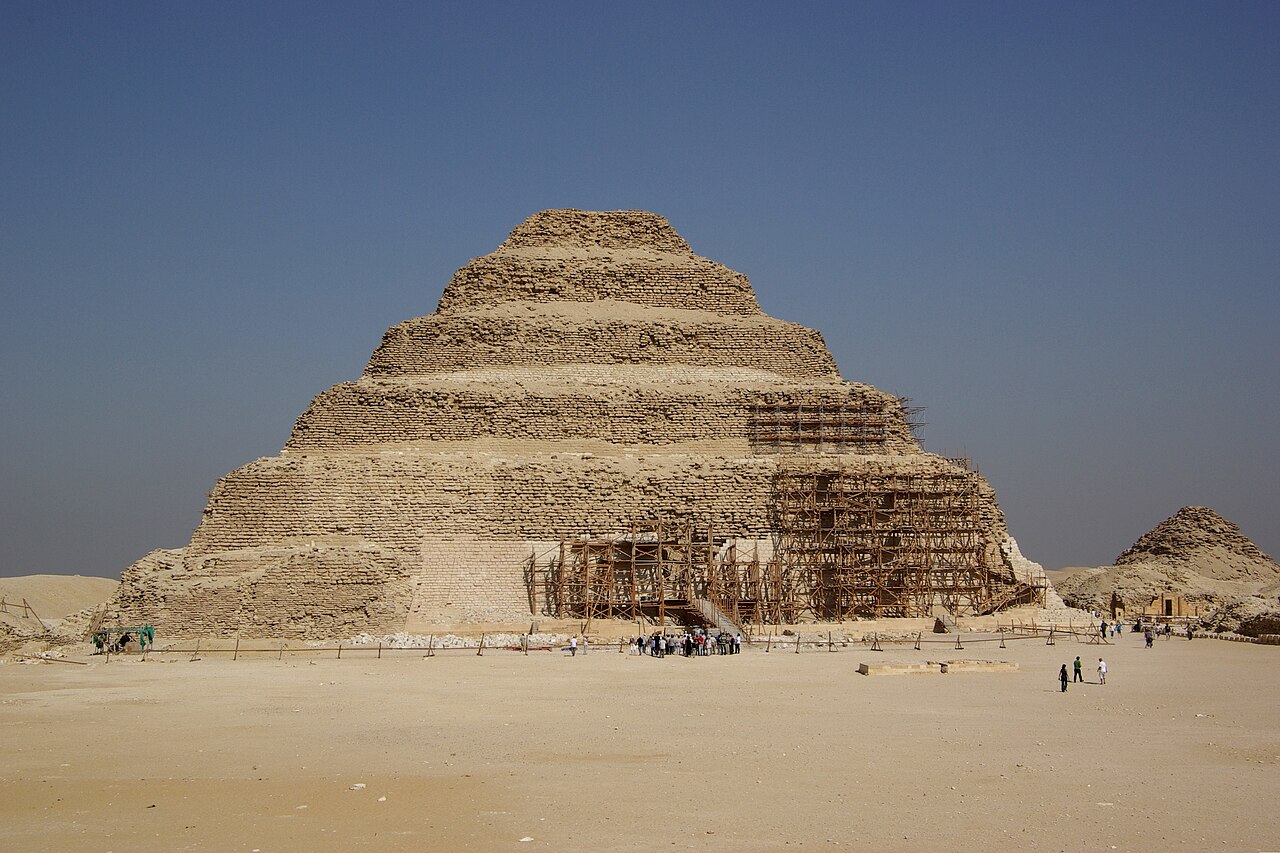
Saqqara was the burial ground of Memphis, the first capital of a united Egypt (3100 BC). It occupies a desert plateau above the Nile valley and stayed in use as a cemetery for over 3,000 years, from the first dynasty (around 3000 BC) right through to the Ptolemaic era (50 BC). Alongside Thebes, no necropolis anywhere on earth served for so long.
The site houses 11 royal pyramids (Djoser, Ounas, Téti, Pépi I, Pépi II and others), hundreds of mastabas (raw brick tombs with flat roofs) of nobles and high officials, and the mysterious Serapeum - underground gallery where the sacred Apis bulls were buried in immense granite sarcophagi. Saqqara is also the site of continued discovery - new burial shafts and mummies are unearthed every year (the latest excavations in 2024 unearthed 250 intact sarcophagi).
Djoser's Step Pyramid - first pyramid in history
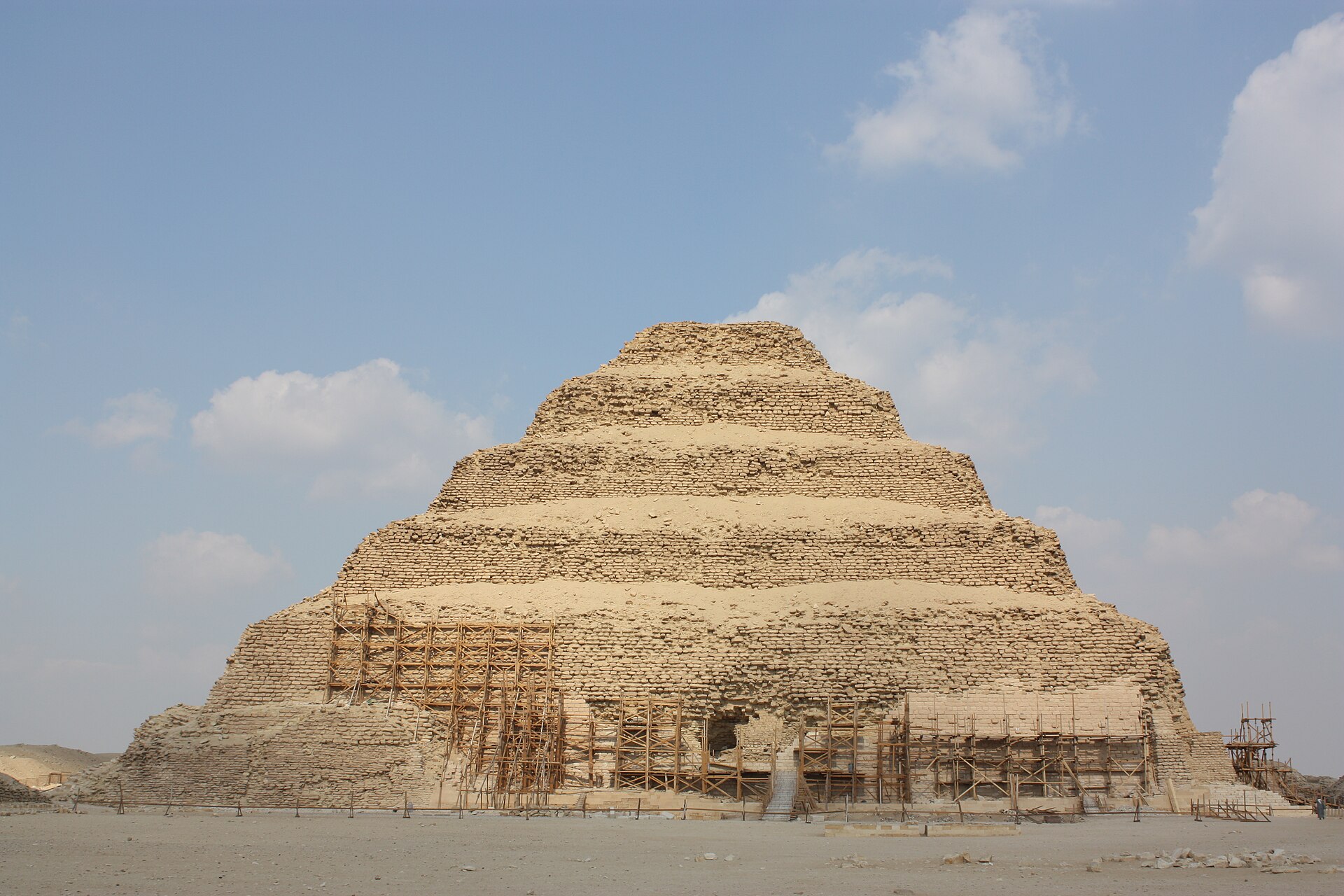
The pyramid of Djoser, built around 2680 BC. BC under the Third Dynasty, marks a absolute architectural revolution. Before Djoser, pharaohs were buried in mastabas - massive but low structures. The architect Imhotep (high priest of Heliopolis, first scholar identified by name in history) had the idea of stacking 6 mastabas of decreasing sizes to obtain a stepped pyramid structure - 60 meters high, 121 meters × 109 meters on the ground. It is the first monumental carved stone building in the world.
This idea started it all. 100 years later, Snefrou experiments with the smooth-sided pyramid (rhomboidal pyramid and red pyramid of Dahshur). Another 20 years and his son Cheops built the great pyramid of Giza, drawing direct inspiration from the architectural principles of Imhotep.
The Djoser pyramid was the subject of a complete restoration from 2006 to 2020 by the Supreme Council of Antiquities of Egypt. Today you can enter the burial chamber (included in the combined ticket, modest supplement) - extraordinary descent into a 28 meter deep burial shaft, where the pink granite sarcophagus of Pharaoh Djoser still rests.
How to get to Saqqara from Cairo
Saqqara is 30 km southwest of central Cairo, or 45 minutes to 1 hour 15 minutes depending on traffic and departure point.
- With an SEV excursion (recommended) - a private air-conditioned car collects you at your Cairo hotel and has you at Saqqara 45 minutes later, door to door. Part of the day pass.
- Private taxi - from Cairo center, 600-900 EGP (£10) round trip with waiting. Negotiate the price before departure. Driver generally does not speak French.
- Uber or Careem - outgoing around 250-350 EGP, return to be organized on site. Budget solution but without guide for the site.
Frequent combination - Giza + Saqqara + Memphis on a full day. Distance between the 3 sites - 30 km in triangle. Allow 9-10 hours outside the hotel to complete the full program.
What to see absolutely in Saqqara
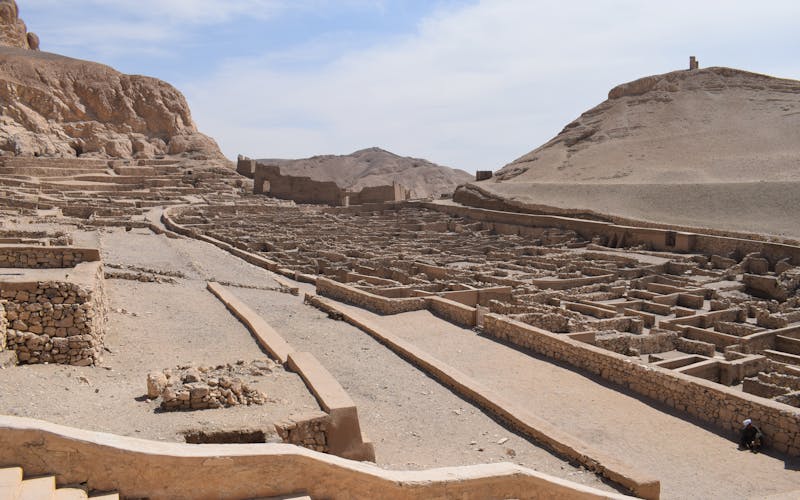
The site is very large (7 km from north to south). Here are the must-see items during a 3 to 4 hour visit.
- Djoser funerary complex (at the heart of the site) - an entrance hall lined with 40 engaged columns, among the oldest anywhere, the great south court with its altar, the step pyramid and a ceremonial chapel. Allow 1h30 at least.
- Pyramid of Unas (southwest) - last pyramid of the 5th dynasty (2350 BC). Its major interest - the Texts of the Pyramids, the first written religious corpus in human history, engraved on the walls of the burial chamber in green hieroglyphs. Interior visit possible.
- Mastaba of Ti (north) - tomb of a vizier of the 5th dynasty. Exceptional polychrome bas-relief reliefs - scenes of daily life (fishing, agriculture, breeding, crafts). Often considered one of the most beautiful mastabas in Egypt. Our favorite.
- Mastaba of Kagemni (beside Téti) - a second vizier's tomb, carved in the manner of Ti but richer in storytelling: spearing fish, driving cattle, feasting.
- Serapeum (northwest) - see dedicated section.
- Mereruka Tomb (north) - vizier of Téti, largest mastaba in Saqqara with 33 rooms. Polychrome reliefs, statues of the deceased in place.
The Serapeum: Where the Apis Bulls Lie in Giant Sarcophagi
Auguste Mariette uncovered the Serapeum in 1851, and it remains among the most astonishing finds in Egyptology: a gallery hewn through the limestone bedrock 200 metres long, holding 24 massive granite sarcophagi of 70 to 80 tonnes each. They were made to receive the sacred Apis bulls, the earthly embodiments of Ptah, god of Memphis.
On its death, each Apis bull was embalmed over 70 days, then borne in a great state procession from Memphis to Saqqara and laid in one of these vast sarcophagi, while its successor was consecrated at once. The rite continued from the New Kingdom (13th century BC) into Ptolemaic times.
Since 2014 the Serapeum has been included in the general Saqqara ticket. Give it 30 minutes to walk the main gallery, look at the most imposing sarcophagi and pick out the hieroglyphs. The mood is intense: cool air, dim light, stone echoing.
Saqqara 2026 prices and tickets
Hours are 8am to 5pm in winter and 8am to 4pm in summer. Individual tombs are shut in rotation for conservation now and then, so ask at the gate. On an SEV excursion your English-speaking guide already knows that week's rotation and plans the programme around it.
Saqqara, Memphis and Dahshur Together in a Single Day
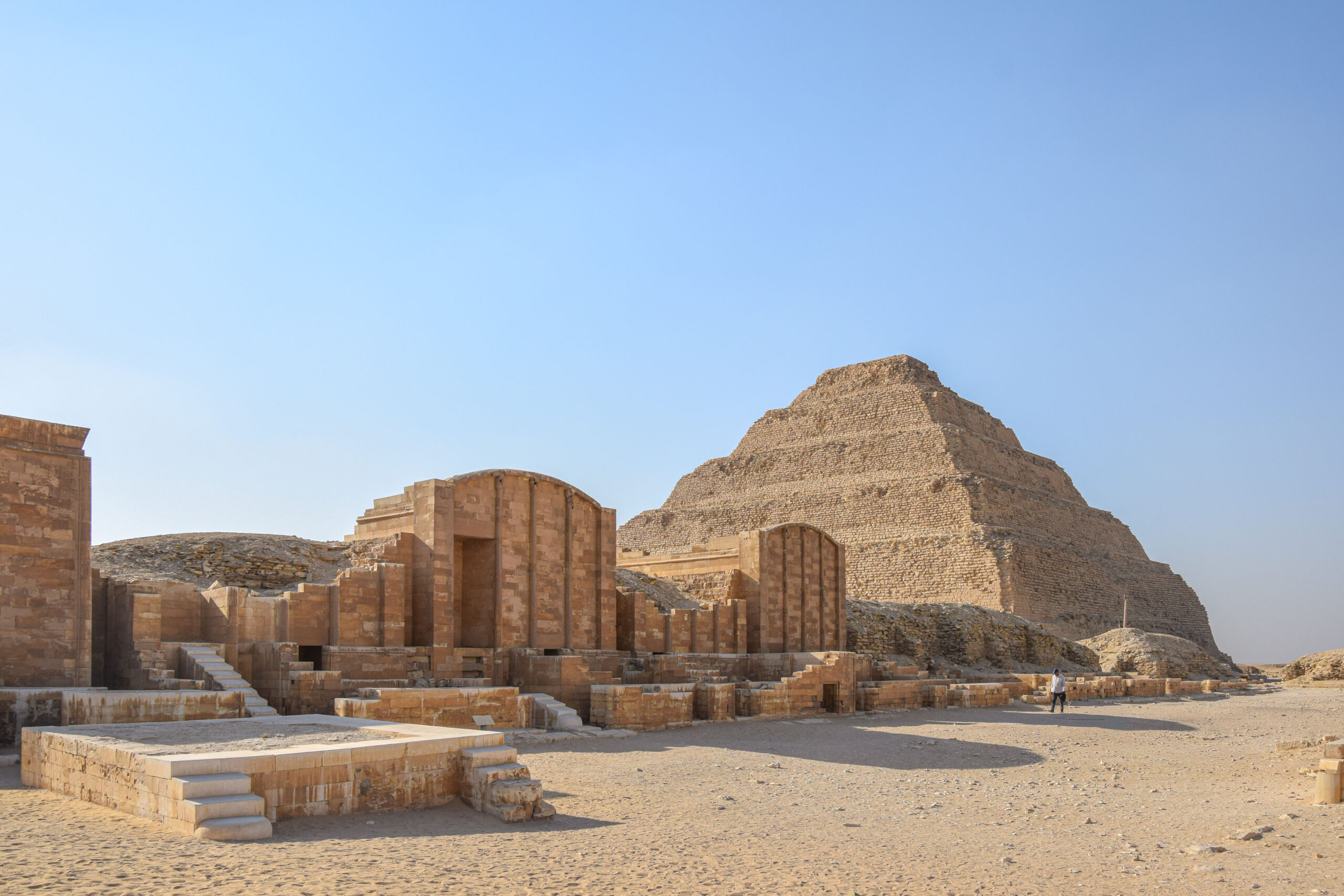
Our most requested formula - the origins day, which covers the three major sites of the beginnings of the Pharaonic civilization.
- 8:00am - Leave your Cairo hotel by private air-conditioned car.
- 9:00am - Memphis (Mit Rahina) - an open-air museum: the recumbent colossus of Ramses II (15 metres of alabaster) and the alabaster sphinx. 45 minutes.
- 10:00am - Saqqara, the Djoser complex - colonnaded entrance, south court, step pyramid, with an optional 28m descent. 1h30.
- 11:45 a.m. - Mastaba de Ti - the most beautiful polychrome reliefs from the 5th dynasty. 30 minutes.
- 12:30pm - Lunch at a local restaurant of the traditional kind (Andrea Mariouteya: roast chicken, mezze, salads).
- 2:00pm - The Serapeum, its underground gallery and giant sarcophagi. 45 minutes.
- 3:00 p.m. - Dahshur - rhomboidal pyramid (exterior), red pyramid (accessible interior). 1h30.
- 5:00 p.m. - Return to hotel Cairo.
Estimated cost in private SEV formula (transfers + entries + lunch + English-speaking Egyptologist) - from £100 per person for 2 people, from £70 per person for 4 people.
Get a full Saqqara day quote →
FAQ - Frequently asked questions about Saqqara
What does a Saqqara visit cost in 2026?
The general adult foreign ticket costs EGP 360 (approximately £550) in 2026 and includes access to Djoser Complex (outer), Ti Mastaba, Mereruka and Serapeum. To enter inside the pyramid of Djoser (descent 28m), count on a supplement of 200 EGP. ISIC students and children aged 6-12 pay half price (180 EGP).
What is the first pyramid in history?
The Step Pyramid of Djoser at Saqqara, built around 2680 BC. BC by the architect Imhotep during the 3rd dynasty. It predates the Great Pyramid of Cheops at Giza by approximately 100 years. Its structure - 6 stacked mastabas - inspired all the later pyramids. The restoration of 2006-2020 allowed its full reopening to the public.
Is Saqqara better than the pyramids of Giza?
Think of them as partners rather than rivals. Giza offers sheer scale (Cheops, Khafre, Mykerinos, the Sphinx); Saqqara offers depth and variety (the earliest pyramid, painted mastabas, the Serapeum, the Pyramid Texts). If you have done Giza already, or simply want a quieter day, nothing beats Saqqara. Ideally, see both, on separate days.
How long does it take to visit Saqqara?
For an essential visit (Djoser + Ti + Serapeum), allow 3 hours on site. For a complete visit (add Mereruka, Ounas and several mastabas), allow 4.5 to 5 hours. If you combine Memphis and Dahshur, it's a full 9-10 hour day out of the hotel.
Is the Serapeum open to the public?
Yes. After a long spell closed for restoration, the Serapeum reopened in 2014, and the general Saqqara ticket now covers it: a 200 metre underground gallery holding 24 giant granite sarcophagi, with an atmosphere like nowhere else. Allow 30 minutes there.
Can we enter Djoser's pyramid?
Yes, since 2020 after a major restoration. The descent reaches a depth of 28 meters via a secure staircase, and leads to the burial chamber where the pink granite sarcophagus of Pharaoh Djoser rests. Supplement 200 EGP to the general ticket. Confined, air-conditioned space, highly recommended for non-claustrophobic people.
How do Saqqara and Dahshur differ?
Saqqara and Dahshur sit 12 km apart on the Memphite plateau, two cemeteries side by side. Saqqara is the older and bigger (Djoser, the mastabas, the Serapeum). Dahshur came later, under Snefru of the 4th dynasty, Khufu's father, and holds two true smooth-sided pyramids: the Bent Pyramid, an architectural experiment, and the Red Pyramid, the first "perfect" one ever built. A single day covers both.
Is Saqqara wheelchair accessible?
Very partially. The Djoser complex is flat and accessible up to the entrance colonnade. The south courtyard is passable. The inner pyramids, mastabas and Serapeum all feature steep stairs or ramps without an access ramp. SEV can organize a visit with dedicated assistance - let us know when you request.
Is there an audio guide in Saqqara?
No, there is no official audio guide at present, and the information boards are in English and Arabic only. To make real sense of Djoser's architecture, the imagery in the mastabas and the story of the Apis, an English-speaking guide, ideally an Egyptologist, makes all the difference. Every SEV Saqqara formula comes with a private English-speaking Egyptologist as standard.
Which time of year suits Saqqara best?
Go early, between 8am and 11am: the site is vast, flat and shadeless, and the heat builds fast. From November to March any hour works. From June to August stick to before 11am or after 4pm, as the sun is merciless. In winter, sunset over the Djoser complex around 5pm is superb, with low light raking across the pale limestone.
Can we take photographs in Saqqara?
Yes, smartphone photography is permitted free of charge throughout the site and inside the mastabas. For professional SLR, a special permit is required (300 EGP). Photography permitted inside the Djoser pyramid (without flash). Drones strictly prohibited without special permission from the Council of Antiquities.