
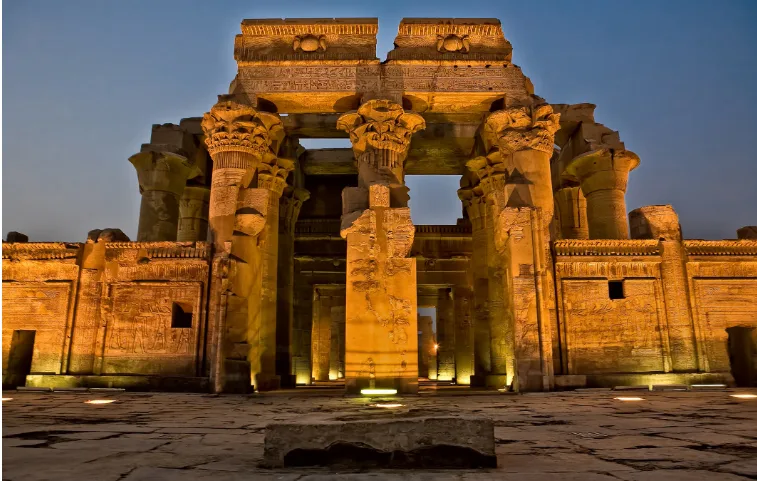
The temple of Kom Ombo stands on the Nile's east bank 45 km north of Aswan and is the only double temple ancient Egypt ever produced: one half belongs to Sobek, the crocodile god, the other to Haroëris (Horus the Elder), the falcon god. Raised under the Ptolemaic dynasty (180-47 BC), it is a fixed stop between Edfu and Aswan for every Nile cruise. Most groups race through in 45 minutes, yet few temples in Egypt reward attention more, thanks in particular to the Crocodile Museum next door and the oldest relief of medical instruments anywhere in the world.
SEV organizes private excursions to Kom Ombo from Aswan or Luxor with a English-speaking guide, or integrates the stopover into our personalized Nile cruise packages. Ask for your quote.
Request a Kom Ombo quote on WhatsApp →
Kom Ombo - the only double sanctuary in Egypt
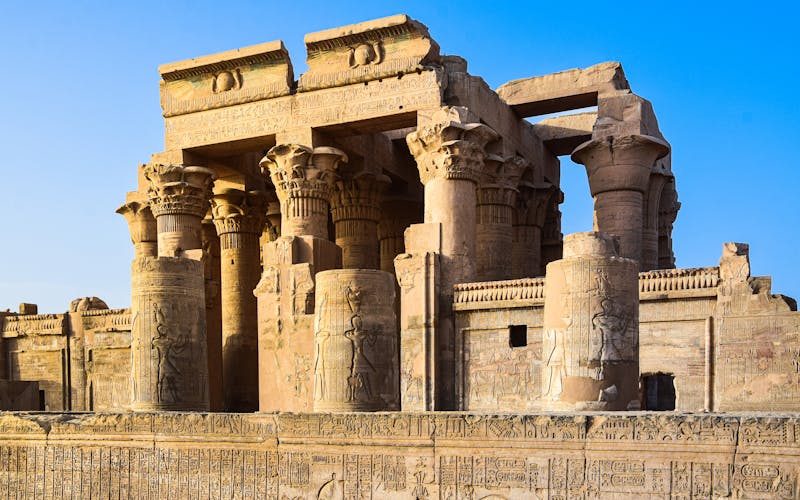
The specificity of Kom Ombo is immediately seen when you approach the temple - the entrance pylon is split, the inner courtyard is split, the sanctuary is split. Everything is replicated twice, in a perfect mirror 12 meters away. The south side (right when you enter) is dedicated to Sobek the crocodile, the north side (left) to Haroëris the falcon. No other temple in Egypt has this configuration.
Why this duality? Three theories. Most likely - Kom Ombo lies on the historical border between the Sobek Fang region (downstream, towards Edfu) and the Haroëris Falcon region (upstream, towards Aswan). The Ptolemies, who financed the construction, wanted to unify the two cults in the same sanctuary to unite the region and support their Hellenistic legitimacy in Upper Egypt.
The story - Ptolemaic rulers and the crocodile god's cult
There was already a shrine here in the Middle Kingdom (12th dynasty, 2000-1800 BC), but almost everything standing today comes from Ptolemy VI Philometor (180-145 BC) and Ptolemy XII Neos Dionysus (80-51 BC, Cleopatra VII's father). Under Augustus and Tiberius the Romans finished the pronaos and some of the outer reliefs.
The cult of Sobek was particularly developed in the Kom Ombo region because the Nile made a dangerous loop there - crocodiles were numerous there. Taming a sacred crocodile on behalf of the temple was considered protection against riverine attacks. The priests kept around ten crocodiles alive in sacred pools (the lakes of Sobek), fed daily and mummified when they died. It was in Kom Ombo that Egypt's largest collection of crocodile mummies was found - now on display in the adjoining museum.
The temple has suffered over the centuries - earthquake (1199), annual Nile floods, especially dismantling by Coptic Christians (5th century) who made it a church. Fortunately, many Ptolemaic reliefs remained engraved deep enough to survive.
Reaching Kom Ombo: 2026 travel options
Kom Ombo is 45 km north of Aswan and 60 km south of Edfu. Three ways to go according to your program.
- On a Nile cruise (the simplest) - all 5★ liners stop at Kom Ombo between Luxor and Aswan, generally in the morning with a visit from 1h30 to 2h. Included in the cruise package.
- On an excursion from Aswan - SEV private air-conditioned vehicle, departure 6 a.m., arrival Kom Ombo 7:30 a.m. 2 hours of visit with English-speaking guide. Return to Aswan 11 hours or continuation to Edfu.
- Train + taxi (budget, not recommended) - train Aswan-Daraw (15 EGP, 30 minutes), then taxi Daraw-Kom Ombo (50 EGP, 10 minutes). Slow and fragile solution for French speakers.
What to see absolutely at the Kom Ombo temple
The site is compact (250 meters × 100 meters) but dense. Here are the things not to miss during your 1.5 hour visit.
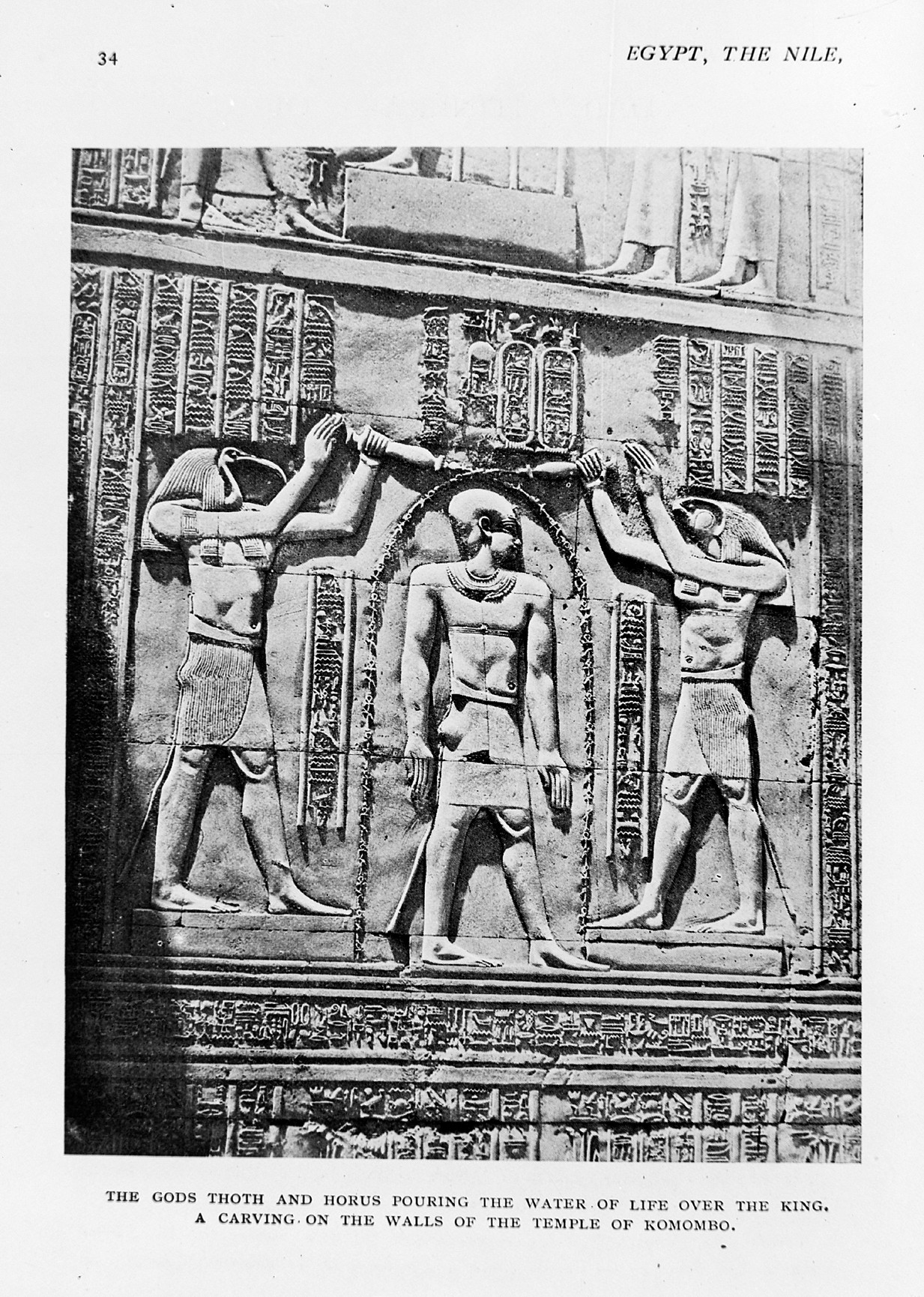
- The twin pronaos (the entrance) - ten papyrus-form columns topped with bell capitals, and fine purification scenes in which Thoth and Horus pour lustral water over Ptolemy VIII.
- The festival calendar (inner wall) - along the east side, a detailed listing of the year's religious festivals and the offerings each required; among the richest sources we have on Sobek's cult.
- The relief of medical instruments (rear exterior wall) - see dedicated section below.
- The deep nilometer (at the heart of the site) - masonry well in which the annual flood of the Nile was measured. Depth 6 meters.
- The two inner sanctuaries - ruined walls but we can clearly see the double plan. Sobek side (right), reliefs of the crocodile god with a human head. Haroëris side (left), Horus standing in uraeus.
- Sobek's crypt (right of the sanctuary) - a cramped chamber below ground where the sacred mummies were stored.
The relief of medical instruments - our favorite
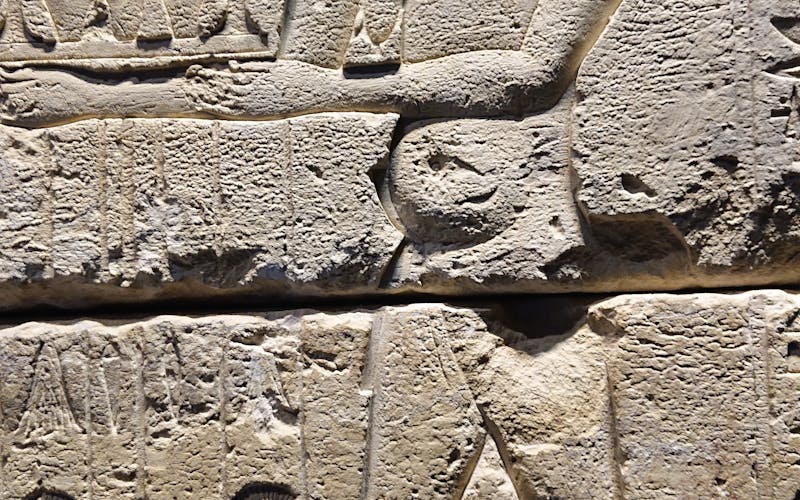
On the rear exterior wall of the temple (north-east side), a sculpted relief represents around thirtymedical and surgical instruments - scalpels, forceps, scissors, bone saws, suction cups, scales for weighing ingredients, mortars, buckets. It is one of the world's oldest accounts of surgical practice and organized pharmacopoeia, dating from the 2nd century BC. AD
Anyone interested in the history of science should treat this as the highlight of Kom Ombo. Most guides skip it, since reaching it means walking right round the back of the temple. With SEV, your English-speaking guide leads you straight to it and spends 10 minutes on ancient Egyptian medicine, the Alexandrian school and what passed down to Hippocrates.
The Crocodile Museum - the hidden nugget of the site
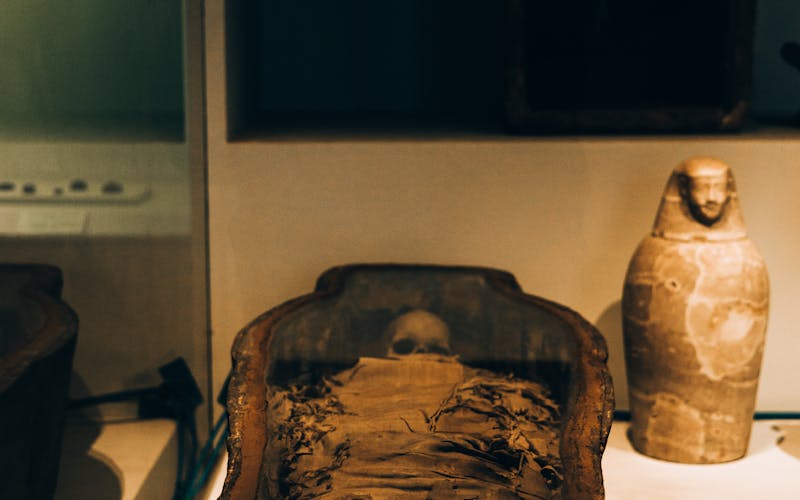
Inaugurated in 2012, this small modern museum (3 air-conditioned rooms) adjoins the temple and exhibits a fifty crocodile mummies found in the sacred pools and the zoological necropolis of the site. Varied sizes - from 30 cm newborn to 5 meter adult. Well-lit windows, trilingual signs (Arabic, English, French).
Also on display - gold and bronze votive jewelry, Sobek statues, liturgical papyri, and the extraordinary golden mask of a crocodile mummy found intact with its linen shroud. Visit included in the temple ticket (no extra charge). Allow 25-30 minutes.
A tip from us - see the museum FIRST, then the temple. Once you grasp what Sobek meant to people here, the reliefs in the main sanctuary read completely differently.
Kom Ombo 2026 prices and tickets
Opening hours 2026 - 7 a.m. to 5 p.m. (winter), 6 a.m. to 6 p.m. (summer). Very hot site in summer because of the shadeless shore - bring a hat, water and glasses. No restaurant on site, but a small bazaar of souvenirs and cold drinks at the exit.
Kom Ombo by Nile cruise - the ideal stop
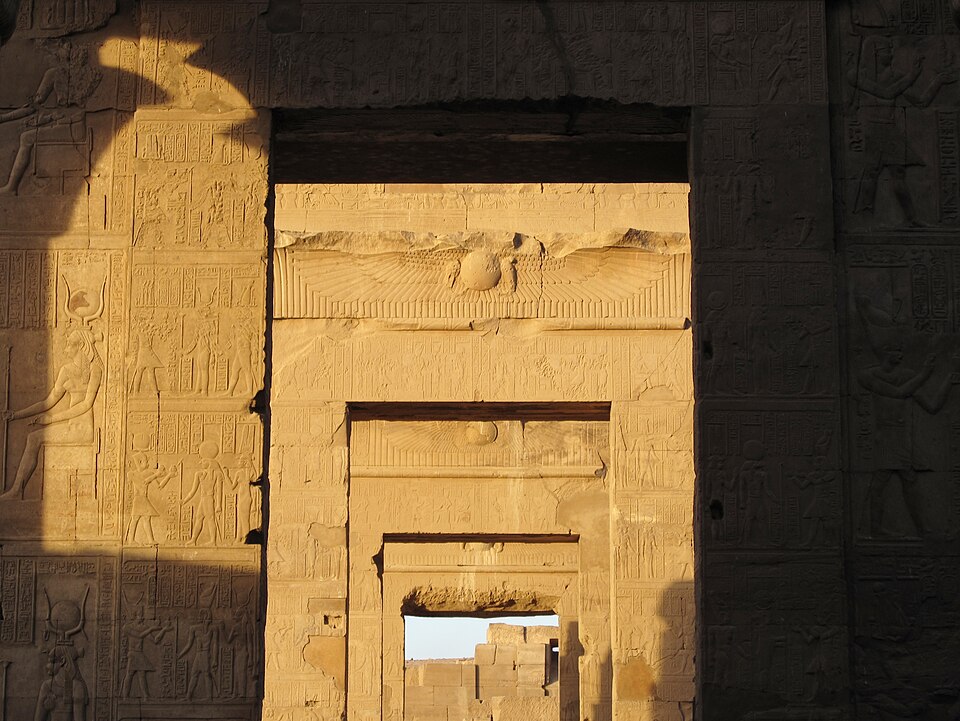
Kom Ombo is designed by nature to be visited by cruise - the temple is placed directly on the bank of the Nile, 20 meters from the water. The 5★ liners dock at the quay just in front of the pylon, and you disembark on foot to the site in 3 minutes. No road transfer necessary.
Here is the typical sequence of a Kom Ombo stopover on a 5★ Luxor-Aswan cruise, morning program:
- 6:00 a.m. - Arrival of the boat at Kom Ombo. Quay 20 meters from the temple.
- 6:30am - Breakfast aboard as the first light of sunrise catches the temple's pylon.
- 7:30 a.m. - Disembarkation and visit (1h30 with local English-speaking Egyptologist).
- 9:00 a.m. - Re-boarding and departure to Aswan (3 hours of navigation).
- 12:30pm - Docking at Aswan, then lunch aboard looking out at the pink granite obelisks.
For the English-speaking traveler, this is the best option. The 4-night Luxor-Aswan cruise systematically includes Kom Ombo + Edfu + Valley of the Kings + Karnak + Philae. SEV offers 5★ cruise packages with private English-speaking guide on board from £990 per person all inclusive (domestic flights in Egypt that we organize for you - Cairo-Aswan, Aswan-Abu Simbel - + transfers + cruise + tours + tips).
Get a personalized Nile cruise quote →
FAQ - Your questions on Kom Ombo temple answered
What is the 2026 entry fee for Kom Ombo temple?
In 2026 a foreign adult ticket is 360 EGP (around £5.4), covering both the temple AND the Crocodile Museum beside it. Holders of an ISIC card and children aged 6-12 pay half, 180 EGP. Payment is cash only, in EGP, at the ticket window.
Why is Kom Ombo a double temple?
What sets Kom Ombo apart from every other Egyptian temple is that two cults share one building along parallel axes: the southern (right-hand) side belongs to Sobek the crocodile, the northern (left-hand) side to Haroëris, Horus the Elder, the falcon. The area sat on the historic boundary between the two local cults, and the Ptolemies designed the temple to bring both communities under one roof.
How long does it take to visit Kom Ombo?
Allow at least 1h30 on site - 1h for the temple, 30 minutes for the Crocodile Museum. With an explanatory English-speaking guide, allow 2 hours. If you arrive on a cruise, the program is generally scheduled for 1h30 with a quick return to the boat.
Is the crocodile museum worth the detour?
Yes, absolutely. Inaugurated in 2012, the Crocodile Museum exhibits around fifty crocodile mummies found on the site, votive jewelry, Sobek statues and liturgical papyri. Visit included in the temple ticket, allow 25-30 minutes. Our advice - visit the museum BEFORE the temple to better understand the reliefs.
Is Kom Ombo reachable without taking a cruise?
Yes. From Aswan, allow 45 minutes by private car (45 km north). SEV organizes morning excursions from your Aswan hotel with air-conditioned vehicle, English-speaking guide and 2 hours on site - typically combined with Edfu (60 km further north) for a full day. Price from £60 per person for 4 people.
Which season suits a visit to Kom Ombo?
Early in the morning when it opens (6 a.m.-8 a.m. in summer, 7 a.m.-9 a.m. in winter). The site is located on a bank without shade, and the heat rises quickly after 10 a.m. The sunset over the temple (5 p.m.-6 p.m. depending on the season) is also magnificent - ocher reliefs, sparkling Nile, absolute calm once the cruises have left.
Does Kom Ombo offer an audio guide?
No official audio guide exists. There are a handful of information boards in English and Arabic, but to make sense of the twin sanctuaries and the medical relief you really want an English-speaking guide. SEV's Kom Ombo excursions come with a private, English-speaking Egyptologist.
Can we combine Kom Ombo and Edfou in one day?
Yes, and it's the classic combo of Aswan days. Departure Aswan 6 a.m., visit Kom Ombo 7:30 a.m. - 9:30 a.m., road Edfu 9:30 a.m. - 10:45 a.m., visit Horus temple of Edfu 10:45 a.m. - 12:45 p.m., lunch Edfu, return Aswan 3 p.m. - 4:30 p.m. SEV rate for two people in a private formula - from £130 per person (transfers + entries + lunch + English-speaking guide).
Is the temple wheelchair accessible?
Partially. The temple quay is flat, the entrance via the pylon is accessible. The inner courtyard and the pronaos are passable with assistance. The inner sanctuaries have some steps. The Crocodile Museum is accessible (access ramp). SEV can organize a visit with dedicated assistance - let us know when you request.
Which flights for Cairo - Aswan in 2026?
Between Cairo (CAI) and Aswan (ASW), EgyptAir and Air Cairo fly 4-6 times a day; the flight takes 1h25 and a one-way fare in 2026 runs £70-£120 depending on the season. If you want Kom Ombo, Aswan and Philae inside 3 days, a 4-night Luxor-Aswan Nile cruise package is usually the easiest and cheapest way to do it.