
Texample of Philae - located on the island of Agilkia in the heart of the Nile, 12 km south of Aswan, this sanctuary dedicated to the goddess Isis is one of the last major active temples of ancient Egypt. The mysteries of Isis were celebrated there until 537 AD, two centuries after the official closure of the pagan temples by Theodosius. For the English-speaking traveler who pushes on to Aswan, Philae is not an option - it is the highlight of the stage, and probably the most beautiful arrival atmosphere by boat in all of Egypt.
Our SEV team organizes private guided tours of the Philae temple from Aswan with a English-speaking guide, boat included and optimized timing to avoid cruise buses. Request your personalized quote.
Request a Philae quote on WhatsApp →
Why the Temple of Philae is unique in Egypt
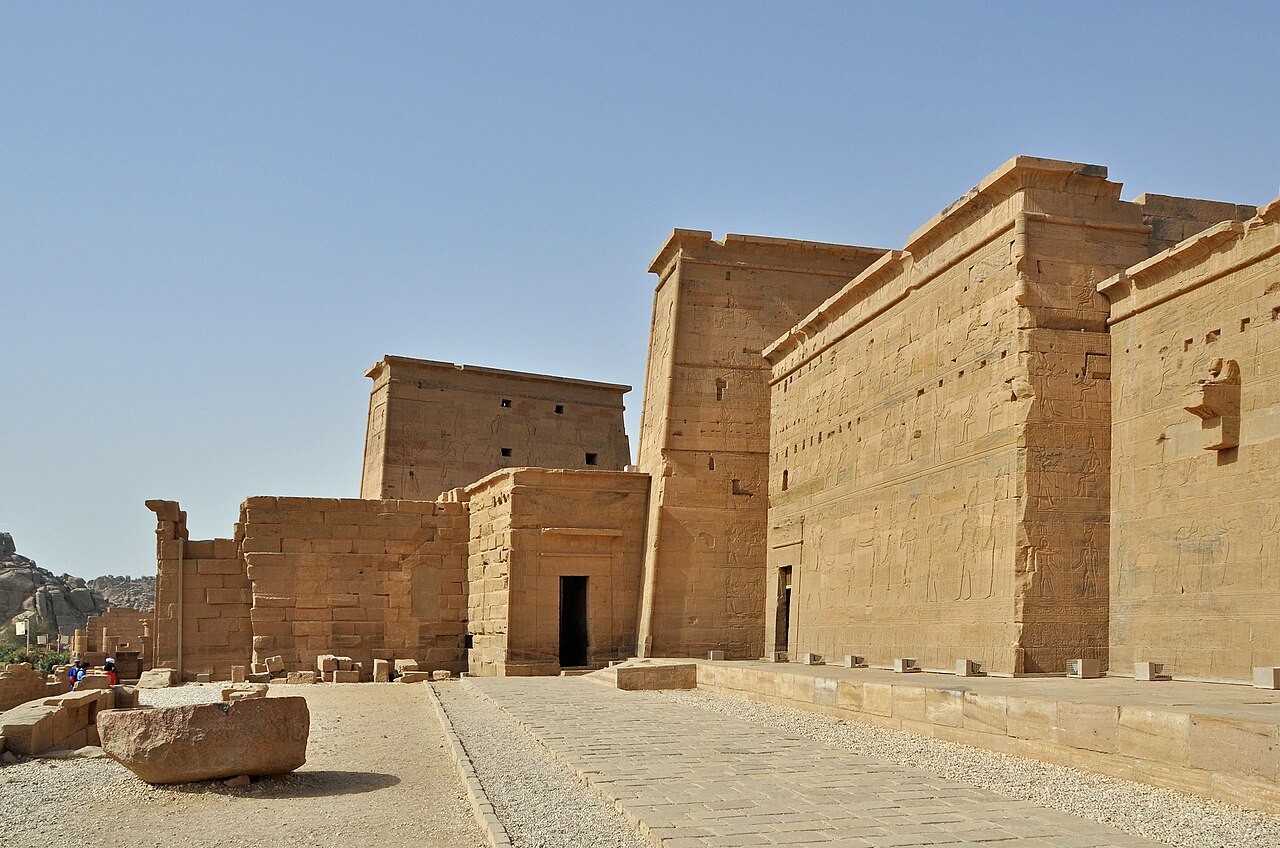
Three facts distinguish Philae from all other Egyptian temples and explain why it is absolutely worth a half-day of your Aswan stop.
- The final pagan temple still in use: worship of Isis carried on here until 537, a full two hundred years after Theodosius shut every other temple in Egypt in 391. Its walls also carry the last hieroglyphs ever carved in the country, graffiti from the 4th century.
- A whole island rescued by UNESCO: between 1972 and 1980 the complex was taken apart block by block (45,000 of them) and rebuilt exactly as it stood on Agilkia, the island next door, 20 metres higher up and beyond reach of the water rising behind the High Dam. Apart from Abu Simbel, no other Egyptian temple has been shifted several hundred metres.
- You arrive by water: the only way onto Philae is a motor boat from the jetty at Shellal. Those 10 minutes on the Nile, as the temple slowly appears from behind the granite boulders, rank among the loveliest approaches to any ancient site anywhere.
History - from Ptolemy II to UNESCO safeguarding
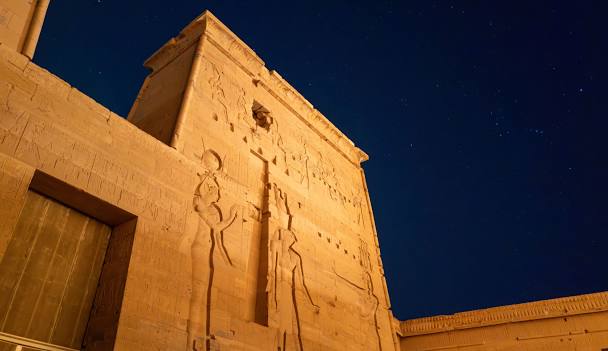
The earliest shrine here goes back to Nectanebo I of the 30th dynasty (370 BC). Most of what you walk through today, though, went up under the Ptolemies, from Ptolemy II Philadelphus through to Ptolemy XII Neos Dionysus (c. 280-50 BC), and the Romans added a good deal more under Augustus, Tiberius, Trajan and Hadrian.
The main temple honours Isis, the goddess of magic, grief and motherhood, who was among the best-loved figures of the late Egyptian pantheon. Her worship later travelled right across the Roman Empire: shrines to Isis, known as Isea, have been uncovered in Pompeii, Athens, London and as far afield as Germany. Philae was the mother house of them all.
Once the first Aswan Dam was raised in 1902, Philae spent six months of every year under water. Travellers rowed in between column tops poking above the surface, a scene made famous by Pierre Loti and David Roberts. The High Dam of the 1960s (Sadd al-Aali, finished in 1970) would have drowned the island for good, so in 1972 UNESCO started taking the temple down and re-erecting it on neighbouring Agilkia, a job completed in 1980. That rebuilt island is what you visit today, as much a feat of modern engineering as of ancient architecture.
Reaching Philae Temple from Aswan: the 2026 options
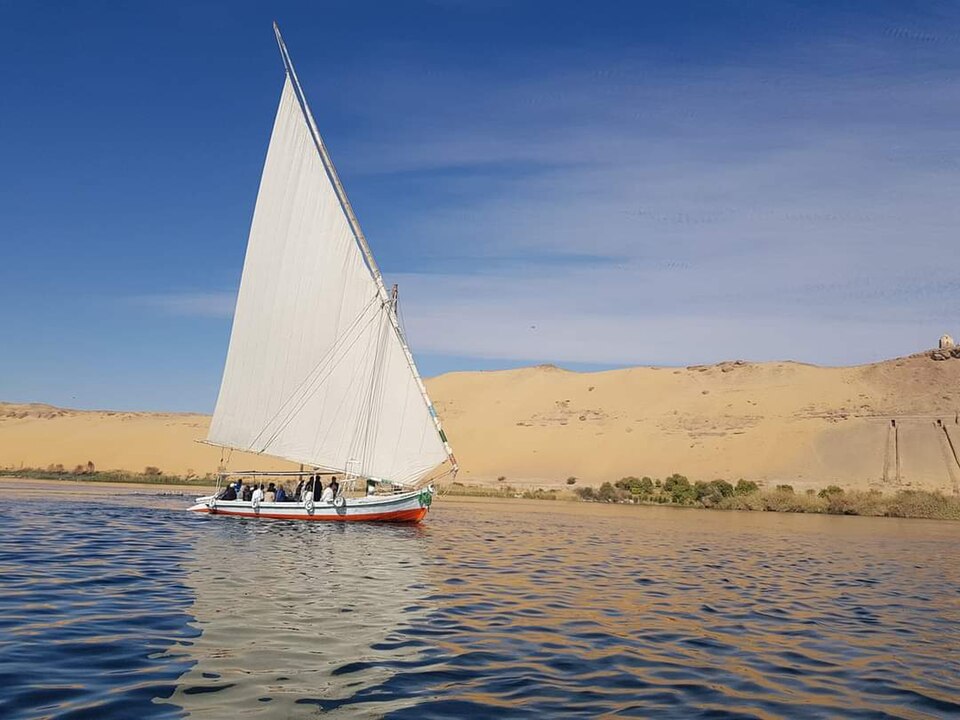
There are two steps to reach Philae - the road to Shellal pier, then the boat to the island.
Stage 1 - Aswan to Shellal - Shellal pier is located 12 km south of the center of Aswan, just behind the old dam (Aswan Low Dam, 1902). Allow 20 minutes by taxi (150-200 EGP one way, or 3-). With an SEV organized tour, private transfer by air-conditioned vehicle is included.
Stage 2, Shellal to Agilkia: a flat-bottomed motor boat, usually with a canopy. The official 2026 rate is 300 EGP per boat, covering the return journey and a wait of 1-2 hours while you explore. Each boat carries 6 to 10 passengers, so couples are grouped with other visitors, which makes for pleasant company. Allow 10 minutes for each crossing.
Book the excursion through SEV and the boat is reserved for your party alone: you choose when to head back, linger on the island as long as you like, and your English-speaking guide remains at your side throughout.
What to see absolutely on the island of Agilkia
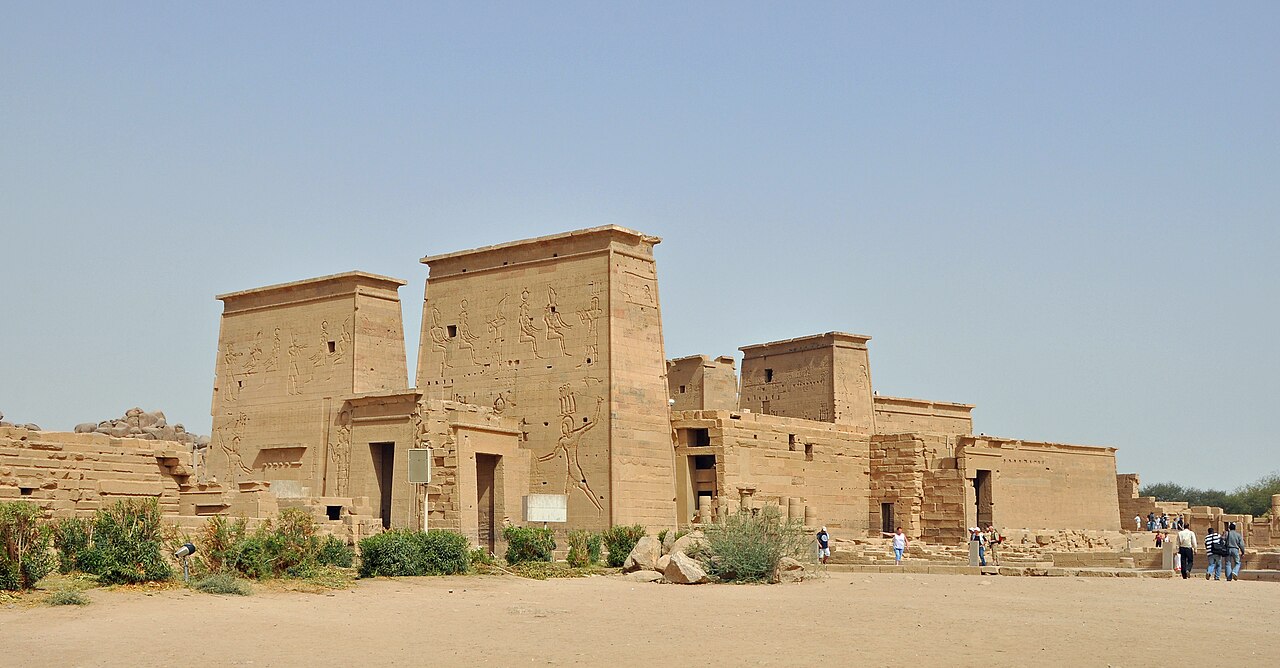
The island is 400 meters long and 130 meters wide. The great temple of Isis occupies 2/3 of the surface. Here is the logical order of visit and the elements not to be missed.
- The kiosk of Nectanébo (to your left as you step ashore): the site's oldest structure (380 BC), a modest open pavilion carried on Hathor-headed columns. Few visitors linger here, and the reliefs are lovely.
- The first pylon (the great gateway): 18 metres tall, a matching pair of towers carved with scenes of Ptolemy XII smiting his foes. Once through the main doorway, glance upwards on either side and you will spot inscriptions cut by members of Bonaparte's expedition in 1799.
- The inner courtyard and the mammisi (left) - the “birthplace”, a small chapel dedicated to the child Horus. Nursing of Horus by Isis carved on the walls - presumably the origin of Christian depictions of the Virgin and Child.
- The second pylon and the naos of Isis (heart of the temple) - hypostyle courtyard with 10 papyriform columns, then interior sanctuary where the statue of Isis was enthroned. Beautiful reliefs where Isis breastfeeds Horus, scenes from the myth of Osiris.
- Trajan's Kiosk (east bank, south exit) - our favorite. Small open pavilion with 14 composite columns, built under Emperor Trajan (AD 98-117) on the banks of the Nile. This is the motif that inspired Pierre Loti in The Death of Philae. Magical photo at sunset.
- The Temple of Hathor (west) - small temple adjoining the great sanctuary of Isis. Unique musical reliefs in Egypt - the god Bes plays the lyre and dances.
Trajan's Kiosk - Philae's most photographed motif
Take away a single picture of Philae and it will be Trajan's Kiosk: fourteen composite columns crowned with capitals that blend papyrus, lotus and Hathor motifs, a lofty roof that was never finished, and beyond it the river and the rose-coloured granite of Aswan. For 200 years it has been the defining image of Philae in English-language travel writing.
Our photo tip - position yourself on the east side, at 4 p.m. in summer (5 p.m. outside summer), with the sun at your back to have the columns bathed in golden light and the Nile sparkling in the background. At 5:30 p.m. in winter, the kiosk glows red in the sunset - a cinematic moment.
The evening sound and light show: is English on offer?
Yes, and it is one of the few authentic twilight experiences in Egypt. The Philae sound and light show is performed every evening on the island in 7 rotating languages, including French. The show lasts approximately 1 hour, narration by actor's voice, colorful illuminations and orchestral music.
Schedule 2026 - 3 sessions per evening - 7 p.m., 8 p.m., 9 p.m. (times shifted by one hour in winter). The French session typically runs on Tuesday and Friday evenings. Check the current weekly schedule at the time of your reservation - it sometimes changes.
In 2026 an adult ticket is EGP 600 (£10), and children under 6 go free. Getting across in the evening is charged separately (200-300 EGP for the boat), as the ticket does not cover it. SEV bundles the ticket, the boat and a pick-up from your Aswan hotel, timed for the English-language performance.
Book the sound and light show in French →
Philae 2026 prices and ticketing
Payment only in EGP (Egyptian pounds) at the counter. Bank cards are not systematically accepted - bring cash. If you arrive with an SEV excursion, the ticket agent is included in the package.
When to visit Philae - avoid heat and crowds
Philae opens 7 days a week, every month of the year. How comfortable your visit is, though, depends hugely on the season and the hour you choose.
- October to March - ideal season. Temperatures Aswan 18-28°C, clear skies, low humidity. Visit at any time of the day. Crowd high but bearable.
- April to May and September - hot (30-38°C) but still acceptable. Visit early morning (8am-10am) or late afternoon (4pm-6pm).
- June to August - sultry (40-46°C in the afternoon). Mandatory visit between 7 a.m. and 10 a.m. or after 5 p.m. Abundant water required, hat, glasses.
To avoid the cruise bus crowds, aim foropening at 7 a.m. (buses typically arrive at 9 a.m. from liners anchored in Aswan) or late afternoon from 3:30 p.m. when the cruises leave for Luxor. SEV systematically schedules Philae visits first thing in the morning or late in the afternoon for its private clients.
Combine Philae with Aswan in one day
Pair Philae with Aswan's other highlights and you have a complete day out. This is the programme guests ask for most.
- 8:00 a.m. - Philae (opening, 2 hours on site with English-speaking guide). Return to Shellal at 10:30 a.m.
- 11:00 a.m. - Aswan High Dam (Sadd al-Aali). 30 minutes visit with photo stop, explanation of the history and hydrology of the Nile.
- 11:45 a.m. - Unfinished obelisk of Carrière north. 45 minutes to understand the size of the Ptolemaic obelisk abandoned in the bedrock.
- 1:00 p.m. - Lunch in a felucca - tour of Nubian village with traditional lunch aboard a traditional felucca lateen sail.
- 3:30 p.m. - Nubian village (Gharb Sehel or Aswan-West) - meeting with Nubian families, visit to traditional colorful houses, karkadé tasting.
- 6:00 p.m. - Return to hotel. Optional - dinner on the Nile or Philae sound and light in the evening.
Estimated cost of a full day Aswan private SEV (transfers + entries + English-speaking guide + lunch + felucca) - from £70 per person from 4 people, from £110 per person for a duet. Request a quote for specific dates.
Get a personalized Aswan day quote →
Philae Temple FAQ: your questions answered
What are the 2026 entry prices for Philae Temple?
The foreign adult ticket costs 550 EGP (around £8.5) in 2026. To this must be added 300 EGP per boat (~£0, shared by 6-10 people) for the Shellal-Agilkia crossing. So count around £13 per person in total for entry and transport by boat. ISIC students and children aged 6-12 pay half price (275 EGP).
What is the route from Aswan to Philae?
Two legs: taxi or private car from Aswan to Shellal (12 km, about 20 minutes, 150-200 EGP), then a motor boat from Shellal across to Agilkia island (10 minutes, 300 EGP per boat). On an SEV excursion the private transfer and a boat kept for your group come as standard.
How much time should I allow at Philae?
Budget a minimum of 1h30 to see the great temple of Isis, Trajan's Kiosk, the Hathor temple and the mammisi properly. If an English-speaking guide is explaining things, make that 2 hours. Keen photographers and Egyptology buffs will be happier with 2.5 to 3 hours.
Does Philae's sound and light show run in English?
Yes, the sound and light show offers a session in French, generally on Tuesday and Friday evenings (program varies depending on the season, check when booking). The show lasts approximately 1 hour and costs 600 EGP (£10). The boat for evening transport is not included in the ticket, count 200-300 EGP additional.
When should you plan a visit to Philae?
Early in the morning at 7-9 a.m. (opening, few people, soft light) or late afternoon from 3:30 p.m. (golden light on Trajan's kiosk, return of cruise buses to Luxor). Avoid between 10 a.m. and 2 p.m. in the hot season - the heat is intense and the groups are numerous.
Can we take photos in Philae Temple?
You can take photos anywhere on the site at no extra cost, the naos included. Anyone wanting to use a tripod or shoot professionally needs a permit from the Aswan Archaeological Inspectorate (300 EGP). Drones are banned outright.
Is Philae Temple wheelchair accessible?
Up to a point. Boarding the boat and getting off at the island both call for a helping hand. Wooden ramps then lead into the main courtyards, though the inner naos involves a few awkward steps. SEV can arrange a visit with dedicated support: just mention it when you enquire.
When was the Philae temple moved?
Philae was relocated between 1972 and 1980 under the great Nubian monuments rescue campaign that UNESCO launched in 1960. Some 45,000 blocks were taken down, numbered and put back together exactly as before on neighbouring Agilkia, 20 metres higher. The engineers even reshaped Agilkia's contours so that it would mirror the original island.
What is the difference between the old and the Aswan High Dam?
The Aswan Low Dam, the older of the two, was a British project of 1898-1902, heightened in 1907-1912 and again in 1929-1934; that is the structure responsible for the partial flooding of Philae during the 20th century. The High Dam (Sadd al-Aali, finished in 1970) stands 7 km further upstream and formed Lake Nasser, and without UNESCO's intervention it would have submerged Philae for ever.
Do you need a English-speaking guide to visit Philae?
No one will insist, but we strongly advise it. Go alone and you admire the architecture yet miss the myths and history that give the place its meaning: the Osiris, Isis and Horus story, the UNESCO rescue, the graffiti left by Bonaparte's men. A licensed English-speaking Egyptian guide charges 800-1200 EGP (£10-£20) for 2 hours at the temple. Every SEV Philae package comes with a private English-speaking guide as standard.
Which flights for Cairo - Aswan in 2026?
Between them, EgyptAir and Air Cairo fly the Cairo (CAI) to Aswan (ASW) route 4-6 times a day, with a flight time of 1h25. Expect to pay £70-£120 each way in 2026, depending on the season, and reserve 2-3 weeks ahead for the keenest fares. If you are taking a Nile cruise, the sensible pairing is a flight down and a Luxor to Cairo return.