
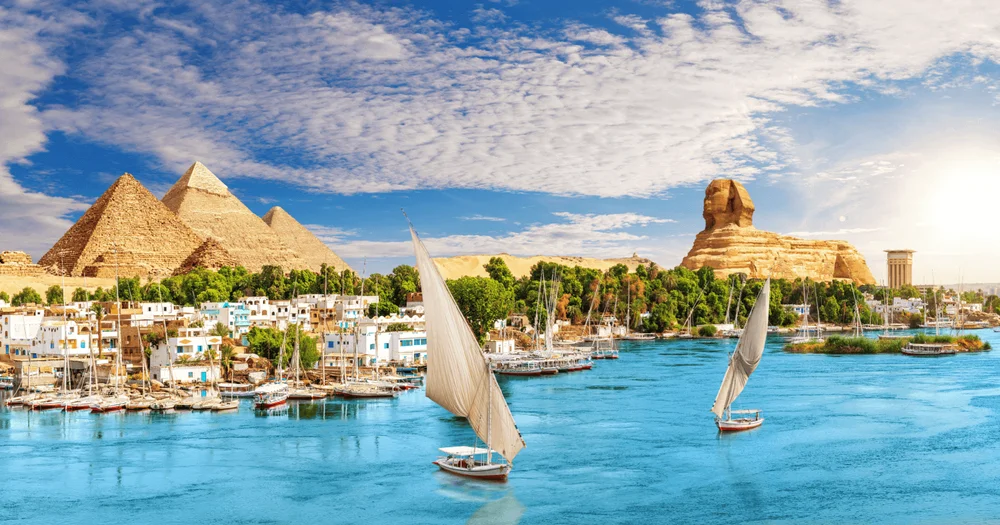
Seven days off work: that is what most people get. You want pyramids, a stretch of river, the temples at Luxor, and to come home rested rather than wrecked. Tricky to balance. We trialled fifty versions. This is the one that holds up.
The day by day program
Day 1: Arrival in Cairo
Arrive in Cairo on your flight to Egypt. You land around 6 p.m. or 10 p.m. (depending on your flight). VIP welcome at the airport by our team. Private transfer to the hotel in central Cairo (Zamalek or Gezira). You have 5-6 hours to rest. Do not go out that day. You are tired. Your body doesn't know where it is. Consult our guide on visa for Egypt to prepare for your arrival without surprises.
Hotel: four stars and up. A pool. A room facing the river. Around £100 to £120 nightly.
Day 2: Cairo in 24 hours
Morning: Egyptian Museum (2 hours). Go there first. It's chaos after 10am. Tutankhamun's mummy. Pharaonic treasures. Your guide speaks French. This is crucial. To better understand the Cairo and its monuments, check out our complete guide.
Lunch is koshary: rice, pasta, tomato sauce in a bowl. The national dish. Costs next to nothing. Genuinely good.
The afternoon is Giza. Three pyramids, Khufu's the giant of the set, and standing under it recalibrates your idea of big. Hollywood, it turns out, undersells the thing. Two hours there, then the Sphinx, then out into the sand for the viewpoint where all three line up.
Evening: Citadel of Saladin. View of Cairo. The Muhammad Ali Mosque. Very photogenic. You leave stressed by the density of Cairo, but full of history. If you're traveling with family, don't forget to check out our guide on security in Egypt.
What day two costs: about £50, tickets and guiding included.
Day 3: leaving Giza behind for Luxor
Set off at first light for Saqqara, 20 km out of Cairo. Djoser's Step Pyramid: quieter than Giza, and the better for it. Tight passages inside. What you breathe in there is age itself.
Back into Cairo for lunch, then across to the airport.
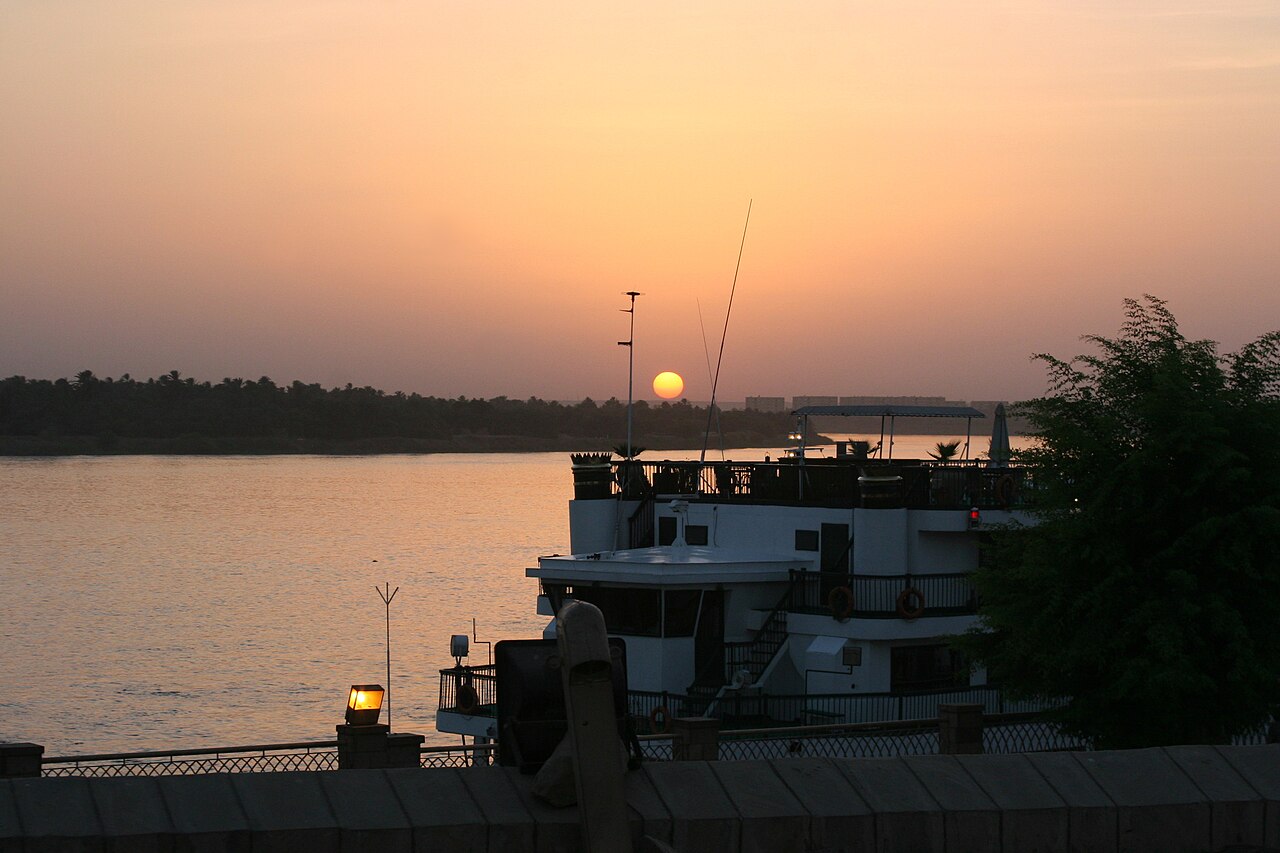
You head south after lunch and reach Luxor by five, with three hours of daylight left. A private boat carries you up the river as the sun goes down. Your cruise boat waits at the mooring; the first drink is on its top deck. Cairo and its noise are behind you.
Day three comes to roughly £120: internal travel, transfers, boat.
Day 4: cruising the Nile, the left bank
Early morning: Valley of the Kings. The tombs of the pharaohs. You go down 20 meters underground. The walls are painted. The colors have lasted for 3300 years. Your guide tells the story of each king. Two hours. You feel dizzy because time goes back. To discover all the sites of Luxor, consult our complete guide to Luxor.
Back aboard for lunch, then the afternoon is yours: sleep, a book, or the pool on deck.
Afternoon at Medinet Habu, the temple Ramses III left behind. Better preserved than Karnak, and emptier than anything in Luxor. Often it is just you and walls solid with hieroglyphs.
The boat pushes south through the evening, slowly. Dinner on board. A dance show after, on the motor boats. You sleep with the river underneath you.
Day 5: the right bank, and hours on the water
Karnak in the morning. No temple in Egypt is bigger; ten pharaohs had a hand in it. You lose yourself among the colonnades, a hundred and thirty of them, then reach the central sanctuary under full sun. It moves people. It will move you.
Midday, and the boat keeps moving. Sit and watch the bank go past: villages, fields worked the way they were 5,000 years ago. Time behaves oddly out here.
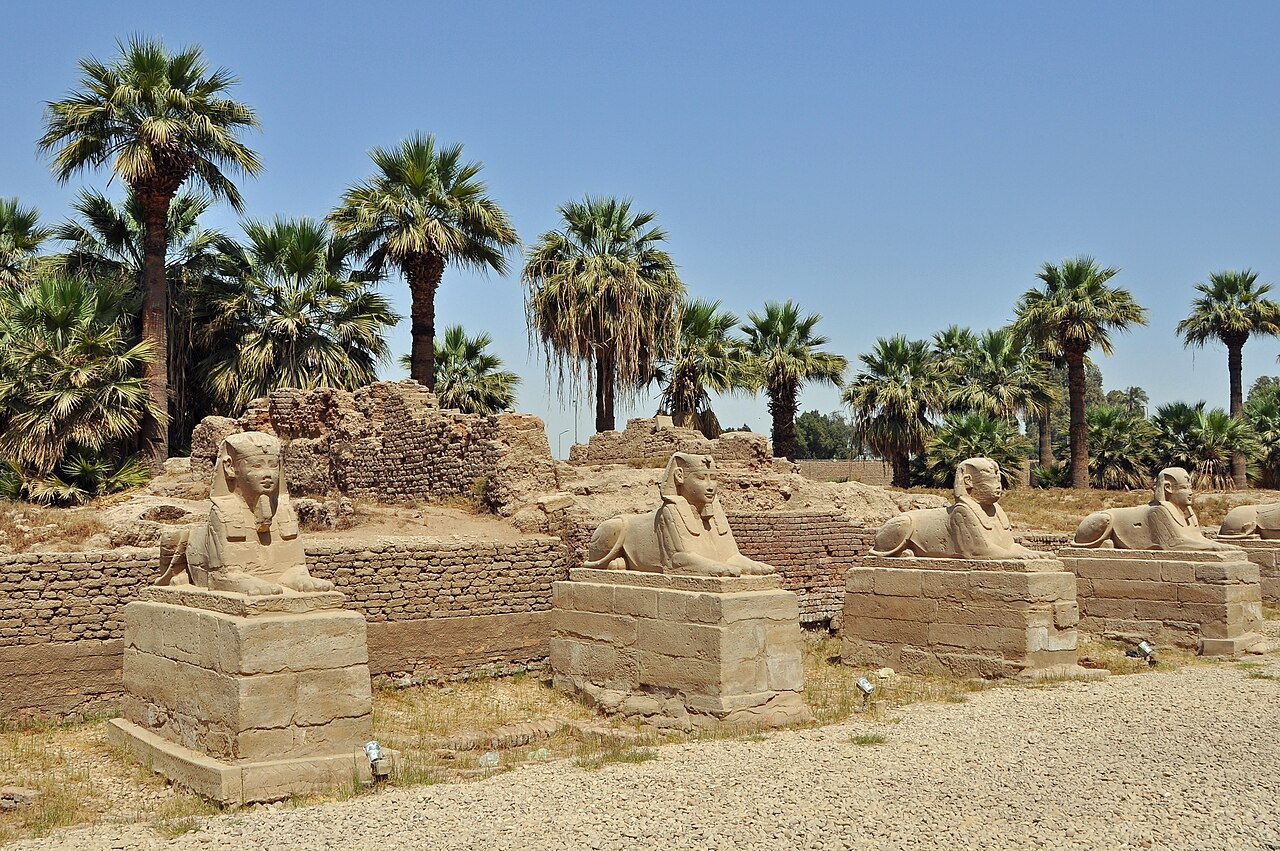
In the afternoon, Luxor Temple. It is smaller than Karnak and stands almost whole, with the seated statues of Ramses II at the entrance. A two kilometre avenue of sphinxes once linked it to Karnak, and walking a stretch makes the old processions easy to picture.
The boat ties up for the night. Dinner, then bed, and the good kind of tiredness.
Day 6: Aswan, then the journey home
You reach Aswan in the morning and step off the boat with four or five hours in hand before the airport.
Quick visit: Aswan Dam. Lake Nasser (view from the dam). Traditional market in Aswan (spices, fabrics, perfumes). One last true moment. No selfies. Just from the look. Also see our complete guide to Aswan to deepen your discovery.
Something light to eat, then the transfer out.
Late afternoon takes you back up to Cairo, then across to the international terminal.
Day 7: Cairo, and the way home
A private car takes you out to the airport for the journey home, which usually goes overnight. You are back on British soil the following morning, wrecked and delighted at once, and you will still be talking about Egypt three months later.
The whole week in one table
| Day | Location | Main | Housing |
|---|---|---|---|
| D1 | Cairo (arrival) | Rest | Cairo Hotel |
| J2 | Cairo & Giza | Pyramids, Sphinx, Museum | Cairo Hotel |
| D3 | Saqqara → Luxor | Djoser, Flight, Boat | Nile Cruise J1 |
| J4 | Luxor | Valley of the Kings, Medinet | Nile Cruise J2 |
| J5 | Nile (navigation) | Karnak, Luxor | Nile Cruise J3 |
| J6 | Aswan | Dam, market, departure | Landing |
| J7 | Cairo → House | Return flight | Airplane |
What the week costs, line by line
Economic budget (couple)
Two nights in a Cairo three star: £120. Three nights aboard a three star boat: £690, so £450 each. Domestic travel between cities: £140, or £90 each. Tickets and guiding: £140, again £90 each. Eating and getting about: £120, £80 each. Comes to £1,000 a traveller.
Comfort budget (couple)
Two nights in a Cairo four star: £220. Three nights aboard a four star boat: £1,150, so £750 each. Domestic travel between cities: £140, or £90 each. Tickets and guiding: £140, again £90 each. Eating and getting about: £200, £130 each. Comes to £1,540 a traveller.
Luxury budget (couple)
Two nights in a Cairo five star: £310. Three nights aboard a five star boat: £1,850, so £1,200 each. Domestic travel between cities: £140, or £90 each. Tickets and guiding: £170, or £110 each. Eating and getting about: £310, £200 each. Comes to £2,310 a traveller.
What we skip, and why
Abu Simbel. Colossi cut into the mountainside, and magnificent with it. But 280 km beyond Aswan, which costs you two full days. Not on a seven day trip. Save it for a ten or twelve day one.
The Red Sea goes for the same reason. Hurghada and Sharm El-Sheikh need two or three days at the very least. A week cannot spare them.
The White Desert is fascinating, all those pale rock formations. But it sits 300 km from Cairo, and a full day goes on the road alone. Postpone it.
Luxor in depth. A day and a half is what this route gives you, which covers Karnak, Luxor Temple and the Valley of the Kings comfortably. It does not stretch to Hatshepsut, Medinet Habu and the necropolises on top. Something has to go.
Seven days, ten days, fourteen days: what changes
| Appearance | 7 days | 10 days | 14 days |
|---|---|---|---|
| Rhythm | Fast, tiring | Good balance | Quiet, thorough |
| Major sites | Pyramids, Luxor, Nile | +Abu Simbel | + Red Sea + desert |
| Rest days | 0 | 1 half day | 2-3 days |
| Average budget | £1,390 | £1,850 | £3,080 |
| Ideal for | First visit | Exploratory | Total immersion |
Tips we use ourselves
Book the internal leg to Luxor early. Leave it until you are standing at the counter and the price doubles. Two months ahead is right: about £60 rather than 150.
Join the boat at Luxor and step off at Aswan, not the other way round. Going south the boat works with the river rather than against it, so the days on the water are quicker and easier on you.
Go down to Luxor on the second evening rather than the third morning. That buys you an extra night, and it frees up the third morning for Medinet Habu or the Colossi of Memnon before you board.
Do not skip the English-speaking guide. It adds about £20 a day and it is the difference between looking and understanding. Hieroglyphs are writing, not decoration.
Take the combined pass: £20 covers Karnak, Luxor Temple and the Valley of the Kings. Bought separately, each site is nearer £30.
FAQ: The real questions
Is two days in Cairo genuinely necessary?
Yes. A day for Giza, a day for the museum. The city could fill a week on its own, and a week is all you have for the whole country. Two days is the floor.
What if I want more river and less city?
Then take five nights on the boat instead of three. Board at Luxor on day two and come off at Aswan on day seven. Abu Simbel goes, but you rest properly. That trade is usually the right one.
Does the time difference bite?
Egypt sits on UTC+2. Britain runs on GMT through the winter and BST in summer, so you gain an hour or two, nothing worse. Two rough nights at most, and that is all.
Would this route work in April, with the heat?
It works, but Luxor hits 45°C and you will spend fourteen hours a day hiding in the hotel. The comfortable window runs October to April, 25 to 30°C. July and August are punishing at the temples.
Which boat for 7 days?
Three or four stars, no lower. The two star boats are too noisy to sleep on. Five stars means proper luxury, the dahabiyas. Four is where most people land: comfortable, well staffed, sensibly priced.
How much time at each temple? Is it rushed?
Karnak takes two and a half hours. Three in the Valley of the Kings. An hour and a half at Luxor Temple, two at Medinet Habu. Nobody chivvies you along. This is not a coach party.
Is travel insurance worth it?
Yes. You want medical cover, repatriation and cancellation on the policy. Egypt is safe, genuinely so, but the hospitals are not the NHS. Around £40 covers two of you.
When are you leaving?
This route holds up. We have run it a hundred times. People go home with more than a camera roll. Stories about temples, about the river, about the Egyptian who poured them mint tea.
Still weighing something up? The timings, the boat, what it all adds up to? Give us a ring.
Seven days a week · Straight answers from Cairo · No obligation whatsoever