
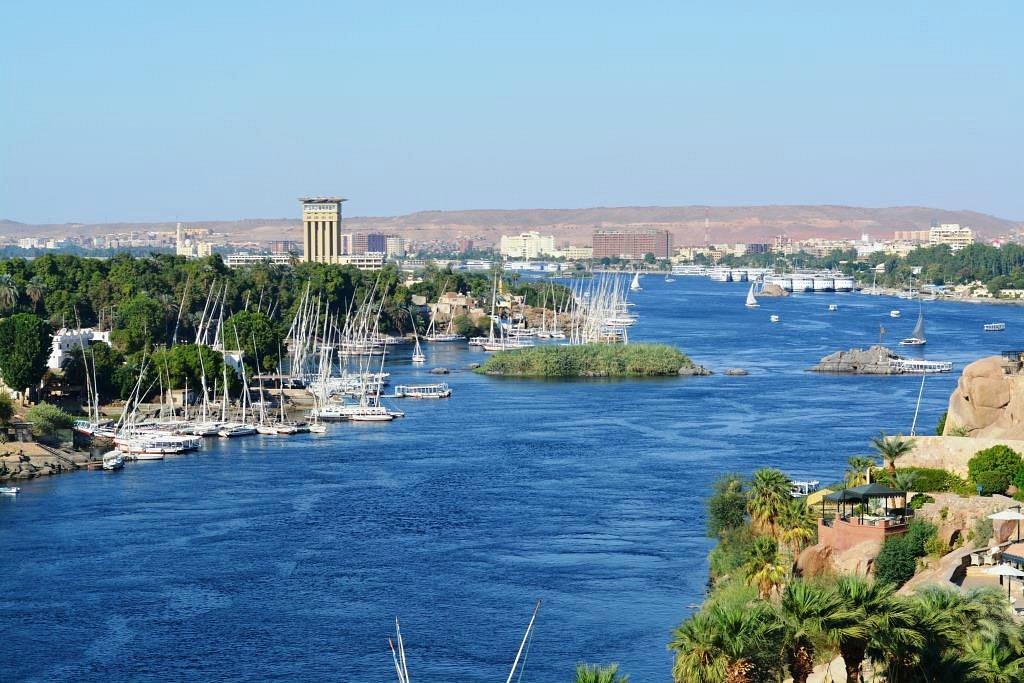
By Sem Elegant Voyage | Updated: March 2026
Aswan. People think temples (Philae) or markets (souks). Fair enough. But Elephantine Island? That one's lesser known. It's not a "temple" in the Edfu or Luxor sense. It's an archaeological remnant that survived 3,500 years without any glamour. And that's exactly why it's magical. Ruins that breathe. Sand that talks. A museum with three rooms and hieroglyphs you can actually touch (yes). Then the Nubian villages on the island - not the "for tourists" villages, the real ones. Turquoise-blue houses, hand-painted doors, kids who say "hello" and want your photo, not your money.
Plan your day on Elephantine Island down to the detail
A traditional felucca, a guided museum tour, genuine encounters in the Nubian villages. Our guides guarantee an experience with no tourist traps.
Contact usReply in under 2h · 7 days a week · No obligation
Authentic? Honestly, yes. A trap? Possibly, if you fall asleep at the wheel.
Quick answer
Access: Felucca (sailboat) from Aswan (20 min) | Duration: 3-4 hours | Cost: felucca and museum entry, agreed on the day | Best time: 8am-10am or 4pm-6pm | Authentic vs traps: Local guide = essential
Elephantine Island: an island that was once the pharaonic heart
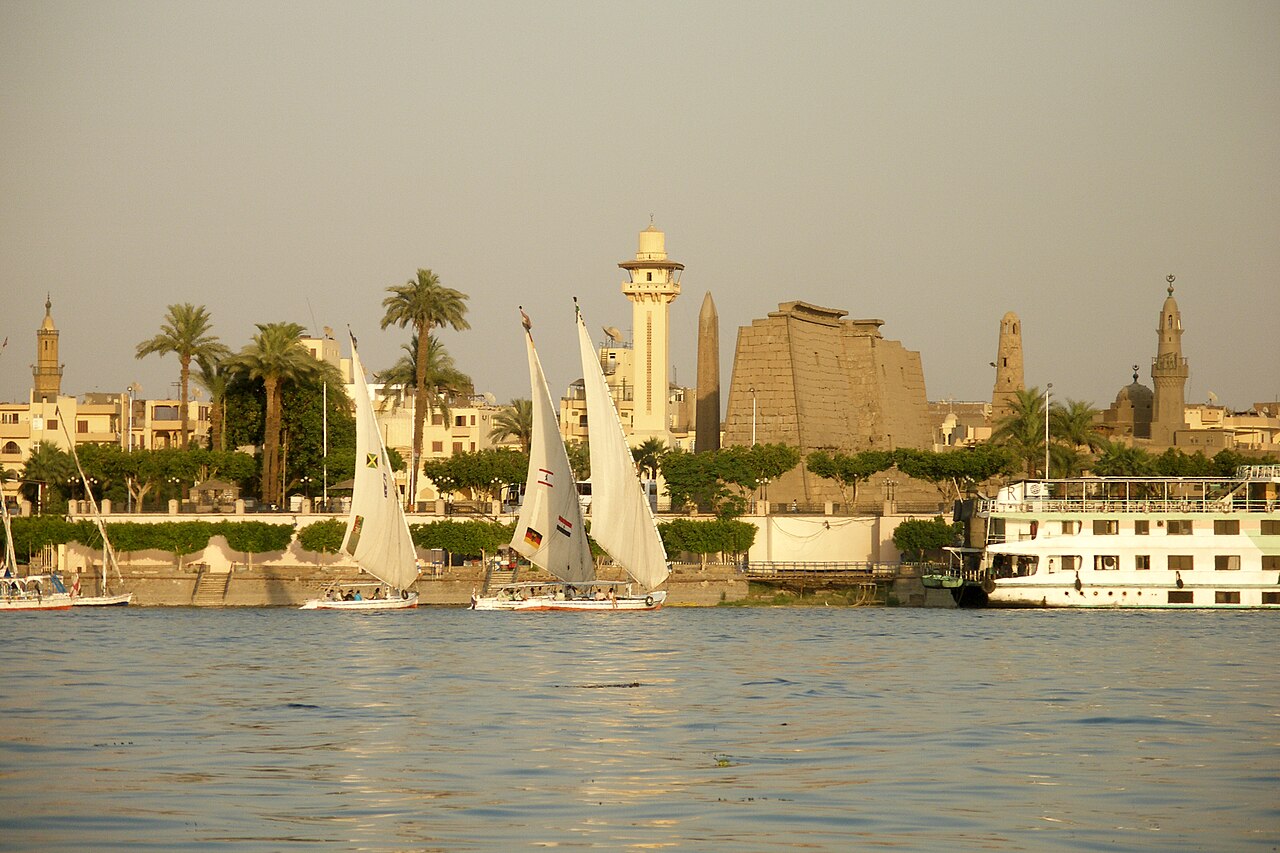
Name: Yeb in Egyptian. Elephantine in Greek. Why "Elephantine"? The Greeks thought the elephants' ivory tusks came from here. (Wrong, but the name stuck.)
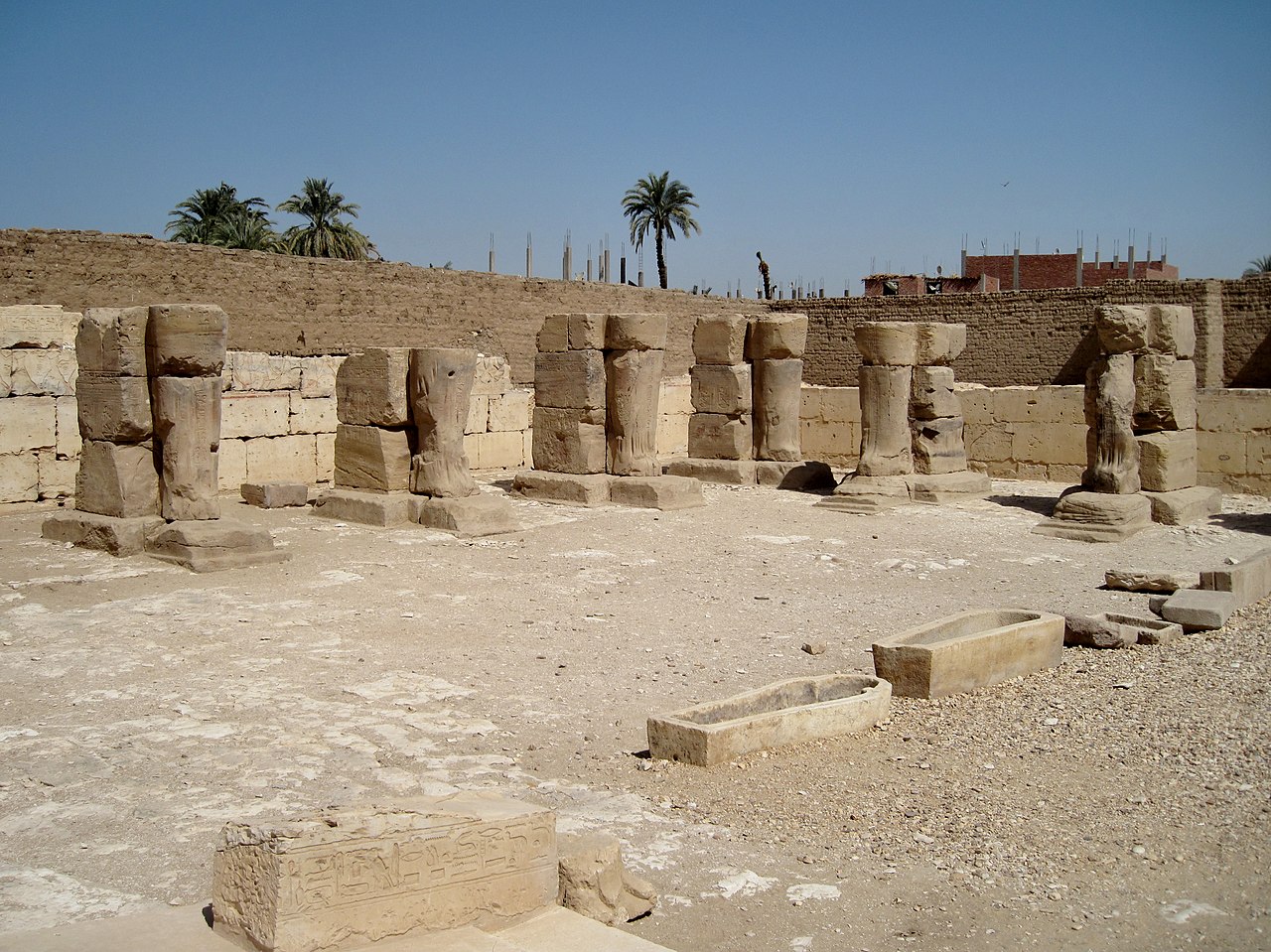
History? The island has been occupied since the 1st Dynasty (around 3100 BC). Yes. Nearly 5,000 years. It was a fortress, an administrative center, a place of worship. The pharaohs had temples here. The generals guarded Egypt's southern border from here. The priests lived here. Then, like so many Egyptian sites, it became a forgotten field of ruins.
In 2026, the island holds a small but dense museum, Nubian homes, and enough ruins for you to picture ancient life. (And honestly, this is where ancient Egypt becomes visceral, not just photographable.)
The Elephantine museum: intimate and honest
Admission: on request. The museum sits in the restored 1898 Willcocks villa. Three rooms. Three rooms only. But every piece counts.
Room 1: Faience and small objects. Shabtis (funerary figurines). Scarabs. Cosmetic jars. Dignitaries' seals. The pieces aren't "behind glass and untouchable" the way they are in Cairo - they're tangible. You can see the wear marks. The painted hieroglyphs? Eroded but legible. It's the real thing, not a spectacle.
Room 2: Stelae and reliefs. Bas-reliefs carved into limestone. Scenes of everyday pharaonic life. A father with his children. A man making an offering to a god. Family hierarchy in stone. (These images take time to decode, you actually read them instead of consuming them.)
Room 3: Nilometer. This is the room few people aim for. The nilometer was a stone staircase at the island's edge that measured the level of the Nile each year. Higher = better harvest. Lower = famine. The priests read the nilometer like an oracle. Here, you see the actual staircase, with ancient graduations still intact. It's a 3,500-year-old scientific instrument. (And honestly, seeing an ancient hydrological gauge is cool.)
The museum takes 45 minutes to visit properly. No more. No less. No air conditioning, but windows that open onto the ancient walls. It's archaeology the way it should be: light, accessible, alive.
The Nubian villages: what's authentic and what isn't
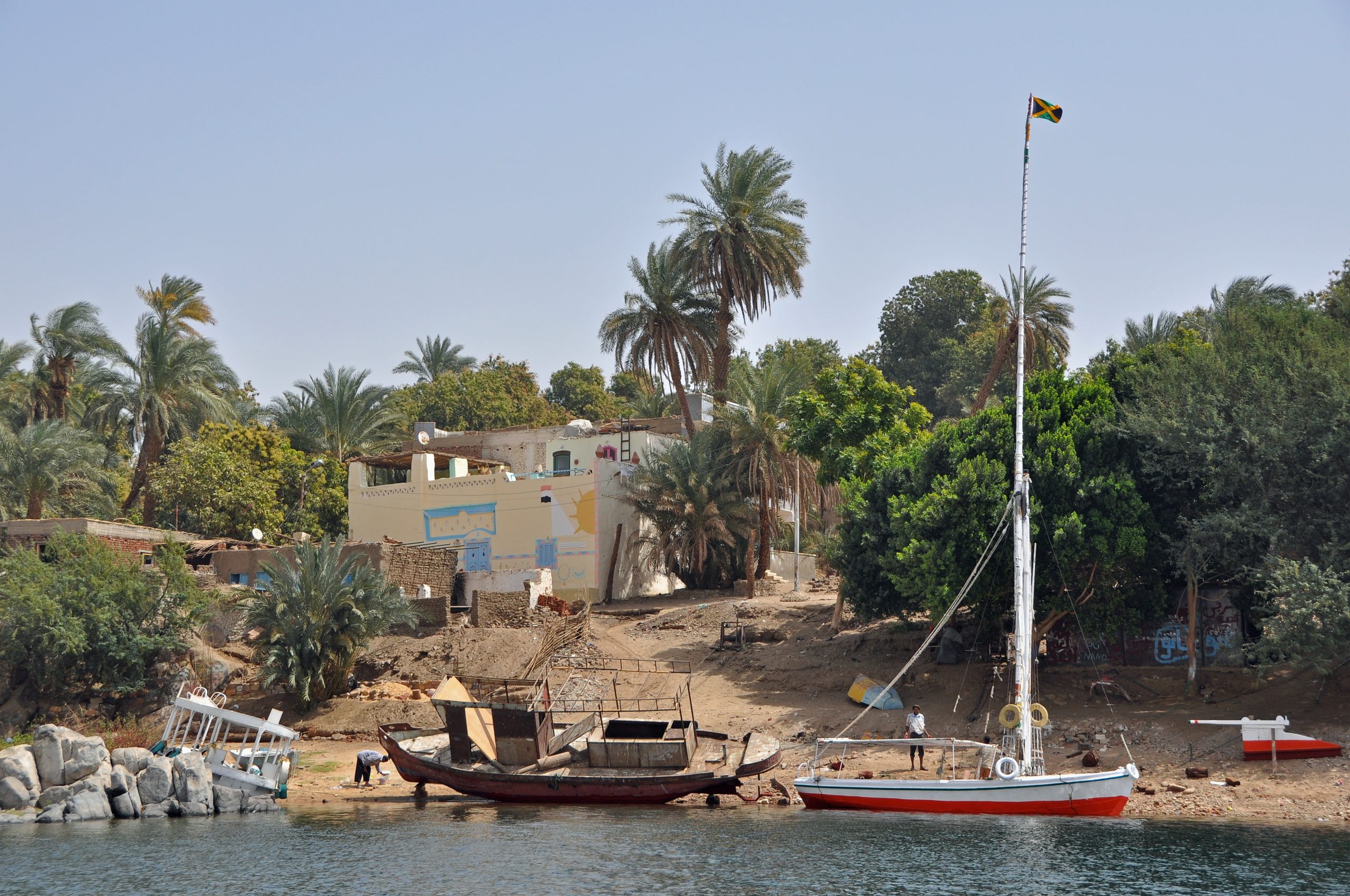
Here's the trap. The Nubian villages on Elephantine Island have exploded touristically since 2000. Some are "preserved," others are stage sets. How do you tell the difference?
Authentic: You step into an alley and see a woman baking bread in a traditional oven. Kids are playing. The houses haven't been repainted for you. The colors (turquoise blue, gold, red) are real - it's the Nubian tradition of painting your walls. (And honestly, it's gorgeous, and not by accident.)
Not authentic (traps): You walk into a "Nubian house" where a woman in folk costume offers you mint tea while sizing you up like an ATM. The house "museum" has objects that look like tourist bazaar stock. The doors are all painted identically (a sign of imitation). The price for the tea? Noticeably more than an Egyptian would pay. It's not a crime, it's commerce. But it's not the ancient Egypt you came looking for.
My strategy: hire a local guide (Nubian if possible) through Aswan. Cost: on request for a half day. He'll take you to the real villages, not the showcases. You drink tea with his family, not with a professional vendor. It's the access you should pay for, not the "tradition."
Nubian houses: the architecture nobody notices
Nubian houses don't follow the standard Egyptian order. Unlike the rest of Egypt, the Nubians had a different logic.
1. Local materials. Mud brick (adobe), not stone. Why? Stone was expensive to quarry. Nile mud was free. It made walls that insulated naturally - you stayed cool.
2. Brick crown. At the top of the walls, a row of bricks is left raw, unpainted. What's it for? Ventilation. The Nubians knew hot air rises. The raw bricks let the air escape. Passive air conditioning. (That's engineering without a formula.)
3. Colors. Turquoise blue dominates. Why blue? It was a traditional protection against the evil eye. In Nubian belief, blue wards off curses. (That's applied folklore.)
4. Massive doors. Heavy, detailed wood. The doors weren't just entrances - they were status. An ornate door = a merchant's or an official's house. A simple door = a modest family. You see the economic hierarchy in wood.
It's not just a "pretty color." It's climatic + spiritual + economic adaptation. (And honestly, that's what makes the villages interesting.)
The felucca crossing: the non-negotiable experience
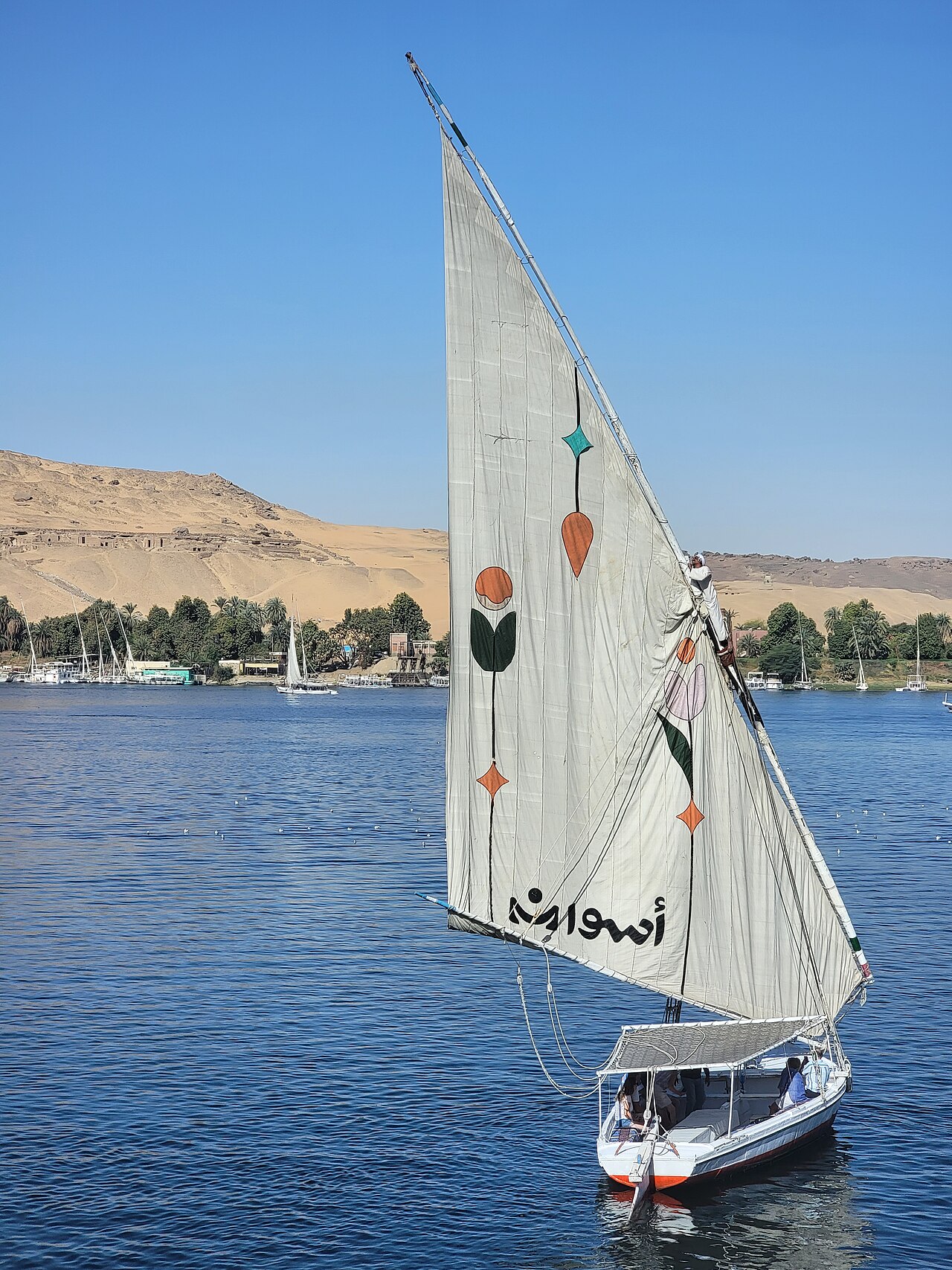
To reach Elephantine Island from Aswan, you take a felucca. It's a triangular sailboat that's been used on the Nile since the Middle Ages. No engine. Just the wind and the geometry.
Duration: 20-30 minutes from the Aswan dock to Elephantine.
Cost: A private felucca (2-4 people) is agreed on the day. Shared: agreed per person. Prices vary with the season and the political situation (tourist demand plays a part).
The feeling: Magical. You feel the Nile air. The clouds shift. The island grows slowly on the horizon. (It's cinematic.)
It's not comfortable (no padded seat). It's not air conditioned. But it's the real thing. You sail the way the ancient Egyptians sailed. And it changes your perspective on the Nile. (So don't skip it.)
Bargaining: The boatmen at the dock will ask high. Counter firmly. You'll settle somewhere in the middle. (That's normal. It's not exploitation, it's commerce.)
Felucca + Nubian villages + tea with locals: we organize it all
Our Nubian guides know every family, every alley. No tourist traps. Just the authentic.
Reply in under 2h · 7 days a week · No obligation
Meeting the crocodiles (live and mummified)
Surprise: Elephantine Island has Animalia, a family-run Nile crocodile centre with live animals in separate pools, plus a small museum of mummified specimens. It's not a zoo, it's a sanctuary. The crocodiles are there to be observed and studied, not to entertain.
Cost: usually included in guided tours. Duration: 15 minutes.
Scary? No. The crocodiles are separated by glass and water. You watch them safely. A guide explains that they were once common animals in the area - hunting in the 1950s wiped them out. Now there are none left in the wild. This small population is a conservation remnant.
Detail: You can ask the keeper whether there are any mummified crocodiles. Yes. A few in a small side room. Not as spectacular as at Kom Ombo, but historically speaking, this is where the mummies were buried. (Unless the foreign collectors took them, the usual story.)
The tea ritual with locals: what you need to know
The key moment of any visit to the Nubian villages: mint tea. An Egyptian invites you into his home, his wife prepares hot tea with fresh mint, you sit down in the courtyard, and you talk.
What you should accept: The invitation. To refuse is to insult. Going = mutual respect.
The hidden cost: Usually, at the end, you'll be offered "souvenirs" - coral necklaces, herbal remedies, copper objects. The price? 5-10x more expensive than at the market. It's not a trap, it's a business model. You buy or you politely decline.
The real value: The conversation. The stories about Nubian life. The kids showing off their school homework. The woman talking about the Upper Nile and her Sudanese roots. It's anthropology live. (And honestly, that's why you come, isn't it?)
Total cost: Free tea (the ceremony). Souvenirs (optional): modest if you buy something. Donations (optional): modest too if your heart's in it. (You can also give pencils or notebooks if you bring them. Egyptians value education.)
If you come with a Nubian guide, he negotiates everything for you. That's one of the advantages.
When to go: timing and seasons
Morning (7am-10am): Light, gentle winds, less crowded routes. The felucca is pleasant. The villagers are less tired, more talkative. Fewer tourists = more authenticity. This is the top option.
Midday (11am-3pm): Excessively hot. The villages shut down (siestas). The felucca can be uncomfortable. Avoid unless you're a masochist.
Afternoon (4pm-6pm): Acceptable. People wake up. The winds pick up again. Sunset from the island = magical. Optimal for photography. Limited window (closing at 6pm generally), but viable.
Ideal season: November-February. Human temperatures. December-January: perfect. March-April: getting hot. May-October: nearly impossible for non-residents.
Full budget for a day of Elephantine + villages
2 people.
Round-trip felucca: on request | Elephantine museum: on request | Crocodile park: Usually included | Local guide (half day): on request | Tea + optional souvenirs: on request
Total: on request for a full 4-hour experience. (That's reasonable for Egypt.)
If you skip the guide: a little less. But you lose access to the real villages. (I recommend the guide.)
An optimized one-day itinerary in Aswan
If you have 1 day in Aswan, here's the plan I recommend.
7am-8am: Breakfast at the hotel. Meet your Nubian guide at the Aswan dock.
8am-9:30am: Felucca to Elephantine.
9:30am-10:30am: Visit the Elephantine museum + crocodile park.
10:30am-12:30pm: Nubian villages with the guide. Tea at a local's home. Photos.
12:30pm-1:30pm: Felucca back (winds are better in the afternoon, so it's steadier).
1:30pm-3pm: Rest at the hotel. Nap. Shower. Recalibrate.
3pm-6pm: Aswan souk or Philae temple or an Abu Simbel excursion (ask the guide).
6pm+: Dinner. A walk along the Nile. Sleep.
It's compact but not stressful. You touch three major experiences (archaeology, nature, human culture) without rushing.
Traps to absolutely avoid
Trap 1: The "tourist village" tours organized out of Aswan. Agencies sell you "Nubian village tours including a house-museum and shopping." It's a circuit with no local guide. You see theater, not life. Cost: a premium price for less than you could do on your own. Avoid.
Trap 2: Taking a felucca without checking the state of the boat. Inspect it. Sail intact? Hull stable? Captain sober? Yes to all = good. No = look for another.
Trap 3: Buying "the authentic" at the first price offered. All souvenirs are negotiable. A coral necklace listed high? Offer low. The seller counter-offers. You settle in the middle. That's normal. It's not an insult, it's commerce.
Trap 4: Coming on a cruise without disembarking at Aswan for this. The boats often do Philae and skip Elephantine to save time. If you're on a cruise, ask to get off at Aswan for the half day. It's often possible.
The bigger picture: Aswan within an itinerary
Aswan is the last major city on the southern Nile. It's the gateway to Nubia and Sudan. For centuries, it was the southern border of pharaonic Egypt. Today, it's a modern city (200,000 inhabitants) with strong Nubian roots.
A classic Nile cruise usually gives you 1-2 days in Aswan. 1 day? Philae is enough. 2 days? Add Elephantine + villages. More? Abu Simbel (a southbound excursion). Water activities or the souk or the Nubian House museum.
Aswan isn't "quick" to do. It's a slow feeling. You stay, you observe, you talk. In short, it's not a box to check, it's a stay.
FAQ on Elephantine and the villages
Can you stay overnight on Elephantine Island? No. No hotel. You have to stay in Aswan (the city is 1 km away). The locals mainly work in farming and craftsmanship, not in tourist lodging.
Are the villages dangerous? No. It's safe. No organized crime. No aggressive street scenes. Just normal commerce and families living their lives.
Do you need to speak Arabic to enjoy it? No. A guide speaks for you. But knowing a few words (hello = "salam alaikum," thank you = "shukran") opens doors. People appreciate the effort.
What if you're afraid of crocodiles? They're enclosed. You're safe. And it's scientific observation, not a thrill show. (Breathe.)
Can you bring children? Yes. It's an educational experience. Kids love the villages (other kids, animals, colors). The museum is short, so it's not boring. The felucca can be bumpy for very young ones.
Best time to visit? December-January. Mild temperatures, good conditions, no oppressive heat. March onward: rising heat. Avoid the full summer.
Conclusion: why Elephantine changes how you see Aswan
Aswan on its own is just market + temple + sunset photo. Aswan + Elephantine + villages? It's an immersion into three Egypts at once: pharaonic, natural, human. The felucca connects you physically to the Nile the ancients used. The museum tells you about ancient science (the nilometer). The villages remind you that modern Egypt has deep Nubian roots. (And honestly, that's what you remember afterward.)
You leave Aswan having lived it, not just having looked at it.
Plan your Elephantine + villages day with a guide
Sem Elegant Voyage organizes Elephantine excursions with Nubian guides and vetted feluccas. Authentic, safe, English-speaking guide available.
Contact us on WhatsApp