
By Sem Elegant Voyage | Updated: March 2026
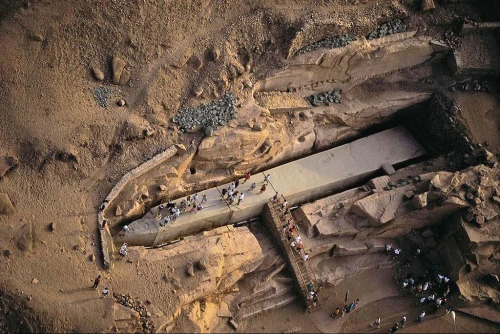
Looking for the largest obelisk ever carved? You can't see it standing. It still lies in a quarry in Aswan. Gigantic. Rough-hewn. Unfinished for 3,500 years. (Yes, three and a half millennia.) I've been there six times. Every visit reminded me of something: the ancient Egyptians aimed for the impossible, and sometimes they missed. But when they missed, it was monumental. This block of pink granite weighs 1,168 tons. Imagine the effort needed to extract it. Imagine the humiliation when a single crack ruined everything. Find out how to visit Aswan completely.
The Largest Block Ever Carved: Figures and Superlatives

138 feet tall. 14 feet wide. 12 feet deep. This unfinished obelisk could have rivaled the Luxor Obelisk (which, for the record, is complete and stands 82 feet tall). The bottom line? It was a challenge to geometry, a statement of pharaonic power.
Why carved at Aswan? Simple. Pink granite comes from here. The Aswan quarries supplied ancient Egypt with building stone. Temples, obelisks, colossal statues. Everything began in these quarries. (And a few are still active today, by the way, for smaller modern projects.)
This particular block dates to the 18th Dynasty. Hatshepsut, maybe. Or Thutmose III. Archaeologists hesitate. It doesn't matter. The real story? It's how they carved it and why they left it there.
THE NUMBER THAT STUNS
1,168 tons. That's the estimated weight of this block. For comparison, the two carved lions that guard the Luxor Obelisk in Paris each weigh 2.5 tons. Multiply by 468? That's the scale of the ancient effort.
How They Carved (And Why They Failed)
The Tools: Copper and Extreme Patience
No diamond saw. No electric drill. The Egyptians used copper tools (which rust) and hardwood, combined with abrasive sand. Worse still? Water. They poured water to cool the stone, creating a paste between the block and the tool. So every strike landed hard. Very hard.
The technique was called "pounding." Strike. Strike. Strike. Day after day. Hundreds of workers, probably. Not chained slaves the way Hollywood tells it (weak), but rather organized teams under contract or corvee labor. Breaks. Rations of beer and bread. (Yes, they drank beer on the job. It was nutritious, for the era.)
The Crack That Ruined Everything
Look at the block today. You'll see a clean crack running along its flank. The workers spotted it during the carving. Maybe at 80%, maybe at 90%. Impossible to say exactly. But a crack in the granite? That's a death sentence. The ancient stonecutters knew it. So they gave up.
In short, the block stayed there. Unfinished. A monument to natural imperfection. Today's geologists believe the crack was already present in the raw rock, invisible until the block was cleared out. Human cost? Incalculable. Frustration? Total. Compare that with the temples of Abu Simbel that succeeded.
The Practical Visit: How to See This Obelisk
Entry: 30 EGP (less than a dollar). You walk into the quarry. It's just a rocky site with this enormous block on the ground. No museum. No 3D reconstruction. Nothing but the stone, raw and honest. (Frankly, it's more authentic that way.)
Recommended duration? 30 to 45 minutes. You can walk around it, stand on top of it (yes, really), take photos, then look at the other partially carved blocks nearby. There are also ancient tools on display. Some guides say the tool marks are still visible. True. Honestly breathtaking.
Logistical tip? Go early. The midday sun hits hard. You sweat through your clothes. The local guides (who hang around the entrance) know how to tell a good story. Budget for an English-speaking guide? $5-10. It's worth it if you love the details.
LOGISTICAL TIP
The unfinished obelisk is 1.2 miles from the center of Aswan. Taxi: 10-15 EGP (about 30 cents). On foot if you enjoy walking in the heat. Bring water. Lots of water. A quart minimum.
Combining With Other Aswan Sites
The Obelisk + The High Dam
This is the classic combo. Two miles separate them. Plan a full half-day (45 min for the obelisk, 30 min for the dam). The view from the dam, then the ancient history of the obelisk. Two Egyptian eras in one morning.
In a nutshell, you sweep across 3,500 years of engineering (ancient and modern) without leaving the area. Total entry fees? 60 EGP. Transport? 20-30 EGP. It's a steal.
The Obelisk + Philae Island
Philae is a temple. Dedicated to Isis. A marvel (truly). 4.3 miles from the obelisk. A half-day covers both. Obelisk in the morning (30-45 min), a light lunch ($2-3 for some mezze), then Philae in the afternoon (90 minutes needed). You catch a sunset over the Nile if you time it well.
Philae price? 80 EGP (entry + boat). Add the obelisk (30 EGP) and transport (30 EGP). You've spent 110 EGP. Less than $3. For two of the most important sites. A bargain.
ITINERARY IDEAS
Our detailed guide to the routes between Luxor and Aswan shows you how to combine obelisks, temples and Nile landscapes.
The Archaeology Behind the Unfinished
Why do we tell this story? Because the unfinished obelisk gives us a unique window into ancient techniques. Modern quarries use explosives and the diamond saw. The ancients? Copper, stone, water, and muscle. This obelisk rivaled in ambition the Nile cruises that reveal other marvels.
Watching this block, you see exactly where the tools dug in. You measure the depth of the cuts. You understand the rhythm of the work. (The parallel lines on the surface? Those are "work benches." Each bench represents several days of labor.) It's a living archaeology manual, without words.
So this "failed" obelisk is more precious than a finished one. Why? Because it reveals the process. Egyptologists would all dream of this block. (And some come to measure it regularly to refine their theories about the techniques.)
Abu Simbel and the Obelisks: Connections
You visit this unfinished obelisk, then you head down to Abu Simbel (174 miles to the south). The two temples of Ramesses II await you. But here's the connection: Ramesses II also commissioned obelisks. All the granite that goes into pharaonic construction comes from the Aswan quarries. Without this site, Abu Simbel (and every temple) would not have been possible.
In a nutshell, you trace the supply chain of the ancient Nile. From quarry to temple. Fascinating.
Looking for More Info?
Ask your questions on WhatsApp. Our advisors reply in under 2 hours, 7 days a week, no obligation.
Contact Us on WhatsAppReply in under 2h · 7 days a week · No obligation
When to Go: Season and Weather
November to February? Perfect. Temperatures between 68 and 82F. You can stay 45 minutes outdoors without dying of heat.
March to May? It starts to heat up. 82-95F. Doable, but bring a huge hat and water.
June to September? Forget it. 100-118F. Even the locals vanish into it after 10 in the morning. The tourist sites run at half speed. The guides take breaks every 15 minutes.
That said, hotel rates drop enormously in summer. You pay $32-43 a night instead of $65-86. An acceptable trade-off if you can tolerate the heat. Also check out our complete budget guide.
Explore Aswan Completely
From the unfinished obelisk to the High Dam and Abu Simbel, plan your Nile itinerary.
Plan My VisitReply in under 2h · 7 days a week · No obligation
Conclusion: Why This Unfinished Block Is Worth It
The Unfinished Obelisk of Aswan is not a temple. Not a tomb. Not a palace. It's a lesson in stone about human ambition and its limits. The Egyptians aimed high. Sometimes geology said no. And when geology says no, even pharaohs surrender.
But here's what truly counts: you can walk on it. You can touch the ancient tool marks. You can imagine the workers who struck, day after day. You can see the crack that stopped them. It's a direct connection with the past. Not through museum glass. Direct.
45 minutes in Aswan? Invest them here. It's a "lesser-known" site that beats the majority of tourist attractions. Authentic. Educational. Human.
Discover the Ancient Secrets
Explore the carving techniques with a local archaeologist guide who reveals the mysteries of pink granite.
Explore NowReply in under 2h · 7 days a week · No obligation
💡 Good to know for your visit: The unfinished obelisk takes 30 to 45 minutes to see, but the granite quarry site deserves a little more time. Look closely at the tool marks on the rock: you'll see the aligned holes where the workers inserted wooden wedges that they soaked to split the stone. This 3,500-year-old technique is visible all over the quarry, and it's honestly fascinating when you think about it.
The site is in the open air and almost without shade, so come early in the morning or late in the afternoon, especially from April to October. A hat, sunscreen and a water bottle are essential. The entry ticket costs about 100 EGP (roughly $2) and it's often included in guided packages. If you visit without a guide, the explanatory panel at the entrance gives a good summary, but the explanations in English are limited. An audio guide or a good blog article (like this one) will be more useful to you on site.