
By the Sem Elegant Voyage team | Revised March 2026
Quick response
Al-Azhar Mosque (970 AD, still functioning). Al-Muizz Street (the oldest street in Cairo). Sultan Hassan (crazy architecture, 14th century). Ibn Tulun (the largest mosque in Cairo). To do in one morning: 2-3 hours. Cost: free everywhere except Sultan Hassan (220 EGP). Guided tour: £30 extra, it’s worth every euro.
Think of it this way: the Coptic quarter is Cairo's ancient soul, and the Islamic quarter is the pulse that keeps it going. A million Cairenes pass through these streets daily. History happened here, and here you finally grasp why everyone insists Cairo is a living city.
The mosques here? Not dead museums. Places of prayer. Universities. Cultural centers. They have been working for 1000 years (literally). And you can enter it. This is the difference with European churches - it's not a show, it's real life.
Al-Azhar Mosque: the university that prays
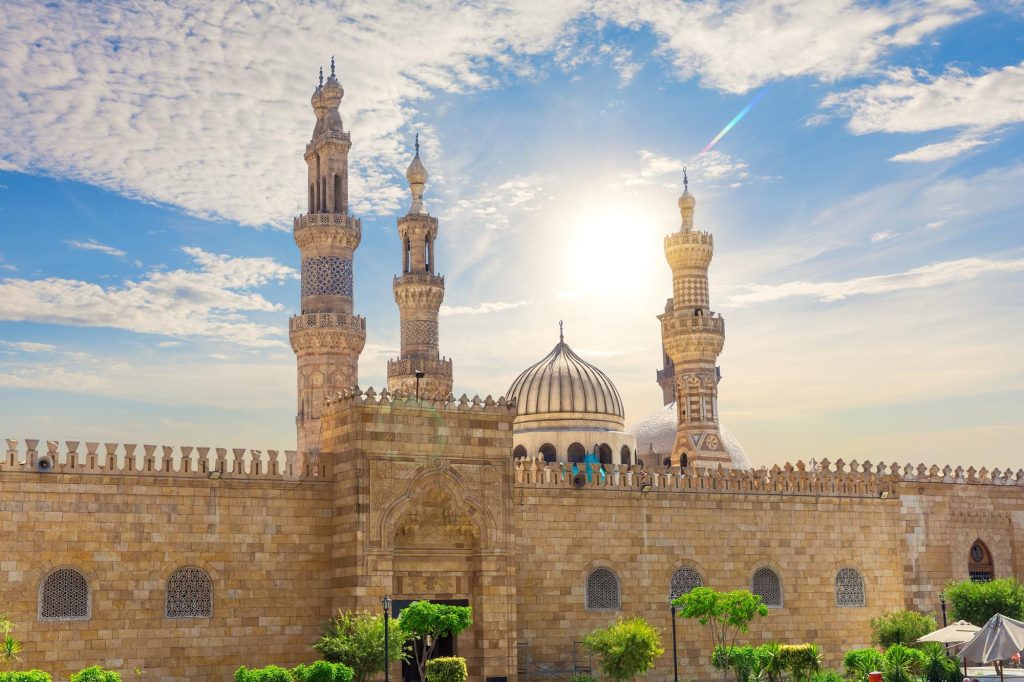
Built in 970 AD by the Caliph Al-Moizz. The oldest university in the world still in operation (1000 years, non-stop). It's not just a mosque. It is a religious, academic, political institution. The scholars of Al-Azhar train the imams of all Islam. No pressure.
The building itself has no equal. An open courtyard at its centre, arcades on ancient columns (a few salvaged from Roman Cairo), pale limestone walls, and daylight throwing shadows that seem to pray too. When the theology students file in at dusk, what you feel is history breathing, not embalmed.
Visit ? Free for everyone, donations welcome if you wish. Open 8 a.m. to 5 p.m., except during prayer times. If you're worried about the schedule, a guide tells you when it's calm.
Tip: come after 5pm for the genuine article. That is when the students turn up, the lamps are lit and the whole place comes alive. Not a tourist in sight, only a mosque doing its job.
Al-Muizz Street: the living street
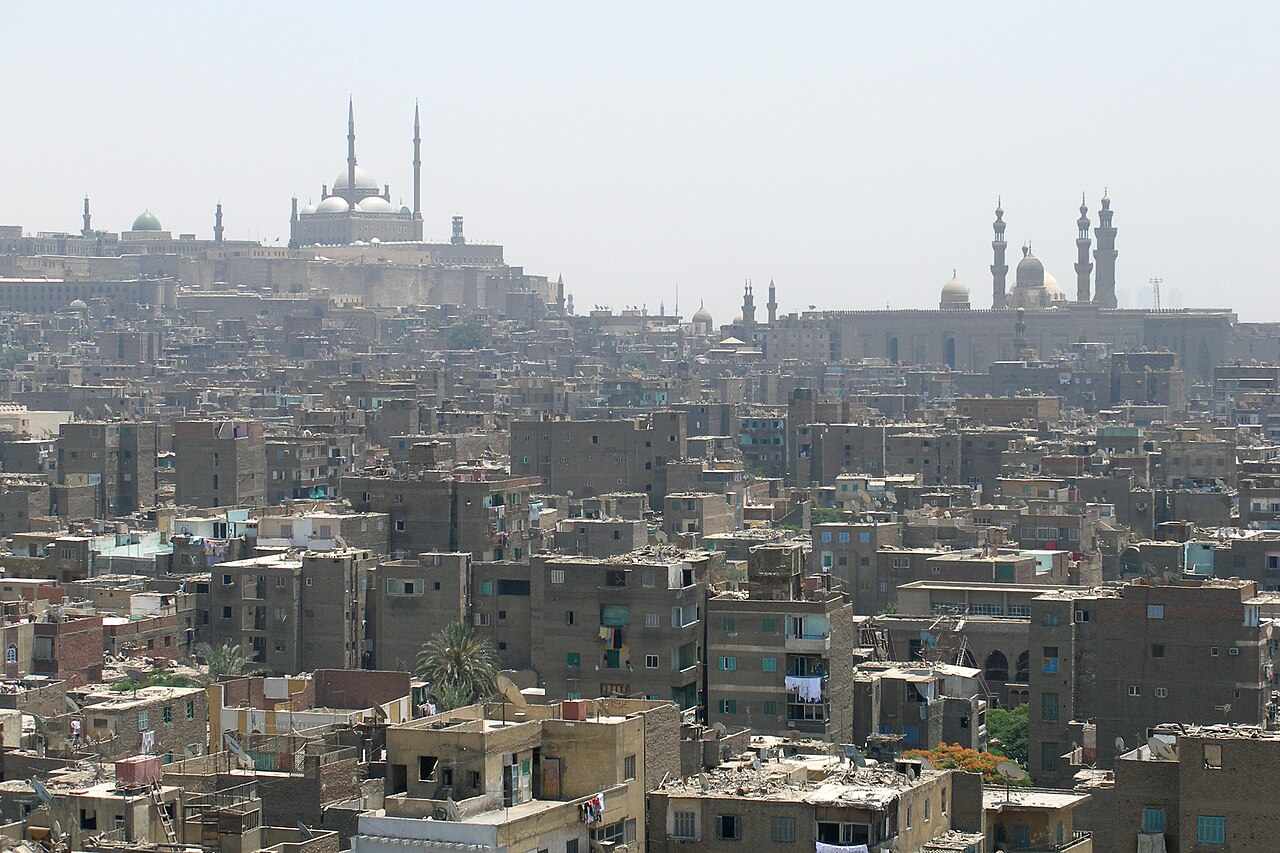
Put simply, no pedestrian street in Cairo runs longer, and every yard of it is steeped in history.
Built in the 10th century. Lined with mosques (15+), madrasas (Koranic schools), caravanserais, bazoars. And still alive. The day? It's a chaotic bazaar (spices, textiles, copper). At night? It's magical. The lamps light up, the shadows dance, and you are in Baghdad in the year 800 (almost).
Three hours of walking. Free. Just you, your feet, and 1000 years of history. For shopping, check out our souk shopping guide in Egypt. You don't really buy here - you wander around and soak it up.
The key stages of Al-Muizz Street:
Bab al-Futuh (Gate of Conquests): Old city gate. 11th century. Still standing. Frankly impressive as a portal. You walk in there and you know you're leaving modern Cairo.
Al-Hakim Mosque: 990 AD. Renovated in 2013 (well done). Huge yard. You can really say your prayers discreetly at the corner. No invasive tourists (compared to other mosques).
Khan el-Khalili: the bazaar where the street finishes. Everything you need to know about buying here is in our full Khan el-Khalili shopping guide.
The thing we forget: Al-Muizz Street is not a museum. People live there. You will come across kids playing, men drinking coffee, sellers shouting. It's organized chaos. And it's beautiful. So no, you don't have to do a "pure historical" visit - you walk, you look, you listen. It's the experience.
Arrange a visit →Response in less than 2 hours · 7 days a week · No obligation
Sultan Hassan Mosque: the architectural madman
Built in the 14th century by Sultan Hassan. It's not just big. It's absurd. Massive. Architecturally crazy.
The central iwan (the great arch) rises to a dizzying height, well above the buildings around it. It opens onto the courtyard and you feel the pure power of genius. The walls? Alternating pink and gray stone. The minaret? Pointed like an arrow to the sky. And all this without a "recognized" architect - just a Sultan who had a vision.
Entry costs 220 EGP (a combined ticket with Al-Refai) and the doors are open 9am to 5pm. Right beside it stands the Al-Refai Mosque (19th century), and together the pair make one imposing architectural ensemble. Our advice is to give the two of them 90 minutes. One more thing: the acoustics inside are extraordinary, tempting enough to make you wish you had brought a flute (we joke, but only slightly).
Ibn Tulun Mosque: the largest, the quietest
About 26,000 square meters. It's a stadium. It is a forest of columns. It's silence.
It dates from the 9th century, so it predates even Al-Azhar. There is no gold leaf here and nothing showy, just stone, proportion and open space. The courtyard is big enough to run across (please don't, though you could). From the top of the minaret the whole of Cairo spreads out below you: domes, minarets, a jumble of rooftops. Be warned that the climb is steep, so take water with you.
Entrance: free. Open 9 a.m.-4 p.m. Less touristy than the others (it's a little out of the way). Honestly, if you're looking for peace and beauty, this is it. No noise. Just your breath and geometry.
Fancy exploring the Islamic quarter in the company of a Cairo historian?
Request a guide →Response in less than 2 hours · 7 days a week · No obligation
Ramadan in the Islamic Quarter
Honestly? It’s a bonus era. Ramadan transforms the neighborhood.
Mosques open at 5 p.m. (Iftar - breaking the fast). The streets fill with bean soup sellers. People sit outside and eat together. The atmosphere? Electric. Spiritual. Community. According to feedback from our customers this season, Ramadan in Cairo is +1000 for the experience. For more information, see our Ramadan guide in Egypt. Bottom line: if you can be there in Ramadan, go. Easy decision.
How to visit respectfully?

You're not Muslim. Okay. You can still enter. Here's how not to be the weird tourist:
1. Clothing: No shorts. No aggressive necklines. Women must cover their shoulders (men too, technically). Unless you like the glares, be discreet. (Local arrival: long skirt, sleeved shirt, period.)
2. During prayers: You can stay. But don't cross the line of people praying. Don't shout. Don't take photos. Be a ghost.
3. Off-limits sections: at prayer times some areas are for women only, others for men. Honour that; your guide will say which is which.
4. Shoes: You must take off your shoes when entering. Bags to put shoes in are at the entrance (free). Your feet will have an interesting conversation with the ground (it's good for the soul apparently).
Recommended route: 4 hours

09:00: Al-Azhar (free). 60 mins.
10:00 a.m.: Al-Muizz Street (free). 90 mins.
11:30 a.m.: Traditional coffee. 15 mins. (Coffee + pastry:).
11:45 a.m.: Ibn Tulun or Sultan Hassan of your choice. 90 mins. (Ibn Tulun free, Sultan Hassan 220 EGP).
Total cost: 220 EGP for Sultan Hassan (without guide). With guide: £60-£80.
Do you prefer a combined itinerary (Islamic district + Coptic + pyramids)?
Request a package →Response in less than 2 hours · 7 days a week · No obligation
Detailed budget
| Element | Cost (EUR) | Duration |
|---|---|---|
| Al Azhar | Free | 1 hour |
| Al-Muizz Street | Free | 1.5h |
| Sultan Hassan | 220 EGP | 1.5h |
| Ibn Tulun | Free | 1.5h |
| Specialized guide | 40-50 | 3-4h |
| Coffee + pastry | 3 | 20 mins |
| Transportation (Uber) | 4-6 | - |
| TOTAL (without guide) | 7-9 + 220 EGP | 5-6h |
Frequently asked questions
Can I enter if I'm not Muslim?
Entirely. Non-Muslims are welcome in Cairo's mosques (Mecca, by contrast, is closed to them). Keep to the basics (modest dress, silence while prayers are under way, shoes removed) and nobody will bat an eyelid. Egyptians take real pride in showing their heritage to visitors; from our own base in Cairo, we see it every day.
When is the best time to visit?
Morning (8 a.m.-11 a.m.) or late afternoon (4 p.m.-6 p.m.). Noon ? No. It's hot, people are sleeping, the mosques are almost empty. Ramadan? Yes, if you can. The atmosphere is multiplied by 10. Consult our guide when to go to Egypt for the best season.
Do I really have to wear the hijab as a woman?
No. A headscarf does the job (they hand them out at the door, free of charge). Nobody expects a British visitor to dress like a Cairene, only to be covered: shoulders hidden, hair at least partly so. A full outfit is unnecessary. Use common sense rather than a rulebook.
Are photos prohibited?
For the most part. Never during prayers (obviously), and even at other times a few areas are off limits to cameras; your guide will say where. Drones are illegal, full stop. During Ramadan, pictures at Iftar are welcome; people enjoy being included.
What about forest excursions? Just kidding, but where next?
After the Islamic quarter, you can go to the Citadel (pyramids of Mohamed Ali, crazy view of Cairo). Then the Coptic district. This is the “grand tour of Cairo” itinerary. Consult our 3 days Cairo itinerary for the complete structure.
Which comes first, Sultan Hassan or Ibn Tulun?
Al-Azhar → Al-Muizz → Sultan Hassan (for sheer architectural drama) → Ibn Tulun (for calm). Reverse it if you would rather finish on a quiet note. The last two sit close together (about 15 min on foot). In truth, any order works, so pick whichever suits your day.
Final Practical Tips
1. Hydrate yourself. The mosques are not air-conditioned. Brings 1.5L of water minimum.
2. Don't come hungry. Eat first. Small local restaurants are good (5-10 per meal), but if you're doing a big tour, eating at 1 p.m. is smarter.
3. Guide or no guide. Based on customer feedback, the guide is worth the price. The stories you learn about Egyptian architecture, religion, politics - it's not in the tourist guides. It changes your understanding.
4. Come back in the evening. Al-Muizz Street illuminated? It's another world. Honestly recommended. And for completed budgets, consult our complete budget guide Egypt.