
Sem Elegant Voyage | Last revised March 2026
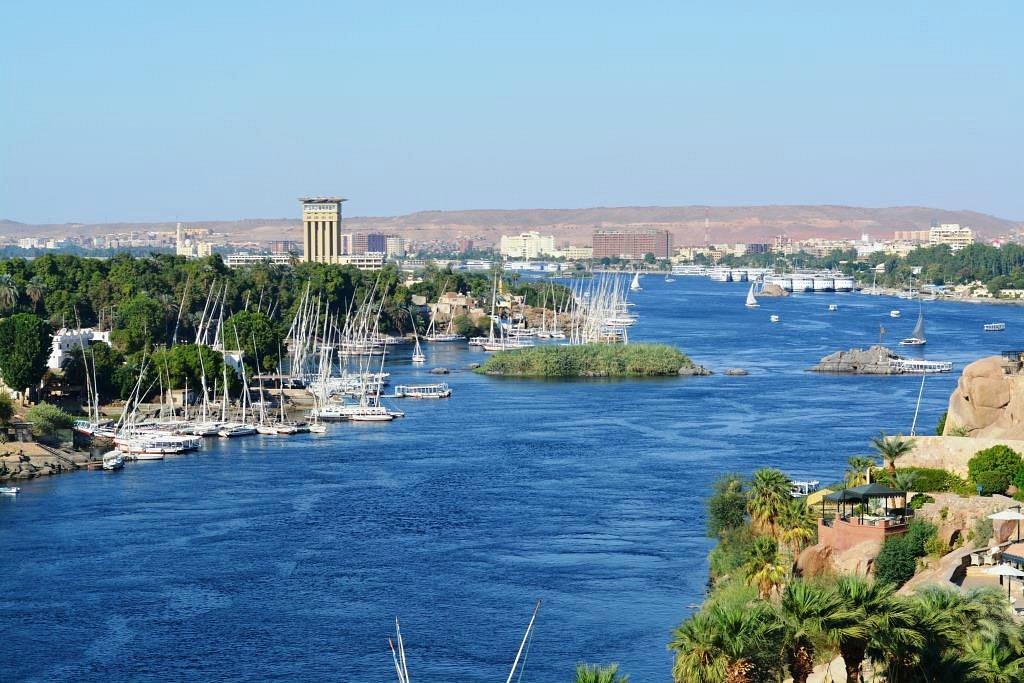
Aswan means temples (Philae) and souks to most people. Fair enough. Elephantine, the little island in the river, gets far less attention. It is not a “temple” the way Edfu or Luxor are temples; it is archaeological wreckage that has hung on for 3,500 years with none of the glamour. That is precisely its magic. Ruins with a pulse. Sand that seems to speak. A museum of three rooms where the hieroglyphs are close enough to touch (really). Then the Nubian villages on the island itself, and not the ones staged for tourists but the genuine article: houses in turquoise blue, doors painted by hand, children calling "hello" who want a photo with you rather than your cash.
Plan your day at Elephantine Island in detail
Traditional Felucca, guided tour of the museum, authentic encounters in Nubian villages. Our guides guarantee an experience without tourist traps.
Contact usResponse in less than 2 hours · 7 days a week · No obligation
Authentic? Honestly, yes. Trap ? Possible if you fall asleep.
Quick response
Getting there: 20 min by felucca (sail boat) out of Aswan | Allow: 3-4 hours | Budget: felucca an agreed fare plus a modest fee for the Elephantine museum | Go at: 8am-10am or 4pm-6pm | Real vs tourist trap: a local guide is essential
Elephantine Islet: an island that was the pharaonic heart
The Egyptians called it Yeb; the Greeks, Elephantine. Where does “Elephantine” come from? The Greeks assumed elephant ivory was shipped from this spot. (They were mistaken, yet the name survived.)
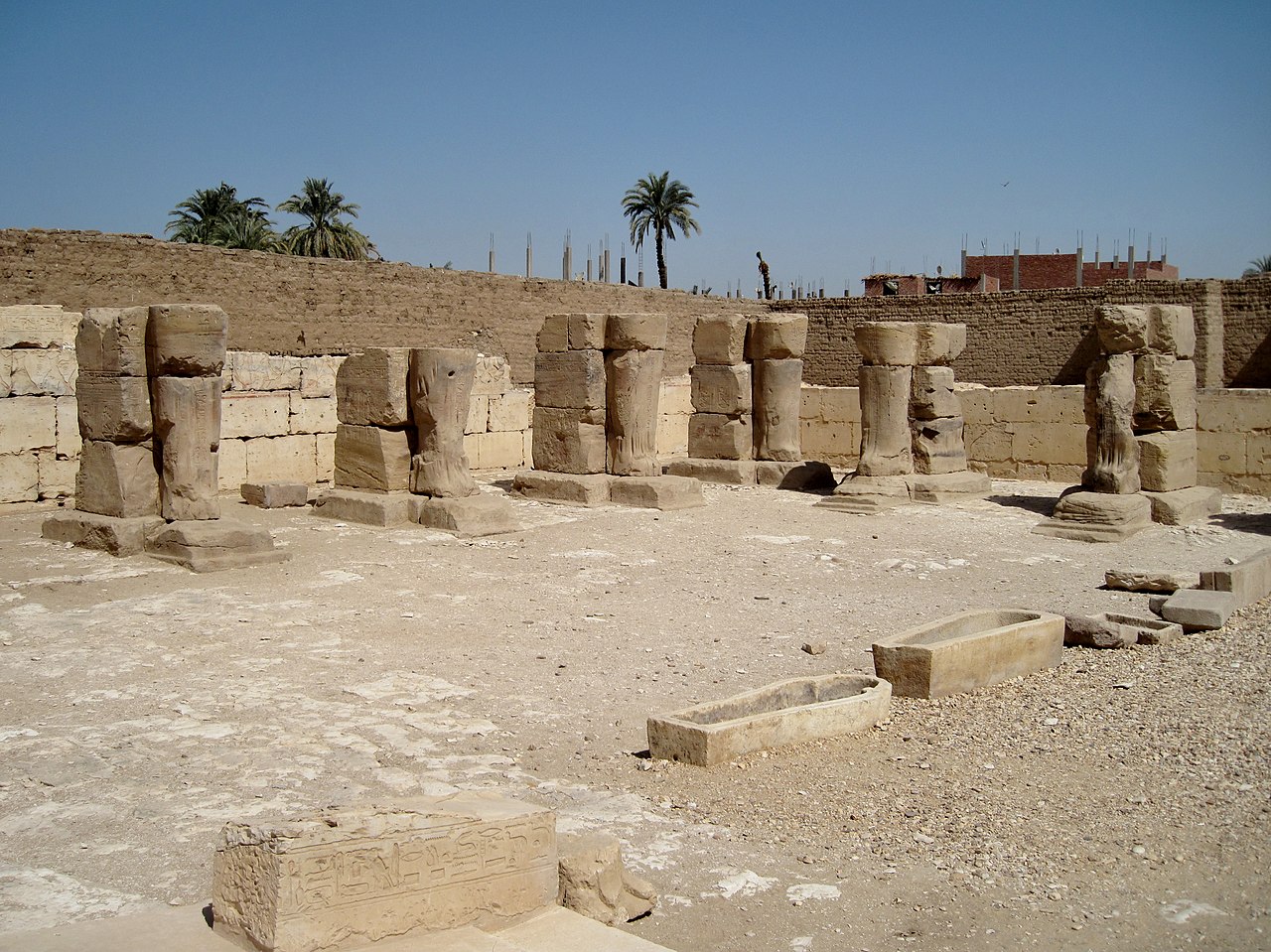
Its past? People have lived on the island since the 1st Dynasty, around 3100 BC. That is close to 5,000 years. Over that span it served as a stronghold, a seat of administration and a sacred site. Pharaohs raised temples here, generals watched over Egypt's frontier with the south from here, priests made their homes here. And then, like so many Egyptian sites, it faded into a forgotten field of rubble.
In 2026, the islet is home to a small but dense museum, Nubian residences, and enough ruins for you to imagine ancient life. (And frankly, this is where ancient Egypt becomes visceral, not just photographable.)
The Elephantine Museum: intimate and honest
Admission: on request. The museum occupies the restored 1898 Willcocks villa. Three rooms. Only three rooms. But every piece counts.
Room 2: Stelae and reliefs. Bas-reliefs engraved in limestone. Scenes of pharaonic daily life. Father with his children. Man offering to a god. Marble family hierarchy. (These images take time to decipher, you really read them instead of consuming them.)
Room 3: Nilometer. This is the piece that few aim for. The Nilometer was a stone staircase at the edge of the island that measured the level of the Nile each year. Higher = better harvest. Lower = starvation. The priests read the nilometer like an oracle. Ici, tu vois l'escalier réel, des graduations antiques intactes. It is a 3,500 year old scientific tool. (Et franchement, voir une jauge hydrologique antique, c'est cool.)
Give the museum 45 minutes to do it justice, not a minute more or less. There is no air conditioning, just windows looking out over the ancient walls. Archaeology the way it ought to be: airy, approachable, alive.
Nubian villages: what is authentic and what is not
That's the trap. Les villages nubiens sur l'île Éléphantine ont explosé touristiquement depuis 2000. Certains sont "préservés", d'autres sont des décors. How to know?
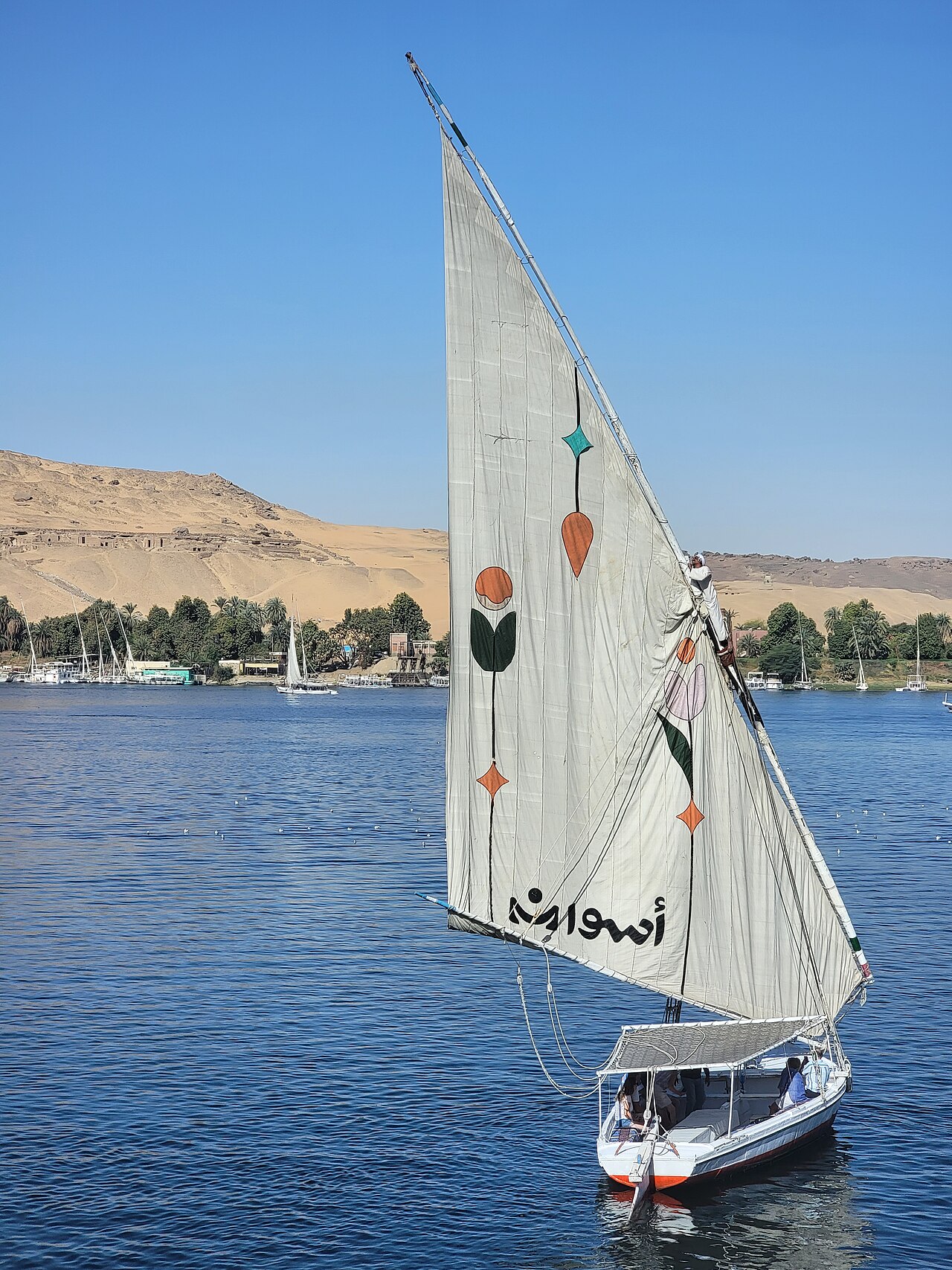
Authentic: Tu entres dans une ruelle, tu vois une femme faire du pain dans un four traditionnel. The children are playing. The houses are not repainted for you. The colors (turquoise blue, gold, red) are real - it is the Nubian tradition to paint your walls. (Et franchement, c'est magnifique, pas par hasard.)
Inauthentic (pitfalls): Tu entres dans une "maison nubienne" où une femme en costume folklorique te propose du thé-menthe en te regardant comme un ATM. The house "museum" has items that look like tourist junk. Les portes sont toutes peintes identiquement (signe d'imitation). Prices for tea? Noticeably more than an Egyptian would pay. It's not a crime, it's business. Mais c'est pas l'Égypte ancienne qu'on venait chercher.
My strategy: hire a local guide (Nubian if possible) via Aswan. Cost: on request for half a day. It takes you to the real villages, not the shop windows. Tu prends le thé avec sa famille, pas avec une vendeuse professionnelle. C'est l'accès qu'il faut payer, pas la "tradition".
Nubian houses: the architecture we ignore
Les maisons nubiennes ne suivent pas l'ordre égyptien standard. Unlike the rest of Egypt, the Nubians have a different logic.
1. Local materials. Mud brick (adobe), not stone. For what ? The stone was expensive to extract. The Nile mud was free. Ça donnait des murs isolants naturellement - tu restais au frais.
2. Brick crown. Au sommet des murs, une rangée de briques reste brute, pas peinte. What is it for? Ventilation. The Nubians knew that hot air rises. The raw bricks let the air escape. Passive air conditioning. (This is engineering without a formula.)
3. Colors. Dominant turquoise blue. Why blue? C'était une protection traditionnelle contre le mauvais œil (Evil Eye). Dans la croyance nubienne, le bleu éloigne les malédictions. (This is applied folklore.)
4. Massive doors. Heavy, detailed wood. Doors weren't just access - they were status. Une porte ornée = maison d'un commerçant ou d'un fonctionnaire. Single door = modest family. You see the wooden economic hierarchy.
It's not just "pretty color". C'est de l'adaptation climatique + spiritual + économique. (And frankly, that's what makes villages interesting.)
The felucca crossing: the non-negotiable experience
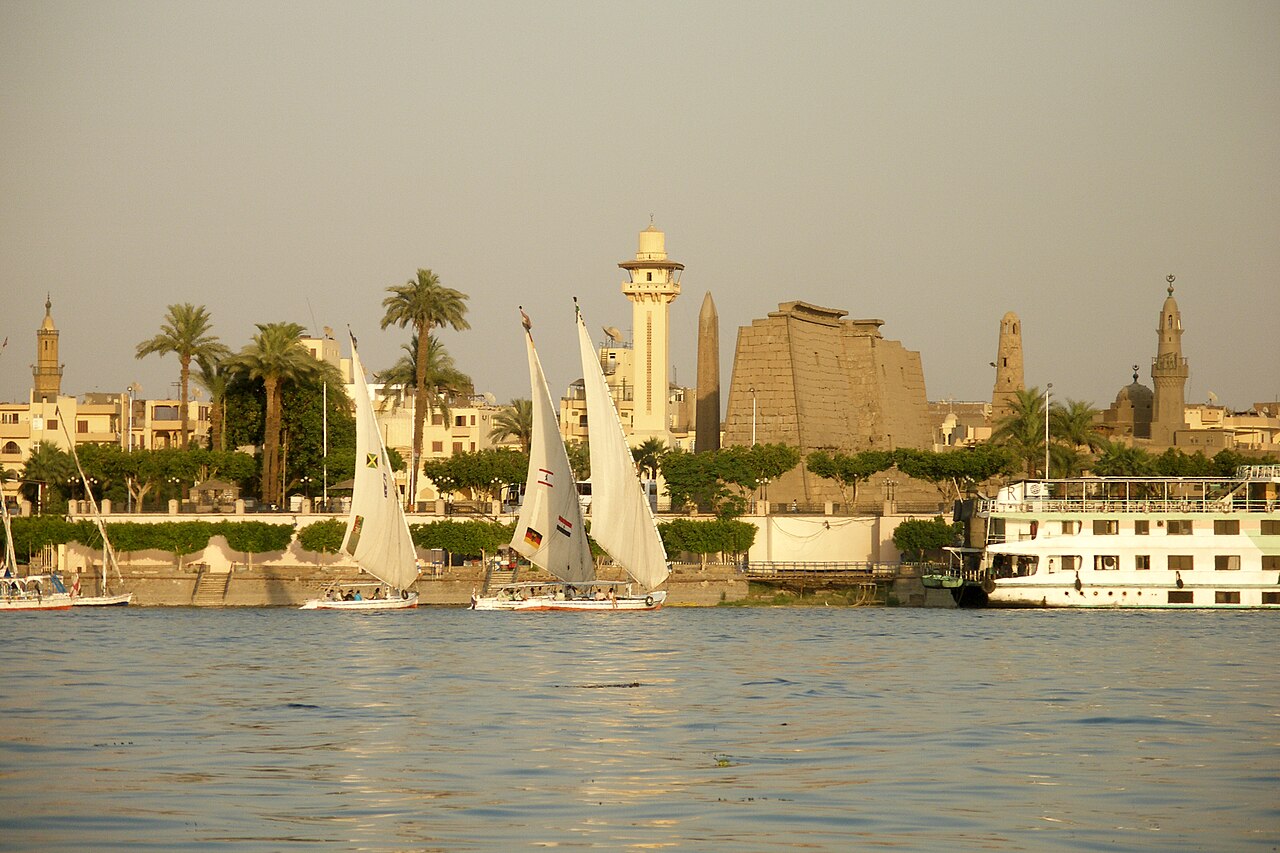
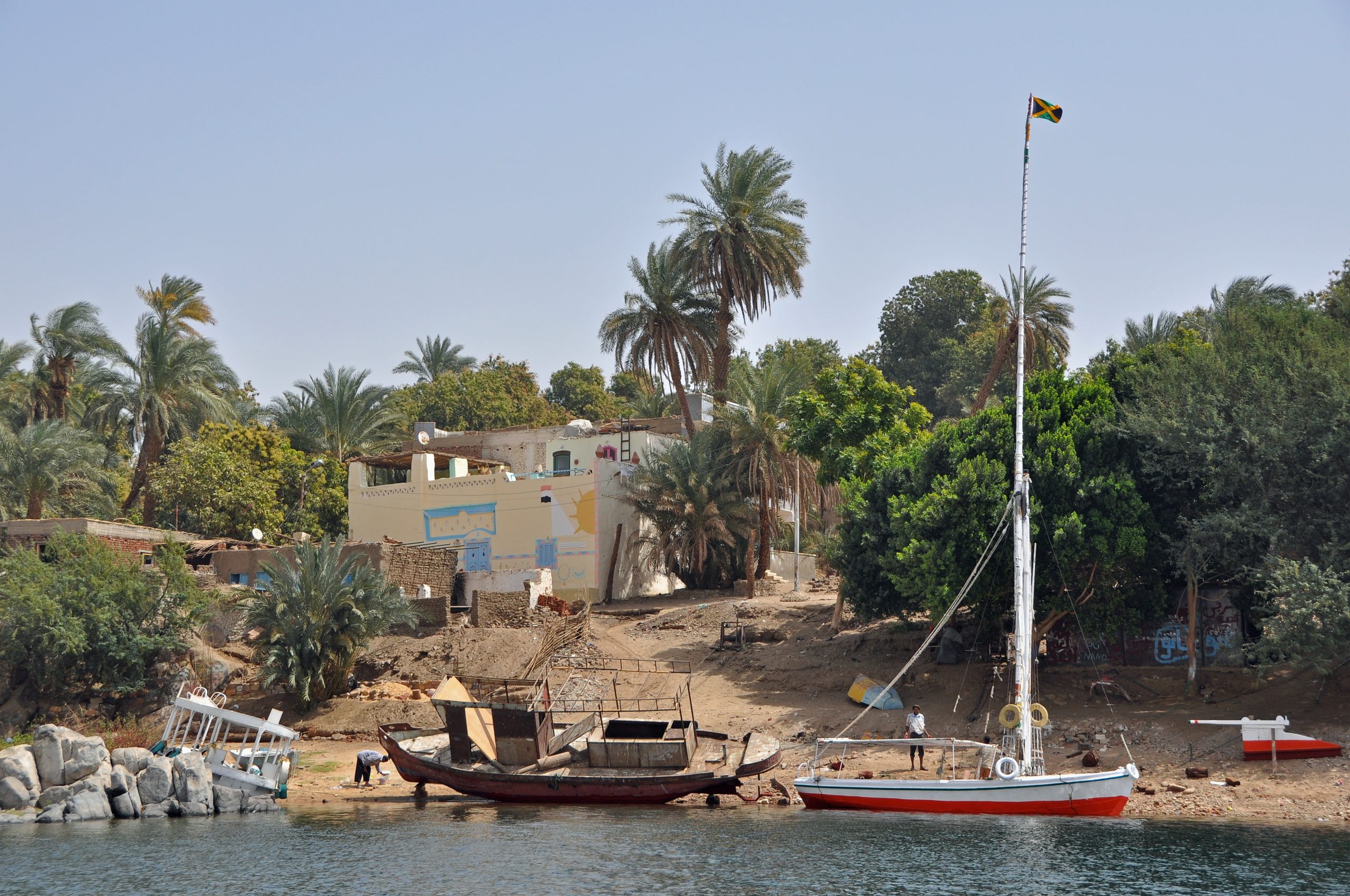
Getting across to Elephantine from Aswan means boarding a felucca, the lateen-rigged sailing boat that has worked the Nile since medieval times. There is no motor, only wind and the angle of the sail.
Cost: A private felucca for 2-4 people is agreed on the day; a shared one is agreed per head. Rates move with the season and with the wider political picture, since tourist numbers drive them.
Feeling: Magic. You smell the Nile air. The clouds are changing. The island slowly grows on the horizon. (It's cinematic.)
Comfortable it is not (the seats are bare wood). Cool it is not either. But it is the proper way: you move as the ancient Egyptians moved, and the Nile looks different afterwards. (Do not skip this.)
Haggling: the boatmen on the landing will open high. Come back firmly and expect to settle somewhere in the middle. (Perfectly normal; not a rip-off, just trade.)
Felucca + Nubian villages + the local: we organize everything
Every household and lane is familiar to our Nubian guides. Nothing staged for tourists, only the genuine.
Response in less than 2 hours · 7 days a week · No obligation
Meeting with crocodiles (alive and mummified)
Unexpectedly, the island also keeps Animalia, a family-run Nile crocodile centre with live animals in separate pools, plus a small museum of mummified specimens. Think reserve rather than zoo; the animals are here for observation and research, not for performing.
Entry is usually included in guided tours. Allow 15 minutes.
Fear ? No. Crocodiles are separated by glass and water. You observe them without danger. A guide explains that they were common animals in the area - hunting in the 1950s eliminated them. Now there are none in the wild. This small population is conservation remnant.
One more thing: ask the attendant about mummified crocodiles and he will show you a handful tucked away in a side room. It lacks the drama of Kom Ombo, though historically this is the ground where those mummies were laid to rest. (Unless the British Museum got there first, as so often.)
The tea ritual with the locals: what you need to know
Whatever else happens in the Nubian villages, there will be mint tea. A local man asks you into his house, his wife brews it hot with fresh leaves, everyone settles in the courtyard and the conversation starts.
The hidden price: As you leave, out come the "souvenirs": necklaces of coral, herbal remedies, bits of copperware, priced at 5-10 times what the souk would charge. This is not a con so much as how the household earns. Buy if you like, or decline with good grace.
The real value: What gets said. Tales of how Nubians live. A child proudly producing schoolwork. A woman recalling the Upper Nile and the family's Sudanese origins. Living anthropology, in other words. (Which, let's be honest, is the point of coming.)
What it adds up to: the tea itself costs nothing. Souvenirs, should you want any, are modest. A donation, entirely up to you, is modest too. (Pencils or exercise books brought from home go down well too; education is prized in Egypt.)
Bring a Nubian guide along and all the bargaining is handled on your behalf, which is a real plus.
When to go: timing and seasons
Noon (11 a.m.-3 p.m.): Excessive hot. The villages close (siestas). Felucca can be uncomfortable. Avoid unless you are a masochist.
Ideal season: November-February. Human temperature. December-January: perfect. March-April: warm start. May-October: almost impossible for non-residents.
Complete budget for a day Elephantine + villages
2 people.
Felucca there and back: on request | Museum on Elephantine: on request | Crocodile park: normally covered | Half-day local guide: on request | Tea plus any souvenirs: on request
Total: on request for a full 4-hour experience. (This is reasonable for Egypt.)
Going without a guide saves money, but the genuine villages then stay closed to you. (Take the guide.)
Optimized one-day itinerary in Aswan
With just 1 day to spend in Aswan, this is how I would organise it.
8 a.m.-9:30 a.m.: Felucca to Elephantine.
10:30 a.m.-12:30 p.m.: Nubian villages with guide. Tea at a local. Pictures.
1:30 p.m.-3 p.m.: Rest at the hotel. Nap. Shower. Recalibration.
Abu Simbel on excursion (ask the guide).
Tight, yet never rushed: you get three big experiences (archaeology, nature, people) without racing between them.
Pitfalls to absolutely avoid
Trap 1: The “tourist villages” organized from Aswan. Agencies sell you “Nubian village visits including house museum and shopping”. This is a tour without a local guide. You see theaters, not life. Cost: a premium price for less than you could make on your own. Avoid.
Trap 2: Take a felucca without checking the condition of the boat. Inspect it. Sail intact? Stable hull? Captain sober? Yes to everything = good. No = looking for another one.
Trap 4: Coming on a cruise without disembarking in Aswan for that. Boats often do Philae and skip Elephantine to save time. If you are on a cruise, ask to get off in Aswan for half a day. This is often possible.
Wider context: Aswan in an itinerary
Heading south along the Nile, Aswan is the final city of any size before Nubia and Sudan begin. For hundreds of years it marked where Pharaonic Egypt ended. These days it is a modern place of 200,000 people, with its Nubian heritage very much alive.
On a standard Nile cruise you usually get 1-2 days here. With 1 day, stick to Philae. With 2, add Elephantine and the villages. Longer still? Head south to Abu Simbel, or try activities on the water, the souk, or the Nubian House museum.
You cannot "do" Aswan in a hurry. Its rhythm is slow: you linger, you watch, you chat. Put simply, it is somewhere to stay, not a box to tick.
FAQ about Elephantine and the villages
Are the villages dangerous? No. That's for sure. No organized crime. No aggressive street scenes. Just normal business and families living.
What if you're afraid of crocodiles? They are locked up. You are sure. And this is scientific observation, not entertaining spectacle. (Breathe.)
Can you bring children? Yes. It is an educational experience. Children love villages (other children, animals, colors). The museum is short so not boring. Felucca can be bumpy for very little ones.
Conclusion: why Elephantine changes your vision of Aswan
Aswan on its own, it's just market + temple + sunset photo. Aswan + Elephantine + villages? It is an immersion in three simultaneous Egypts: pharaonic, natural, human. The felucca physically connects you to the Nile that the ancients used. The museum tells you about ancient science (nilometer). The villages remind you that modern Egypt has deep Nubian roots. (And frankly, that's what we remember afterwards.)
You leave Aswan having lived, not just having watched.
Prepare your day Elephantine + villages with a guide
Sem Elegant Voyage organizes Elephantine excursions with verified Nubiensa and Feluccas guides. Authentic, safe, English-speaking available.
Contact by WhatsApp