

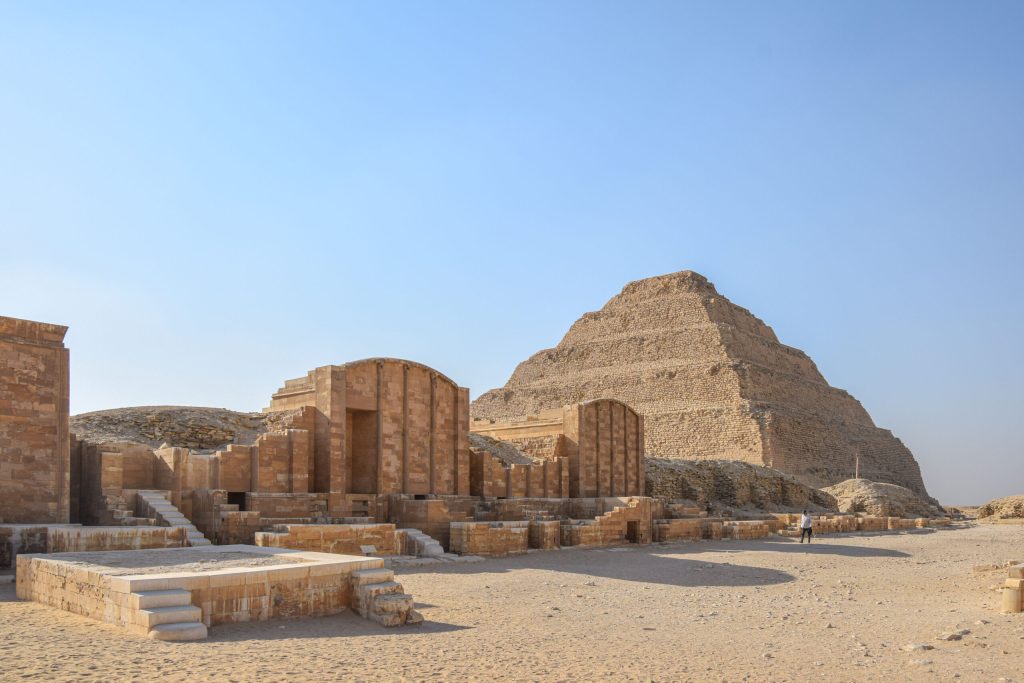
Giza's pyramids tend to hog the limelight, yet anyone serious about Egyptology knows the tale starts a short way to the south. Roughly 30 km out of Cairo, Saqqara and the old capital of Memphis take you right back to where Pharaonic civilisation was born.
This is the ground where Imhotep, architect of genius, dreamed up the very first pyramid, and where the sacred bulls were laid to rest in enormous sarcophagi. Anyone who wants to grasp how building evolved towards the Great Pyramid really must see Saqqara and Memphis, which is why the excursion features in every one of our Cairo cultural itineraries.
Saqqara: The Largest Necropolis in Egypt
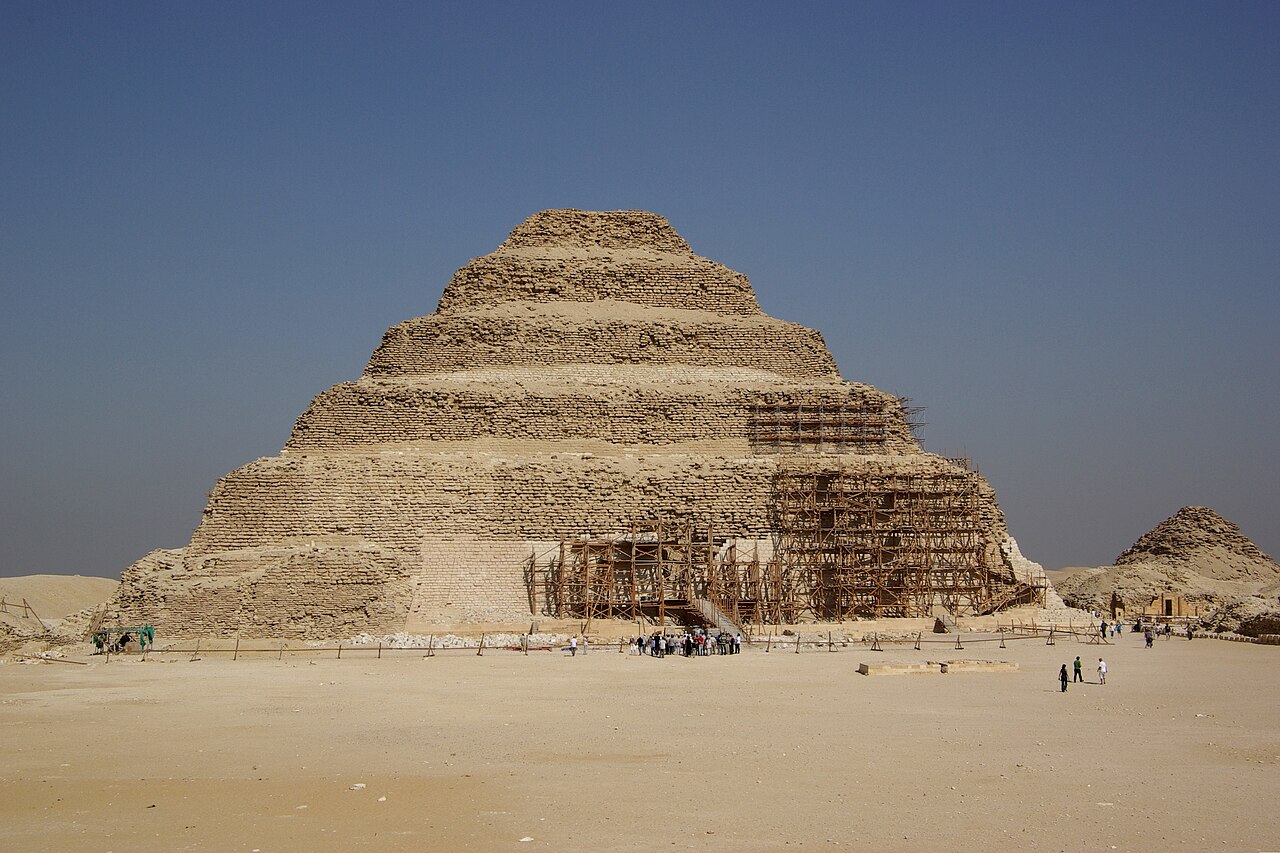
Think of Saqqara as history laid out under the sky: a royal burial ground in use for more than 3,000 years. It is vast, stretching over 7 km, and every digging season still turns up fresh finds.
1. Djoser’s Step Pyramid
He's the star of the site. Built around 2650 BC. BC by Imhotep, it is considered the oldest monumental stone building in the world. Its stepped shape (6 degrees) symbolizes the ascension of the pharaoh's soul towards heaven. Recently restored, it is now possible to go inside to admire the underground corridors, for an additional ticket (approximately 150 EGP in addition to the entrance ticket to the site which costs approximately 450-500 EGP in 2026).
2. Unas and the Pyramid Texts
Don't be fooled by its scree exterior appearance. The interior of the small pyramid of King Ounas is a jewel. It is here that the famous “Texts of the Pyramids” appear for the first time, magical formulas engraved in blue hieroglyphs on the white walls to help the king in the afterlife. Access is usually included in the general ticket.
3. The Serapeum of Saqqara
The Serapeum is eerie and awe-inspiring in equal measure: a subterranean gallery that held the sacred Apis bulls, living embodiments of the god Ptah. Inside stand colossal granite sarcophagi of up to 70 tonnes, finished with a precision so exact that engineers today still puzzle over it.
4. The Mastabas of the Nobles
Saqqara is also home to tombs of high officials (mastabas) with incredibly fine decorations. The graves of Mereruka, Kagemni or Ti offer scenes of daily life (hunting, fishing, agriculture) with colors still vibrant after 4,000 years.
Memphis: The First Capital
Minutes away from Saqqara lies the village of Mit Rahina, which sits on top of ancient Memphis. King Menes founded it around 3100 BC as the first capital of a united Egypt. Nothing of the great city survives, though a delightful open-air museum makes the stop worthwhile.
Star of the show is the Colossus of Ramses II, a limestone figure lying on its back and stretching beyond 10 metres. The delicacy of the musculature and the face is remarkable. Look out too for a superb alabaster sphinx and a scattering of other giant statues.
Practical Information 2026
- Hours: Open seven days a week, 8:00am until 5:00pm (during Ramadan the gates shut earlier, at 4:00pm).
- Tickets (2026 indicative prices):
- Saqqara (main site and Imhotep Museum): ~500 EGP
- Memphis (Open Air Museum): ~200 EGP
- Serapeum: Separate ticket often required (~200 EGP)
- How to get there: Public transport does not run anywhere useful for visitors. Your best bet is a private car and driver hired for the day out of Cairo or Giza.
Dahshur: To Complete the Visit
If you have time, extend your excursion a few kilometers south towards Dahshur. You will see the Rhomboidal Pyramid (with a unique curved shape) and the Red Pyramid (the first real successful smooth pyramid). These sites are much less frequented and sometimes allow you to find yourself alone in a royal burial chamber! This is an extension that we offer in our package Cairo Complete.
Pairing Saqqara and Memphis with Nearby Sights
A big plus of Memphis and Saqqara is how close they sit to other headline sites. Being based locally, we usually fold the visit into a full day with further stops. The combinations people choose most:
Saqqara + Giza (full day): the classic pairing. Take Giza first thing (7am-10am), then continue to Saqqara and Memphis (10:30am-2pm). Stop for lunch at a local place on the road linking the two, where the grilled meats and mezze are superb and cheap (150-300 EGP / ~3- per person for a full meal). Our Smile of the Sphinx package includes this day.
Saqqara + Dahshur (half day): for fans of pyramidal architecture, this combination is ideal. You will see the complete evolution of the pyramids: the first (Djoser in Saqqara), the failed attempt (Rhomboidal Pyramid in Dahshur) and the first successful one (Red Pyramid in Dahshur). This is a three-step architectural history course. Allow 4 to 5 hours.
Saqqara + Memphis + Coptic Cairo (full day): Already ticked off Giza and got a whole day spare? Give the morning to the ancient sites and the afternoon to Coptic Cairo (the Hanging Church, Ben Ezra Synagogue and the Coptic Museum). Two periods, two moods, one very full day.
Recent Discoveries in Saqqara
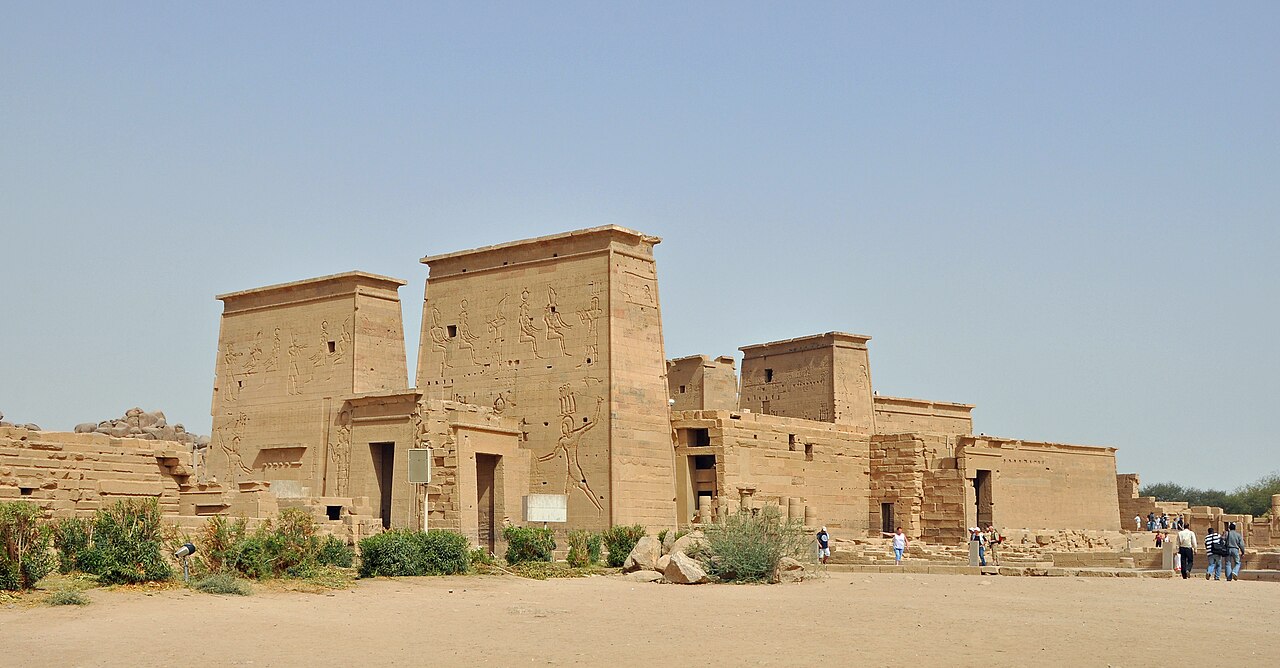
Right now Saqqara is arguably the busiest dig in the whole of Egypt. Finds from the past few years have made front pages around the world and give you fresh reasons to come:
Every season of digging throws up something unexpected. Burial shafts sunk 10 to 12 metres into the ground have given up dozens of painted wooden coffins in flawless condition, and several still held untouched mummies complete with their amulets and funerary papyri.
Just inside the entrance, the Imhotep Museum has gained extra galleries devoted to these latest finds. Hurried visitors tend to walk straight past this little museum, which is a mistake: it deserves 30 to 45 minutes at the very least. The displays are beautifully done and explain the story of the site in plain terms. Your general Saqqara ticket covers admission.
Advice from our on-site team
After years of accompanying groups on this site, here are some practical recommendations that our guides systematically share:
Wear closed shoes. The terrain is sandy and irregular. The sandals are for the hotel. In Saqqara, you will walk on sand, stones and stone stairs. Good walking shoes make all the difference.
Bring plenty of water. Once past the gate there is next to nowhere to buy any (a handful of hawkers, and they charge over the odds). Carry at least 1.5 litres each, more so in summer.
Don't neglect the mastabas. Many visitors focus only on the pyramid of Djoser and miss the mastabas of the nobles. This is a mistake. The tombs of Ti and Mererouka contain scenes of daily life of incredible richness: harpoon fishing, wine making, dance, music. These are the “Instagram photos” of ancient Egypt, so to speak.
Allow time for the panorama. Stand in the Djoser complex and look out: desert to the horizon, with the pyramids of Dahshur and Giza rising in the distance. Few spots in Egypt give a clearer sense of how the whole Memphite necropolis fits together. Give yourself 5 minutes with the view before you go.
Frequently Asked QuestionsQ: How long does it take to visit Saqqara and Memphis?
A: Set aside half a day from Cairo, around 4 to 5 hours, for the main sights. Make it a whole day if you want to add Dahshur and a proper grilled lunch on the way to Saqqara.
Q: Is it feasible to see Saqqara and Giza in a single day?
A: You can, though it makes for a demanding day. Our advice is Giza early (before the coaches arrive) and Saqqara after lunch, or the other way round. The Smile of the Sphinx package is built precisely around this.
Q: Will children enjoy it?
A: Yes, although the terrain is sandy. The Memphis Museum is small and easy. Entering the pyramids can be impressive (and sometimes claustrophobic) for young ones, but the exterior offers a huge area of discovery.
Book Your Time Travel
There is something stirring about treading where Imhotep and the earliest pharaohs once trod. Well away from the city's noise, Saqqara has a calm that invites you to reflect on the deep past.
The Old Kingdom is a period our English-speaking Egyptologist guides care deeply about, and they have a knack for making the stones “talk”. Get in touch with Sem Elegant Voyage to arrange a private excursion.