
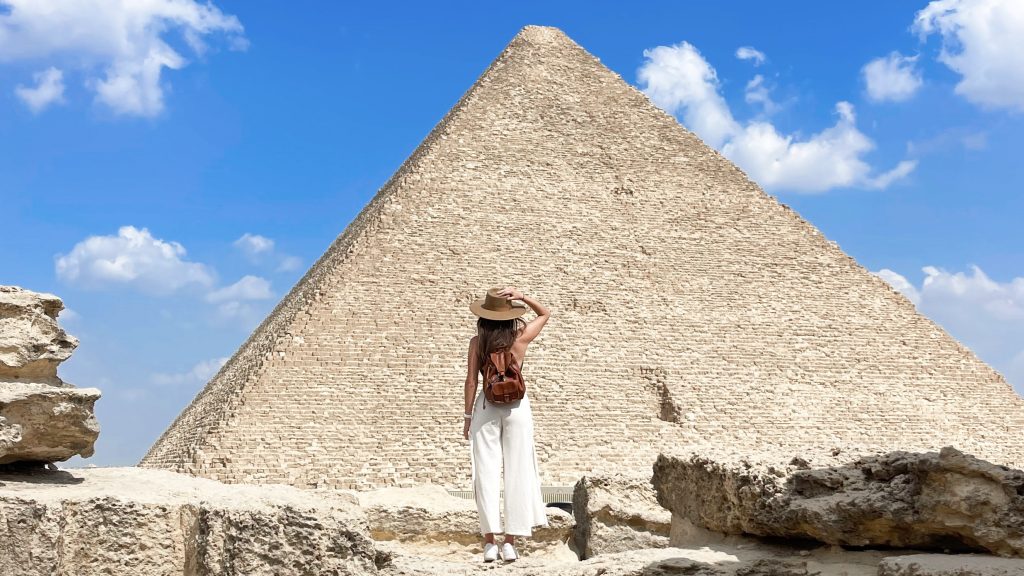
A trip to Egypt rewards careful planning. Between entry requirements, itinerary choices, packing your suitcase and health precautions, this checklist covers everything you need to know before you set off to discover the land of the pharaohs in 2026.
We put this list together after years of organizing trips for American travelers. Every single point comes from real experience. The traveler who shows up at the airport without printed proof of their e-visa. The one who has no US dollars in cash for the entry stamp. The woman wearing heels to tour the Valley of the Kings. We have seen it all. And we put every bit of it into this checklist so it does not happen to you.
Pro Tip
Print this page or take a screenshot of the summary checklist at the end of the article. Stick it on your suitcase or keep it in your phone notes. This is the kind of list you wish you had when you are hunting for a power adapter at 11pm in the lobby of your Cairo hotel.
3 Months Before Departure
Documents and Entry Requirements
Passport: Make sure your passport is valid for at least 6 months beyond your planned return date. US citizens must travel on a valid passport (a driver's license or other ID will not work for international travel). Egypt does not require US travelers to carry extra passport photos for entry, but tucking 2 spare photos (2x2 inch, light background) into your bag is smart insurance in case you need them for a local permit or a lost-document situation. Our honest recommendation: keep a clear photo of your passport ID page saved on your phone and in the cloud.
Visa: A visa is required for US passport holders. Three options:
The online e-visa ($25) is the recommended and cheapest method, and it is available to US citizens. Apply on the official site visa2egypt.gov.eg (beware of scam sites - this is the only official domain). Processing time: 5-7 business days. Submit your application at least 10 days before departure.
The visa on arrival ($30 since March 1, 2026, a $5 increase) is paid in cash only at the bank exchange counter BEFORE passport control. Bring the exact amount in US dollars.
The Sinai exemption (free) applies if you stay exclusively in Sharm el-Sheikh, Dahab, Nuweiba or Taba for fewer than 15 days.
All the options are detailed in our Egypt visa guide 2026.
Travel insurance: It is essential to take out a policy covering medical expenses (minimum $35,000), medical evacuation and trip cancellation. Hospital bills in Egypt can climb fast in the private clinics of Cairo, and your regular US health plan likely will not cover you abroad. Some premium credit cards include basic coverage, but check the limits and exclusions (water sports, diving). For full coverage, providers like Allianz Travel, World Nomads or Travelex offer traveler plans starting around $30-50 per week.
Booking your trip: Flight, accommodation and/or a package with an agency. If you book an organized tour with our agency, we handle all the logistics: visa, transfers, site tickets, English-speaking guide. If you travel independently, book your flight to Egypt 3-4 months ahead for the best fares, and your site tickets on egymonuments.com (the interior of the Great Pyramid of Khufu, for example, is capped at 300 visitors per day and sells out within 48 hours in high season).
Register your trip: Enroll in the US State Department's free STEP program (Smart Traveler Enrollment Program) to receive security alerts and let the US Embassy locate you in an emergency. It is free and takes 2 minutes.
Copies of your documents: Make a photocopy of your passport, your e-visa, your flight tickets, your hotel reservations and your travel insurance. Keep a paper copy somewhere separate from the original, and email yourself a digital copy (or store it in the cloud). If your passport goes missing, that copy saves you at the embassy.
Booking and Itinerary
Check the US State Department travel advisory for the latest security guidance on Egypt. Spoiler: the tourist areas (Cairo, Luxor, Aswan, Hurghada, the Nile) sit at a moderate "exercise increased caution" level, the same tier as Turkey or Mexico. No specific restriction applies to the classic itineraries. Our Egypt safety guide 2026 breaks it all down in detail.
Define your itinerary based on the length of your stay. For 7 days: a Nile cruise (Luxor-Aswan). For 10 days: add Cairo and the pyramids. For 12-14 days: add Hurghada or Abu Simbel. Our detailed Luxor-Aswan itinerary and our all-inclusive packages give you concrete examples.
Tell your bank about your trip to avoid having your card blocked abroad. Check the foreign-transaction fees (many cards waive them, and some travel cards charge nothing). ATMs are available in every Egyptian airport, hotel and shopping mall. Visa and Mastercard are accepted in tourist hotels and restaurants. Amex is more hit or miss.
1 Month Before Departure
Health and Vaccinations
No vaccine is required to enter Egypt (except yellow fever if you are arriving from an endemic area). The recommended vaccines are: hepatitis A (strongly recommended), typhoid (for long stays or travel off the tourist trail), and an up-to-date Tdap (tetanus-diphtheria-pertussis) booster. Hepatitis B is recommended for extended stays or if you anticipate needing medical care while there.
See your doctor or a travel clinic for a pre-trip checkup, ideally 4 to 6 weeks before departure. Some vaccines need time to take effect. If you are on any ongoing medication, bring it along with the original prescription (English is fine for US travelers). Egyptian customs may inspect certain medications.
Travel Medical Kit
Put together a basic medical kit. Egyptian pharmacies sell medication at very low prices, but shortages happen and brand names are different. Better to leave home with the essentials:
Anti-diarrheals (Imodium or equivalent) - traveler's diarrhea is common, especially the first 2-3 days. This is the medication you are most likely to use.
Antacids (Tums, Pepto-Bismol) for sensitive stomachs.
Pain reliever (acetaminophen / Tylenol) for fever and heat-related headaches.
SPF 50 sunscreen - non-negotiable. The Egyptian sun burns even in winter, even on cloudy days.
Insect repellent (DEET-based, 30-50%) - mosquitoes come out in the evening along the Nile, especially in Luxor and Aswan.
Oral rehydration salts (ORS) - for diarrhea or heat-related dehydration.
Bandages, antiseptic, sterile gauze - even a minor cut gets infected fast in the heat.
Eye drops and saline solution - sand and dust irritate the eyes, especially in the desert and at archaeological sites.
Your personal medications with the original prescription.
Phone and Connectivity
Three options for staying connected in Egypt:
Local SIM card at the airport (Vodafone, Orange or Etisalat): $10-20 for 10-20 GB of data. Buy it at the counter in the arrivals hall, right after baggage claim. Bring photo ID. This is the cheapest and most reliable option.
eSIM (Holafly, Airalo, Nomad): $15-40 depending on duration and data volume. Set it up before you leave, right from your phone. Upside: you keep your US number active for banking verification texts. Downside: no local number for calls.
Roaming through your carrier: usually more expensive (check your plan). Some US carriers like T-Mobile include international roaming in their plans; Verizon and AT&T charge a daily TravelPass fee (around $10-12 per day). Confirm before you fly.
Our recommendation: the local SIM for the best value, or the Holafly eSIM if you want the peace of mind of setting everything up before takeoff.
1 Week Before Departure: The Suitcase
Clothing: What to Pack
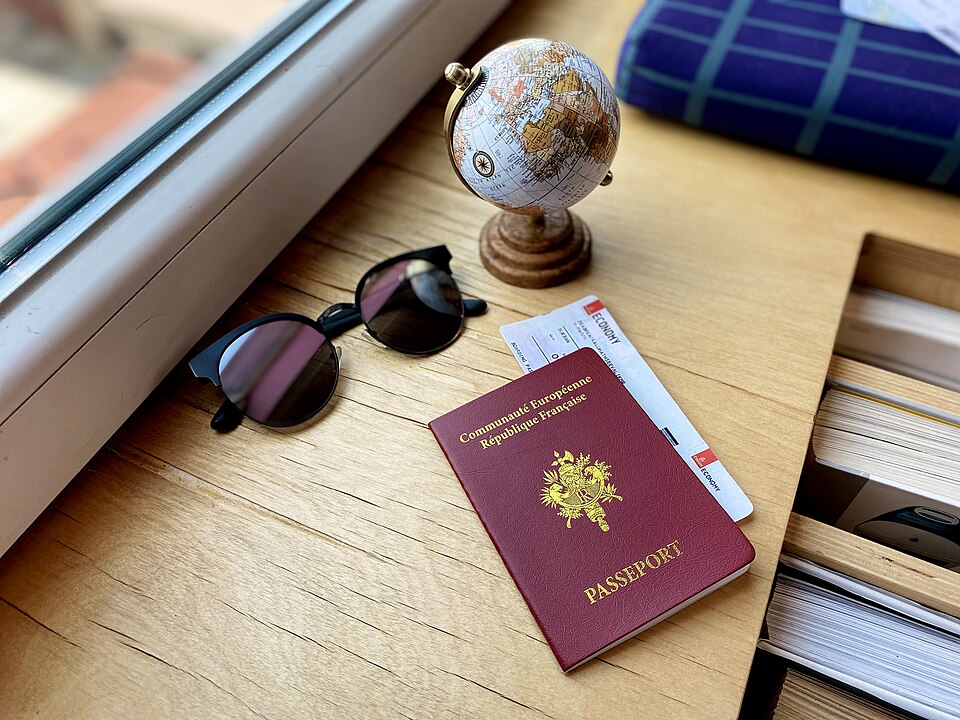
Egypt combines a scorching desert climate during the day with evenings that can turn cool (especially in winter, October to March). Your clothes should be light, modest and respectful of local customs. No short shorts, no plunging necklines, no spaghetti-strap tank tops in non-tourist areas and mosques. In the beach resorts of Hurghada or Sharm, the rules are more relaxed.
Light cotton or linen clothing (3-5 tops, 2-3 pairs of light pants) - go for pale colors that do not trap the heat. Linen wrinkles but breathes better than anything. Loose-fit pants are perfect: covering, light, comfortable.
A sweater or light jacket - evenings on the Nile can be chilly (59-64°F in January-February). On the cruise ships, the air conditioning is sometimes freezing in the dining rooms. In Aswan in winter, the temperature drops from 86°F during the day to 54°F at night.
A scarf or shawl - essential for women. It works as a shoulder cover for entering mosques, as sun protection, as a wrap in air-conditioned buses, and as a multi-purpose accessory. Men can wear one around the neck like the locals (a light keffiyeh does the job nicely).
Swimsuit - for the hotel pool, the beaches of Hurghada, or a swim in the Nile (yes, some hotels in Aswan offer it). Women wear swimsuits freely in the beach resorts and hotel pools. On public beaches, a one-piece or a more modest cover-up is a better fit.
"Smart casual" attire for dinners on the cruise ship - the 5-star cruises expect presentable dress at the restaurant (no shorts, no flip-flops). Nothing formal, but a pair of pants and a light shirt are plenty.
Footwear: The Most Important Choice
Your feet will suffer if you choose badly. The archaeological sites are out in the open desert: sand, rocks, heat radiating up from the ground. Here is what works:
Closed, comfortable walking shoes - sneakers or light hiking shoes. This is the number-one choice for touring temples and tombs. You will walk 6-9 miles a day over sand, stone slabs and steep stairs (inside the pyramids, the passages are under 5 feet high).
Walking sandals (Teva, Keen, Birkenstock) - acceptable for visits if they hold the foot well. No flip-flops for archaeological sites. The scorching sand of the Giza plateau at 2pm will confirm it.
Water shoes (if you are heading to Hurghada) - the coral is sharp. You do not walk barefoot in the water on the Red Sea. A $10 pair of water shoes will spare you a nasty cut that would ruin the next day's diving.
Flip-flops or slides - for the cruise ship, the pool, the hotel. Not for visits.
Accessories and Sun Protection
Hat or cap - wide-brimmed if possible. The sun beats straight down on the Giza plateau and in the Valley of the Kings. There is no shade. None. A hat is not an accessory, it is a medical necessity.
Sunglasses (with UV400 protection) - the glare off the sand and the white stone is intense.
SPF 50 sunscreen - reapply every 2 hours. The Egyptian sun is stronger than you think, even in winter. Sunburns on the deck of the cruise ship are a classic of the first few days.
Aloe vera gel (after-sun) - in case the sunscreen was not enough.
Waterproof phone pouch - essential for snorkeling excursions and felucca outings. A phone in the Red Sea is a dead phone.
Light backpack (20-25L) - for your days of sightseeing. It will hold your water, your sunscreen, your camera and your scarf. Go for a pack with a ventilated back panel (your back sweats a lot at 95°F).
Insulated water bottle (not a reusable plastic bottle) - water turns warm within 20 minutes under the Egyptian sun. An insulated bottle keeps water cool for 4-6 hours. Fill it at the hotel every morning with bottled water.
Headlamp - useful for visits inside the pyramids and tombs (some passages are poorly lit), for the 5am hot-air balloon departure, and for desert safaris at sunset.
What NOT to Pack
Binoculars - banned in Egypt. They will be confiscated at the airport by the authorities. Seriously. Even if you mean to use them for birdwatching along the Nile.
Drone - strictly prohibited. Your equipment will be seized right at the airport and you could run into trouble with the authorities.
Clothing that is too short or revealing for visits (save it for the resort).
Valuable jewelry - unnecessary and a magnet for unwanted attention.
Too many clothes - hotels offer fast, very cheap laundry service ($1-2 per item). Travel light, get things washed on site.
Apps to Download Before You Leave
Download them BEFORE you take off. The WiFi at Cairo airport is... temperamental.
Google Maps - download the offline maps of Cairo, Luxor and Aswan. GPS works with no internet connection. Essential for checking taxi routes.
Google Translate - download the offline Arabic pack. The camera translation (point your phone at Arabic text) works without internet and can rescue you at a restaurant or on public transit.
Uber - works in Cairo, Hurghada and the major cities. Fixed fares, no haggling, payment by card. It is the safest and least stressful way for tourists to get around.
Careem - the alternative to Uber, very popular in Egypt. Same idea, sometimes cheaper.
XE Currency - real-time USD/EGP exchange rate. In March 2026, $1 = about 50-53 EGP. That rate fluctuates. Having the app keeps you from getting ripped off on exchange.
egymonuments.com (bookmarked in your browser) - the official site for booking your archaeological-site tickets online (the Giza pyramids, the Valley of the Kings, etc.).
visit-gem.com (bookmarked) - reservation required for the Grand Egyptian Museum. On-site sales have been suspended since December 2025.
The Big Day: At the Airport and On Arrival
On the plane: A cardboard immigration form is usually handed out on the plane (or on arrival at the ground level). Fill it in with your information: last name, first name, flight number, name of your hotel, purpose of the trip (tourism). Note: this form has been getting phased out since February 2026 - you may not receive one at all.
On arrival: Before passport control, head to the bank exchange counters to buy your entry stamp (visa on arrival, $30) if you did not do the e-visa. Stick the stamp on a blank page of your passport. Go through control with your passport. Collect your luggage. If you booked with us, our representative is waiting for you in the hall with a sign bearing your name.
Exchanging money: Exchange $50-100 at the airport for your first needs (taxi, tip, water). The airport exchange rate is fair (not the best, but no scam). The ATMs in the arrivals hall give you Egyptian pounds directly. For the bulk of your exchange, wait until you are in town - the exchange offices downtown offer better rates.
Tipping: Baksheesh is part of Egyptian culture. Plan to have small change in Egyptian pounds from day one. Airport baggage porters expect 20-50 EGP. Taxi drivers, 10% of the fare. Guides, 100-200 EGP per day per couple. Cruise-ship staff, 200-400 EGP per couple per week.
Budget Tips 2026
2026 exchange rate: $1 ≈ 50-53 EGP. This rate has swung enormously over the past few years (1 USD = 31 EGP in 2023, 50+ EGP in 2026). Egypt remains a very affordable destination for American travelers.
Exchange a small amount at the airport for your first needs (taxi, tip). Egyptian ATMs dispense Egyptian pounds. Visa and Mastercard are accepted in hotels, tourist restaurants and souvenir shops. Souk vendors and small restaurants take cash only.
US dollars: Bring $30-50 in cash (in 5, 10 and 20 dollar bills) for the visa on arrival and tips in tourist areas. Dollars are accepted in hotels and for excursions. But for local purchases, pay in Egyptian pounds: the exchange rate vendors apply is always unfavorable if you pay in dollars.
Sample budget for 10 days:
All-inclusive organized tour (accommodation, domestic flights we arrange inside Egypt, cruise, meals, visits, guide): $1,300-2,700 per person, excluding your own flight to Egypt. Independently, count on $1,100-2,200 but without a guide or cruise. The budget broken down by spending category is in our Egypt travel budget guide 2026.
Summary Checklist Before Departure
3 Months Before
☐ Check passport validity (6 months minimum beyond return)
☐ Apply for the online e-visa at visa2egypt.gov.eg ($25, 7-10 days)
☐ OR set aside $30 in cash for the visa on arrival
☐ Take out travel insurance (medical + evacuation)
☐ Book your flight to Egypt and accommodation (or the tour with an agency)
☐ Check the US State Department advisory for security guidance
☐ Enroll in the STEP program (US State Department)
1 Month Before
☐ See your doctor (hepatitis A, Tdap, typhoid vaccines)
☐ Prepare the travel medical kit (anti-diarrheal, acetaminophen, SPF 50)
☐ Order an eSIM or plan to buy a local SIM
☐ Tell your bank about the trip (avoid a card block)
☐ Photocopy all the important documents (passport, visa, insurance)
☐ Book site tickets online (Khufu = 300 spots/day)
☐ Book the GEM at visit-gem.com (required, no more on-site sales)
1 Week Before
☐ Pack the suitcase (light clothing, closed shoes, scarf)
☐ Check the destination weather (adjust the suitcase)
☐ Download the useful apps (offline Maps, Translate, Uber, XE)
☐ Prepare $30-50 in cash (5/10/20 bills)
☐ Send a copy of the itinerary to someone close
☐ Check the flight times and baggage rules (charter = often 44 lb max)
The Big Day
☐ Passport
☐ E-visa printout (if applicable)
☐ $30-50 in cash for the visa and first expenses
☐ Travel insurance (policy number accessible)
☐ Original medical prescriptions
☐ Phone charger + adapter (Type C outlets in Egypt - US plugs need an adapter)
☐ Hat, sunglasses, sunscreen in your carry-on
☐ Empty water bottle (to fill after security)
What the Other Guides Will Not Tell You
After years of organizing trips to Egypt, here are the tips that make the difference between a good trip and an exceptional one.
The electrical outlets need an adapter. Egypt mainly uses Type C outlets (the European standard, 220V). If you are coming from the US, your devices run on 110V flat-pin plugs, so you will need a Type C plug adapter - and a voltage check for anything that is not dual-voltage (most phone and laptop chargers are 110-240V and fine; hair dryers and curling irons often are not).
Tap water is not drinkable. Drink bottled water only, with a sealed cap. Check that the cap cracks when you open it. Avoid ice cubes in non-tourist restaurants and unwashed salads. The 4-5 star hotels and the cruise ships use filtered water for cooking.
Site hours change during Ramadan. In 2027, Ramadan will fall around February 7 to March 8. Sites close about 1 hour earlier. Local restaurants close during the day and open after sunset. Hotels and cruise ships serve as normal. See our guide to Ramadan in Egypt.
Negotiate everything. In the souks, the bazaars, the taxis without a meter: the first price quoted is always 3 to 5 times the real price. It is not a scam, it is the culture of bargaining. Divide by 3-4 as your starting point, then inch up. If the seller accepts your first price without negotiating, you paid too much.
Photos in the tombs. Since 2024, phone photos are free at all outdoor sites. Inside the tombs (Valley of the Kings), photos are generally prohibited or subject to a special permit. The guards who offer to take photos "on the sly" for a tip are not official. Your call.
Dress in the morning for the midday heat. You head out at 6am in light jeans and a sweater because it is 64°F? By 11am it will be 95°F and you will be deep in the desert with nowhere to change. Layers: t-shirt + light long-sleeve shirt + thin sweater. Peel off the layers as the day goes on.
Friday is the day of rest. It is the Egyptian Sunday. Some shops, government offices and small restaurants are closed. The tourist sites stay open but can be more crowded (Egyptian families also visit the temples on Friday).
Simplify Your Planning with Sem Elegant Voyage
Booking a tour or a cruise with us? Our team handles all the preparation for you: automatic reminders for the e-visa, a personalized packing list tailored to your itinerary and the season, booking of site tickets, airport welcome with a private transfer, English-speaking guide and 24/7 assistance throughout your stay.
Traveling independently and have questions? We answer those too. For free. It is our way of making you want to come back with us next time.
Unsure about the planning?
Ask your question, we answer within 24h. Visa, packing, itinerary, budget - everything.
FAQ: Planning Your Trip to Egypt
What vaccines do you need for Egypt?
No vaccine is required for US travelers (except yellow fever if arriving from an endemic area). Recommended: hepatitis A (strongly), an up-to-date Tdap booster, and typhoid for long stays. The yellow fever vaccine is only required for travelers coming from an endemic area. See your doctor 4-6 weeks before departure.
Can you drink the tap water in Egypt?
No, never. Drink bottled water only (sealed cap). Avoid ice cubes in non-tourist restaurants and unpeeled raw vegetables to prevent traveler's diarrhea. The 4-5 star hotels and the cruise ships use filtered water for cooking.
What budget should you plan for 10 days in Egypt?
Excluding your own flight to Egypt, count on $1,300-2,700 per person for an all-inclusive organized trip (accommodation, domestic flights we arrange inside Egypt, cruise, meals, visits, guide). Independently, $1,100-2,200 but without a guide or cruise. See our detailed budget guide.
Are the electrical outlets the same as in the US?
No. Egypt mainly uses Type C outlets (the European standard, 220V), which are different from US flat-pin 110V sockets. US travelers need a Type C plug adapter, plus a voltage converter for any device that is not dual-voltage.
What should you pack in your suitcase for Egypt?
Light cotton/linen clothing covering shoulders and knees, closed walking shoes, a wide-brimmed hat, SPF 50 sunscreen, a swimsuit, a scarf, a travel medical kit (anti-diarrheal, acetaminophen), a headlamp, an insulated water bottle. Do NOT pack binoculars (banned) or a drone (seized at the airport).
Do you need a power adapter for Egypt?
Yes. Egyptian outlets are Type C (European standard, 220V), which do not fit US flat-pin plugs. US and other North American travelers need a Type C plug adapter, and a voltage converter for any single-voltage device.
How much does the Egypt visa cost in 2026?
The online e-visa costs $25. The visa on arrival rose to $30 on March 1, 2026. The Sinai exemption is free (Sharm/Dahab only, 15 days max). See our complete visa guide.
What is the best time to visit Egypt?
October to April for ideal temperatures (72-86°F). May to September for the lowest prices (-30 to -40%) but intense heat (95-108°F). See our month-by-month calendar.
To keep planning, see our Egypt safety guide 2026, our visa guide, our budget guide and our when to visit Egypt guide.