
You have already visited Egypt once. Pyramids, the Nile, sunsets over Aswan. Maybe you think you have "seen it all." That is not true. Egypt does not reveal itself on the first visit. It reveals itself on the second. And it is often even better.
Here is why. On your first trip, you probably had a list of boxes to check: Giza, Luxor, a Nile cruise, the Red Sea. You were racing. You felt the pressure of "don't miss this."
The second time? No pressure. You can really breathe. You can savor it. And you can finally discover what 80% of tourists miss: Siwa, the White Desert, underrated temples like Abydos and Dendera, a dahabiya instead of a motorboat, the deep Cairo (beyond Giza).
Planning your 2nd trip to Egypt?
Reply in under 2h • 7 days a week • No obligation
Yes, Egypt Deserves a Return. And a Third One.

Let us be honest. Egypt is vast. The classic tourist destinations (Giza, Luxor, Aswan, Hurghada) do not even cover 20% of the fascinating things to see.
The American travelers who come back all tell us the same thing: "I should have come back much sooner. Why does nobody tell us about Siwa? Why no dahabiya on the first trip?"
Reason 1: Standard agencies have offered the same circuits for 30 years. Easy to sell. No headaches. Everyone knows Giza and Luxor.
Reason 2: Second visits are less lucrative than a brand-new client. Agencies do not make the effort.
Reason 3: Many travelers do not even think a 2nd trip to Egypt is worthwhile. They assume they have "already seen it."
That is a big mistake. A second visit is often BETTER. Less stress. More depth. More soul, fewer selfies. You discover the authentic Egypt, not Egypt at full speed.
What You Probably Saw the First Time
Let us start by sizing up your "check marks" from the first trip. If you followed a classic 10-14 day circuit, here is what you likely visited:
Giza and the Sphinx
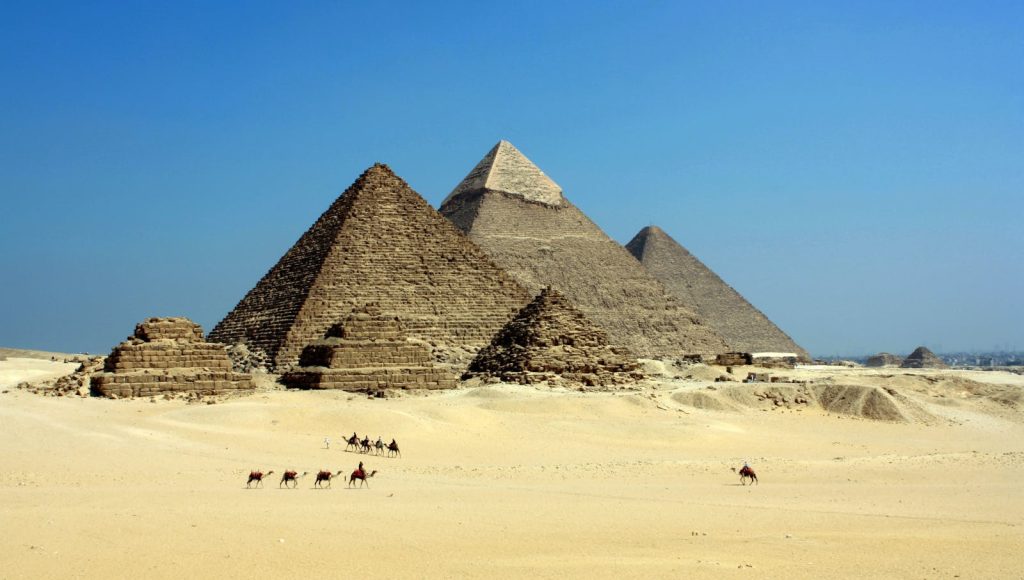
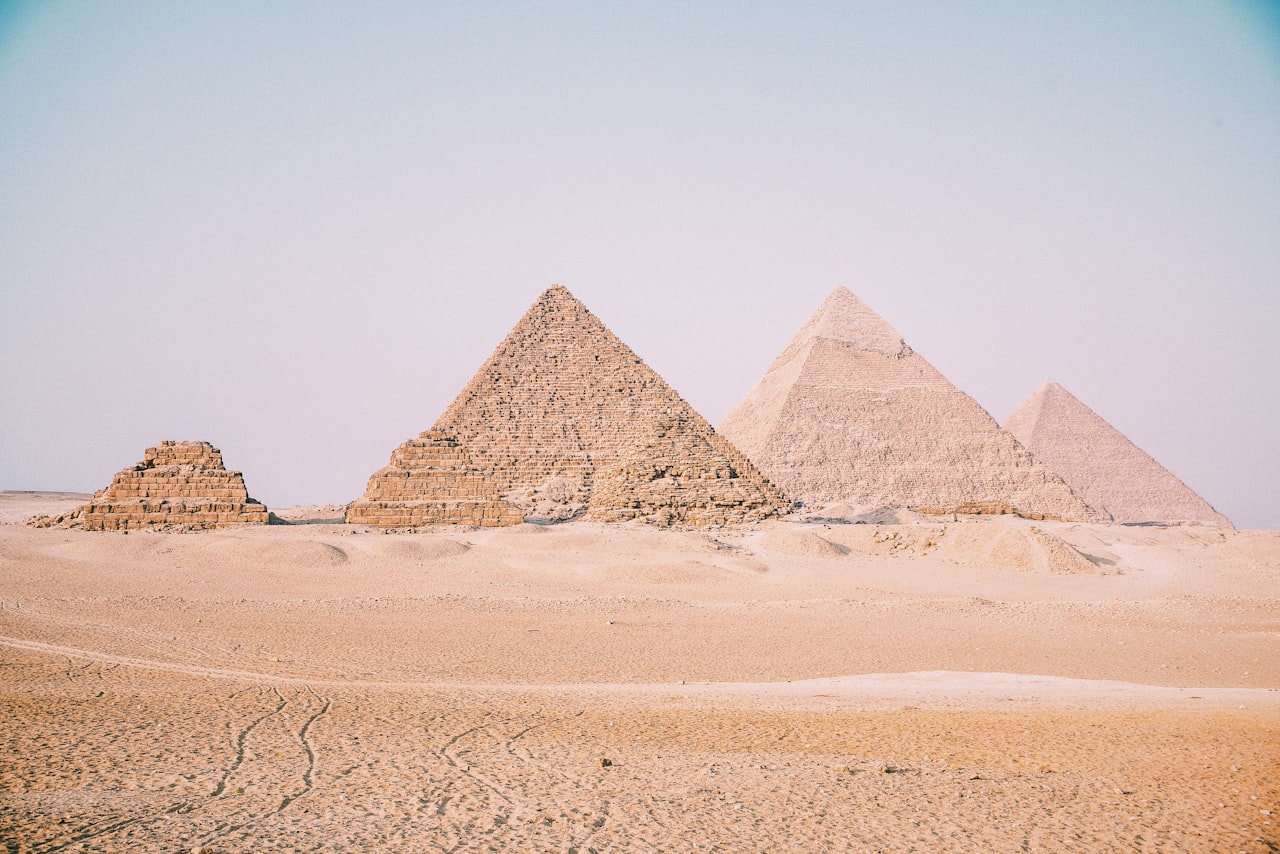
The three pyramids (Khufu, Khafre, Menkaure), the Sphinx, the Valley of the Queens. It is the absolute classic. You did it. It is magnificent. But beyond Giza, Egypt goes much further.
Nile Cruise (Aswan to Luxor)
A 4 or 5-star boat. A comfortable cabin. A buffet. Not bad. But these motorboats are big, noisy, and depart on the tourist schedule. The real Nile? It is elsewhere. It is on a silent sailing dahabiya.
Luxor: Karnak, Valley of the Kings
You did the "hits": the Temple of Karnak (immense), the Valley of the Kings (Tutankhamun and company). You surely also saw the Temple of Luxor and the Colossi of Memnon. That is good. But the temples of Dendera and Abydos? 80% of tourists never see them. You missed that.
Aswan
A felucca at sunset. The Temple of Philae. The modern dam. Maybe the Aswan High Dam. You got the atmosphere. But you probably did not see Lake Nasser. Or else you missed Abu Simbel.
Red Sea: Hurghada or Sharm El Sheikh
An all-inclusive resort. Diving. Fish. A coral reef. It is nice for unwinding. But the Egyptian Red Sea does not stop there. Marsa Alam, further south, is different (less touristy, wilder). And if you were in Hurghada, you did not see Sharm, and vice versa.
Tourist Cairo
The Egyptian Museum, the Saladin Citadel, Khan El-Khalili. Standard. But the real Cairo? The deep Cairo? The Islamic quarter beyond the Khan (the ancient mosques, Darb al-Ahmar)? The people who have never seen tourists? You missed it.
What You Probably Did Not See
Here are the hidden gems. The things that make a second visit better than the first.
Siwa: The Most Remote Oasis in Egypt
Siwa is 350 miles from Cairo, 185 miles from the Libyan desert. It is the most isolated oasis in Egypt. Perhaps the most beautiful one, too.
Why does nobody go there? It is far. It is hard to reach (you have to forget the classic tourist route and drive a 4x4). And it takes time.
But when you arrive in Siwa, you understand why Cleopatra came here to bathe. The natural pools are pure. Siwa salt glitters under the sun. The white limestone houses of Siwa town date back to the 12th century. The locals speak their own dialect (Siwi), not classical Arabic. It is another world.
You swim in the Aghormi Oasis. You climb Gebel al-Mawta (the Mountain of the Dead) to see the Libyan rock-cut tombs. You bite into dates freshly harvested at the farm. It is authentic. It is magical. It is a must for a 2nd visit.
Budget for Siwa from Cairo: 500-750 USD per person for a 3-4 day tour with a 4x4, local guide, and a 3-4 star hotel.
White Desert and Bahariya Oasis
205 miles southwest of Cairo, the Bahariya Oasis. And right next to it, the geological wonder: the White Desert.
Picture a lunar landscape. Monumental white rock formations (chalk and limestone bleached by 80 million years of erosion), 100-130 feet tall, sculpted by the wind into bizarre shapes (camels, dinosaurs, mushrooms). You feel like you are on Mars.
During the day, it is pure white. You hunker down under an umbrella. In the evening, you camp (not in luxury, but a real camp under the stars with Bedouin tea). At dawn: sunset and sunrise over the White Desert. No photo does it justice.
It is 4-5 hours of pure desert. No town. No tourists. Just you and the rock formations.
Budget for the White Desert + Bahariya: 375-600 USD per person (2-3 days with a 4x4, guide, food, camp or small hotel)
Abydos and Dendera: Underrated Temples
You saw Karnak. You saw the Temple of Luxor. But Abydos and Dendera? Many tourists skip them. Big mistake.
Abydos (north of Luxor, 110 miles away): the Temple of King Seti I. The hieroglyphs are almost intact. The bas-reliefs are exceptional. The colors are still visible after 3,200 years. Why? Because Abydos is less visited. Less wear. Less human degradation.
It is the site of the "Egyptian helicopter" (a strange inscription that pseudo-archaeologists misinterpret, but it is just an optical erosion effect). It is also the temple dedicated to the god Osiris, god of resurrection. The ancient Egyptians came here on pilgrimage from all over the kingdom.
Dendera (just north of Qena, 6 miles from Luxor): the Temple of Hathor. A colossal facade. A hypostyle hall with columns shaped like the head of Hathor (goddess of love). Inside, Egyptian astronomy is carved into the ceiling: the Dendera zodiac (which reminds you of the harmony between Egyptologists and astronomers).
These two temples? 2-3 days from Luxor. Often not included in the classic circuits because it is "too much effort to customize."
Budget for Abydos + Dendera: 200-325 USD per person (day excursions from Luxor with a private guide)
Fayoum: The Oasis Near Cairo
Only 62 miles southwest of Cairo, but a different world. Fayoum is a verdant oasis, a haven of water in the desert.
Lake Qarun: huge, with a beach. It is different from the Nile. It is a real lake. You can swim. The freshwater fish are delicious (tilapia, mullet).
Medinet Madi: the ancient temple of pharaoh Amenemhat III. Underrated but fascinating ruins.
Wadi el-Hitan (the Valley of the Whales): a UNESCO World Heritage Site. 95 miles south of Cairo. Fossils of giant whales (50 million years old). You walk among the petrified skeletons. It is a journey back in time.
Budget for Fayoum: 270-430 USD per person (2-3 days)
South Saqqara: Neglected Pyramids
You may have visited classic Saqqara (the Step Pyramid of Djoser). But South Saqqara? It is different.
Further south at Saqqara, you will find the pyramids of Pepi I and Pepi II. Less visited. More intimate. The inner corridors preserve "Pyramid Texts" carved by hand (hymns to the gods).
You walk through ancient underground tunnels. You see the sarcophagi. It is like having Saqqara all to yourself.
Budget: can be combined with a Cairo visit (day excursion, 110-160 USD)
Lake Nasser and the Abu Simbel Cruise
If you saw Abu Simbel on your first trip, it was a quick day trip from Aswan (4h drive, 2h visit, 4h return).
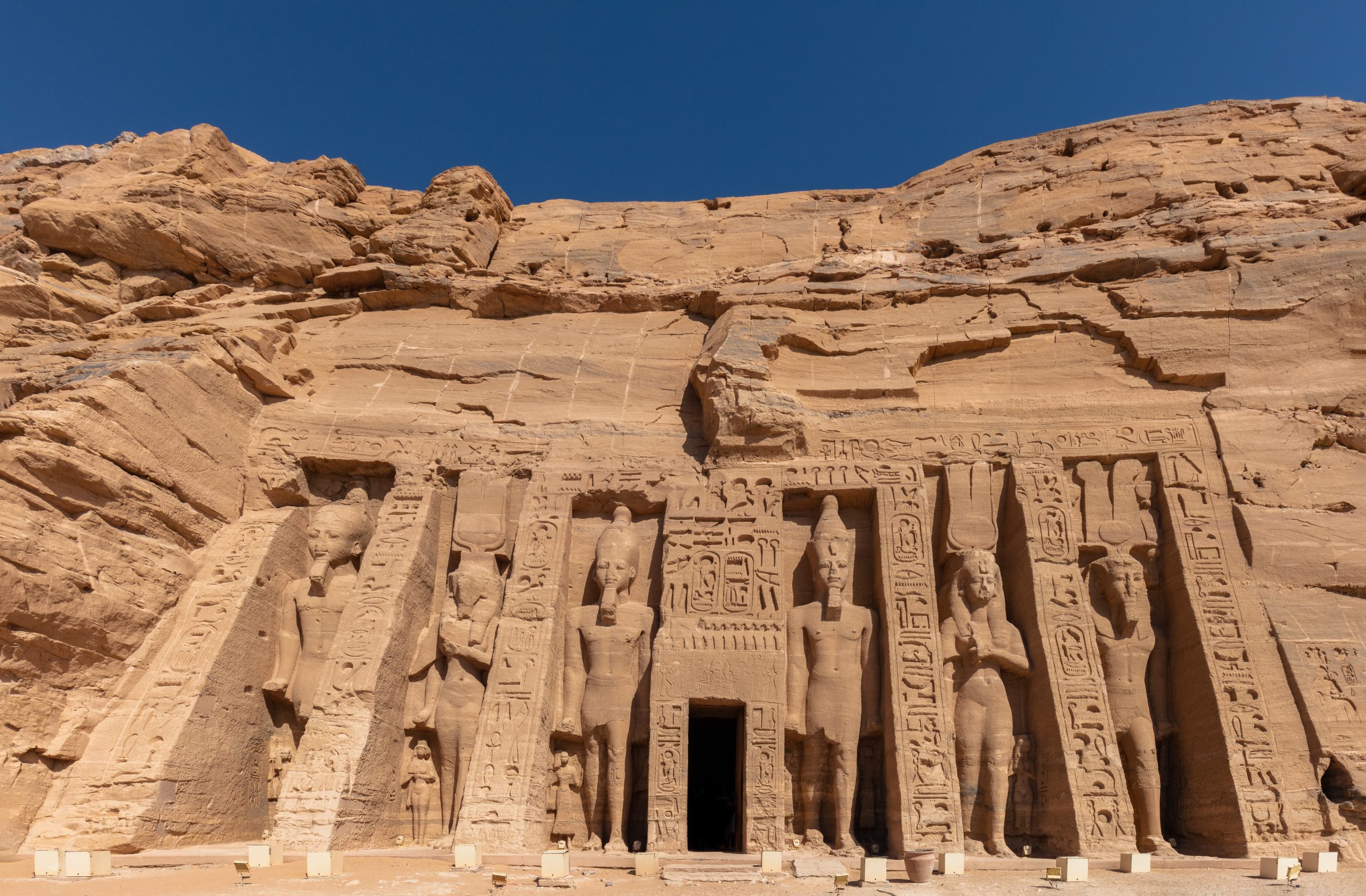
But Abu Simbel deserves a cruise. Lake Nasser (created by the High Dam in 1970) stretches toward Sudan. A 3-4 day cruise from Aswan or Abu Simbel lets you see not only Abu Simbel, but also Qasr Ibrim (an ancient Nubian city), Amada (the temple of Thutmose III), and stunning Nubian desert landscapes.
It is a rare experience. Few tourists do this. You will not even cross paths with other boats.
Budget: 650-1300 USD per person (3-4 day Lake Nasser cruise from Aswan)
Red Sea Alternative: Marsa Alam
If your first visit was to Hurghada or Sharm El Sheikh, you got the touristy Red Sea.
Marsa Alam? It is the wild side. 155 miles south of Hurghada. Fewer all-inclusive resorts. More small "boutique" lodges. The reefs are just as beautiful, sometimes better preserved because they are less crowded.
Marsa Alam is also the gateway to Ras Banas and the wrecks (sunken ships, ideal for diving). And toward the interior: Wadi Gemal, a desert canyon right next to the ocean.
Budget: 85-160 USD a night for a small 3-4 star hotel/lodge (generally cheaper than Hurghada)
Alexandria: The Pearl of the Mediterranean
You probably missed Alexandria. Most "Cairo + Nile + Red Sea" circuits do not include it.
Alexandria is different. It sits on the Mediterranean, not the Nile. It carried the scent of the Greeks (the Ptolemies). It carried the scent of the French (the colonial occupation). It carried the scent of the Orient.
The Citadel of Qaitbay (a 15th-century fortress, built on the ruins of the ancient Lighthouse). The Catacombs of Kom el-Shoqafa (Greco-Roman tombs). The Library of Alexandria (modern, but grandiose). The Royal Jewelry Museum (a stunning collection of the Ptolemies).
And the corniche? You sit at a terrace, you watch the Mediterranean, you eat fresh octopus. It is another Egypt.
From Cairo, it is 135 miles north. You can do a long weekend (2-3 days) in Alexandria, then head back.
Budget: 160-270 USD a night for a 4-star hotel in Alexandria
Deep Cairo: Beyond Giza
Your first visit? The Citadel, the Museum, Khan El-Khalili. Standard.
But the real Cairo? The ancient Islamic quarter (Al-Moez Street and around it). Mosques from the 12th-15th centuries. Bazaars of silk, spices, tableware. Medieval houses with mashrabiyas (wooden lattice windows). No tourists, just local life.
Al-Azhar Mosque (998 AD, still in use, with a theological university attached). The Mosque of Ibn Tulun (the oldest intact building in Cairo). The Coptic Museum (ancient churches, especially for Egyptian Christian history).
And nighttime Cairo? Terraces at sunset. The Orman botanical gardens. Markets at night (like Khan El-Khalili but even after 10 p.m.).
It is a Cairo that 90% of tourists never see.
Grand Egyptian Museum (GEM): If It Did Not Exist on Your 1st Trip
The Grand Egyptian Museum opened gradually from 2018-2022. If your first visit was before 2020, you missed it.
The GEM is ENORMOUS. 1.2 million artifacts (that is 10x the classic Egyptian Museum). A new building near the Pyramids of Giza. You can spend an entire day exploring it.
The mummification hall (how the Egyptians mummified bodies). A collection of canopic jars. Tutankhamun's chariots. Everything you wanted to see at the classic Museum, but better displayed, better lit.
It is a reason on its own to return to Cairo.
A Dahabiya Instead of a Motor Cruise
Perhaps the greatest discovery of a second visit: the dahabiya.
A dahabiya is a small traditional Egyptian sailing boat. 30-40 passengers max. Silence. You glide along the Nile the way the ancient Egyptians sailed.
Versus a classic motor cruise (200-500 passengers, a buffet, Disney-style entertainment, a "floating resort" vibe), a dahabiya is intimate. You see villages the big boats cannot visit. You eat local. You meet the locals. At night, there is only the sound of the Nile.
A 4-5 day dahabiya from Luxor to Aswan costs about the same (400-700 USD per person), but it is an incomparably better experience.
It is a discovery almost every "returner" mentions to us: "why didn't we do this the first time?"
3 Itineraries for a 2nd Visit

Here are three ready-to-go itineraries for a second visit. They deliberately avoid the classic circuits.
Itinerary 1: Desert + Oases (10 days)
Target: Travelers seeking adventure, far from mass tourism
Day 1-2: Cairo (Grand Egyptian Museum, Islamic quarter)
Day 3-5: White Desert + Bahariya (Camp under the stars, white moonscape formations)
Day 6-7: Siwa (4x4, Aghormi Oasis, Gebel al-Mawta, freshly harvested dates)
Day 8-10: Slow return to Cairo via Mersa Matruh (quiet Mediterranean beaches)
Approximate budget: 1,300-1,950 USD per person (4x4 guide, camps, small hotels, local meals - all domestic flights within Egypt arranged and included by SEV)
Itinerary 2: Dahabiya Cruise (7 days)
Target: Travelers who have already seen Luxor/Aswan, but want an intimate Nile experience
Day 1: Arrival in Luxor (a quick visit to Karnak Temple if you wish)
Day 2-6: Dahabiya Luxor-Aswan (Riverside villages, Abydos Temple en route, Dendera Temple, small islands, local life)
Day 7: Aswan (Departure)
Approximate budget: 1,500-2,150 USD per person (5-star all-inclusive dahabiya, all domestic flights within Egypt arranged and included by SEV)
Can be combined with: a 3-day Lake Nasser cruise before or after the dahabiya (add 650-865 USD)
Itinerary 3: Advanced Archaeological Sites (12 days)
Target: Serious Egyptophiles who really want to understand History
Day 1-2: Cairo (GEM, Coptic quarter, South Saqqara)
Day 3-4: Fayoum + Wadi el-Hitan (Fossils, Lake Qarun)
Day 5-8: Luxor intensive (Valley of the Nobles, Medinet Habu, Deir el-Bahari, Abydos, Dendera as excursions)
Day 9-11: Aswan + Lake Nasser (3-day cruise, Abu Simbel and Nubian temples)
Day 12: Return
Approximate budget: 2,400-3,450 USD per person (all guides, 4-star hotels, Lake Nasser cruise - all domestic flights within Egypt arranged and included by SEV)
Not sure where to start?
Our Egyptologist experts and local guides build custom itineraries. We combine the off-the-radar destinations with comfort. Zero unpleasant surprises.
FAQ: Common Questions About a 2nd Visit
Does a 2nd visit cost more than a first one?
No. The itinerary is different (fewer massive museums, more nature and adventure), so the costs balance out. A desert + oases tour (10 days) costs about the same as a classic Nile circuit (10 days). A dahabiya is sometimes even cheaper than a classic motor cruise.
Is there a "good season" for a 2nd visit as well?
Yes. October-November and February-March are ideal (a climate of 77-82°F, not too hot). July-September and June are best avoided (104-113°F, unbearable). December-January: acceptable, but more tourists and your flight to Egypt will cost more.
For Siwa and the White Desert: June-September is impossible (113-122°F). October-April is ideal.
What is the minimum length for a 2nd visit?
7 days minimum (the dahabiya alone). But really, 10 days is the sweet spot. 12 days lets you combine several clusters (desert + temples, or desert + Lake Nasser). With less than 7 days, you barely have time to breathe.
Can I combine a "first visit" and a "second visit" destination?
Absolutely. Many of our clients combine: 3 days on a dahabiya (new) + 3 days in Hurghada (revisit) + 2 days in deep Cairo (new) = 8 perfect days. We personalize it to your wishes.
Are the off-the-radar destinations "less safe"?
No. Siwa, the White Desert, Abydos, Dendera, Fayoum: all stable and safe destinations. We have local guides who have lived there for 20+ years. Tourists are rare there, which means fewer "tourist scams" and more authenticity.
Just check with the US State Department before you leave (general advice, not specific to Egypt).
What budget should I plan for "everything" in one visit?
If you want Siwa + the White Desert + Abydos + Dendera + a dahabiya + Lake Nasser + Alexandria in a single visit: count on 15-18 days and 2,700-3,800 USD per person (4-star hotels, all transport, guides, meals).
It is doable. Our clients do it. But it is intense. We recommend two 12-day trips rather than a single 24-day one. Explore our custom travel packages for more options.
The Counterintuition: A 2nd Visit Is Often BETTER Than a 1st
Here is what we see again and again with our clients.
First visit: stress, hustle, box-checking, fatigue, "too much to see, too little time."
Second visit: pleasant, slow, depth, friendship with the guides, a true understanding of the country, memories that last.
Why? Because on the first one, you are a "tourist on a mission." The second time, you come back as a "traveler who loves this country." A radical difference.
Your second trip to Egypt will probably be better than the first. Slower. Happier. More authentic. Fewer selfies, more moments of real connection.
It is not just our opinion. It is what most of our "returning" clients tell us after their second trip.
If you loved Egypt once, you will love it twice. And a third time, too.
Start Your Return Now
Egypt has evolved since your first visit (new roads, the new GEM museum, new adventure activities). But fundamentally, Egypt is still just as magical.
Returning to Egypt means realizing you were right to love it the first time. And that it was only the beginning.
Thinking about returning? Now is the moment. You already have the visa down (you renew it or apply for a 2nd one). You know the country. You can finally explore at your own pace.
Send us a WhatsApp. Describe your first visit (what did you see?). Tell us your wishes (desert? temples? closeness with the locals?). We will build an itinerary that surpasses your first visit.
And you will come back transformed. Once again.