
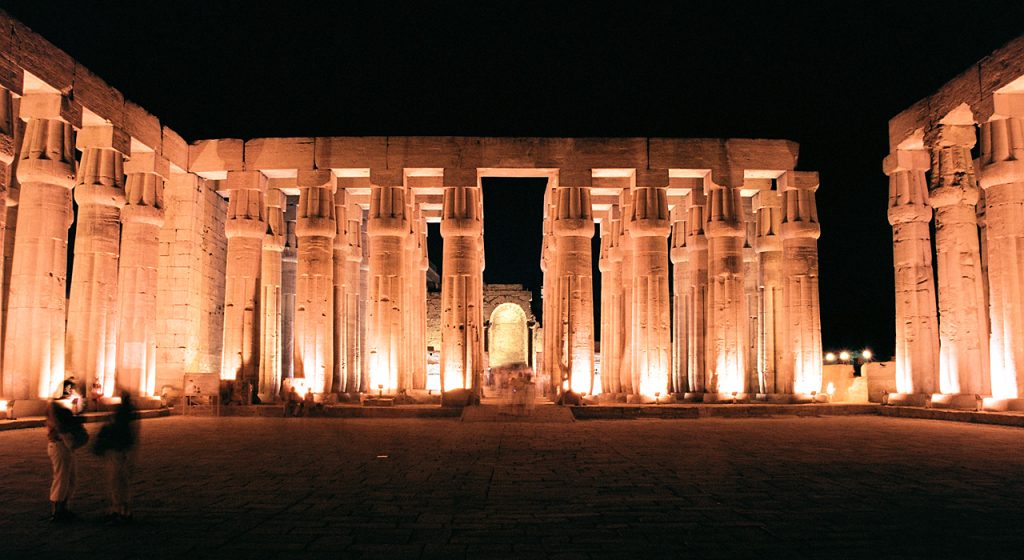
Luxor is arguably the world's greatest open-air museum. Ancient Thebes, the capital of Egypt during the New Kingdom, this Upper Egypt city alone holds close to a third of the world's archaeological heritage. From the majestic columns of Karnak to the secret tombs of the Valley of the Kings, every stone tells 3,500 years of pharaonic history. Discover our Luxor excursions for an unforgettable guided visit.
This guide, updated for 2026, covers everything: must-see sites, entry fees (including the Luxor Pass), opening hours, 1 to 3 day itineraries, and the question many travelers ask - can you visit Luxor without a guide? Written by a local agency whose guides walk Luxor every week.
Discover our Luxor destination page →
The Must-See Sites of the East Bank
1. Karnak Temple: Egypt's Largest Sanctuary
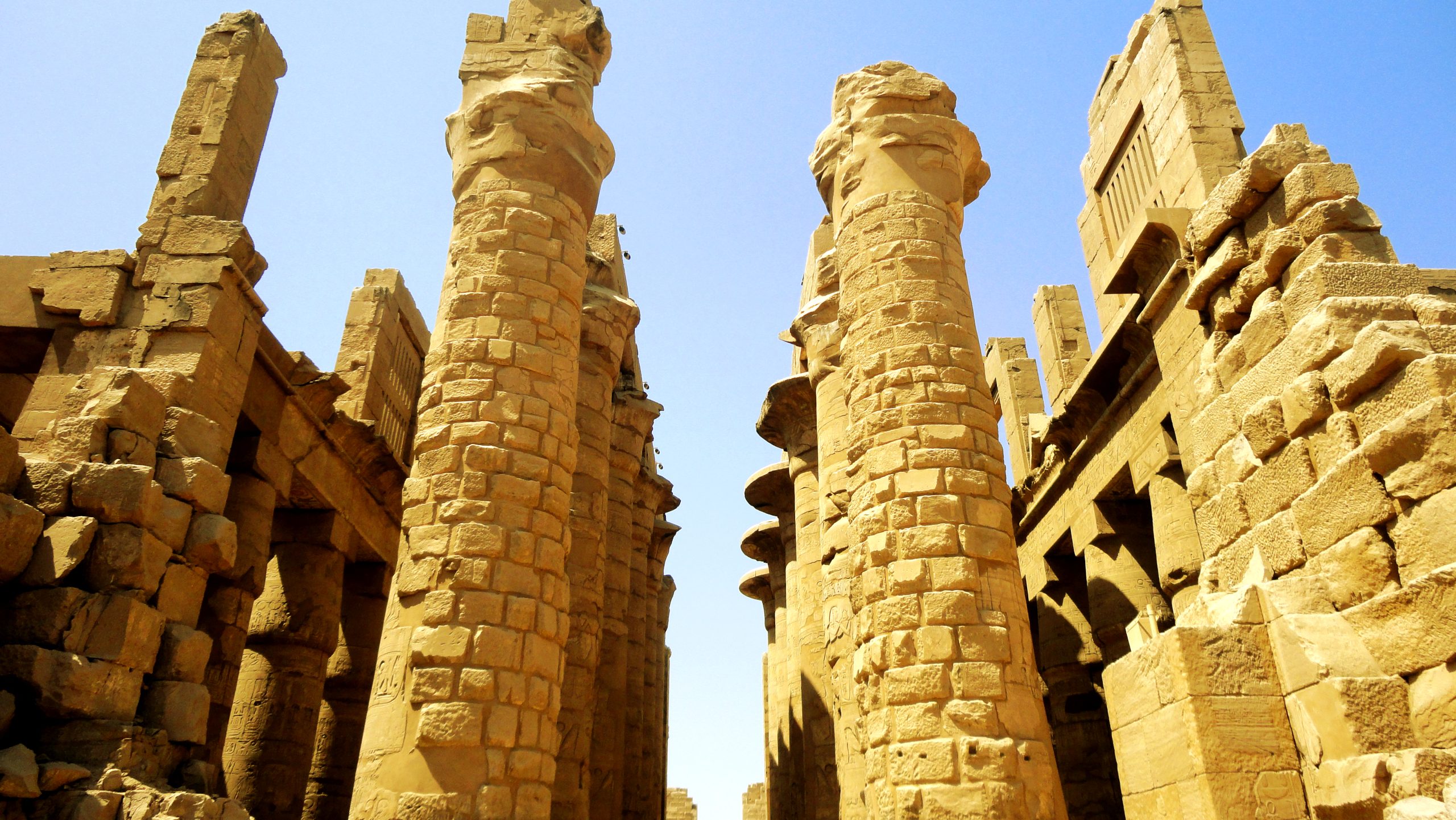
Karnak is not a temple, it is a true sacred city of 74 acres built over nearly 2,000 years by dozens of pharaohs. The heart of the complex, the great hypostyle hall, leaves you speechless: 134 gigantic columns 75 feet tall, covered in hieroglyphs, form a forest of stone bathed in light. It is the largest and most impressive monument in Egypt, ahead of the pyramids themselves for many visitors.
Beyond the hypostyle hall, explore the obelisks of Hatshepsut (rising to 98 feet), the sacred lake where priests purified themselves, and the sanctuaries dedicated to the god Amun. The avenue of ram-headed sphinxes links Karnak to Luxor Temple over nearly 2 miles, fully restored and accessible on foot.
2026 fee: ~600 EGP (~$11). Open 6am to 5:30pm (winter) and 6am to 6pm (summer). Allow 2 to 3 hours for the visit. Buy tickets online at egymonuments.com.
Tip from our guides: Arrive at 6am right when it opens. The low morning light illuminates the hypostyle hall in a spectacular way, and you have it almost to yourself. By 9am, the first tour buses arrive and the atmosphere changes completely. The Karnak Sound and Light show in the evening is also recommended for a different experience.
2. Luxor Temple: Splendor at Sunset
Located right in the city center, Luxor Temple, dedicated to the Theban triad (Amun, Mut, Khonsu), is especially spectacular late in the day. The remaining obelisk (its twin has stood in the Place de la Concorde in Paris since 1836), the colossi of Ramesses II and the courtyard of columns light up magnificently at sunset. A visit to Luxor Temple is ideal in the early evening, when the night lighting creates a magical atmosphere among the thousand-year-old columns.
2026 fee: ~500 EGP (~$9.5). Open 6am to 9pm (winter) and 6am to 10pm (summer). 1 to 1.5 hours for the visit.
3. The Restored Avenue of Sphinxes
Since its complete restoration, the 2-mile Avenue of Sphinxes linking Karnak to Luxor Temple has become one of the most impressive walks in Egypt. Lined with hundreds of ram-headed and human-headed sphinxes, this sacred way offers a unique experience, especially at night when it is illuminated. The walk takes about 30-40 minutes at a comfortable pace.
Access: Free (entry to the temples at each end is paid). Illuminated in the evening.
4. Luxor Museum and the Mummification Museum
The Luxor Museum, set on the bank of the Nile, presents a remarkable collection of statues, jewelry and funerary objects found in the region. The presentation is polished and the museum is a welcome refuge from the midday heat. The Mummification Museum, unique in the world, reveals the body preservation techniques practiced by the ancient Egyptians: organs in canopic jars, wrappings, protective amulets. Fascinating for history buffs.
Luxor Museum: ~400 EGP (~$7.5). 1-2 hours. Mummification Museum: ~220 EGP (~$4). 1 hour.
The West Bank: The Kingdom of the Dead
The west bank of Luxor was the funerary domain of the pharaohs. Here, the rulers had their tombs carved into the mountain to protect their journey into the afterlife. A central ticket office is located beyond the Colossi of Memnon.
5. Valley of the Kings: The Tombs of the Pharaohs
The Valley of the Kings holds 63 royal tombs, including those of Tutankhamun, Ramesses II, Seti I and Ramesses III. The standard ticket gives access to 3 tombs (regular rotation). Tutankhamun's tomb requires a separate ticket.
Recommended tombs: Ramesses III (KV11) for the colorful reliefs depicting the deities and daily life; Ramesses VI (KV9) for the spectacular astronomical ceilings (the finest in the Valley, widely regarded as the high point of Egyptian funerary art); Merenptah (KV8) for its monumental sarcophagus and impressive dimensions.
2026 fee: ~750 EGP (~$15) for the standard ticket (3 tombs). Tutankhamun: surcharge ~700 EGP (~$13). Seti I: surcharge ~2,000 EGP (~$38, the most expensive but also the most beautiful). Nefertari (Valley of the Queens): surcharge ~2,500 EGP.
Tip: Arrive at 6am when it opens to avoid the crowds and the heat. The buses of the big groups arrive around 8:30-9am. A small electric train runs inside the valley between the visitor center and the tombs (free). Children under 6 enter free.
6. Temple of Hatshepsut at Deir el-Bahari
Carved into the cliff, the funerary temple of Queen Hatshepsut - the first woman pharaoh - impresses with its terraced architecture, unique in Egypt. Its reliefs tell the story of the trading expedition to the Land of Punt and the queen's divine ascent. Arriving facing the cliff, at sunrise, is a memorable moment. Allow 1 to 1.5 hours for the visit.
Fee: ~440 EGP (~$8.5).
7. Colossi of Memnon
These two monumental statues, 59 feet tall, guarded the entrance to the funerary temple of Amenhotep III. Free and open access. An ideal landmark to begin your visit of the west bank. 5 minutes is enough for the photos.
8. Valley of the Queens and Tomb of Nefertari
The Valley of the Queens holds the tombs of the royal wives and the princes. Less visited than the Valley of the Kings, it offers a calmer atmosphere. The tomb of Nefertari is considered by many Egyptologists to be the most beautiful in Egypt: dazzling paintings in vivid colors, preserved in a remarkable state. Access is limited and the surcharge is high (~2,500 EGP), but if you visit only one premium tomb in Luxor, choose this one.
Valley of the Queens entry: ~220 EGP (~$4). Nefertari surcharge: ~2,500 EGP (~$47).
9. Deir el-Medina: The Village of the Artisans
A little-known yet fascinating site. Deir el-Medina was the village where the artisans lived who carved and decorated the royal tombs of the Valley of the Kings. The houses, the streets and the tombs of the artisans themselves are remarkably preserved. The frescoes in the artisans' tombs are sometimes more detailed and more colorful than those of the kings. Few tourists make their way here, which makes the visit all the more pleasant.
Fee: ~100 EGP (~$2). 45 min to 1 hour.
10. Medinet Habu (Temple of Ramesses III)
A well-kept secret of the west bank. The temple of Ramesses III at Medinet Habu is one of the best-preserved monuments in all of Egypt, with walls still intact and original paintings still visible on the carved surfaces. The entrance pylon, the battle scenes and the preserved colors are striking. Many of our clients rank it above Karnak in terms of visual impact. And yet, it is nearly deserted. If you have the time, do not miss it.
Fee: ~220 EGP (~$4). 1 hour.
11. Ramesseum
The funerary temple of Ramesses II, partly in ruins but impressive for its dimensions. The broken colossus of Ramesses II (once 56 feet tall) is the fragment that inspired Shelley's poem "Ozymandias." Off the tourist circuits, the visit is pleasant and quiet.
The Luxor Pass: Is It Worth It?
This is the question our clients ask most often. The Luxor Pass is a combined ticket that gives access to most of Luxor's sites for 5 days.
Luxor Pass Standard: $130 - Access to most sites except the premium tombs (Tutankhamun, Nefertari, Seti I).
Luxor Pass Premium: $250 - Access to ALL sites, including the three premium tombs (Tutankhamun, Nefertari and Seti I).
Is It Worth the Money?
Let's do the math. If you visit Karnak (600 EGP) + Luxor temple (500) + Valley of the Kings (750) + Hatshepsut (440) + Medinet Habu (220) + Luxor Museum (400), the total of individual tickets is 2,910 EGP (~$55). The Luxor Pass Standard costs $130, so it only pays off with a tomb supplement like Tutankhamun's.
For the Premium: the three premium tombs (Tutankhamun 700 + Nefertari 2,500 + Seti I 2,000) cost 5,200 EGP individually. The Premium, at $250, still costs more, but it also covers every other site.
Where to buy the Luxor Pass: At the counter of the Valley of the Kings visitor center, or at the antiquities office on the Luxor corniche. Photo ID required. The pass is personal and non-transferable.
Our tip: If you stay 2 days or more in Luxor and plan to do both the east bank and the west bank, get the Premium. The tomb of Nefertari alone is worth the trip (many consider it the most beautiful tomb in Egypt, even more beautiful than Tutankhamun's, whose tomb is in fact quite small and modest). The saving is enormous either way.
Good to know
Since 2024, payment by bank card (Visa/Mastercard) is mandatory at the archaeological sites. Phone photos are free at all outdoor sites. DSLR cameras require a photo pass (~300 EGP). The Luxor Pass is available only in Luxor, not online.
Can You Visit Luxor Without a Guide?
Technically, yes. All the sites are accessible without a guide. You buy your tickets at the counters (or on egymonuments.com) and you visit at your own pace.
But let's be honest. Without a guide, you miss 90% of the history. Hieroglyphs without explanation remain drawings on walls. With an Egyptologist by your side, every stone tells a 3,000-year-old story. The column is no longer "a big column" but "the pillar erected by Ramesses II to celebrate his disputed victory at the Battle of Kadesh against the Hittites." The relief is no longer "a drawing of a bird" but "the goddess Maat, the embodiment of cosmic justice, whose feather weighs the souls of the dead."
The Valley of the Kings illustrates the paradox well. Guides are not allowed to enter the tombs (preservation rules: too much CO2 and humidity if 30 people speak at the same time in an enclosed space). They comment at the entrance. Without a guide, you go in, you see magnificent frescoes, and you come out without knowing what they represent. With a guide, you know exactly what to look for before you go in: "In the tomb of Ramesses VI, look up at the ceiling of the burial chamber - it is the largest astronomical representation in ancient Egypt, showing the nocturnal journey of the sun through the 12 hours of the night."
Our recommendation: Keep a guide for Karnak, the Valley of the Kings and Hatshepsut (the 3 sites richest in history). Visit Luxor Temple, the Colossi of Memnon and the Avenue of Sphinxes on your own - these sites "read" well without commentary.
12. Hot Air Balloon Flight at Sunrise

This is the activity all our clients rank number 1 of their stay in Luxor. Every morning at dawn, dozens of hot air balloons rise above the west bank. An aerial view over the Valley of the Kings, the temples, the Nile and the lush fields lined with palm trees. The silence, the golden morning light, and the perspective on 3,500 years of history seen from the sky.
Price: $85-130 per person depending on the operator and the season. Flight duration: 40-50 minutes. Departure from the hotel around 4:30-5am.
Booking: Essential 2-3 days in advance in high season. The spots go fast.
Our tip: Choose a certified and established operator. Prices under $65 often correspond to operators with a questionable safety record. This is not where to cut corners. Your hotel or our team can point you toward reliable operators.
Recommended Itineraries: From 1 to 3 Days
Luxor in 1 Day (Cruise Stopover)
Morning (6am-12pm): Valley of the Kings (3 tombs) → Temple of Hatshepsut → Colossi of Memnon. Afternoon (2pm-5pm): Karnak Temple. Evening: Luxor Temple illuminated. This program matches the itinerary of our Nile cruises.
Luxor in 2 Days (Recommended)
Day 1 - East Bank: Karnak Temple in the morning (6am-9am), Avenue of Sphinxes, Luxor Temple at sunset. Luxor Museum at the end of the day. Day 2 - West Bank: Departure at 6am. Valley of the Kings, Temple of Hatshepsut, Valley of the Queens (or Medinet Habu), Deir el-Medina. Return in the early afternoon to avoid the heat.
Luxor in 3 Days (Full Immersion)
Add to the program: hot air balloon flight at sunrise (day 2, 5am), an excursion to the temples of Dendera and Abydos (full day, among the best-preserved temples in Egypt, few tourists), and a felucca ride on the Nile at sunset (200-400 EGP per boat, 1 hour, negotiate before boarding). The 3rd day also lets you explore the sites that the cruises skip: Medinet Habu, the Ramesseum, the Mummification Museum.
Practical Information
How to Get Around Luxor?
East Bank: Luxor Temple is reachable on foot from most hotels. Karnak can be reached by taxi (50-100 EGP), by horse-drawn carriage or by walking along the Avenue of Sphinxes (3 km, 30-40 min). Uber works in Luxor.
West Bank: Cross the Nile by local ferry (5 EGP, 5 min) or by water taxi, then rent a taxi or a bike for the day (80 EGP/day). Organized excursions include transport in an air-conditioned vehicle between the sites.
Best Time to Visit Luxor
October to March: Ideal temperatures (68-82°F during the day). December-January are the most pleasant months but also the busiest. April to September: Intense heat (95-113°F). Visit between 6am and 10am. Sites almost deserted and lower accommodation rates. Check out our When to Travel to Egypt guide.
How to Reach Luxor?
From the US: After your flight to Egypt, connect to Luxor on a domestic flight (1h) - SEV arranges this domestic connection for you. From Cairo: Flight (1h, from $65 with EgyptAir or Nile Air), the Watania overnight train (~10h, ~$110), or the daytime train (9h). From Hurghada: 4h by road or a 40 min flight. By cruise: Luxor is also the starting point of a cruise with stops in Luxor and the arrival point of most Nile cruises.
Is Luxor Safe?
Yes. Luxor is one of the safest cities in Egypt for tourists. The police presence is strong around the sites, and the city lives mainly off tourism. The usual precautions apply: avoid walking alone at night in isolated areas, negotiate prices before any service, and use Uber or your hotel's taxis. For up-to-date entry and travel advisories, US citizens can check the US State Department and the US Embassy in Cairo. Our Egypt safety guide 2026 covers the subject in detail.
Why Visit Luxor with Sem Elegant Voyage?
Our English-speaking Egyptologist guides are the heart of the experience. They do not recite a learned text. They tell stories. They know the photo angles that tourists never find. They know what time the light is perfect on the pylon of Karnak. And they handle all the logistics: tickets, transport, schedules, tips. You arrive, you enjoy.
Luxor with an English-speaking Egyptologist?
A tour, a cruise, or a guide by the day. Tell us what you are looking for.
Glory of the Gods Tour → |
5-Star Cruise → |
Luxor Attractions →
FAQ: Visiting Luxor
How many days do you need to visit Luxor?
Two full days let you see the major sites: one day on the east bank (Karnak, Luxor Temple, Avenue of Sphinxes) and one day on the west bank (Valley of the Kings, Hatshepsut, Colossi of Memnon). Three days give you the time to add the hot air balloon, Dendera or the museums. On a cruise stopover, 1 day is enough for the must-sees.
Is the Luxor Pass worth it?
It depends mainly on which supplement tombs you plan to visit. The Standard ($130) covers most of the sites. The Premium ($250) adds the tombs of Tutankhamun, Nefertari and Seti I. For comparison, individual tickets for 6 sites cost about 2,910 EGP (~$55). The pass is bought at the Valley of the Kings or at the antiquities office on the corniche.
Can you visit Luxor without a guide?
Yes, the sites are accessible individually. But an Egyptologist guide enriches the visit considerably: every column, every fresco tells a story that only an expert can decipher. Guides are not allowed to enter the tombs (preservation), but their briefing at the entrance completely changes the experience. Our tip: a guide for Karnak and the Valley of the Kings, on your own for Luxor Temple and the colossi.
What is the budget to visit the Luxor sites?
Count on $54 to $75 per person for entry to the 6 to 8 main sites (or $11-20 with the Luxor Pass). Add $16-32 for local transport and $85-130 for a hot air balloon flight (optional). Students get 50% off with an ISIC card. Our Egypt budget guide details every line item.
Is Luxor safe for tourists?
Yes, Luxor is one of the safest cities in Egypt. The police presence is strong around the sites. The city lives off tourism. The usual travel precautions apply. Our safety guide covers the subject.
Which tombs should you visit in the Valley of the Kings?
The standard ticket gives access to 3 tombs. Our recommendations: Ramesses III (KV11, colorful reliefs), Ramesses VI (KV9, spectacular astronomical ceilings), Merenptah (KV8, monumental sarcophagus). As a surcharge: Tutankhamun (historic but small), Seti I (the most decorated). In the Valley of the Queens: Nefertari (the most beautiful tomb in Egypt according to many Egyptologists).
Can you buy tickets online?
Yes, the site egymonuments.com lets you buy tickets with card payment. Fixed-date tickets, non-refundable. Automatic kiosks are available at the main entrances. Card payment has been mandatory at the sites since 2024. The Luxor Pass is not available online (counter only).
To plan the rest of your trip, see our Luxor-Aswan itinerary, our Nile cruise guide 2026, our Hurghada guide and our Egypt travel checklist.
Our related guides
- → Detailed visit of the Karnak temple
- → The Colossi of Memnon: history and visit
- → The Valley of the Kings and its tombs
- → Deir el-Bahari: the Temple of Hatshepsut
- → The tombs of the nobles in Luxor
- → Medinet Habu: the Temple of Ramesses III
- → Hot air balloon in Luxor: price and tips
- → Sound and light shows in Egypt
To visit Luxor with an English-speaking guide, two options tested by our team: