
By Sem Elegant Voyage | Updated: March 2026
QUICK ANSWER
Karnak is roughly 1 square mile of temples. Thirty pharaohs left their mark here. You will not see it all. Nobody sees it all. Budget 4.5 hours minimum to do it right. Admission: 240 EGP ($9). The evening Sound and Light show costs about 100 EGP more. That said, daytime is better.
Luxor is where you figured you would go for the temples. People say "Luxor Temple." No. It is Karnak that floors you. Karnak is 3,100 years of architecture on a single site. It is surreal.
We are a local agency based in Cairo since 2020, and we see 50 to 70 travelers a month who thought they could do Karnak in an hour and a half. Impossible. They leave after 2 hours, frustrated. Karnak demands respect. Time. Preparation.
Why Karnak Is Different (And Confusing)
The Great Pyramid? A pyramid. One structure. You get it in 30 seconds (it is big, it is old, it is blocks of stone). Karnak? It is not a pyramid. It is an assemblage. Which is exactly why it confuses people.
The main temple is dedicated to Amun-Ra. Then there are annex temples for Khonsu (the moon god) and Mut (the goddess). Then smaller temples for secondary cults. Then chapels built by individual pharaohs. Then obelisks and colossal statues. In short, it is 30 centuries of rough drafts compressed onto 1 square mile. You cannot "finish" it. You explore zones.
The absurd number: 80 temples once stood at Karnak. Today, 8 to 10 are in good condition. It is not that the archaeologists are incompetent. It is that the place is gigantic and people kept building on top of the older temples (recycling was already eco-friendly back then).
The Great Hypostyle Hall: Your Anchor Point
If you do one single thing at Karnak, do the Great Hypostyle Hall. Built under Seti I and Ramesses II (19th Dynasty, 1290-1213 BC). 134 columns. Yes, 134.
Architecture and dimensions
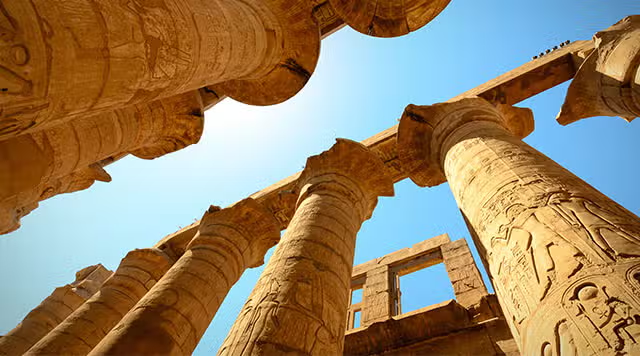
Dimensions: 335 feet by 174 feet. Two rows of giant columns (75 feet tall, 50 feet in diameter). The 12 central columns have capitals shaped like open papyrus flowers. The side columns are closed buds. The ancient Egyptians used architectural codes; nothing was random. (Come in late afternoon - the shadows the columns throw are wild.)
A painted starry sky. Walls covered in hieroglyphs and bas-reliefs. Most of the original colors are gone (vandalism, weather, calcification). But traces survive: blue lapis lazuli, red ochre, malachite green. So you can still spot patches of color on the upper walls.
The sensory experience
You walk in. It is dark. Your eyes adjust. And then the columns emerge from the heat haze (95°F at 2 p.m.). It is claustrophobic and majestic at the same time. So you end up staying an hour and a half in there. Walking between the columns, photographing, reading the hieroglyphs. It is the most imposing room at Karnak.
Section by Section: Your Optimal Route
You have 4 to 5 hours. Here is the logical order (the order of the site itself). Do it this way and you cover 70% of Karnak without dropping from exhaustion.
1. First Pylon and Court (20 min)
You enter through the Court of the First Pylon. The main facade of the site. Massive walls, bas-reliefs of Ramesses II smiting his enemies. It is ancient propaganda: "Look how strong I am." Walk straight, ignore the souvenir sellers (by the way, prices are negotiable by 40%). The court itself is vast, empty, and often baking hot.
2. Great Hypostyle Hall (1h30)
That is the one. You read about it above. Take your time. No rush. If you have a guide, this is where they talk the most (hieroglyphs, symbolism). If you are on your own, bring a booklet (50 EGP at the entrance).
3. Sacred Sanctuary of Amun-Ra (45 min)
Behind the Hypostyle Hall. It is more deteriorated. Headless statues (the heads torn off by zealots or thieves). Erased hieroglyphs. But it is authentic. This is where the statue of Amun stood (gold, lapis lazuli) before it was stolen. Small adjoining chambers for the priests and rituals.
4. Temple of Khonsu (30 min)
A small annex temple dedicated to the son of Amun (Khonsu, god of the moon). It is less damaged than the main sanctuary. An interesting pylon with military bas-reliefs. A rewarding detour if you have the time. If you are tired, skip it.
5. Sacred Lake (20 min)
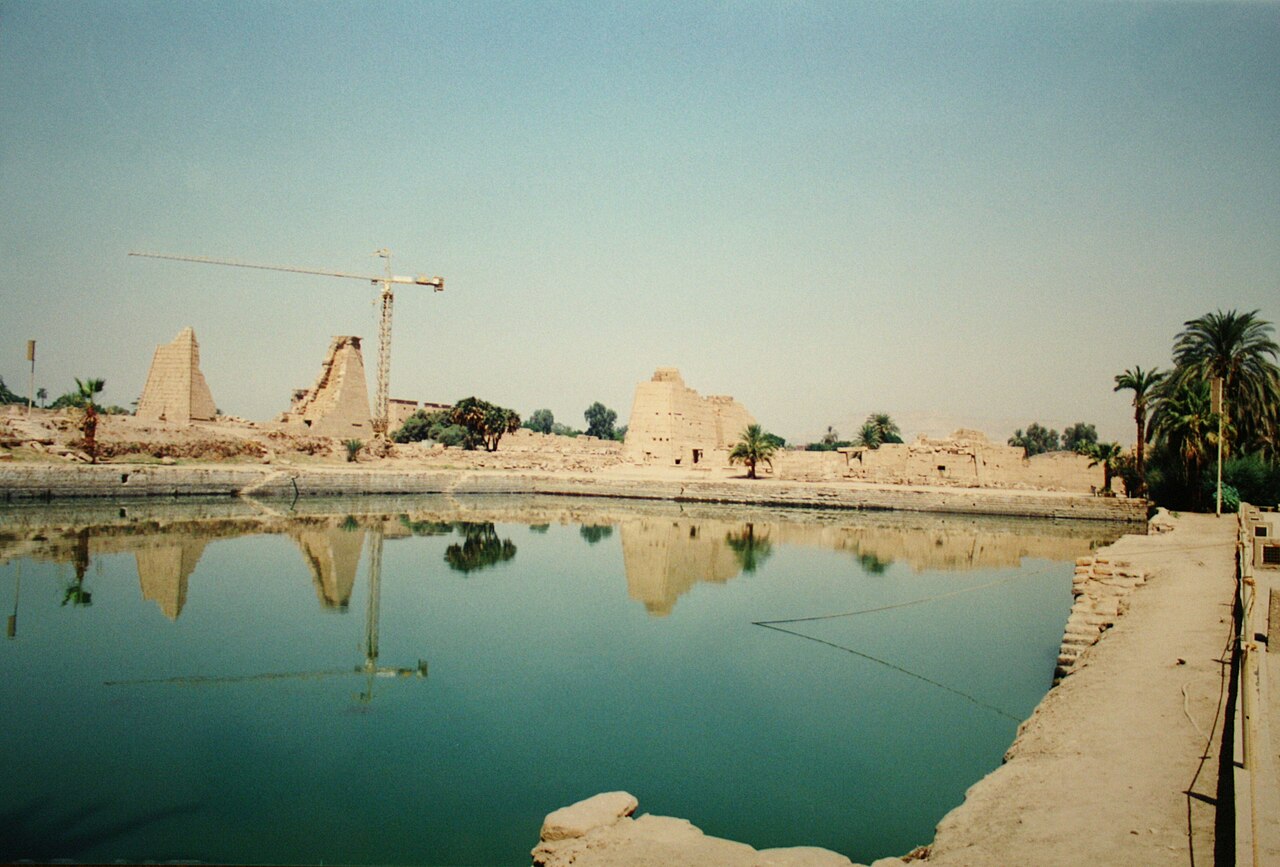
An artificial basin where the priests performed their ritual ablutions. Size: 425 ft x 260 ft. The water today? Muddy, not exactly inviting. But it is an interesting photo spot at sunset (the temple reflecting on the water). In short, it is quiet, away from the chaos of the central complex.
Local tip: If you have 6 hours, add the Temple of Mut (south of the Sacred Lake). It is a detour (about half a mile on foot), barely visited, with interesting chapels and rising lanes. That said, there are stray dogs out there. Not aggressive, but annoying.
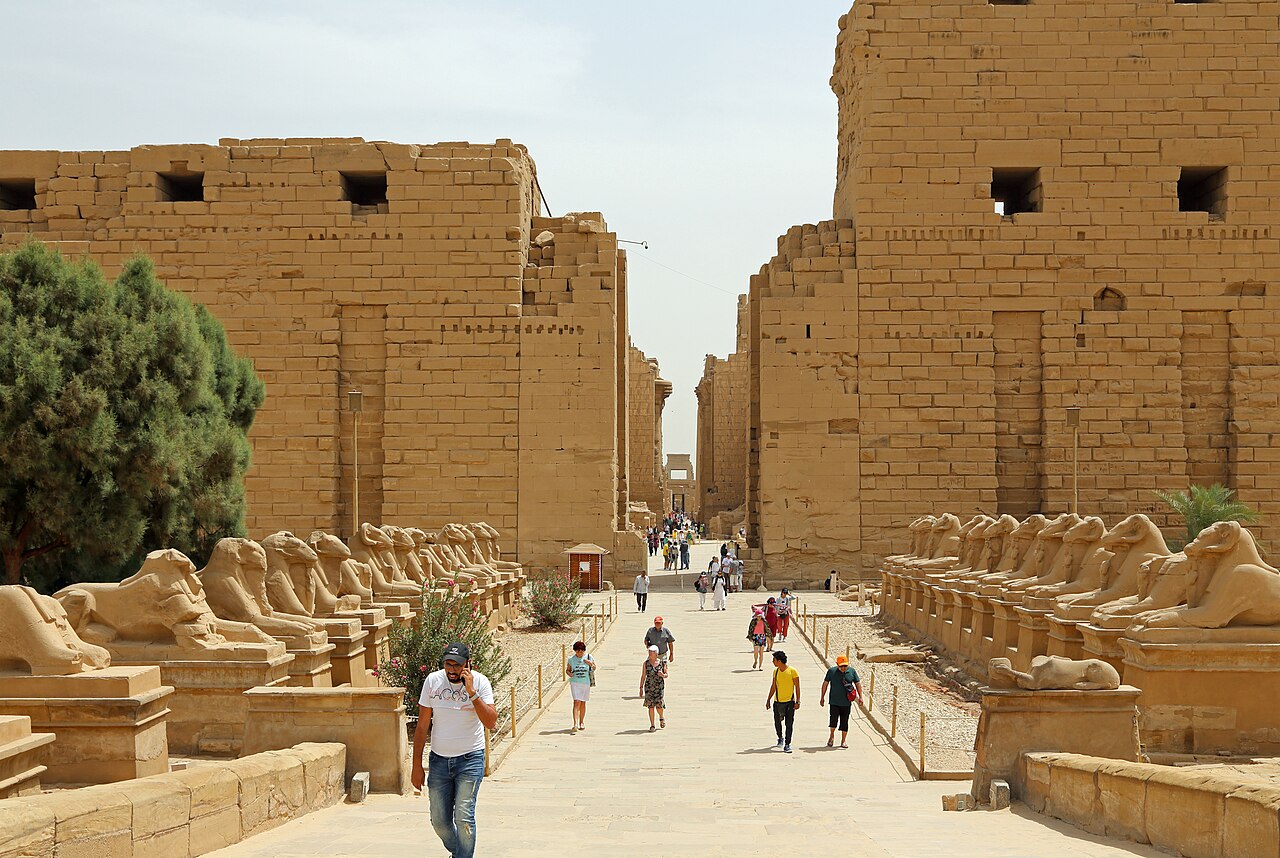
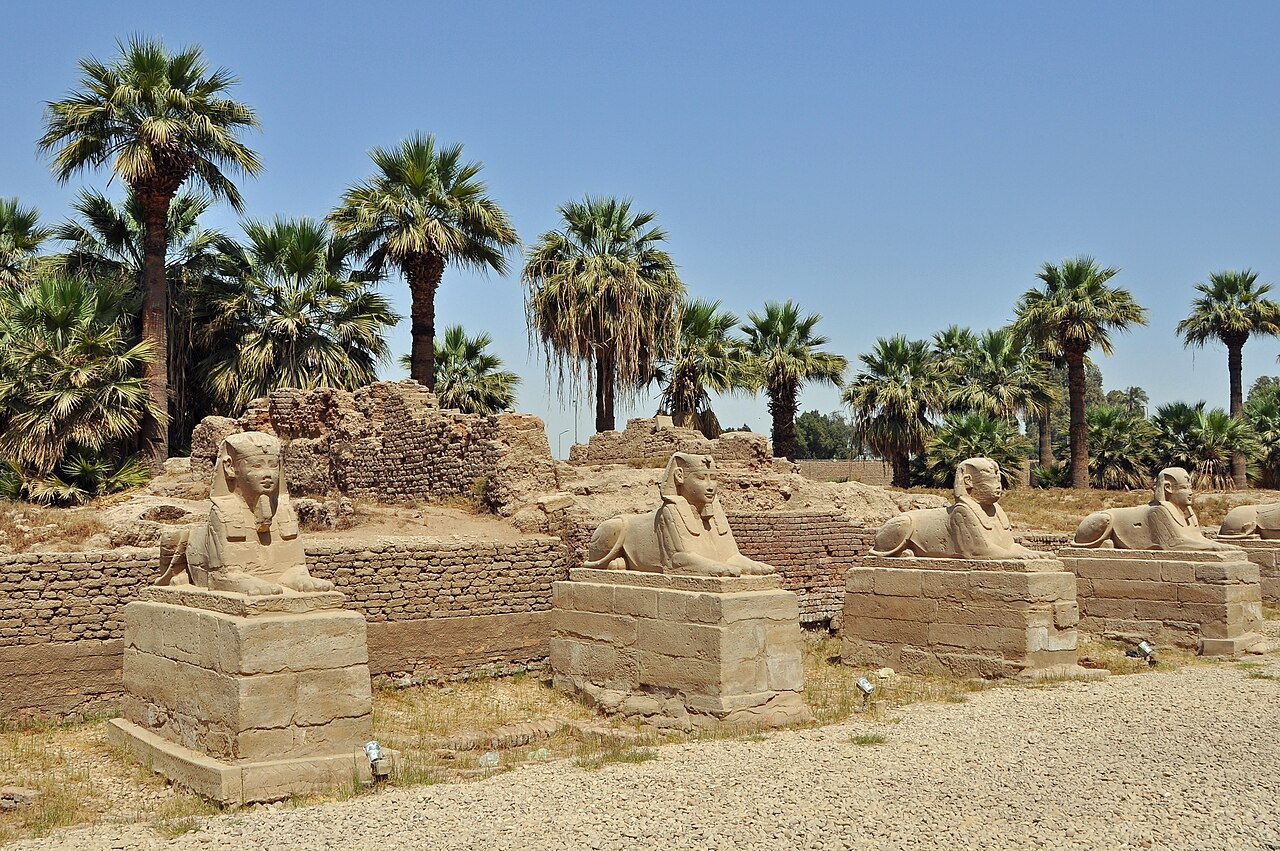
6. Avenue of the Sphinxes (optional, 15-20 min)
A 1.7-mile avenue linking Karnak to Luxor Temple. Restored in the 2000s. It is touristy now, not like it used to be. You can walk a segment (650 to 1,000 feet) heading south. Stone sphinxes, a classic Egyptian avenue. If you have the time, yes. If you are wiped out, no.
The Obelisks of Karnak: The Pointy Ones
Three major obelisks remain at Karnak (others were carried off: one to Rome, one to Istanbul). They mark the milestones of the cult of Amun.
Obelisk of Thutmose I (138 feet)
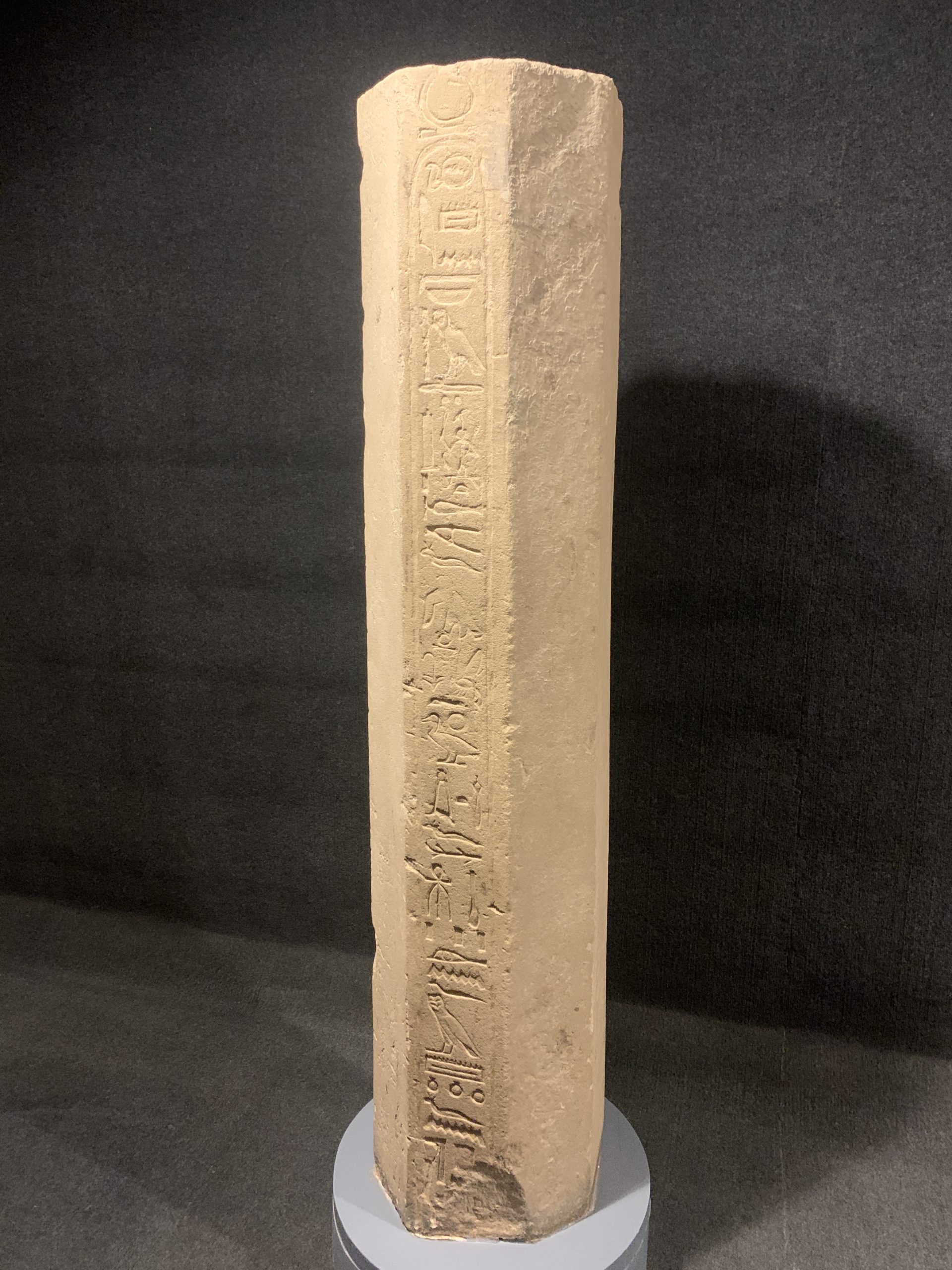
The oldest. Almost intact. The hieroglyphs are still legible. It stands near the southern entrance to the Great Hall.
Obelisks of Thutmose III (red granite replicas)
Later. Less visible because the site grew up around them. You will come across them while exploring.
Tickets and Practical Information
General admission
240 EGP ($9). Children 6-12: 120 EGP. International students (valid card): 125 EGP. Cheaper than you would expect.
Sound and Light (evening show)
100 EGP extra ($4). Two sessions: 6:30 p.m. and 8 p.m. (depending on the season). Length: 1h15. Light projected onto the temple facades plus historical narration. Available in English on certain days (check beforehand).
The problem? It is a fairly ordinary show. The lights illuminate the temples, but it is not revolutionary. Daytime is better for the architectural detail. That said, the atmosphere at night is different, almost spiritual. Up to your preferences.
Hours
6 a.m. to 6 p.m. (October-March). 5:30 a.m. to 7 p.m. (April-September). Last admission: 30 min before closing.
Want a serious archaeological guided tour? Our certified guides in Luxor run 5-hour tours with full historical context (dynasties, cults, architectural evolution). $160 for two people, English-speaking guide included.
Book a tourReply in under 2 hours · 7 days a week · No obligation
Best Time to Visit Karnak
Two variables: the heat and the crowds.
October-November and February-March: the sweet spot. 72-86°F. Moderate crowds (200 to 400 visitors a day). Plenty of other open sites too. December-January: peak tourist season. 64-77°F (ideal weather-wise). But insane lines at the entrance. Early morning (7-10 a.m.) is less bad than the afternoon.
April-May and September: avoid. 104-113°F. You will sweat through everything. The interior corridors turn into ovens. And the scarce tourists mean few water sellers around.
The ideal hour to visit
Arrive at 7 a.m. Great Hypostyle Hall by 7:45 (before the groups). You get 3 quiet hours. By 10:30 it turns touristy. Golden hours for photos: 7-8:30 a.m. (soft light, no harsh shadows). Noon to 3 p.m.: avoid (crushing heat, black shadows, little detail visible).
Local trick: The tour groups roll in between 9 and 11 a.m. depending on where they come from, and the buses bunch up at midday. If you want the opposite of the crowd, come after 3 p.m. (sunset hours). You get 2 to 3 quiet hours before closing.
A visit to Karnak fits perfectly into a well-planned trip, especially if you pick the right dates. In fact, the budget for a trip to Egypt depends largely on your choice of activities. See also how to fit Karnak into a Nile cruise.
Combining Karnak with Other Sites in Luxor
Luxor is dense. Too dense for one day if you really want to do it justice. Short combinations:
Karnak + Luxor Temple (1 day)
Distance: 1.7 miles (the Avenue of the Sphinxes connects them). Karnak in the morning (7 a.m. to 12:30 p.m.), Luxor Temple in the afternoon (3-5 p.m.). You see two major temples in one day. Doable. Not ideal (you will be rushing a bit) but doable. For more detail on Luxor in full.
Karnak + Valley of the Kings (1 long day)
East Bank (Karnak 7 a.m. to 12:30 p.m.). Cross the Nile at midday. West Bank (Valley of the Kings 2-5 p.m., including the Colossi of Memnon). You see temple AND tombs. Long. Tiring. But thematically coherent. Check out our Luxor-Aswan itinerary.
Karnak alone (the best choice)
If you only have 1 day in Luxor, do Karnak in full (5-6 hours). Then a stroll along the Nile in the evening. Luxor Temple at sunset (1 hour). You get a coherent day without burnout. If you prefer a less hectic approach, the Temple of Edfu offers a more intimate and better-preserved experience.
What You Would Get Wrong Without a Guide
Karnak on your own is disorienting. Here are the traps.
You think you have seen it all once you reach the Great Hypostyle Hall
Wrong. That is the center. There is 80% of the site after it. You are only halfway through.
You waste 45 minutes hunting for the Sacred Lake
It is to the north, the opposite direction from most tourists. Signage is sparse. With a guide, 5 minutes to get there.
You photograph the wrong obelisks
There are three obelisks. Not easy to tell apart without context. A guide points out "this one is from the 19th century, that one from the 18th." It is not just the photo, it is the understanding.
Do 5-6 hours sound long? Not when it is well guided. Our packages include transport from your hotel + an English-speaking Egyptologist guide + a local lunch. Karnak in full (5h) starting at $90 per person (min 2).
Get a quoteReply in under 2 hours · 7 days a week · No obligation
Practical Tips
Before you go
Comfortable shoes. Non-negotiable. You will walk 2 to 3 miles over uneven ground. Flip-flops, no. Sneakers. 2-3 liters of water. SPF 50 sunscreen. A hat. A camera with a charged battery (4 hours of use, minimum). A small notebook to jot down hieroglyphs if that fascinates you.
Photography: key points
Great Hall: 7-8 a.m. before the groups arrive. The shadow contrast makes for striking compositions. No flash (forbidden and it ruins the shots). ISO 1600, aperture f/5.6. Obelisks: the southwest side for warm light. Sacred Lake: sunset (4:30-6 p.m.) for the reflection.
Food and drink
Coffee outside Karnak: expensive and bad (12-15 EGP for a coffee). Bring a thermos with cold coffee if you are particular about it. Food nearby (100-150 EGP for a decent sandwich). At midday, you are better off stepping out of the site to eat (few options inside).
Frequently Asked Questions
What is the difference between Karnak and Luxor Temple?
Karnak = the temple of the daily cult of Amun (vast, complex, 30 centuries of building). Luxor Temple = a more intimate sanctuary, built for festivals (Opet), when Amun symbolically left Karnak to visit Luxor. Luxor is smaller, better preserved, more "beautiful." Karnak is more "historic."
Is 4 hours really the minimum?
Honestly? 3h30 if you are fast and fit. But you miss details. 5-6 hours is better. 7h+ if you are a hardcore archaeology buff.
Is there a light and sound show that's worth it?
Honestly, no. It is touristy and pricey (100 EGP extra). Daytime is a thousand times better for seeing the detail. If you love the nighttime atmosphere, go to Luxor Temple at sunset instead.
Do you really need a guide?
On your own? Possible. But 50% less satisfying. The hieroglyphs and the symbolism are addictive once you get into them. Without explanation, it is just "old walls." A guide turns it into understanding.
Still torn between going solo or with a guide? Try our flexibility package: pickup right from your hotel, a guide stays with you for the first 2 hours for historical context, then you explore on your own if you want. $70 per person.
Ask about the flexible packageReply in under 2 hours · 7 days a week · No obligation