

By Sem Elegant Voyage | Updated: March 2026
Honestly? The Temple of Edfu is THE visual shock that guides oversell and that you take badly the first time. Why? Because you expect Luxor, shattered grandeur, and you find... an immaculate fortress. (And honestly, that is exactly what gives it its charm.) In 2026, it is still one of the three best-preserved temples in Egypt - if not the best - and the least overrun with tourists along the Nile Valley. No crowd at 10 a.m. No selfie sticks at the top of the pylon. Just you, history, and an infernal heat.
Three days on the Nile? At least one day should stop at Edfu.
Quick answer
Distance: 65 miles south of Luxor | Entry: 150 EGP (about $5) | Duration: 2-3 hours | Best time: 7-9 a.m. or 4-5 p.m. | From a cruise: 95% of boats stop at Edfu
Why Edfu beats Dendera and Abydos (yes, that is my opinion)
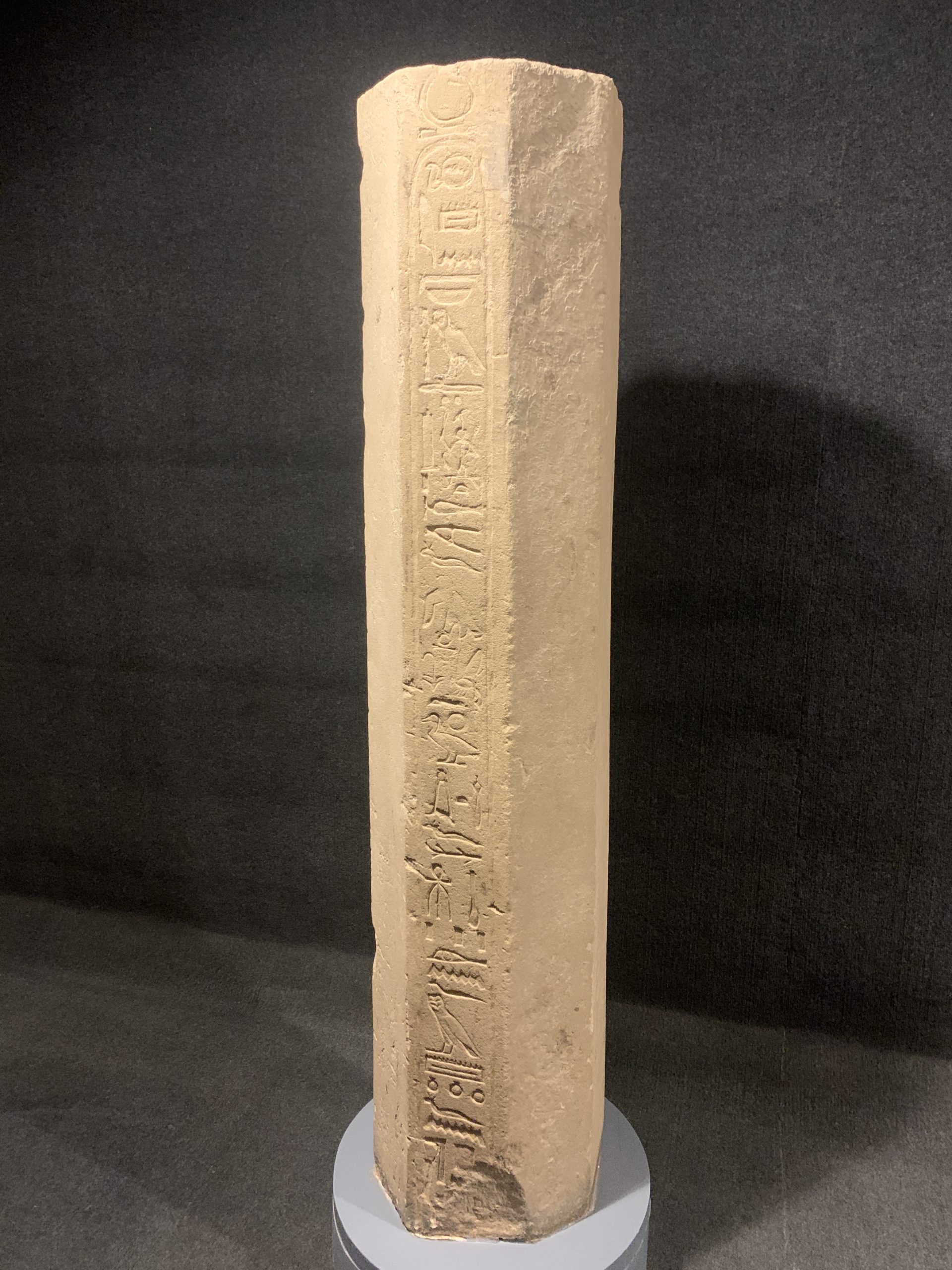
First, the numbers. The Temple of Edfu dates from the late Ptolemaic period (237-57 B.C.), so it had 2,000 years to turn into a ruin. And then... it did not. Why? Sand. Burial. Luck. The Ptolemies built this monument to Horus like a fortress, walls 8 feet thick, and geology did the rest - the temple buried itself completely until its "discovery" in 1860 by Auguste Mariette. (Mariette cleared the steps with laborers, it is wild.) The result? 80% of the original iconography is intact. The colors, too - there are still traces of Khufu-blue paint on the hieroglyphs. Dendera? Bigger, but battered by iconoclasts. Abydos? Magnificent, but eroded.
The sanctuary of Horus that you see today? It is almost the original.
The temple's architecture: the plan in three acts
Alright. Structurally, Edfu follows the classic Egyptian temple scheme: pylon, court, hypostyle hall, sanctuary. But there are details that make the walk-through almost dramatic.
The entrance pylon. 118 feet high. Two massive towers in white limestone. The walls carry bas-reliefs of Ptolemy XII crushing his enemies - it is a trope, but here it is blown up to a huge scale. As you climb (careful, old-style staircase, no railing), you see the pharaoh's cartouches grow larger, and the perspective is meant to remind you that you are entering a sacred space. 67 steps. Half the tourists stop halfway.
The open court. 75,000 sq ft of sand. Columns all around shaped like papyrus (43 feet high, the capitals finely carved). At the center, the original altar, still there. It was in this court that the pilgrims stood - they never went beyond this point. Only the king and the clergy could cross.
The hypostyle hall (pronaos). 32 columns. Low ceiling (15 feet). Grazing light from the upper slits. The hieroglyphs reveal themselves as you advance. (It is something the Egyptians did: tuning the lighting to create narrative suspense.) The reliefs tell the myth of Horus vs Seth - 6 epic scenes of combat, judgment, apotheosis.
The inner sanctuary. This is where you step into pure myth. Three small successive rooms, each more intimate. The last one (the Adyton) is said to have held the barque of Horus - the ritual boat in which the god sailed each night. The room is 20 x 13 feet. The walls are covered in blue-black hieroglyphs on white limestone. Photography forbidden inside (check with the temple keeper - the rules change).
Horus: the falcon god and his central role
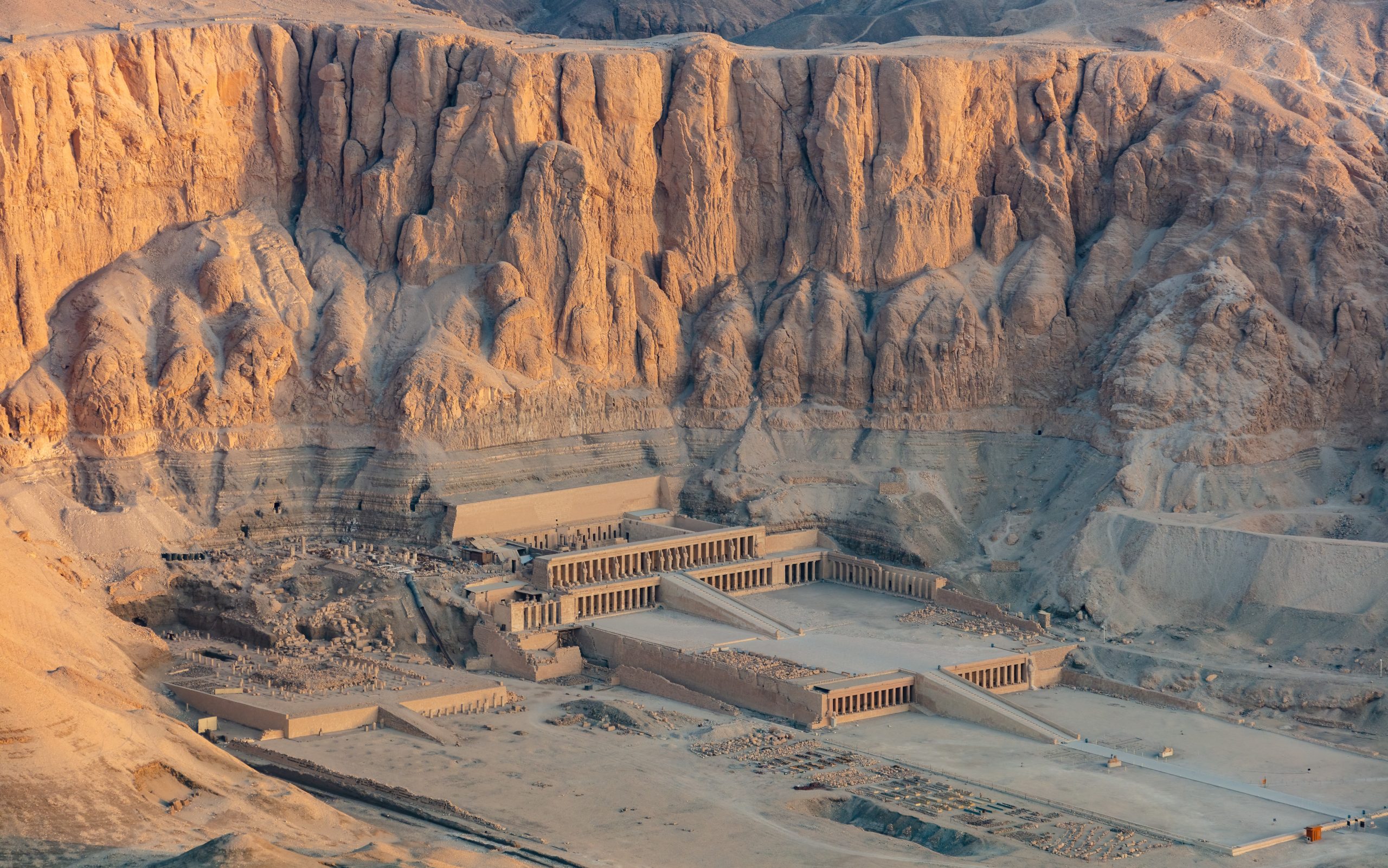
Why did the Ptolemies (Greeks, remember) build this giant temple to Horus? Political strategy. Horus is the son of Osiris, the god who claimed his throne against Seth (the usurper). The Ptolemies saw themselves as the legitimate heirs of that divine right - Horus was a projection of their legitimacy. So the temple becomes a statement: "We are the true kings of Egypt." Even if they spoke Greek and probably ate Libyan olives in Alexandria.
The bas-reliefs on the walls show Horus dozens of times - as a falcon, as a warrior, as a triumphant god. One scene you see often: Horus chains Seth and presents him to the pharaoh (this is victory justified by divine right). Another scene: Horus is crowned by his father Osiris. The message?
Succession. Legitimacy. Vengeance.
As a visitor, it is important to keep this context: you are not just looking at decoration, you are looking at 2,000-year-old propaganda, carved in stone. (And honestly, that is what makes it interesting.)
Visiting from a Nile cruise: what you need to know
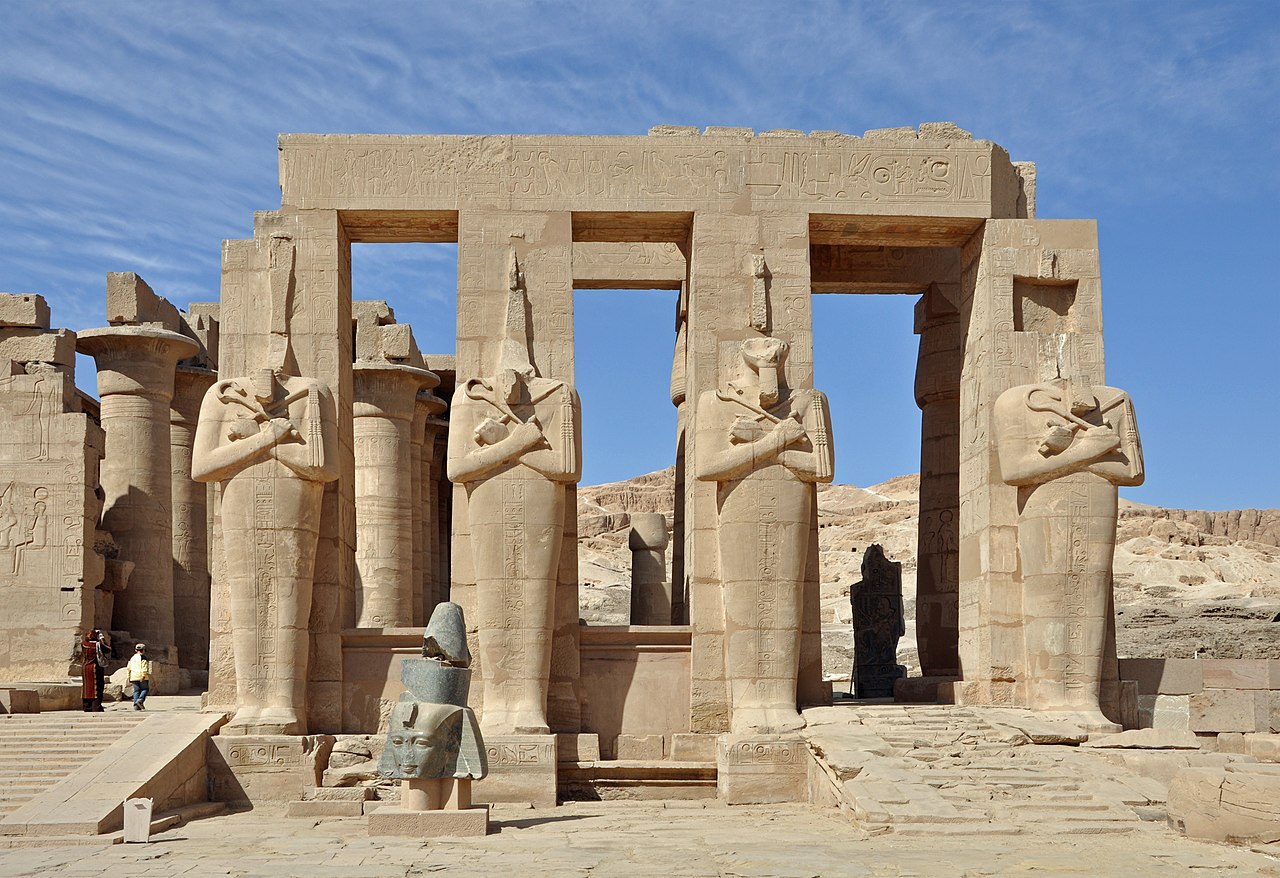
95% of Nile cruises make a stop at Edfu. Some stop in the morning, others in the afternoon. If you are on a 150-passenger boat, you will go there with 40 other tourists. If you are on a dahabiya (traditional boat), you go with 8 people. A huge difference in the quality of the experience.
The route from the dock: carriage or on foot?
Here is the eternal debate. The temple sits about 2 miles from the Nile quay. Two options.
Option 1: The carriage (el-kantareh). This is the "authentic" experience that agencies sell you. You climb into a buggy pulled by a horse, the guide works out a deal with the driver (usually 50-80 EGP per trip for 2 people), and you move through the local neighborhoods of Edfu. Duration: 15 minutes. The downside? The horse is often tired (104°F in March is hard on an animal). The road is bumpy. And the "authentic charm" fades when you see 8 other carriages full of tourists in the same street. You feel less like an explorer, more like a sheep. That said, it is cheaper than taking a private taxi.
Option 2: On foot (khodj). Seriously? Yes. Let me explain. You leave the boat at 7 a.m. (before the heat), you walk easily toward the temple with a local Egyptian guide. The walk takes 30 minutes. You see real life - kids heading to school, shops opening, Egyptians wondering why you are there. Once at the temple, you have 2 hours to explore. You come back by carriage because it is hot at noon (that is fine, 15 minutes). Better experience? In my opinion, yes. More money to the local people, more stories to tell, fewer clichés.
If you are on a standard cruise, the carriage price is usually included in your excursion. So, technically, why walk? Because you forget a walk far less quickly.
Need help planning your visit to the Temple of Edfu?
The Temple of Edfu is a must-see, especially on a Nile cruise. Our English-speaking guides help you avoid the crowds and understand every hieroglyph of Horus.
Contact us on WhatsAppReply in under 2 hours · 7 days a week · No obligation
Timing and prices in 2026
Entry to the temple: 150 EGP (~$5) for a foreigner. 10 EGP for children. If you are in a group organized by your boat, it is already paid for. If you grab a taxi from the quay to go to the temple on your own, add 100 EGP round trip.
Best time to go? 7-9 a.m. Bearable temperature, golden light, fewer tour buses. Avoid noon (104°F+, you just want water). Sunset? Magical, but too crowded, and the keepers close at 6 p.m. (or 5 p.m. in winter).
Average length of the visit: 2 hours if you read the panels, 45 minutes if you are fast. Take your time. Read a whole bas-relief. Picture the offering ritual. Sit under a column and listen to the echo of your steps on the limestone. (That is where it becomes memorable.)
Arrange your privileged access to the Temple of Edfu
Early-morning access, certified English-speaking guides, detailed explanations of the mythologies of Horus and the cosmic battle. Sem Elegant Voyage organizes everything.
Book my guided visitReply in under 2 hours · 7 days a week · No obligation
The temple's iconography: the scenes not to miss
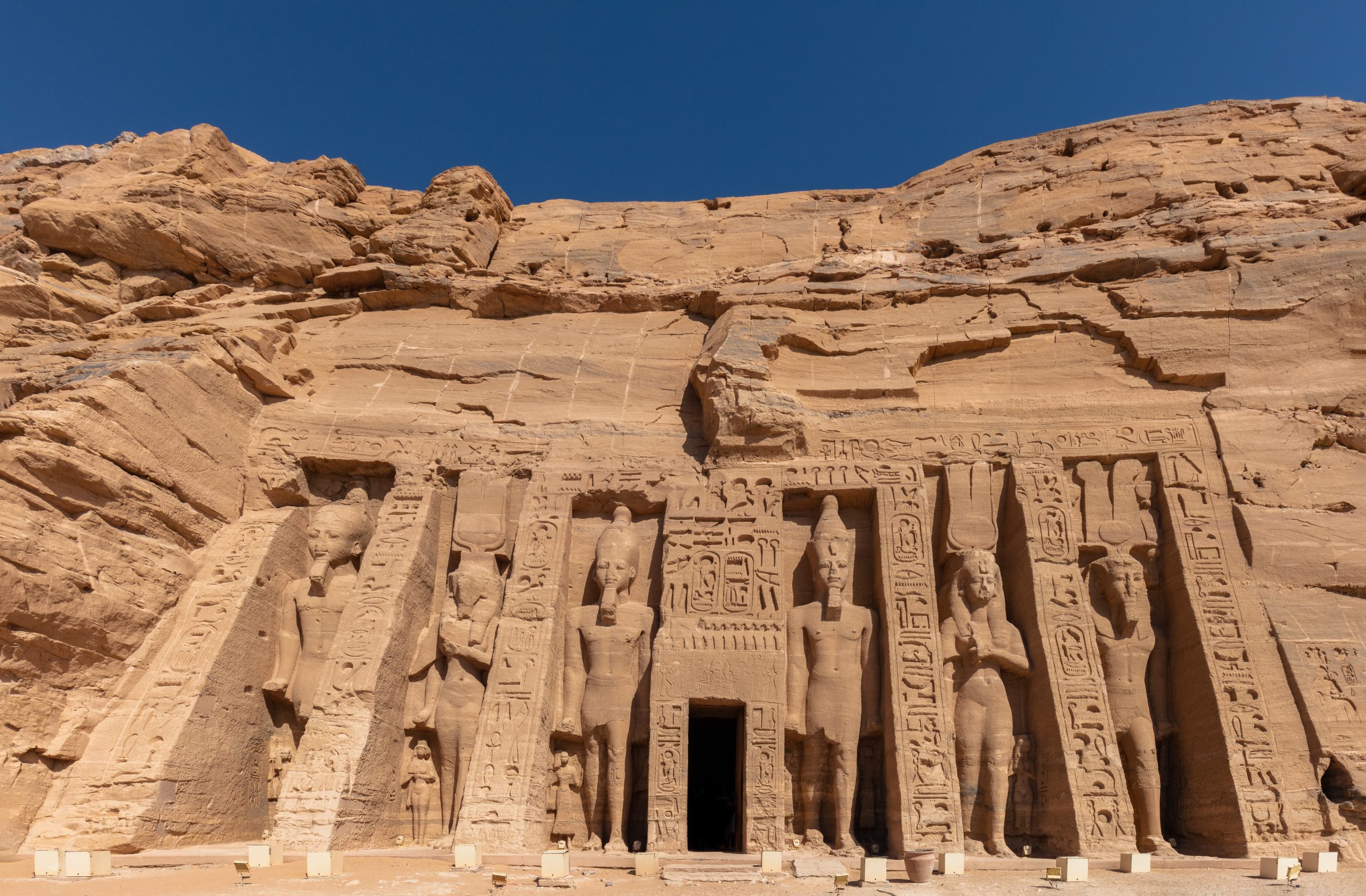
If you have an English-speaking guide, great. If not, here are the key points.
Scene 1: The combat of Horus and Seth (south wall of the hypostyle hall). Horus as a giant falcon crushes the hippopotamus Seth (the visual depiction of Seth). The visual hierarchy? Horus towers over Seth. It is brutal as propaganda. The message? Good vs Evil. Order vs Chaos. Divine right vs usurpation.
Scene 2: The sacred barque (north wall). The barque of Horus carrying the god across the sky and the waters of the Nile. This is Egyptian cosmology in action - the god travels, the universe regenerates, the cycle continues. The Egyptians watched the sun rise and set; the barque is their explanation. Not bad, for 2,000 years before the telescope.
Scene 3: The coronation of Horus (open court, east wall). Osiris places the crown on the head of Horus. The assisting gods applaud (their hands are raised). This is the key moment of the myth - the transfer of power, the confirmation of the right of succession. Seen from the Ptolemaic point of view? It is the pharaoh receiving his legitimacy.
Detail: The traces of Khufu-blue color. Remnants of painted hieroglyphs. Look up as you climb the pylon staircase - the sky-blue incisions are visible on the cartouches. It is rare to see them. It makes the antiquity tangible.
Travel budget and regional context
Edfu fits into a wider itinerary: Luxor to the north, Aswan to the south. A 4-day Luxor-Aswan cruise takes you through Edfu, Kom Ombo, and Aswan. Typical cost in 2026: 1,200-2,000 EGP per person for the 4 days ($45-70), meals included. The temple entry (150 EGP) often falls outside the main budget - check that.
If you do a classic 10-day trip to Egypt (Cairo + Nile + Aswan + Abu Simbel), Edfu is an almost mandatory stop. Do not miss it.
Practical tips and visitor know-how
1. Bring water. A lot. 2 liters minimum. The vendors near the entrance sell at 20 EGP for the small bottle (it is expensive for Egypt, normal for tourist sites). Better: fill up before leaving the boat.
2. Sunscreen + hat. The shade? Minimal. The pylon casts a shadow on the west side in the morning, but you're walking in the sun 80% of the time. Sunburn guaranteed if you think "just 2 hours."
3. Comfortable shoes. 1.2 miles of walking across sand and uneven stairs. Soft sneakers = back pain. Sandals = blisters.
4. Hire a guide if you are on your own. Cost: 100-150 EGP. It changes everything. They know which mythological scenes deserve your time and which are repetitive. No English-speaking guide? Try with one who speaks any language - the hieroglyphs read the same.
5. Photography forbidden in the sanctuary. The interior (Adyton and adjacent rooms)? Flash forbidden, and sometimes cameras entirely forbidden. Ask the keeper. The rules change. Accept that you will keep some images in your memory, not on Google Photos.
6. Talk to the temple keepers. I am serious. The guys who clean and guard the rooms? They know details no tourist guide mentions. An old broken carriage left in a room for 50 years. The real story of the clearing by Mariette. They appreciate it if you say "salam alaikum" and if you ask before photographing.
Comparison with the other major temples
You will see Luxor, Karnak, then Edfu. That is the natural order. Here is how to tell them apart mentally.
Karnak: Enormous, complex, overwhelming. You feel small. Not a visit, an expedition. Every pylon reminds you that you cannot see it all.
Luxor Temple: Graceful, balanced, in the city. You can touch the walls. The hieroglyphs are worn but legible. It is the Egypt you see in school textbooks.
Edfu: Complete, intact, narrative. You follow the story of the Horus myth from the entrance to the sanctuary. It is a fixed narrative arc. (And honestly, it makes the visit more satisfying than you would think.)
If you must choose one in-depth visit, Edfu wins on narrative coherence. If you are after raw immensity, Karnak. If you want the urban atmosphere, Luxor. No bad choice.
Note: Since March 2026, there is a small permanent photo exhibit at the temple entrance with the engravings of David Roberts (the 19th-century British orientalist). It lasts 15 minutes, and it nicely frames the "rediscovery" of the temple by Westerners. Free. Recommended.
Frequently asked questions
Can you go alone without a guide? Yes. But it is a shame. A guide tells you "why" Horus crushes Seth, not just "this is a bas-relief." At Edfu, the context is 50% of the experience.
Is it too touristy in 2026? Less than Giza, Karnak, Luxor. You will have groups between 9 a.m. and 2 p.m., but nothing unbearable. In the morning at 7? You are alone.
And if I am afraid of heights? You can skip the pylon staircase. The base temple (court + hypostyle + sanctuary) does not require any climbing. No problem.
Best season? December-February. March-May: hot, dusty. June-September: scorching, it is wild. October-November: decent.
Cruise duration including Edfu? 4 days minimum (Luxor-Aswan). But you can stop 1-2 days at Edfu if you do a custom itinerary with a local agency.
Is there a museum at Edfu? No. The archaeology stays essentially at the temple. At most, a small tourist café at the entrance with souvenirs (reproducible items at 20 EGP apiece, nothing sublime).
Conclusion: why Edfu deserves more than a 3-hour excursion
The Temple of Edfu is not just an archaeological site. It is a session with history, live. The walls tell the Horus myth without paraphrase. The architecture marks every emotional transition of the Ptolemaic cult. And honestly, it is the best Egyptian temple you can master in a single morning. No wear, no disconnect, just storytelling set in stone.
If your cruise stops at Edfu, let yourself be surprised. It is the temple everyone forgets on the lists, and that is precisely why it changes how you see Egypt.
Need help with a Nile cruise?
Sem Elegant Voyage organizes tailor-made trips including Edfu, Kom Ombo, Aswan. WhatsApp, email, or form - we speak English.
Contact us on WhatsApp