
By Sem Elegant Voyage | Updated: March 2026
QUICK ANSWER
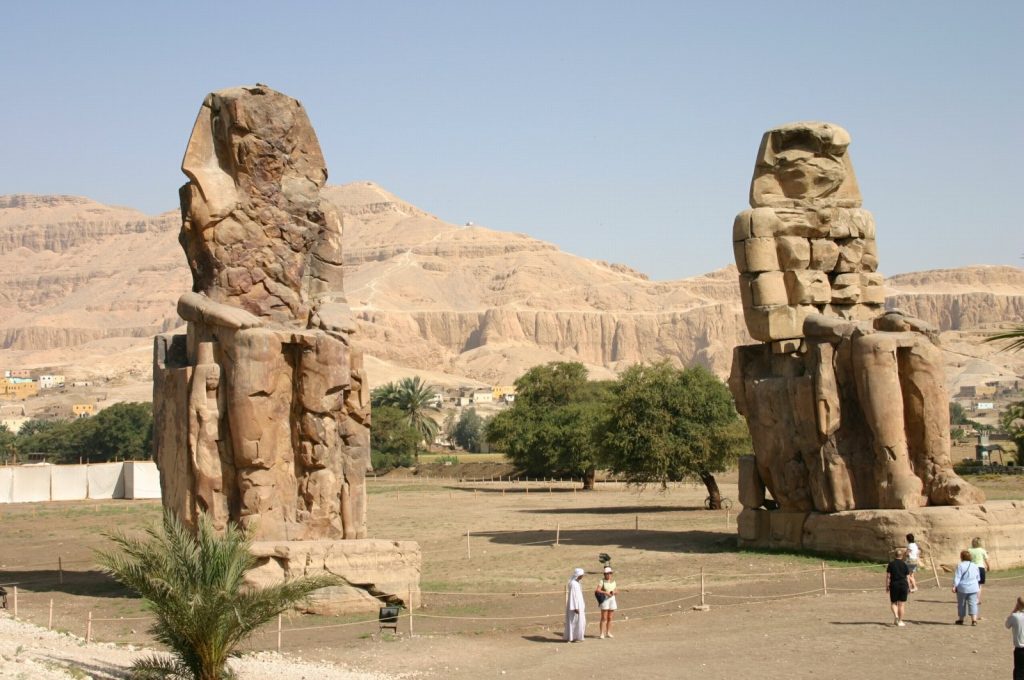
Colossi of Memnon. West Bank, Luxor. Entry 100% free. Two 60-foot statues, 3,300 years old. They used to sing (a cracking sound at sunrise). Silent today. You'll spend 30-45 minutes here. Ideal before the Valley of the Kings. That said, it's nothing without the historical context.
The Colossi of Memnon? They're the most oversold curiosity in Egypt. Tourists pile out, snap three photos, leave. "What was that again? Giant statues. OK, next site." Nobody stays for the history. And that's the problem. Anyway, we'll explain it properly here.
As a local agency with 10 years in Luxor, we see them every week. Groups show up exhausted from the Valley of the Kings, the colossi photos take 8 minutes, and then it's over. By the way, that means losing 90% of the interest. These statues carried the story of a pharaoh, a lost capital, acoustic mysteries. This was serious stuff.
Who Was Memnon (The Legend vs. The Reality)
First trap: the name "Colossi of Memnon." It's misleading. Memnon is a Greek mythological figure (an Ethiopian king, son of the Dawn). No Egypt in there.
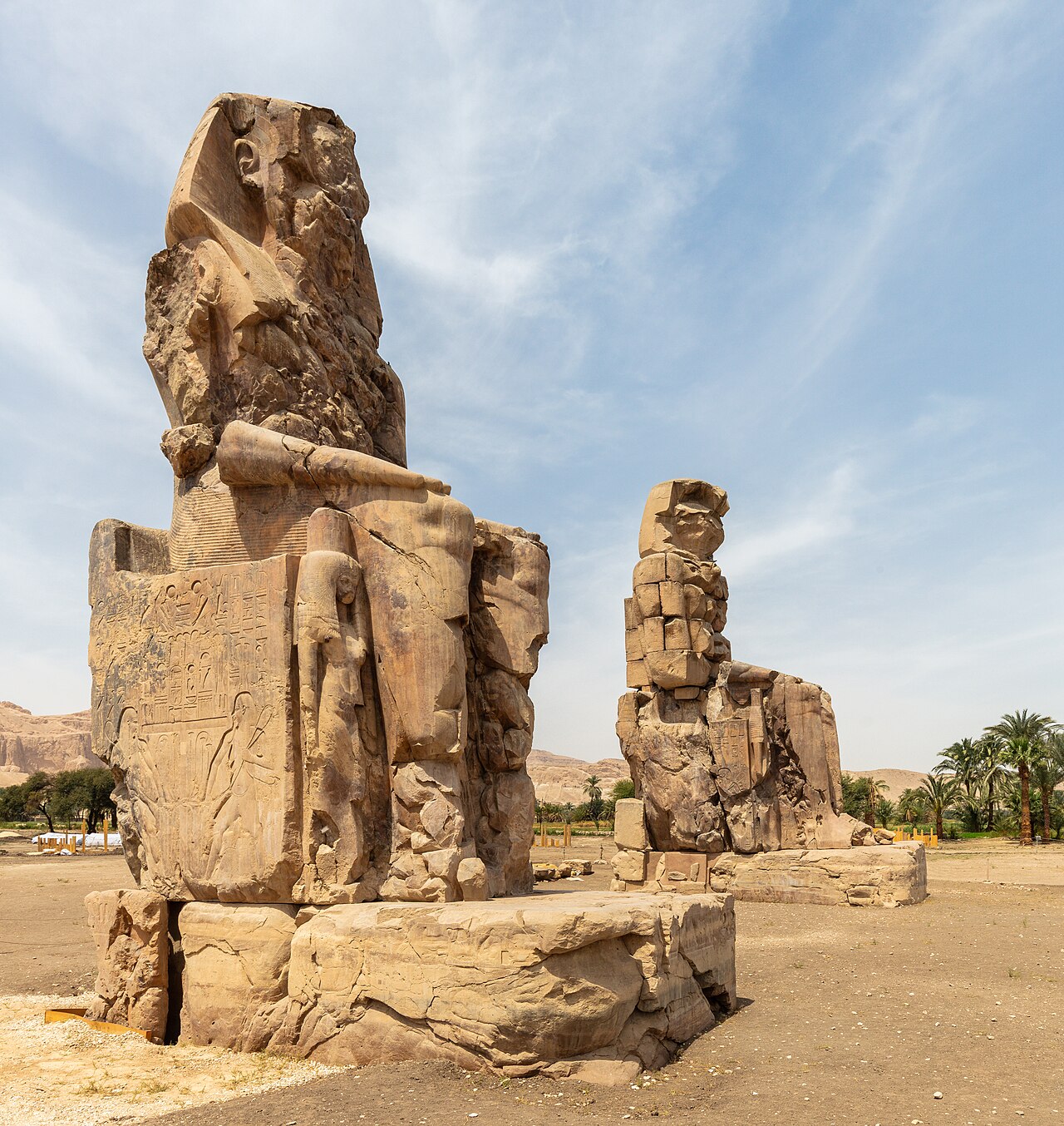
These two statues? They represent Amenhotep III, pharaoh of the 18th Dynasty (1390-1352 BC). Him. Not Memnon. But the ancient Greeks who visited Egypt saw these silent colossal statues and figured "that's Memnon, obviously" (the Greeks connected everything to their own mythology). So the name stuck. And it stayed. A monumental historical inconsistency.
Egyptological correction: In proper Egyptology these statues would be called the "Colossi of Amenhotep III." But "Colossi of Memnon" prevailed. Historical errors tend to stick. It's the same mechanism that put Khufu on the throne in the popular mind even though there were other pharaohs before him.
The Singing Statues: A Strange Reality

The phenomenon of the singing statues. It's not a Hollywood invention. It was real. Between the 1st and 3rd centuries AD, the Colossi of Memnon gave off mysterious sounds at sunrise. High-pitched sounds, like a snapping string. Documented by Greek and Roman travelers.
What caused it?
The scientific explanation (the real one): the statues were damaged by an earthquake in 27 BC. Internal cracks. At sunrise, the day's heat widened those cracks in the sandstone. Air escaped = high-pitched sounds. It's not supernatural, it's physics.
The magical explanation (what the ancients believed): it was Memnon weeping for his mother, Dawn (the goddess of sunrise). Poetic. False. But poetic. So ancient tourists came on purpose to hear the statues "weep." It was a tourist circuit as early as 100 AD. Greek travelers paid for it. Nothing new under the Egyptian sun.
Why did it stop?
Around 200 AD, Emperor Septimius Severus had the statues repaired (restoration, cement). Cementing = sealing the cracks. No cracks = no sound. End of the phenomenon. The emperor killed the magic without meaning to. In trying to preserve, he smothered.
Physical Description and Architecture
Two statues. Side by side. Red sandstone. Each one: 60 feet tall. 700 tons each. Built around 1350 BC under Amenhotep III (a prosperous, little-known pharaoh who nonetheless built massive things).
Current condition
Damaged. The original statues had crowns and minor details. Today, just the torsos and the heads (no legs, the legs are buried under the sand). Hieroglyphs partly visible on the sides. Broken nose (ancient vandalism).
Greek restoration visible. Brown Roman cement on certain areas. It's cosmetic, it ruins the beauty. That said, it's the reality: ancient monuments survive through a patchwork of repairs.
Details to look for
Enormous feet (6 feet long, you'd stand on a single toe). Greek inscriptions carved by ancient tourists (yes, even 1,800 years ago people scratched the monuments). Classic Egyptian depiction: the pharaoh seated, ceremonial elements, the double crown (Upper Egypt + Lower Egypt).
Viewing tip: Go in the late afternoon (4-5 PM). The shadows create interesting contours. The hieroglyphs stand out. Sunrise? Touristy, overcrowded, and the statues no longer sing (so no special draw).
The Whole Site (Beyond the Statues)
The Colossi are not standing in isolation. They once guarded the entrance to the Mortuary Temple of Amenhotep III. A gigantic funerary temple (comparable in size to Karnak). Razed. Gone. The colossi are the only remnants still standing.
Around them? Farmland. Nile silt. Archaeologists excavated sections (in the 1990s). They found mud-brick walls, refuse dumps, traces of ceremonies. But the site is barely set up for tourists.
Practical Visit: Duration and Hours
Visit duration
30-45 minutes on your own. If you have a guide and really listen, 1 hour 30. The rushed tourists? 8 minutes (camera, selfie, gone).
Entry and price
100% free. No charge. No barrier, no official, nothing. You arrive, you look. Optional tip for the local guardian (5-10 EGP, fair if you enjoyed it). That's the beauty of the Colossi: total accessibility.
Opening hours
24/7. Never closed. You can come at midnight if you feel like it (odd but possible). Sunset: the best moment for light. Sunrise: touristy but unremarkable (the statues don't sing, remember).
How to Get There and Pair It with Other Sites
The Colossi are on the West Bank of Luxor. Right next to the Valley of the Kings. It's a logical, all-but-mandatory detour if you're visiting the valley.
Transport from the East Bank (hotels)
Crossing the Nile by felucca (traditional boat): 80-120 EGP per person (authentic, 30 min, touristy). White taxi: 60-80 EGP one way (you negotiate). Uber? Works partly. Organized tour: included by default (most Valley of the Kings tours pass by the Colossi).
Valley of the Kings + Colossi (the ideal combination)
Valley of the Kings: 7 AM-12:30 PM (morning, before the heat). Colossi: 1-2 PM (a quick lunch afterward). Easy. You combine them in a half-day. See our complete Luxor guide.
Colossi + Medinet Habu Temple (1 hour 30 total)
Medinet Habu is farther out (the mortuary temple of Ramesses III). About 2.5 miles away. You're already on the West Bank, so add 20 minutes of driving. Worth it if you love temples and have the time.
Have 2 days in Luxor and want to see the most you can? Day 1: Valley of the Kings + Colossi of Memnon (half-day). Day 2: full Karnak + Luxor Temple at sunset. English-speaking guide included. $150 per person (min 2).
Request a quoteReply in under 2h · 7 days a week · No obligation
A visit to the Colossi of Memnon fits perfectly into your complete Luxor guide. These giant statues mark the historic entrance to the royal necropolis, and many visitors continue on to the Nile cruises to explore other ancient treasures. To make the most of your budget, see our 2026 budget guide. A well-organized cruise folds the Colossi naturally into the itinerary. Discover also the Temple of Edfu and the Kom Ombo Temple to round out your trip.
Best Time to Visit
Season. October-March: ideal temperature (72-82°F), no crushing heat. April-May and September: 100-108°F. Avoid unless you enjoy roasting.
Time of day. Sunset (4-5:30 PM): best light, the statues take on a golden hue. Early morning (7-8 AM): pale light but peaceful. Midday (12-2 PM): too hot, too bright, little contrast.
Crowds. December-January: peak. February-March: moderate. September: almost nobody (but the climate is unbearable). Tuesday-Thursday: less touristy than Saturday-Sunday.
A sunrise tour to hear the statues sing? It's a 100% tourist scam. The statues don't sing (repaired 200 years ago). Agencies sell it as a "mystical experience." It's false. Steer clear of this trap.
Photography Tips
Classic angles. Head-on: 4-5 PM (low sun, shadows sculpt the features). From the side: reveals the hieroglyphs. The feet (yes, the feet): extraordinary in macro (tiny details, human scale).
Drone allowed? Informally no. Local authorities look the other way depending on the day. Don't push your luck. Phone? Fine. Camera? Better. ISO 800, f/5.6, 1/200 shutter speed. No flash (useless and rude).
Advanced composition
Symmetrical statues = symmetrical composition. Rule of thirds: place one statue on a third, the sky on the other. Contrast: silhouette the statues against a sunset sky (it's dramatic). Context: include the fields or the roads for human scale.
Accessibility and Practical Info
Terrain and walking
Flat terrain. Sand + gravel. No stairs. Accessible for most mobility levels. If you have a mobility impairment, you can stay close by, no need to walk far.
Water and shade
No water on site. Bring 1-2 liters. No shade (a few flimsy little vendor stalls). Hat mandatory. SPF 50 sunscreen. (Arrive before 3 PM, late-afternoon sunburns come on fast.)
Souvenir vendors
A few vendors selling postcards, statuettes, scarves. Moderate hassle (not aggressive). "No, no, no" does the trick. Opening price is usually marked up 50% (negotiate firmly).
Broader Historical Context: Amenhotep III
Who was Amenhotep III really? Pharaoh of the 18th Dynasty (1390-1352 BC). A prosperous reign. No major wars, he was a diplomat (married foreign princesses to forge alliances). Religion, art, monumentality: that was his thing.
Construction projects: a gigantic mortuary temple (razed, the Colossi remain). The expansion of Luxor. A statue in Sudan. The man was obsessed with monumentality. In short, the Colossi of Memnon were his business card in stone.
Want to understand the full story (not just the statues)? Our Egyptologist guides give complete context on Amenhotep III, the 19th Dynasty, ancient construction. Colossi + historical context = 1 hour 30 for $80 (2 people minimum).
Book a guided visitReply in under 2h · 7 days a week · No obligation
Frequently Asked Questions
Can you climb them?
No. No access. The statues have a symbolic barrier (pretty weak, honestly). But it's forbidden. If you try, a guardian will stop you. It's an archaeological site, not a playground.
Why weren't they fully restored?
Partial restoration in 2002 (consolidation). A full restoration? Impossible. The legs are buried, and removing the sand would destabilize everything. The missing legs are the trade-off: preserve vs. fully restore.
How long if I just do the Colossi without the Valley of the Kings?
45 minutes is realistic. 30 minutes if you're quick. The photos take 10 minutes. Reading the history and observing the details adds another 35-40 minutes. If you're on your own without a guide, it's hard to spend more than an hour without it getting repetitive.
Is it really free?
Yes. 100% free. There's no official access control. You arrive and that's it. A tip for the local guardian (5-10 EGP) is appreciated but not required. It's rare in Egypt for something to be free.
Are there really carved Greek inscriptions?
Yes. Ancient Greek travelers (notably a fellow named Heron around 100 AD) carved their names. It's visible on the feet. The ancients did tourism + vandalism too (the more things change, the more they stay the same).
What You Really Need to Know
The Colossi of Memnon are not "just statues." They're the story of a pharaoh obsessed with monumentality. They're an ancient acoustic curiosity. They're Greek tourists who got the name wrong. They're the Roman empire sealing the cracks without realizing it.
Free. Accessible. Quick. But flat if you come without understanding why. So bring that context. Read this article. Hire a guide for 1 hour 30. Turn "some old statues" into an understanding of a civilization.
Ready to pair the Colossi with a real Egyptian day? The "Full Valley of the Kings" package: 5 hours, two major tombs (Tutankhamun + Thutmose III) + Colossi of Memnon at sunset + English-speaking guide. $100 per person (min 2).
Order the packageReply in under 2h · 7 days a week · No obligation