
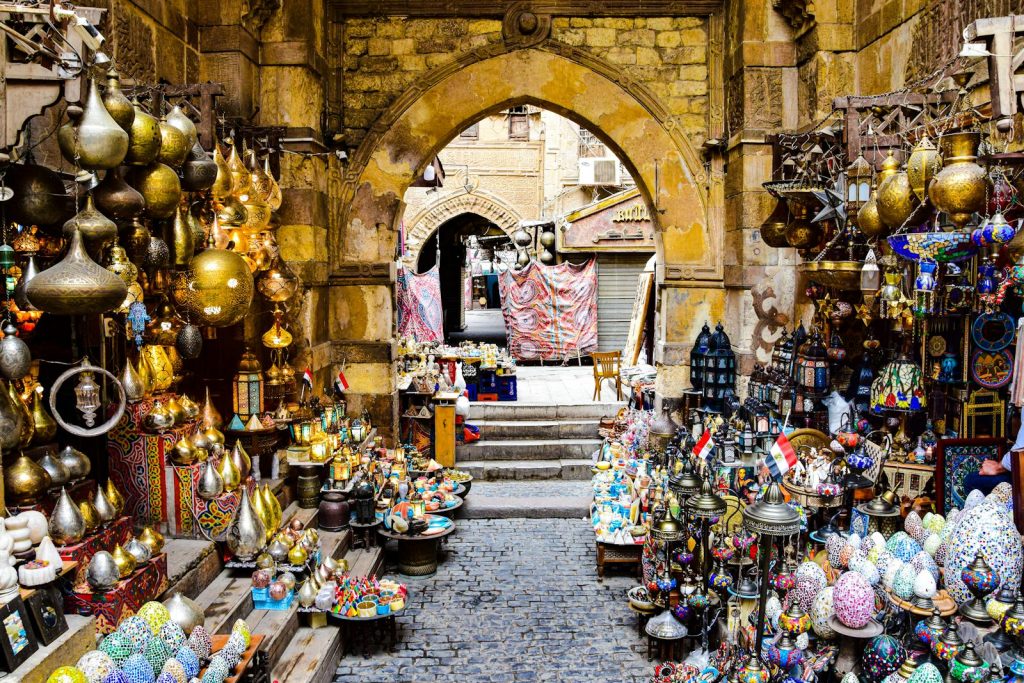
By Sem Elegant Voyage | Updated: September 2026
Buying souvenirs in Egypt is almost a rite of passage. The country is full of traditional handicrafts that go well beyond the little plastic pyramids sold outside the tourist sites: hand painted papyrus, carved alabaster, long staple cotton, and jewelry engraved in hieroglyphs, all made by artisans working the same crafts their grandparents did. The trouble is that without a little preparation, you can easily walk away with a "papyrus" printed on banana leaf or an "alabaster" piece that is really molded plaster. This guide covers the best egyptian souvenirs to buy, where to find the real thing, and honest, hedged price ranges so you know roughly what a fair price looks like before you start bargaining.
Need a guide for your souvenir shopping?
Our local guides know the authentic workshops and the trusted shops. They go with you to find the best products at a fair price.
What are the best souvenirs from Egypt?
The best souvenirs from Egypt are hand painted papyrus, Gurna alabaster (vases and statuettes), Egyptian cotton (sheets, scarves, galabeyas), a cartouche pendant with your name in hieroglyphs, karkade tea and spices, essential oils and perfumes, and a decorative hookah. Buy egyptian souvenirs in a working studio or a fixed price shop, since that is what actually guarantees authenticity, not the sticker price.
The top 15 souvenirs from Egypt
If you only read one list before you go shopping, make it this one. These are the souvenirs from Egypt that our Cairo team sees travelers actually carry home, ranked roughly by how often visitors ask for them.
- Hand painted papyrus, a scene from a temple wall or the Book of the Dead, painted on real papyrus reed.
- Gurna alabaster vases, bowls, or a small canopic jar replica, carved by hand near Luxor.
- Cartouche pendant in gold or silver, your name spelled out in hieroglyphs.
- Egyptian cotton sheets or towels, the long staple cotton the country is famous for.
- Karkade (hibiscus tea), dried and bagged at any spice stall.
- Spice blends for koshari, dukkah, or ful, sold loose by weight.
- Essential oils and attar perfumes, blended to order at a Khan el-Khalili perfumery.
- A decorative or working shisha (hookah), glass base with a metal stem.
- Hand embroidered galabeya (tunic), cotton or linen, from Upper Egypt.
- Filigree silver jewelry, a Cairo goldsmith specialty alongside gold cartouches.
- Pierced copper or brass lantern, the kind that throws star shaped shadows.
- Hand blown glass perfume bottle, small and light enough for carry on.
- Inlaid wooden box with mother of pearl, a Cairo woodworking craft.
- Leather sandals or a leather pouf, from the tanneries and souks of Old Cairo.
- Dates, halva, and Egyptian sweets, an easy, inexpensive last minute buy at the airport or a downtown grocer.
Every one of these is covered in detail further down, with where to buy it and a realistic price range. None of them require an antiquities permit: they are modern handicrafts, not ancient artifacts, which is exactly what makes them legal to bring home.
The essential Egypt souvenirs at a glance
| Souvenir | Where to buy it | Typical price (2026) |
|---|---|---|
| Hand painted papyrus | Cairo and Luxor workshops | roughly $15 to $90 |
| Gurna alabaster | Gurna studios (Luxor) | roughly $10 to $140 |
| Egyptian cotton | Specialty shops in Cairo | roughly $20 to $100 |
| Cartouche jewelry | Khan el Khalili jewelers | roughly $45 to $290 |
| Spices and hibiscus tea | Souks and spice markets | roughly $3 to $15 |
| Oils and perfumes | Khan el Khalili perfumeries | roughly $10 to $45 |
| Decorative hookah | Cairo souks | roughly $30 to $115 |
| Galabeya (tunic) | Upper Egypt, souks | roughly $10 to $50 |
Ballpark prices for 2026 after bargaining, excluding exceptional pieces. Actual prices move with the exchange rate and the vendor, so treat these as a starting point rather than a fixed quote, and confirm on the day. Prices vary with size and quality. Paying in Egyptian pounds usually gets the better rate.
Egyptian handicrafts: the crafts to know before you buy
Egyptian handicraft rests on skills passed down since pharaonic times. Four traditions stand out and are worth knowing before you open your wallet.
- Papyrus. Made from the stem of Cyperus papyrus, pressed and woven. The best workshops sit in Cairo and Luxor, where you can watch the sheet take shape before you buy.
- Alabaster (calcite). Hand carved in the studios of Gurna, near the Valley of the Kings. A Gurna piece is more irregular but finer than mass produced alabaster from Beni Suef.
- Goldwork. Gold and silver run far cheaper than at home. A cartouche engraved with your name in hieroglyphs is the signature piece of Khan el Khalili, and 18 karat is the local standard rather than the 14K common in the US.
- Weaving. Long staple Egyptian cotton (Giza), known the world over, plus hand sewn galabeyas from Upper Egypt.
Our field tip: favor studios where the artisan works in front of you, and the fixed price shops at the museums. You pay 10 to 20 percent more than at the souk, but authenticity is guaranteed. For higher value pieces (gold, fine alabaster), our Cairo based, English speaking team can point you to trusted workshops before your visit.
What to buy in Egypt, by type of traveler
Not everyone is after the same souvenir. Our picks by traveler profile, road tested by our team in Cairo.
- For a standout gift: a personalized cartouche pendant or a bottle of attar perfume.
- For something useful every day: Egyptian cotton sheets or towels that last for years.
- For foodies: spices, karkade (hibiscus) tea, dates, and halva to slip into your suitcase.
- For decorating the home: an alabaster statuette, a pierced copper lantern, or a hookah.
- For small budgets: a pocket papyrus, a bar of artisan soap, or a cotton scarf, all under $15.
Plan your trip:
Papyrus: the must-have souvenir
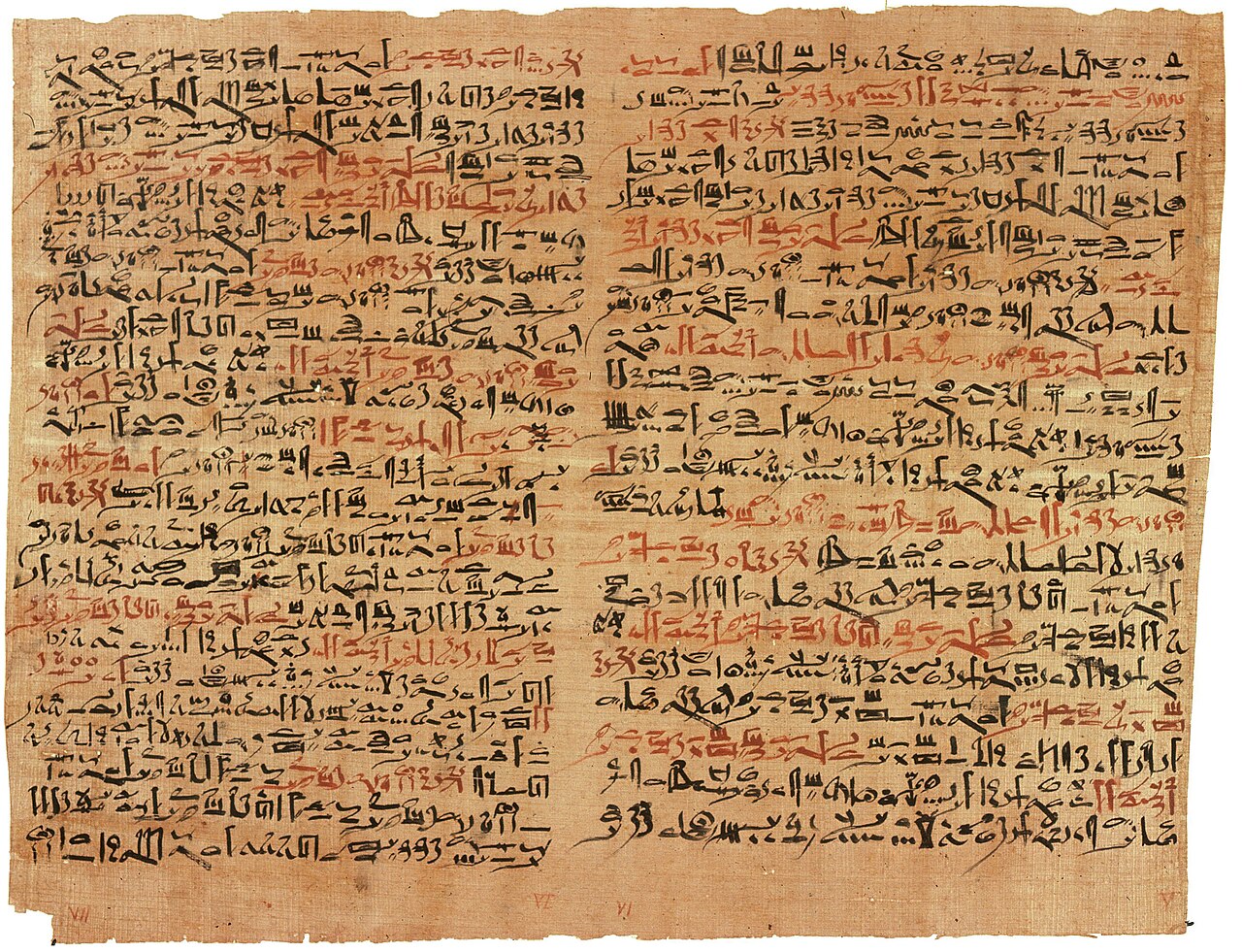
Papyrus is probably the most iconic souvenir from Egypt. The ancient Egyptians invented this writing surface more than 5,000 years ago, and the craft of making it was revived for travelers. A beautiful hand painted papyrus makes a wonderful gift, though it pays to watch out for the scams.
How to recognize real papyrus:
Real papyrus is made from the Cyperus papyrus plant. When you bend it slightly, it does not crack: it stays flexible. If you hold it up to the light, you can see the interwoven fibers. The colors are applied by hand, with fine details and shading. Fake "papyrus" is often made from banana leaves: it is stiffer, tears easily, and the colors are flat and mechanically printed.
Where to buy: The best places are the workshops where you can watch the process live. There are several in the Giza area and in Old Cairo. Avoid the street vendors outside the tourist sites.
Price: Vendors quote in Egyptian pounds. As a rough guide, a medium sized papyrus (12x16 in), hand painted with good detail, runs about 700 to 1,900 EGP depending on the complexity of the design, roughly $15 to $40 at 2026 exchange rates. Large or finely detailed pieces can climb well beyond that. Rates move, so treat this as a starting point and confirm the pound price on the day. If someone offers you a "papyrus" for the price of a coffee, it is banana paper.
Alabaster: the stone of the pharaohs
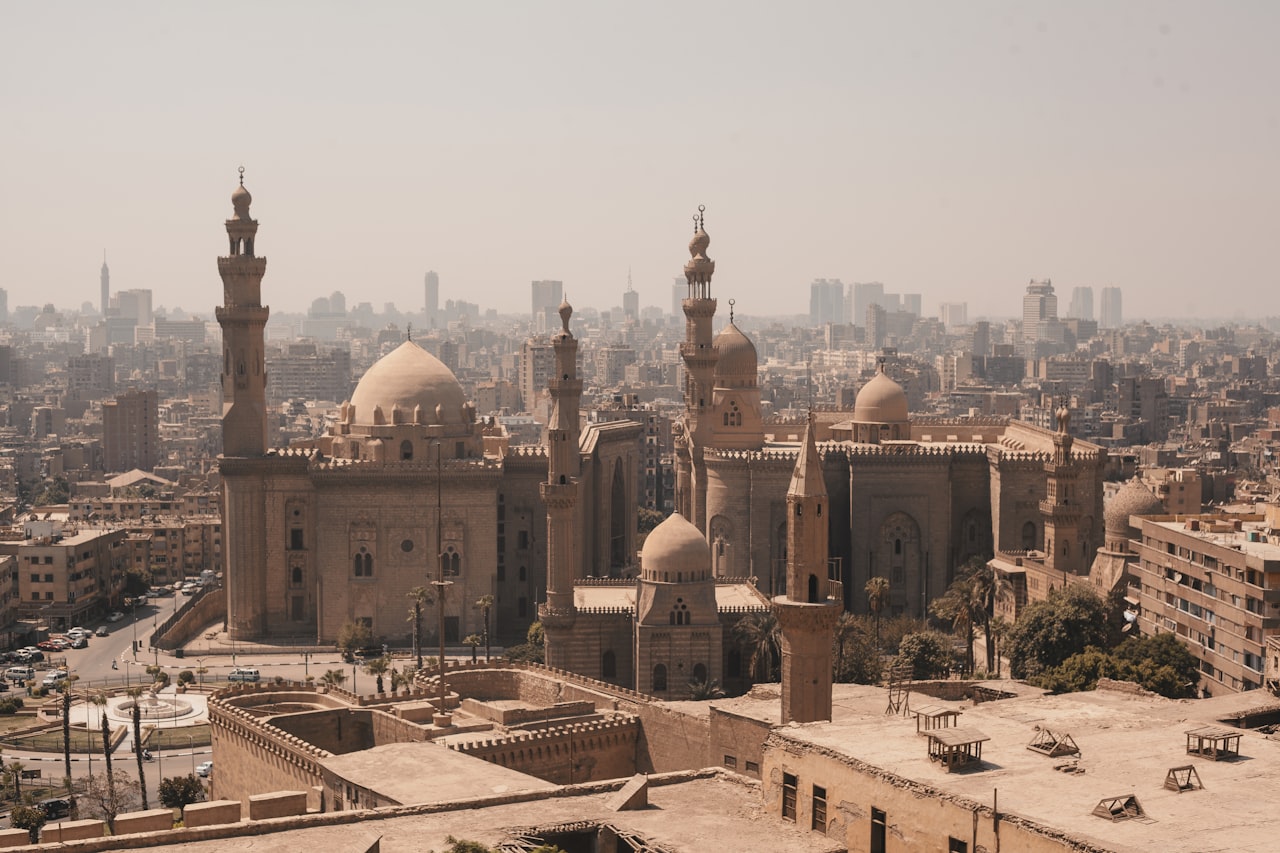
Egyptian alabaster (actually calcite) has been worked in Egypt since the time of the pharaohs. Alabaster vases, bowls and statuettes are elegant, long lasting souvenirs. The stone is translucent: hold an alabaster vase up to a light source and it glows from within with a warm, golden effect.
How to recognize real alabaster: True calcite is cold to the touch, heavy and translucent. The fake stuff (plaster or resin) is lighter, opaque and warm. Run your fingernail across the surface: real alabaster does not scratch easily.
Where to buy: The Luxor region is the center of alabaster production. The village of Gurna, near the Valley of the Kings, has many workshops where you can watch the artisans work the stone on site. In Cairo, Khan el-Khalili has a few specialized shops.
Price: A small vase typically starts around 700 to 950 EGP, roughly $15 to $20. Larger, more detailed pieces run from about 2,300 to 9,500 EGP, roughly $50 to $200. Replicas of canopic jars (funerary vessels) are very popular. These are hedged estimates for 2026: ask the workshop for a written price before you agree to buy.
Egyptian cotton
Egyptian cotton is famous worldwide for its exceptional quality. The extra long fibers produce a fabric that is incredibly soft and durable. Bringing home sheets, towels or clothing in Egyptian cotton is an excellent choice: it is a useful souvenir that lasts for years.
What to look for: "Egyptian cotton" should ideally be certified. Thread count is one indicator, with 200 threads and up for good quality and 400+ for high end. T-shirts and galabeyas (traditional tunics) in Egyptian cotton also make lovely gifts.
Where to buy: The shops in hotels and modern shopping malls offer certified cotton. For traditional clothing, the Khan el-Khalili souk in Cairo has specialized shops. The markets of Luxor and Aswan also offer beautiful pieces.
Price: A set of good quality Egyptian cotton sheets typically runs 2,300 to 7,000 EGP, roughly $50 to $150. A traditional galabeya runs from about 950 to 3,800 EGP, roughly $20 to $80, depending on the fabric and embroidery. Figures are hedged 2026 estimates, since the pound to dollar rate has moved a lot in recent years.
Spices and tea
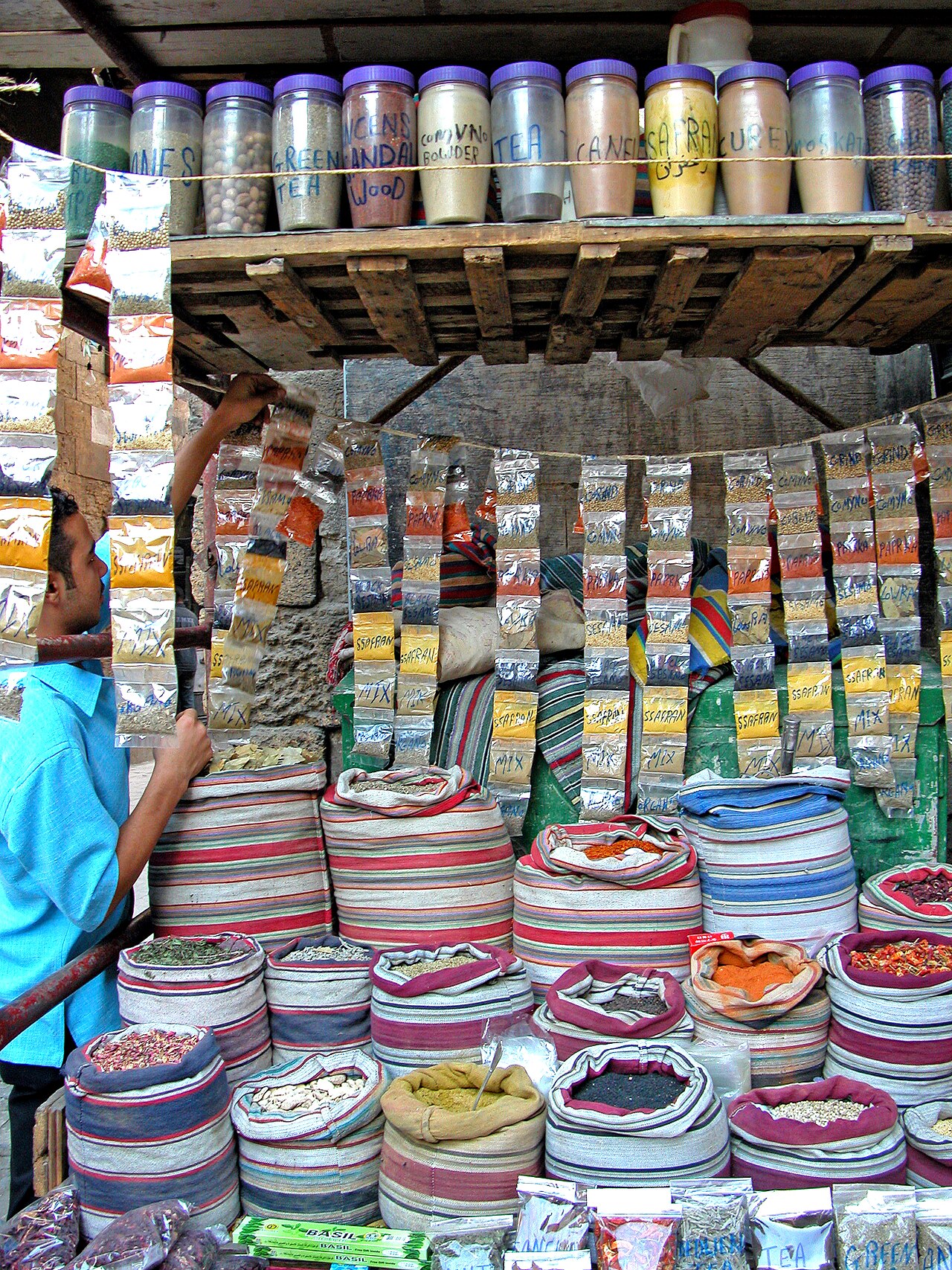
Egypt has been a crossroads of the spice trade for thousands of years, and the markets overflow with flavors and colors. It is a light, inexpensive souvenir that pleases everyone.
The essentials:
Karkade (hibiscus) is the national drink. Dried, it keeps for months and makes a delicious infusion, hot or cold. Egyptian cumin is very fragrant. Saffron is available, but watch out for counterfeits, since real saffron is expensive everywhere in the world. Spice blends for koshari or dukkah are also good buys.
For a complete guide to the spices to bring home and where to buy them, see our dedicated article on the Cairo spice market.
Price: A bag of karkade (250g) costs about 70 to 150 EGP at the market, roughly $1.50 to $3. Common spices (cumin, coriander, cinnamon) are very affordable. Real saffron runs around 470 to 700 EGP per gram, roughly $10 to $15, and the gram to gram price is your best fraud check: cheap "saffron" is not saffron.
Essential oils and perfumes
Egypt has a long tradition of perfumery. The essential oils sold in the markets are often good quality and much cheaper than back home. The perfumers of Khan el-Khalili can create custom blends right in front of you, which is an experience in itself.
The classics: Lotus oil, musk, amber, oud and rose oil are the most popular. Black seed oil (habba sawda) is also highly sought after for its reputed properties.
Careful: Some vendors dilute the oils or use synthetic products. Test the oil on your wrist: a pure oil does not leave a greasy feeling after a few minutes. The shops recommended by local guides are generally more reliable.
Price: A small bottle (15 ml) of essential oil costs between 230 and 950 EGP, roughly $5 to $20, depending on the type. Custom blends in decorative bottles run from about 470 to 2,300 EGP, roughly $10 to $50.
Cartouche jewelry
The cartouche is an elongated oval in which the ancient Egyptians wrote the names of the pharaohs in hieroglyphs. Today, Egyptian jewelers engrave your first name in hieroglyphs inside a gold or silver cartouche. It is a very personal and original egyptian gift.
The options: Cartouches come as pendants, bracelets, rings or earrings. 18 karat gold is the standard in Egypt (not 14K as in the US). Sterling silver (925) is also available and far more affordable.
Where to buy: The jewelers of Khan el-Khalili in Cairo and the hotel shops in Luxor and Aswan offer this service. The turnaround is usually a few hours to a day: order in the morning, pick it up in the afternoon.
Price: A sterling silver (925) cartouche pendant starts at around 1,400 to 2,300 EGP, roughly $30 to $50. In 18K gold, expect to start from about 9,500 to 23,000 EGP, roughly $200 to $500, depending on size and weight, since gold pricing tracks the daily gold rate rather than a fixed tag.
Visit the best craft workshops with a guide
Our guides take you straight to the trusted artisans. No tourist traps, fair prices, and the chance to see the craftsmen at work.
The hookah (shisha)
The hookah, or shisha, is an integral part of Egyptian social culture. Bringing home a decorative hookah is a souvenir that makes a statement, though you have to choose well.
What you need to know: The small hookahs sold as souvenirs are often purely decorative and do not really work. If you want a functional hookah, go for a medium sized model with a thick glass base and a solid metal stem. The best ones have brass or copper parts.
Transport: A hookah travels fine in checked baggage. Pack it well, since the base is fragile. Shisha tobacco can be carried within the limits allowed by customs.
Price: A small decorative hookah costs about 230 to 700 EGP, roughly $5 to $15. A good quality functional model runs from about 700 to 2,300 EGP, roughly $15 to $50.
Other Egyptian handicrafts worth packing
Beyond the classics, a handful of other Egyptian goods turn up in almost every traveler's suitcase. Filigree silver jewelry, delicate twisted wirework rather than a solid cast piece, is a Cairo goldsmith specialty and a good alternative to a cartouche if you want something less literal. Pierced copper and brass lanterns are hand hammered, and a genuine one has slightly uneven perforations rather than a laser cut, machine perfect pattern. Wooden boxes inlaid with mother of pearl are a Cairo woodworking tradition, often used for jewelry or backgammon sets, and the best examples use real shell rather than painted plastic. Leather goods, sandals, belts and small poufs, come from the tanneries of Old Cairo and are usually priced by size and quality of the leather. None of these carry the fraud risk of papyrus or saffron, but the same rule applies: buy from a shop that can tell you exactly what the piece is made of.
The art of bargaining
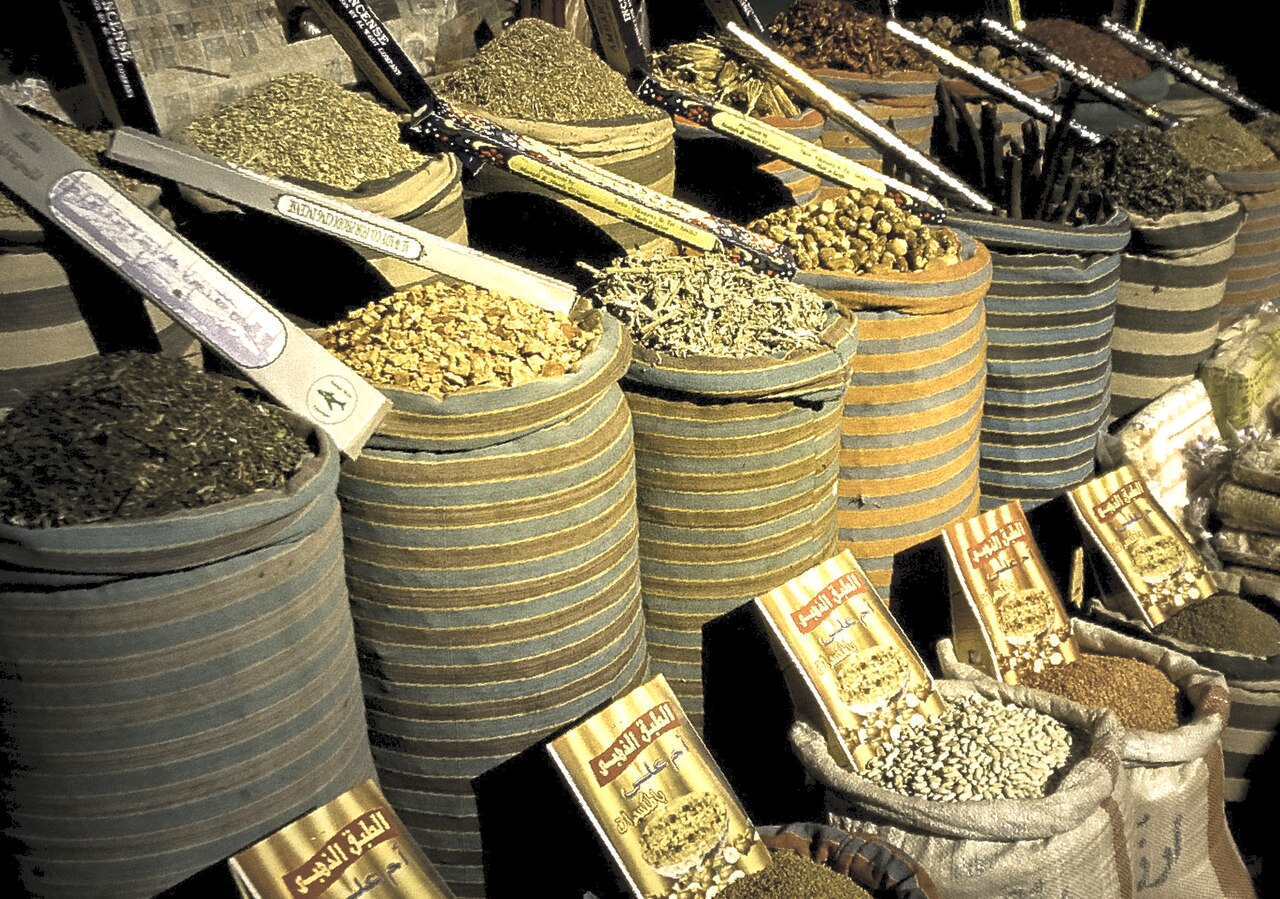
In Egypt, bargaining is part of the commercial culture. It is not a confrontation: it is more of a social ritual that can be very enjoyable once you understand the codes.
Basic rule: The first price quoted is almost always inflated, sometimes 3 to 5 times the real price. Start by offering about 30 to 40 percent of the asking price and negotiate from there. The final price usually lands between 40 percent and 60 percent of the initial price.
A few tips:
Compare prices in several shops before buying. Show interest without looking desperate. If the vendor refuses your offer, pretend to walk away, since that is often when the "real" price appears. Buy several items in the same place to get a better overall price. And keep the tone friendly: good bargaining is a pleasant exchange, not a fight.
When not to bargain: In fixed price stores (clearly marked), supermarkets, pharmacies and museums. In artisan workshops where prices are already reasonable and the work deserves fair compensation.
For bargaining tips specific to the markets, see our guide to the Cairo spice market and our general guide to Egypt's souks and markets.
Customs rules for bringing your souvenirs home
Before you go shopping, here are the important points about customs:
Antiquities: Exporting genuine antiquities from Egypt is strictly forbidden under Egyptian law, and the penalties are serious. The "real" antiquities sold on the street are fakes anyway, but do not take the risk. Reproductions and modern handicrafts are legal to buy and export as long as they are clearly identified as such, so keep your receipt.
Gold and jewelry: Keep your receipts. Gold jewelry bought in Egypt counts toward your customs declaration when you arrive home. Reasonable personal quantities are no problem, but if you buy large amounts, check the declaration thresholds set by US Customs and Border Protection.
Spices and food: Dried spices generally pass without trouble, and so does karkade. Fresh or unpackaged products can be a problem under USDA and CBP regulations, so check current US rules before you shop. For the overall budget of your trip, plan a souvenir allowance of roughly $55 to $165 depending on your wishes.
Shisha tobacco: Subject to the same restrictions as ordinary tobacco. Check the quantities allowed by US Customs, generally 250g maximum, before you pack any.
Frequently asked questions about Egyptian souvenirs
What are the best souvenirs to buy in Egypt?
The best souvenirs to buy in Egypt are hand painted papyrus, Gurna alabaster, Egyptian cotton, a personalized cartouche pendant, karkade tea and spices, essential oils, and a decorative hookah. Each is a genuine local handicraft rather than an imported trinket, and each is available at a wide range of price points, from a five dollar spice bag to a several hundred dollar gold cartouche.
What is the best place to buy souvenirs in Egypt?
Khan el-Khalili in Cairo offers the widest selection, but prices are often inflated for tourists. The markets of Luxor and Aswan are sometimes cheaper. The artisan workshops (papyrus, alabaster) offer the best value for money because you buy directly from the maker. Museum shops are also a reliable option for quality reproductions with a fixed price tag.
What is Egypt known for when it comes to souvenirs?
Egypt is best known for papyrus artwork, alabaster carving, Egyptian cotton, and gold or silver cartouche jewelry, four crafts that trace back to pharaonic and early modern Cairo workshops still working today. Spices, karkade tea and perfumed oils round out the list as smaller, lighter buys that travel well and make easy gifts.
How do I avoid fake papyrus?
Visit a workshop to see the full process. Real papyrus is flexible (it folds without cracking), you can see the interwoven fibers in the light, and the paintings are done by hand with detail and shading. Fake banana paper is stiff, brittle, and the designs are printed. Price is also an indicator: a real hand painted papyrus is never sold for the price of a bottle of water.
How can I tell real Gurna alabaster from a fake?
Genuine alabaster (calcite) feels cold and heavy in the hand and glows translucent when you hold it up to light. Plaster or resin fakes feel lighter and warmer, and stay opaque instead of glowing. A gentle fingernail scratch test also helps: real alabaster resists scratching, while plaster marks easily. Buying at a Gurna workshop where the piece is carved on site is the surest safeguard.
Can I bargain everywhere?
Bargaining is normal in the souks, the markets and the souvenir shops. It is not appropriate in fixed price stores, supermarkets, restaurants and pharmacies. In artisan workshops, the room to negotiate is smaller because prices are already fairer. Always keep a friendly tone, since it is a social game, not a battle.
Should I pay in Egyptian pounds or in dollars?
Merchants often accept dollars and euros, but you will get a better price by paying in Egyptian pounds. The exchange rate applied by shopkeepers is rarely favorable, and it changes with the market rate, which has moved a great deal in recent years. Withdraw pounds from an ATM before heading to the market and check the current rate that morning.
Can bulky purchases be shipped home?
Some large shops and workshops offer international shipping, especially for carpets and bulky alabaster pieces. Check the terms, the insurance and the timeframes before you pay. For major purchases, ask your hotel to recommend a reliable delivery service, and get everything in writing before you hand over payment.
What is a good Egyptian gift for someone back home?
A personalized cartouche pendant, a small bottle of attar perfume, or a tin of karkade and spices all make a genuinely Egyptian gift without straining a suitcase. For someone who appreciates craftsmanship, a small alabaster piece or a filigree silver pendant reads as more considered than a generic magnet or keychain, and every one of these is inexpensive enough to buy in multiples for several people on your list.
What can you bring back from Egypt on a small budget?
On a small budget, go for spices (cumin, hibiscus for karkade tea), olive oil soap, a small papyrus, dates, or a cotton scarf. Figure on roughly $3 to $20 per item in the souks after bargaining. These souvenirs are light, authentic, and easy to pack in a carry on, which also makes them a safe first purchase while you get a feel for local prices.
Can you bring antiquities home from Egypt?
No. Exporting genuine antiquities is strictly illegal under Egyptian law and can lead to prosecution. Only modern reproductions and recent handicrafts are allowed out. Keep your receipts: customs may ask for proof of purchase on pieces that imitate the ancient, such as statuettes, papyrus, and pharaonic style jewelry.
Do US travelers need to declare Egyptian souvenirs at customs?
You declare everything you bought abroad on CBP Form 6059B. Returning US travelers get an $800 duty free personal exemption after being out of the country at least 48 hours, so declare anything above it, since gold and silver jewelry counts toward the limit. Keep your receipts. Dried, packaged spices and pure hibiscus or black tea generally clear once declared.
Discover Egyptian handicrafts with a local guide
Our tours include visits to artisan workshops and dedicated time for shopping in the best markets. Discover our Egypt tour packages and our planning your time in Cairo guide.
Published by Sem Elegant Voyage, specialist in tailor-made trips to Egypt. Prices above are hedged 2026 estimates for planning purposes only and move with the exchange rate and the vendor: always confirm on site before you buy.