
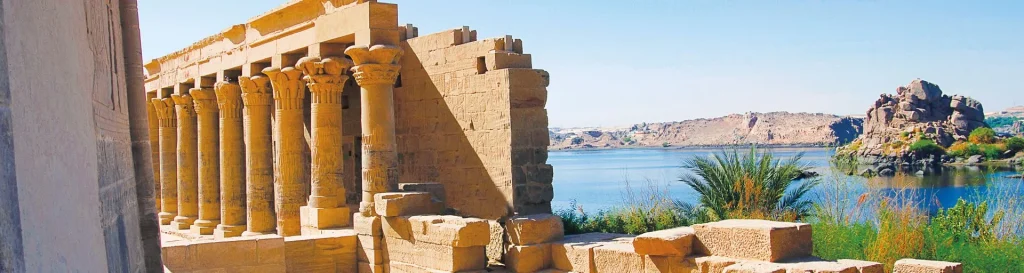
A Nile cruise between Luxor and Aswan is the trip that changes a life. No hyperbole. The temples line the river like abandoned jewels. Sunrises tint the dunes gold. And there you are, sailing through ancient history while sipping a drink on deck.
After three years guiding American travelers on the Nile, I have noticed one constant: almost everyone arrives with two questions. What is there to do in Luxor? What is there to see between Luxor and Aswan? This guide answers with precision. Temple by temple. Hour by hour. Real prices. On-the-ground tips.
In 90 seconds: You will see Karnak and the Valley of the Kings in Luxor, then sail to Edfu (Temple of Horus), Kom Ombo (Sobek and Haroeris), and Aswan (Temple of Philae, Elephantine Island). Entry budget: $215-300 per person. Best time: October to February. Book your tickets through your boat or directly on site.
Luxor: The Ancient Soul of Egypt
Luxor is not a pause in your cruise. It is the heart of your cruise. Built on the site of ancient Thebes, this city breathes pharaonic power. Two temples dominate: the Karnak Complex and the Valley of the Kings. If you only had time for two Nile stops, these would be the ones.
Karnak Temple: Monument of Giants
Karnak is the largest religious complex ever built. That is undisputed. The archaeologists themselves are stunned. The site covers 100 hectares. The columns reach 82 feet high. The narrative walls detail wars, conquests, offerings to the gods.
You will walk beneath the Great Hypostyle Hall. 134 massive columns. The light filters between the stones. It is an incomparable pagan cathedral. The hieroglyphs tell the story of Pharaoh Thutmose III and Queen Hatshepsut. Each wall hides a different era of ancient Egypt.
Practical tip: Arrive at 6:30 a.m. The sun grazes the stones. The tour groups do not show up until after 8. You will have Karnak almost to yourself for 90 minutes. That is the difference between an ordinary visit and a transcendent experience.
Duration: 2 to 3 hours minimum. Enthusiasts stay 4 hours.
Entry price: 600 EGP (about $11).
Best time: 6:30 to 8:30 a.m.
Valley of the Kings: The Royal Tombs
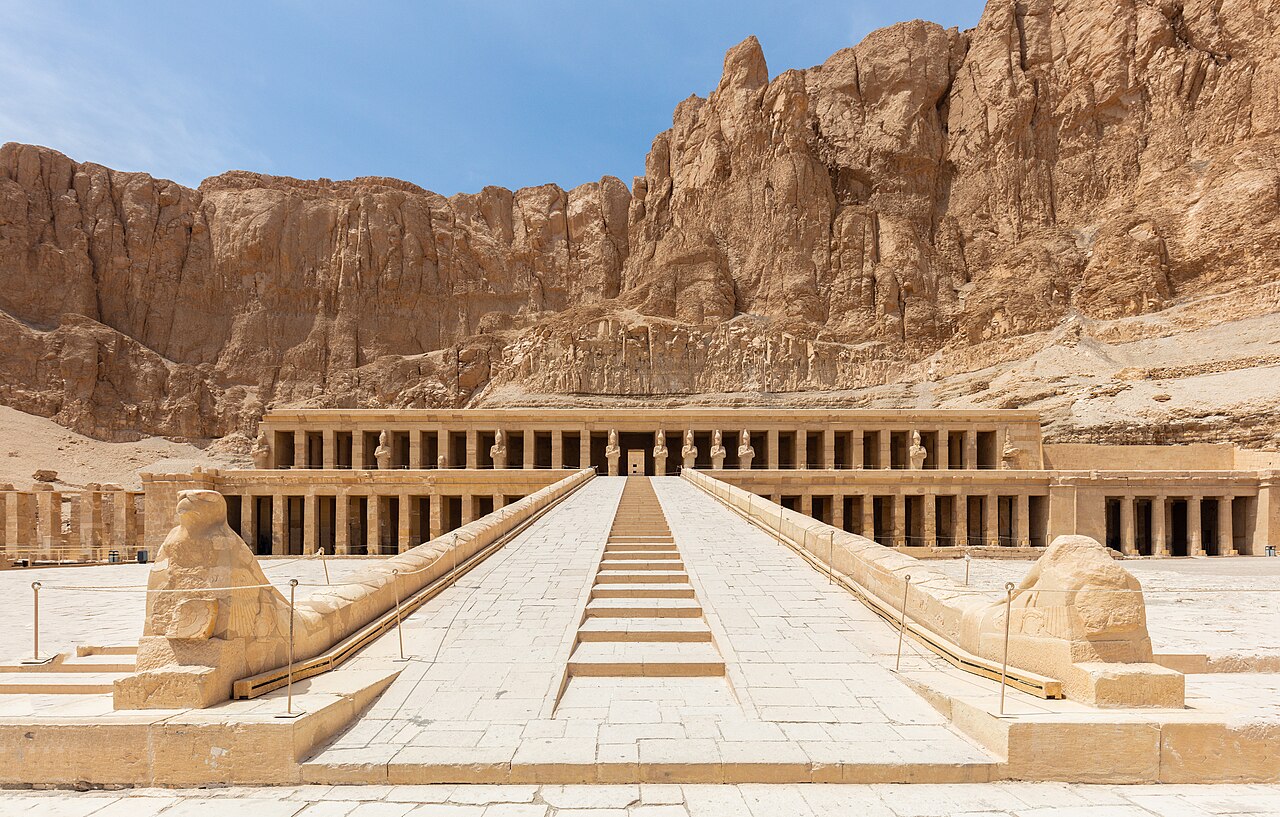
The Valley of the Kings sits on the west bank of the Nile. You cross the river in a small boat. Suddenly you enter a lunar landscape: golden cliffs, silent desert, 63 royal tombs carved into the stone.
King Tutankhamun rests here. So does Amenhotep III. Ramesses II. These pharaohs believed the Nile would bring them back to life. Their tombs are underground museums: intact wall paintings, gilded hieroglyphs, statues guarding the burial chambers.
You will descend into three tombs (included in the ticket). Take the tomb of Tutankhamun if you can. Otherwise, visit the tombs of Ramesses VI and Thutmose III. The paintings there are just as spectacular.
Photo tips: Cameras are forbidden inside the tombs (unless you pay a supplement). Your best photos will come from outside: the cliffs at sunset turn scarlet. Climb up to the overlook. The angle is spectacular.
Duration: 3 to 4 hours with round-trip transport.
Entry price: 750 EGP (standard 3-tomb ticket); some tombs, like Tutankhamun's, cost a separate supplement.
Transport: Your boat usually arranges the shuttle. Otherwise, a taxi costs $5-10.
Luxor Temple: Architectural Harmony
Luxor Temple differs from Karnak. Karnak is massive and complex. Luxor is elegant and symmetrical. Built by Amenhotep III, this temple breathes perfect balance.
The two obelisks at the entrance dominate the landscape. Only one remains in Egypt. The other was given to France in 1833 and now stands on the Place de la Concorde in Paris.
Inside, the colonnaded courtyards follow one after another. The interior walls tell the story of the Opet Festival, an annual celebration when the gods left Karnak to visit Luxor.
Duration: 1 to 2 hours.
Entry price: 500 EGP.
Best time: Late afternoon (4 to 5 p.m.). The sunset colors on the stones are incomparable.
Planning a visit to Luxor?
Our local team recommends the best English-speaking guides and the optimal hours to avoid the massive tourist crowds.
Reply in under 2 hours · 7 days a week · No obligation
Between Luxor and Aswan: The Hidden Stops
Your boat sails gently. You might be on deck with a drink in hand. Or stretched out in your cabin. But the itinerary includes two temples that change everything: Edfu and Kom Ombo. These sites rival Luxor in magnificence, yet draw fewer tourists.
Edfu Temple: The Falcon God
Edfu sits halfway between Luxor and Aswan. Your boat usually docks there on the morning of day 2 or 3. The temple is dedicated to Horus, the falcon god, son of Osiris and Isis.
This temple is the best preserved in all of Egypt. The roofs are intact. The chambers are sealed. The original colors remain visible on some walls. It is like walking into a building abandoned yesterday, not 2,000 years ago.
The inner courtyard holds two giant statues of Horus in black granite. The walls tell the myth of Horus battling Set to avenge the death of his father.
Insider tip: Climb up to the temple roof. The views over the Nile and the palm trees are among the most beautiful in Egypt. You will be alone up there for 20 minutes.
Duration: 1.5 to 2.5 hours.
Entry price: 550 EGP.
Kom Ombo Temple: Twin Gods
Kom Ombo is unique. Almost every Egyptian temple honors a single god. This one honors two: Sobek (the crocodile god) and Haroeris (Horus the Elder). The architecture doubles itself. Two entrances. Two courtyards. Two inner sanctuaries.
The temple sits at the edge of the Nile. Ancient floods eroded the southern bank. You can see the foundations underwater. The walls preserve paintings detailing the medical instruments used by the priests.
Duration: 1 to 2 hours.
Entry price: 450 EGP.
Highlight: A museum of mummified crocodiles sits adjacent to the temple. Fascinating and strange.
Temples budget: $270-380 per person
Budget correctly for Karnak, Valley of the Kings, Edfu, Kom Ombo and Philae. Our local team calculates it exactly for you.
Reply in under 2 hours · 7 days a week · No obligation
Aswan: Where Ancient Egypt Ends
Aswan is the last major stop. Historically, it was the southern frontier of pharaonic Egypt. Beyond it began Nubia. Beyond it began unknown lands. Today, Aswan is a quiet city. The feluccas (traditional sailboats) dance on the water.
Temple of Philae: Sacred Island
Philae is not on the mainland. It is a stone island in the Nile. You reach it by small boat from Aswan. The 15-minute journey is delightful: views of the desert, the blue river, the white sailboats.
The temple is dedicated to Isis, goddess of magic and fertility. What makes Philae special: this temple was moved. In the 1960s, the Aswan Dam was built. The water was rising. Philae would have been submerged. So UNESCO organized a rescue. The entire stones were relocated to Agilkia Island, stone by stone.
Good to know: Tickets usually include the boat transport from Aswan. The site closes at sunset. Visit in the late afternoon. The sky's colors tint the stones gold and pink.
Duration: 2 to 3 hours with transport.
Entry price: 550 EGP plus 10-15 EGP for the boat.
Elephantine Island and the Nubian Museum
Elephantine Island sits in the middle of the Nile, facing Aswan. Historically, it was a trading outpost. The Egyptians bought Nubian ivory, gold and spices here.
Today, you can explore the ruins on the island and visit the Nubian Museum. The museum traces the history of Nubia. The artifacts include statuettes of Nubian deities, funerary jars, gold jewelry.
Duration: 1.5 to 2 hours.
Entry price: Nubian Museum: 400 EGP. Island: free access.
Summary Table: All 2026 Prices and Hours
| Temple | Price (EGP) | Duration | Best Time |
|---|---|---|---|
| Karnak | 600 | 2-3h | 6:30-8:30 a.m. |
| Valley of the Kings | 750 | 3-4h | 7-11 a.m. |
| Luxor Temple | 500 | 1-2h | 4-5 p.m. |
| Edfu | 550 | 1.5-2.5h | 8-10 a.m. |
| Kom Ombo | 450 | 1-2h | 3-4 p.m. |
| Philae | 550 | 2-3h | 4-6 p.m. |
Estimated 2026 prices. Verify on arrival. Prices change with the season.
Best Times to Visit: Season and Climate
October to February: this is the absolute ideal. Temperatures are 77-82°F. No crushing heat. No humidity. The sunrises over the Nile are crystal clear.
March to May: still acceptable. Temperatures climb to 95-104°F. It is doable if you start early (before 8 a.m.) and rest in the afternoon.
June to September: practically impossible for temple travel. Temperatures top 113°F. Skip this season.
Our recommendation: November to January are perfect. The crowds arrive in December, but the hotels handle it well. Comfort is at its peak. Book 4-6 weeks ahead.
Insider Advice: What the Local Guides Know
Hire a qualified guide. Do not visit these temples alone. A good guide turns the stones into living narrative. Local guides cost $22-32 for 2-3 hours. It is the best investment.
Bring water. Lots of water. The sites are exposed. Shade is rare. Two 1.5L bottles minimum. Water costs 2-3 EGP at the site shop.
Shoes matter. You will walk 5-6 miles in total. Light hiking shoes are perfect. Sandals create blisters. Heels are torture.
Photos: ask permission. If you photograph someone, ask first. A smile and a "Shukran" (thank you in Arabic) make the difference.
Negotiate prices slightly, but fairly. Taxis and guides often quote an inflated opening price. That is normal. Negotiate down 20-30%, never more. These people earn their living this way.
FAQ: Your Questions Answered
How many days minimum for Luxor-Aswan?
Minimum 3 days. Day 1: Luxor (Karnak, Valley of the Kings). Day 2: Sailing to Edfu and Kom Ombo. Day 3: Aswan (Philae). Ideally 4-5 days to really breathe.
Do Nile cruises include the temple entries?
Rarely. A few 5-star cruises include the entry fees. Most do not. Budget $270-380 per person for all the sites. Ask when you book.
Can you visit Abu Simbel on a cruise?
Rarely on the standard 3-5 day itinerary. Abu Simbel is 175 miles south of Aswan. Cruises sometimes include an excursion (6-8h). It is extraordinary if included: $160-270 extra.
Are the sites accessible for people with reduced mobility?
Partially. Karnak and Luxor have relatively flat paths. The Valley of the Kings requires many stairs. Edfu and Kom Ombo: stairs too. Inform your cruise operator in advance.
Can I visit on my own or do I need a guide?
Technically on your own, yes. Practically on your own, it is a shame. The temples are books. Without a guide, you see pretty pictures. With a guide, you live the ancient history.
Do combination tickets exist?
No. Karnak, the Valley of the Kings, and Luxor Temple are paid separately (Karnak 600 EGP, Valley of the Kings 750 EGP, Luxor Temple 500 EGP). For multi-day access to Luxor's main sites, the Luxor Pass exists: 130 USD, valid 5 days.
What language do the guides speak?
English, French, German generally. Ask your boat for an English-speaking guide. English is universal too.
Do I need to bring special gear?
Light hiking shoes, a hat, sunglasses, SPF50 sunscreen, a reusable water bottle. No need for a flashlight. The sites are well lit.
You Are Ready. Book Your Nile Cruise.
Luxor to Aswan is not a sightseeing tour. It is an initiation into ancient Egypt. You will walk where Cleopatra walked. You will touch the walls the pharaohs ordered built. You will read the stories the priests carved 3,000 years ago.
The temples change people. Those who return from Karnak speak differently. Their sense of time expands. Their respect for ancient humanity grows. That is why we organize trips here.
Contact us on WhatsApp to Book
Reply in under 2 hours · 7 days a week · No obligation
Related Explorations
📖 Complete guide: Nile Cruise in 2026: The Ultimate Guide to Choosing Well